Number Recognition Chess Worksheets for Ages 7-9
4 filtered results
-
From - To
Enhance your child's number recognition skills with our engaging Number Recognition Chess Worksheets, specially designed for ages 7-9! Discover a fun and interactive way to blend math and chess as your young learners identify and match numbers within exciting chess-themed activities. Our worksheets help children develop critical thinking and analytical skills while learning foundational number concepts. The perfect resource for home or classroom use, these worksheets encourage enthusiasm for learning by combining play with education. Make math enjoyable with our creative workbook that promotes essential skills alongside the fascinating world of chess. Start your child's learning journey today!
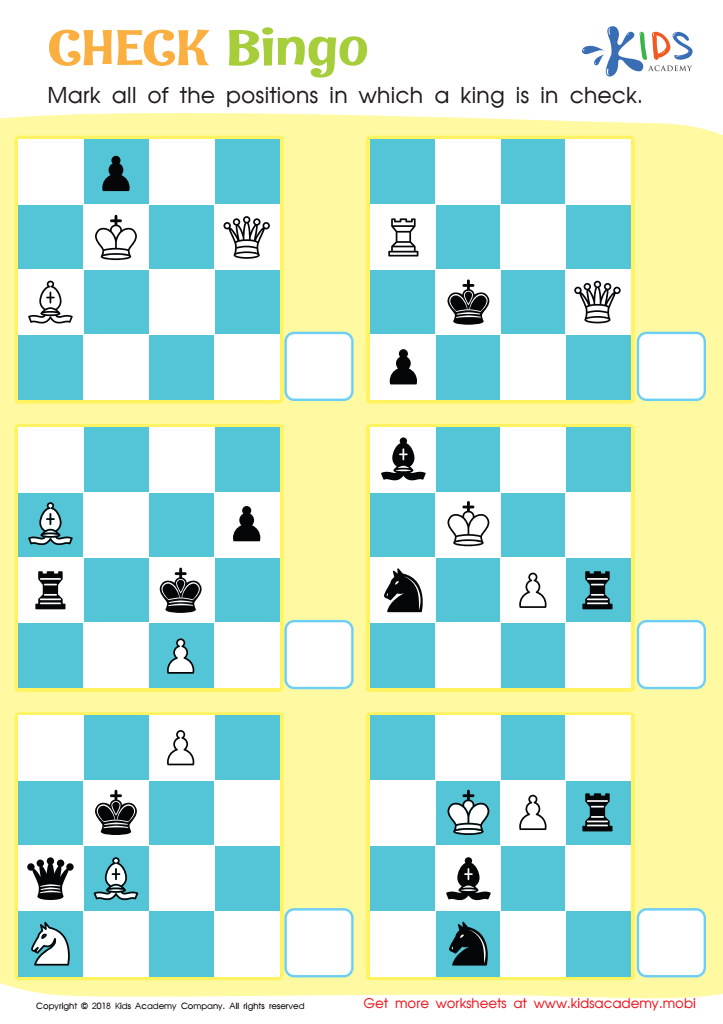
Check Bingo Worksheet
 Assign to My Students
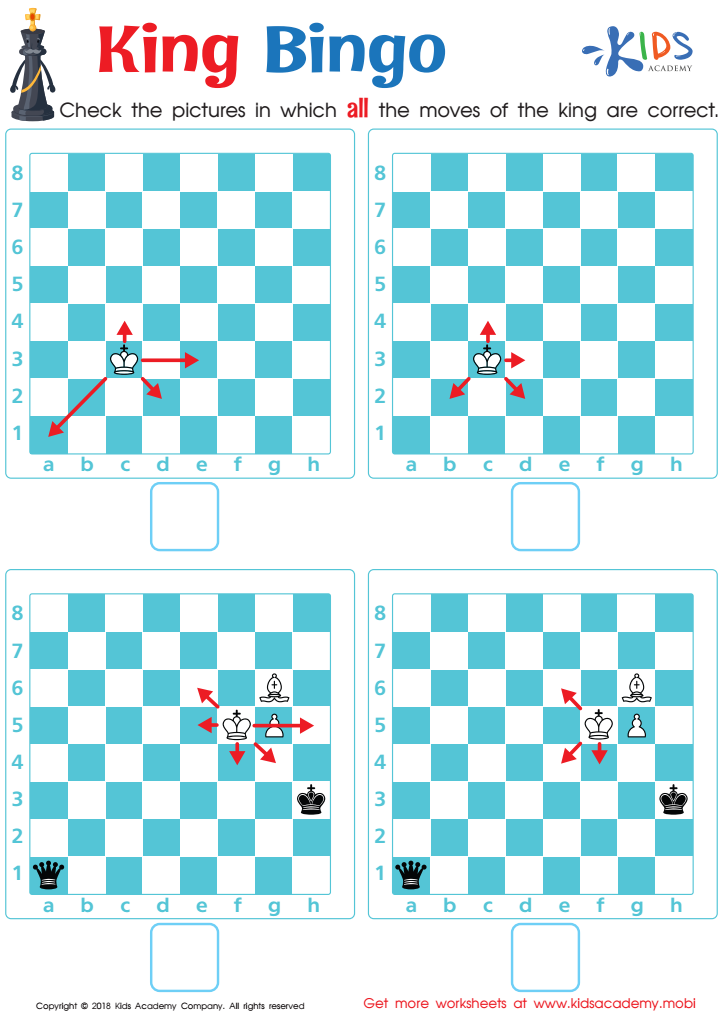
King Bingo Worksheet
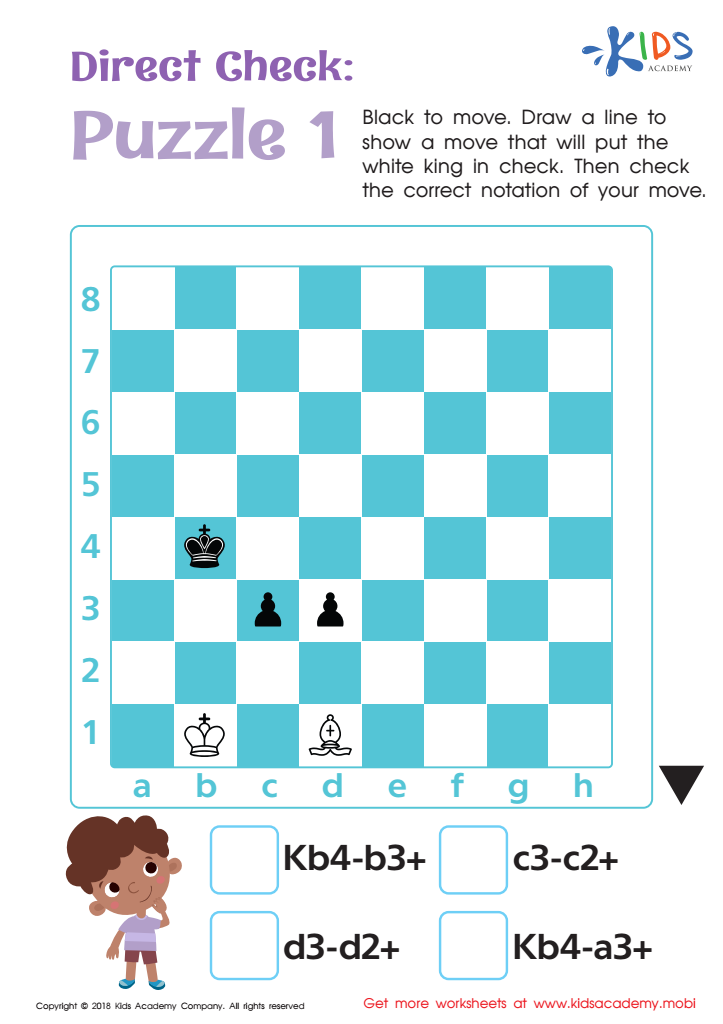
Direct Check: Puzzle 1 Worksheet
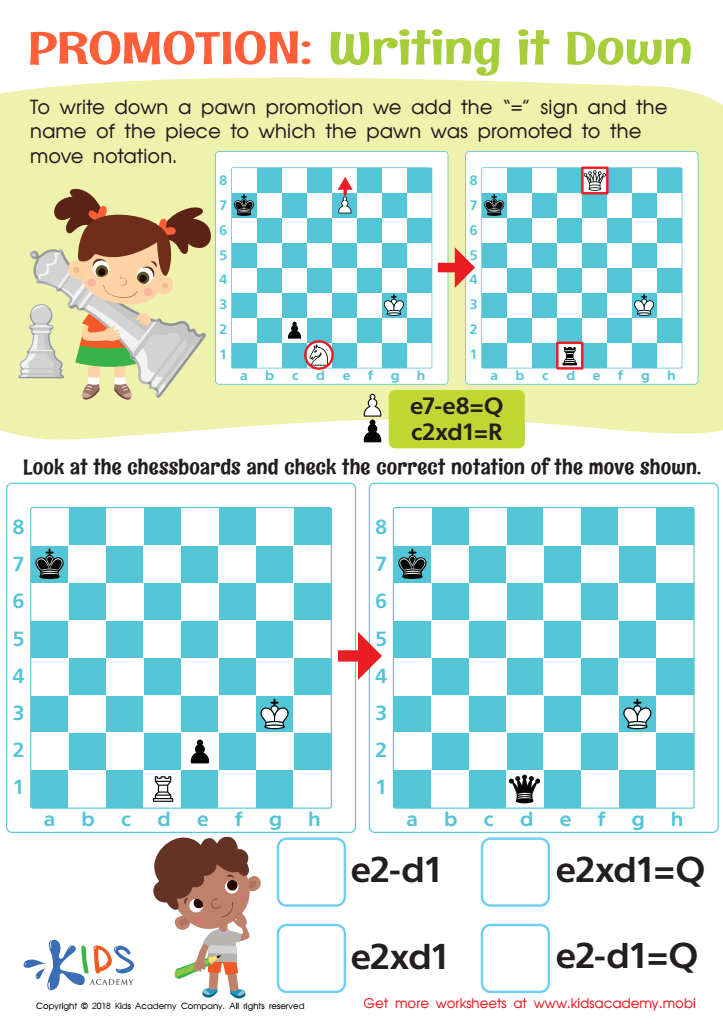
Writing it Down Worksheet







Number Recognition Chess is a valuable educational tool for children ages 7-9, blending the strategic elements of chess with vital number recognition skills. Parents and teachers should care about this approach for several reasons.
Firstly, it enhances cognitive development. Chess stimulates critical thinking and problem-solving abilities, and by integrating number recognition, children also build mathematical skills. This dual focus helps develop young minds holistically, making learning fun and engaging.
Secondly, fostering number sense at this age is crucial. Mastering number recognition lays the groundwork for more complex mathematical concepts and improves fluency in calculations. When combined with chess, children learn to approach math problems similarly to strategic games—analyzing situations, evaluating outcomes, and making informed decisions.
Moreover, engaging in Number Recognition Chess helps improve patience and focus. Children learn to take their time, think strategically about their moves, and apply similar concentration when solving math challenges. This cultivation of focus can significantly impact their overall academic performance.
Lastly, it builds teamwork and communication skills. Playing chess in a group setting encourages discussions about strategies and mathematical principles, fostering social skills that are essential in school and beyond. Overall, Number Recognition Chess creates a well-rounded and stimulating learning environment essential for developing younger learners.