Problem-solving abilities Chess Worksheets for Ages 7-9
3 filtered results
-
From - To
Enhance your child's problem-solving skills with our engaging chess worksheets designed specifically for ages 7-9! These worksheets offer a fun and interactive way for kids to develop critical thinking, strategic reasoning, and analytical abilities through chess. Each worksheet is carefully crafted to challenge young minds, encouraging them to think ahead and solve complex problems. Our resources not only promote cognitive growth but also instill a love for the game. Ideal for classroom settings or at-home learning, these chess worksheets provide the perfect balance of education and enjoyment. Unlock your child's potential and watch them succeed both on and off the chessboard!
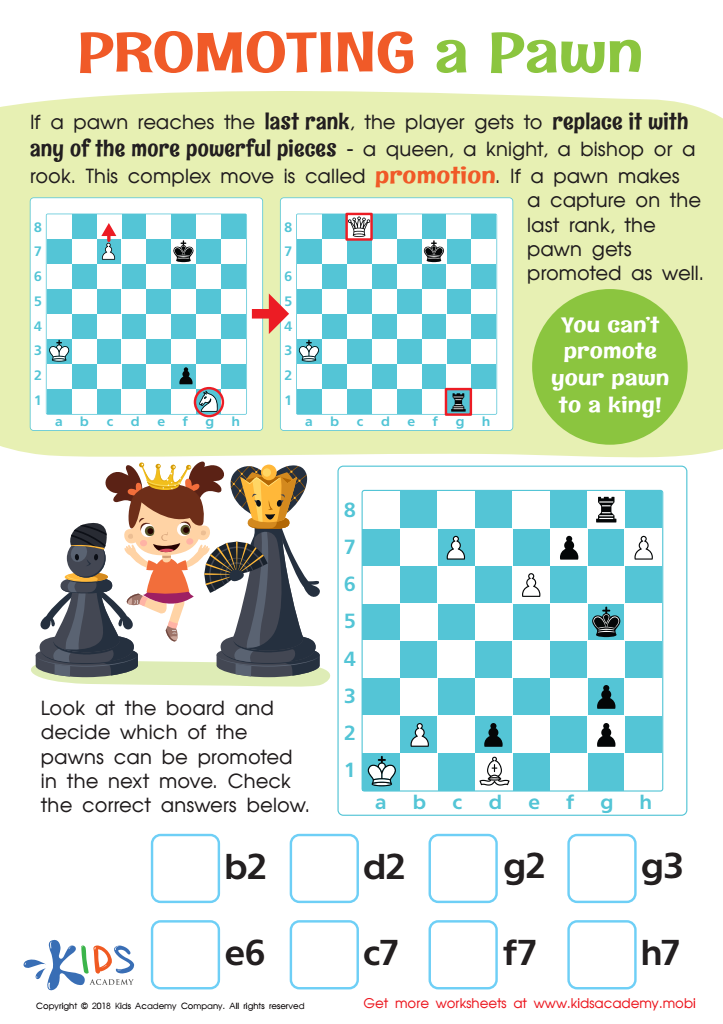
Promoting a Pawn Worksheet
 Assign to My Students
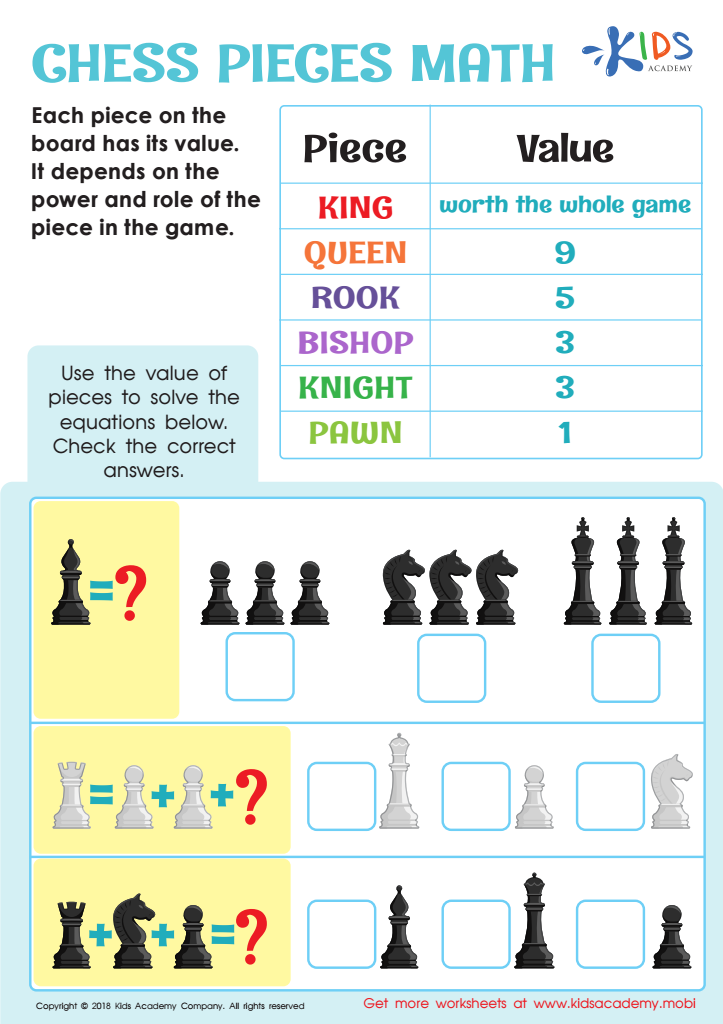
Chess Pieces Math Worksheet
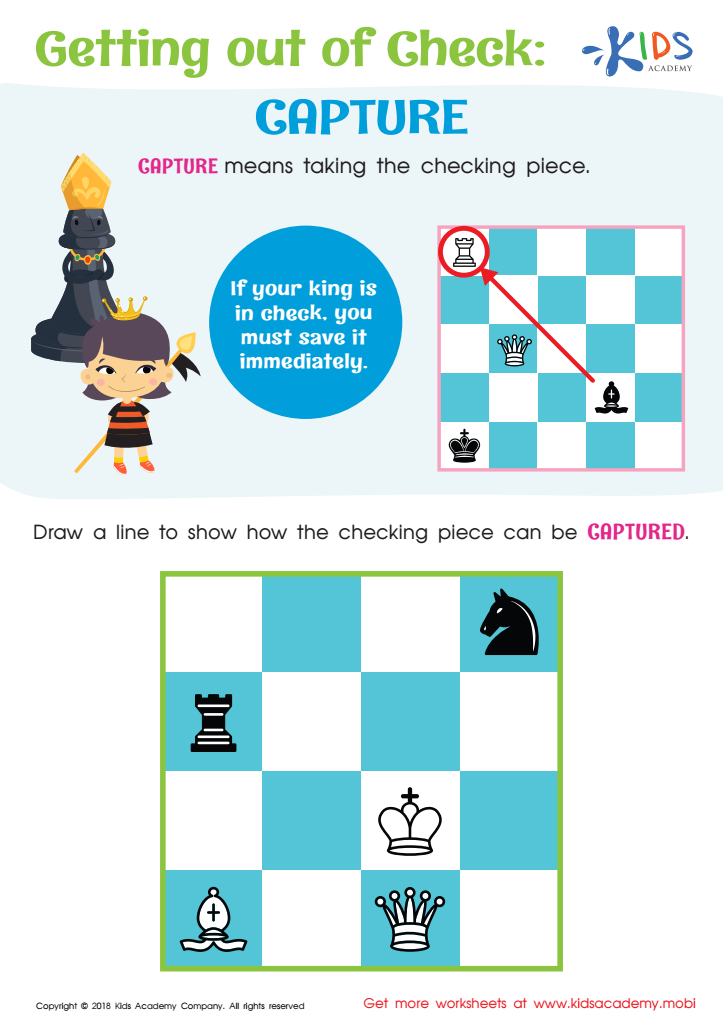
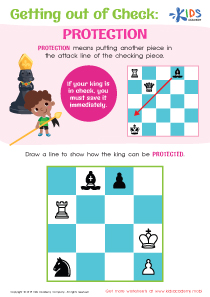
Getting out of Check: Capture







Parents and teachers should prioritize developing problem-solving abilities through chess for children aged 7-9 because it fosters critical thinking, improves cognitive skills, and enhances decision-making. Chess, with its strategic gameplay, encourages players to evaluate various scenarios and outcomes, teaching them to think several steps ahead. This kind of mental exercise strengthens analytical skills that are essential both in academic settings and everyday life.
Furthermore, engaging in chess helps children learn the importance of patience and perseverance. As they face challenges on the board—such as overcoming a difficult opponent or devising a winning strategy—kids develop resilience and learn that failure is simply a stepping stone to success. This mindset is crucial not only in chess but also in broader situations they will encounter.
Additionally, chess promotes social interaction and cooperation as children learn to play together, sharing strategies and solutions. This fosters communication skills and teamwork, which are vital in a collaborative learning environment. By incorporating chess into educational activities, parents and teachers can ensure that children build these problem-solving abilities in a fun, engaging way while laying a strong foundation for future academic and personal success.