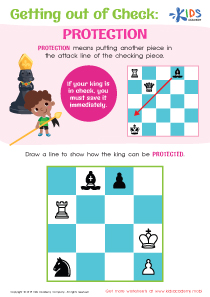
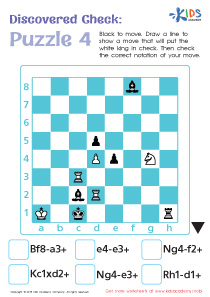
Spatial awareness Chess Worksheets for Ages 7-9
3 filtered results
-
From - To
Enhance your child's spatial awareness with our engaging Chess Worksheets designed for ages 7-9! These printable resources are tailored to stimulate cognitive development while introducing the fascinating world of chess. Through fun puzzles, visual challenges, and interactive activities, young learners will sharpen their ability to perceive space, recognize patterns, and improve problem-solving skills. Our worksheets not only foster a love for chess but also support academic growth in mathematics and critical thinking. Discover the perfect blend of education and enjoyment as your child masters spatial concepts in a playful and innovative way. Download now and watch them strategize like a pro!
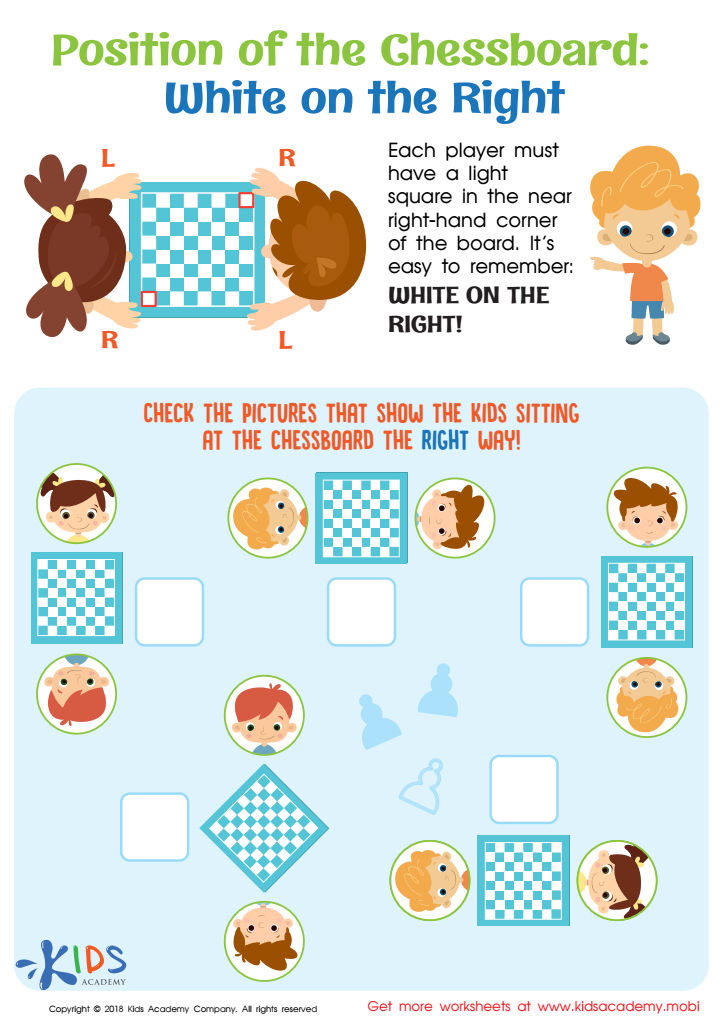
Position of the Chessboard: White on the Right Worksheet
 Assign to My Students
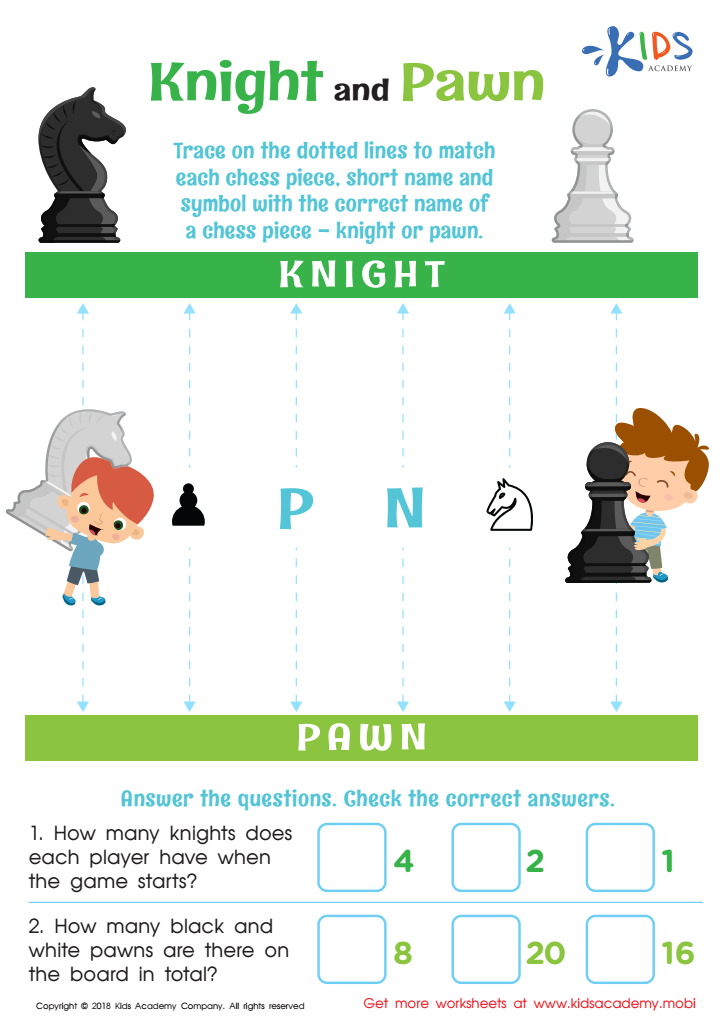
Knight and Pawn Worksheet
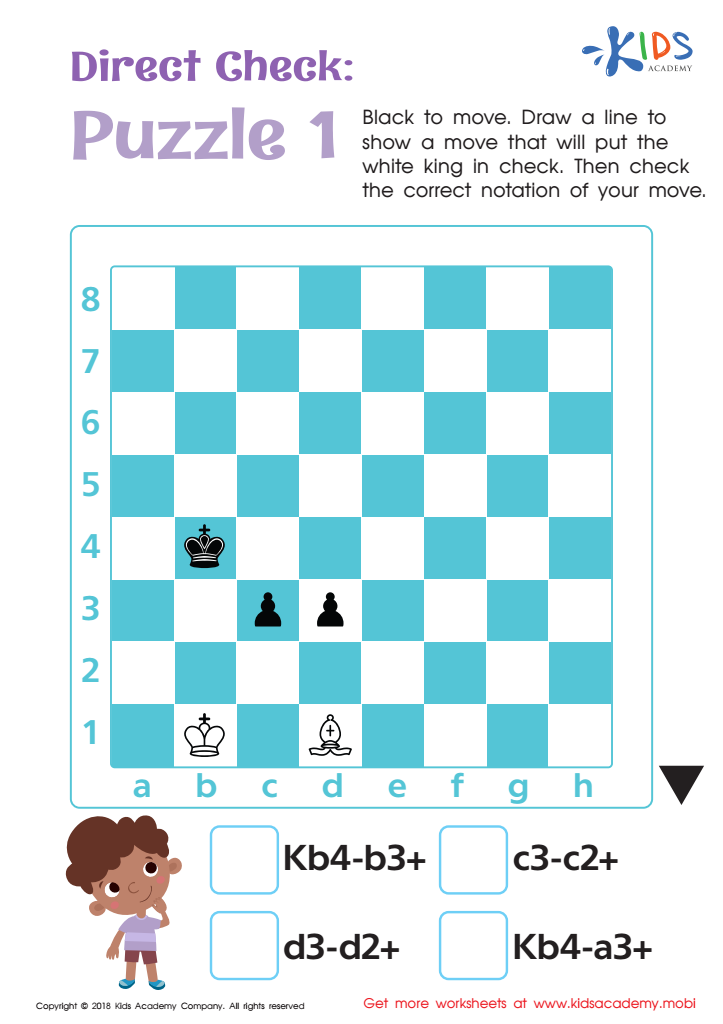
Direct Check: Puzzle 1 Worksheet








Spatial awareness is a critical skill that involves understanding and interacting with spaces and shapes, which is essential for problem-solving and critical thinking. Introducing chess to children ages 7-9 can greatly enhance their spatial awareness. As they learn how different pieces move across the chessboard, kids develop the ability to visualize complex scenarios, foresee opponent actions, and evaluate multiple strategies simultaneously.
Moreover, chess encourages strategic thinking and planning. Children learn to anticipate the consequences of their moves while grasping concepts like space control and positioning. Engaging in this mental exercise not only fosters cognitive development but also builds patience, discipline, and resilience — crucial traits for academic and personal growth.
For parents and teachers, emphasizing spatial awareness through chess can also complement STEM curriculum goals, aligning with educational standards that encourage critical thinking and interdisciplinary learning. Additionally, playing chess can create a fun and interactive environment that bolsters social skills and teamwork when played in groups.
Overall, promoting spatial awareness through chess is a valuable investment in children's cognitive development, preparing them for future academic challenges and nurturing essential life skills in a playful, engaging manner.