Sound Association English for Beginners Worksheets for Ages 7-9
5 filtered results
Difficulty Level
Grade
Age
-
From - To
Subject
Activity
Standards
Discover our engaging Sound Association English Worksheets designed for children ages 7-9! These interactive resources help young learners strengthen their English language skills through fun, hands-on activities that focus on sound recognition and word association. Ideal for both classroom and home use, our worksheets feature visually appealing exercises that promote phonemic awareness, vocabulary development, and reading comprehension. With a variety of exercises including matching sounds to words and identifying sounds in context, children will enjoy learning as they build essential language skills. Foster your child's English proficiency while making learning enjoyable—explore our collection of Sound Association worksheets today!
Favorites
With answer key
Interactive
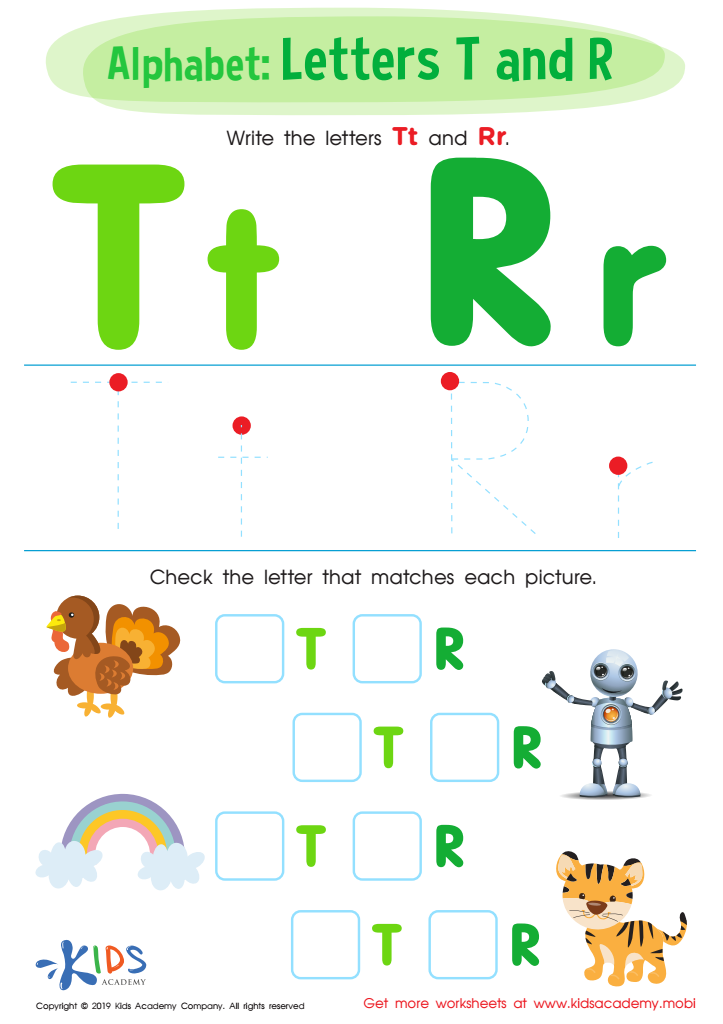
Letters T and R Worksheet
Is your kid bored with basic letter learning? Try this Letters T & R traceable sheet! It combines tracing and picture matching to help solidify fundamental skills. Your child will gain a better understanding and have fun at the same time.
Letters T and R Worksheet
Worksheet
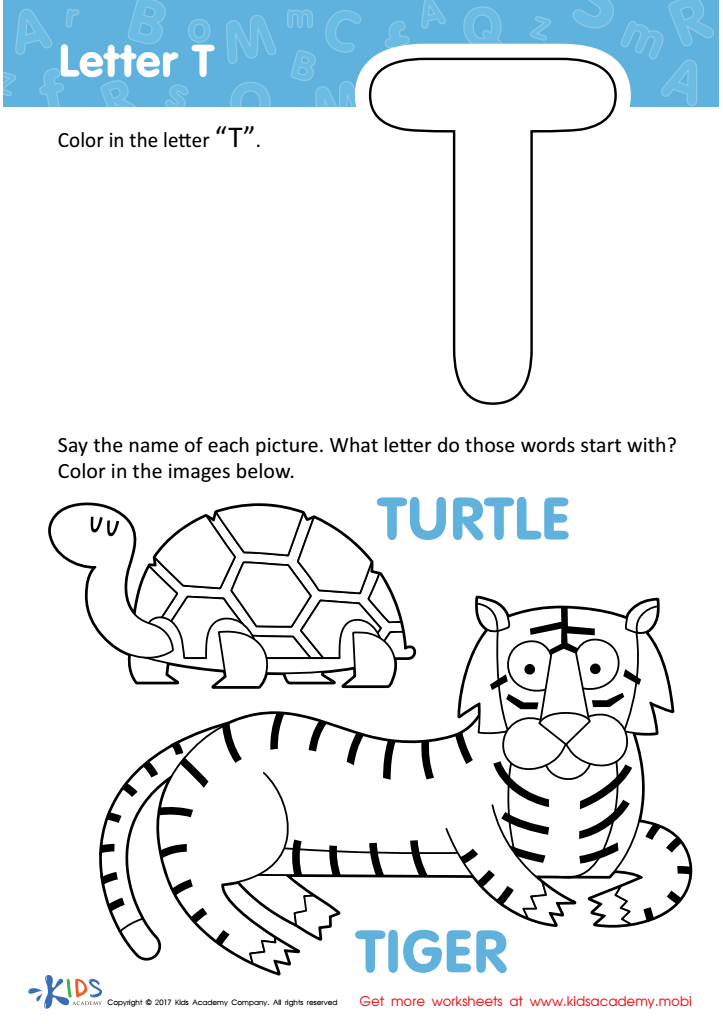
Letter T Coloring Sheet
Introduce your child to the letter "T" and its animals – turtles and tigers! With this coloring page, you can stimulate your child's imagination and creativity, while helping them recognize the letter "T". Have fun with your child and get coloring!
Download (PDF)
 Assign to My Students
Assign to My Students
Letter T Coloring Sheet
Worksheet
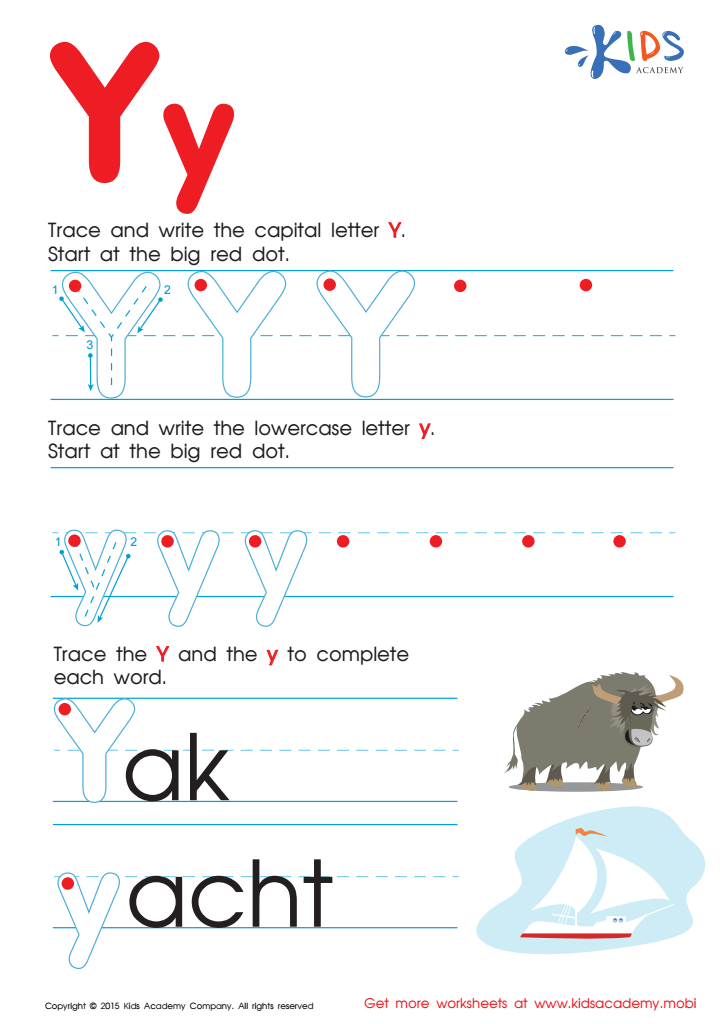
Letter Y Tracing Page
Trace the capital letter "Y" on the red dot, then trace and write the lowercase letter. Complete the words to help the Yak walk and the yacht swim. More worksheets at Kids Academy.
Letter Y Tracing Page
Worksheet
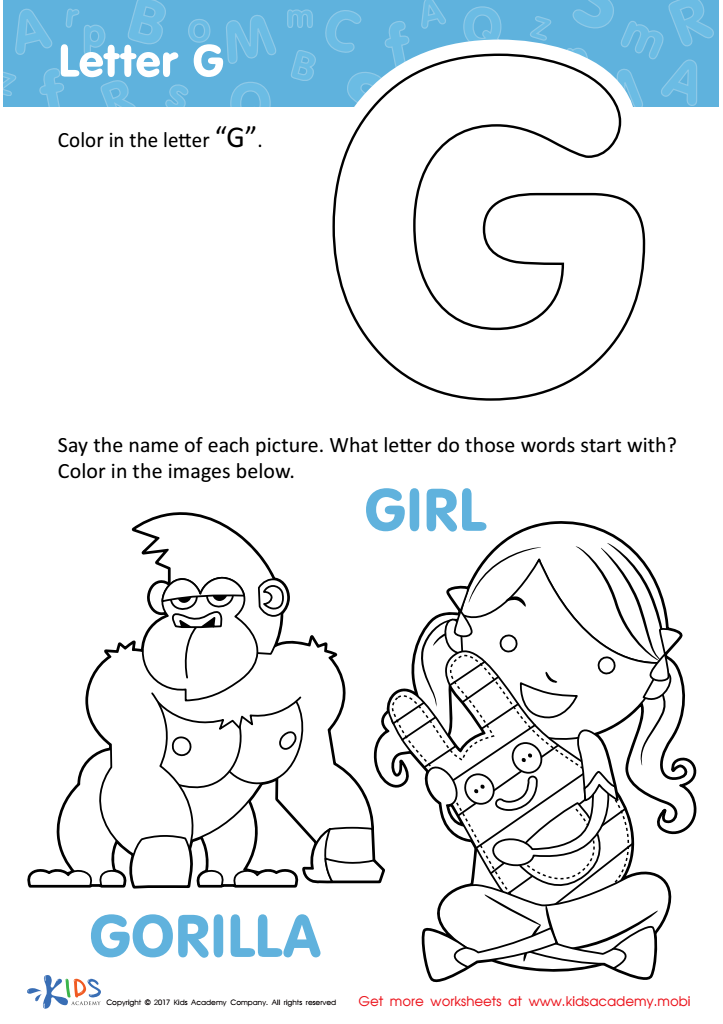
Letter G Coloring Sheet
This "G" coloring page encourages creativity and teaches kids the letter "G" sound. With its fun visuals and familiar words, it's sure to excite your child. Plus, you can talk about the letter’s sound with the pictures given.
Download (PDF)
Assign to My Students
Assign to My Students
Letter G Coloring Sheet
Worksheet
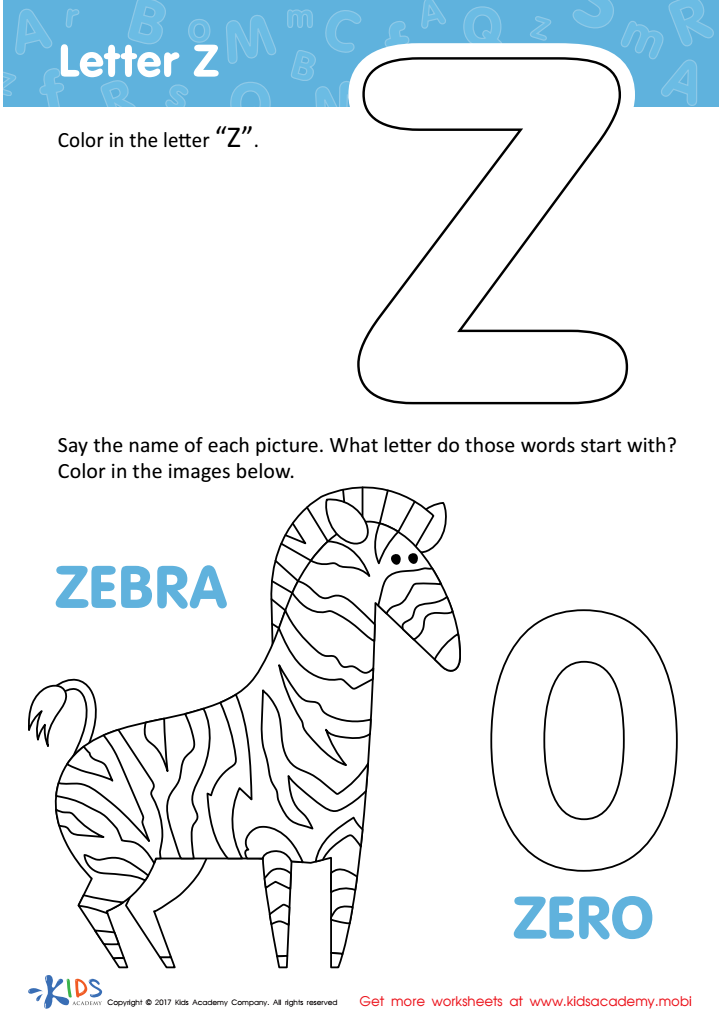
Letter Z Coloring Sheet
This coloring page featuring the letter "Z" is perfect for your child to practice letter recognition! Help them learn the unique sound it makes as they color. It'll be a fun and easy activity they won't have trouble with!
Download (PDF)
Assign to My Students
Assign to My Students
Letter Z Coloring Sheet
Worksheet
Join Kids Academy for Free
Who is primarily going to use this learning content?




Parents and teachers should care about Sound Association English for Beginners, particularly for ages 7-9, as this age group is critical for language development and literacy skills. Sound association is the connection between sounds and the letters or groups of letters that represent those sounds, which forms the foundation for reading and writing. Engaging children with sound association materials enhances phonemic awareness, enabling them to decode new words more effectively, making reading more enjoyable and less frustrating.
At this developmental stage, children are often learning to read for comprehension, not just for decoding. A solid grasp of sound associations fosters confident readers who can engage with a variety of texts. This adaptability nurtures a love for reading and encourages lifetime learning habits.
Additionally, sound association tools cater to different learning styles; they can be visual, auditory, or kinesthetic, making lessons accessible and engaging. Also, when parents or teachers prioritize sound associations, they cultivate a supportive learning environment that values language skills, ultimately leading to academic success. In a world where communication is increasingly important, investing time in developing sound associations ensures that children acquire the essential skills they need for future learning and social interactions.