Analog Clock Understanding Worksheets for Ages 7-9
3 filtered results
-
From - To
Discover our engaging Analog Clock Understanding Worksheets designed for children aged 7 to 9! These interactive resources help students master the concept of telling time using traditional analog clocks. With a mix of fun activities, including matching exercises, fill-in-the-blanks, and hands-on clock-making projects, kids will build essential time-telling skills while enhancing their critical thinking and problem-solving abilities. Each worksheet is crafted to keep learners motivated and encourage practice through creative challenges, ensuring they gain confidence in their time-telling capabilities. Perfect for classroom use or at-home learning, our worksheets pave the way for young learners to navigate the world of time with ease!
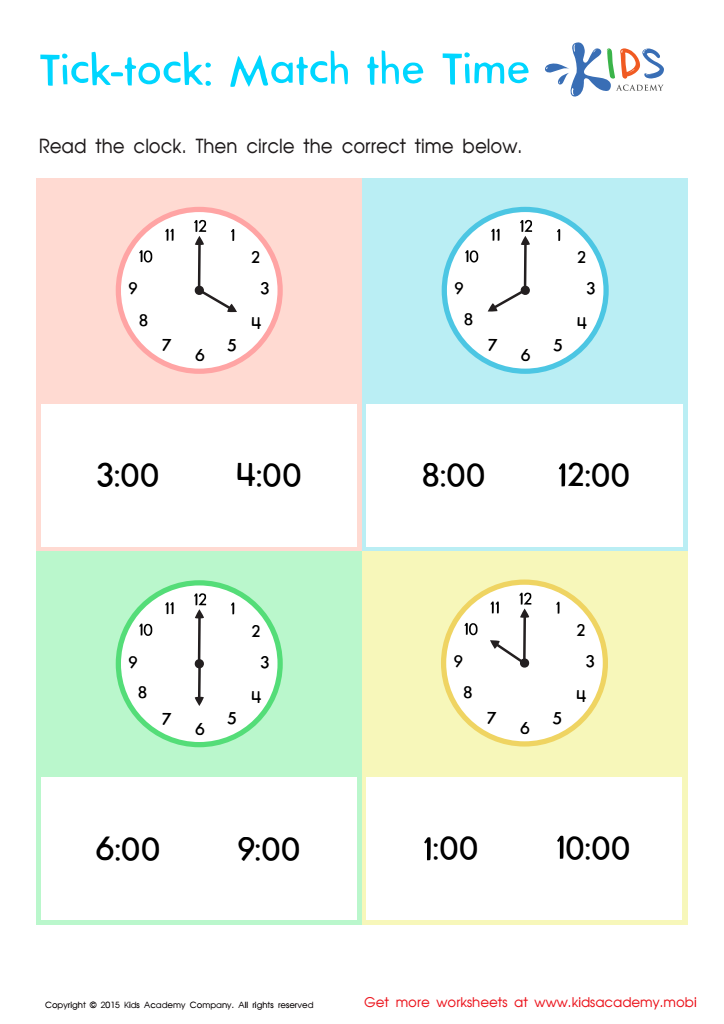
Telling The Time Worksheet: Part 4
 Assign to My Students
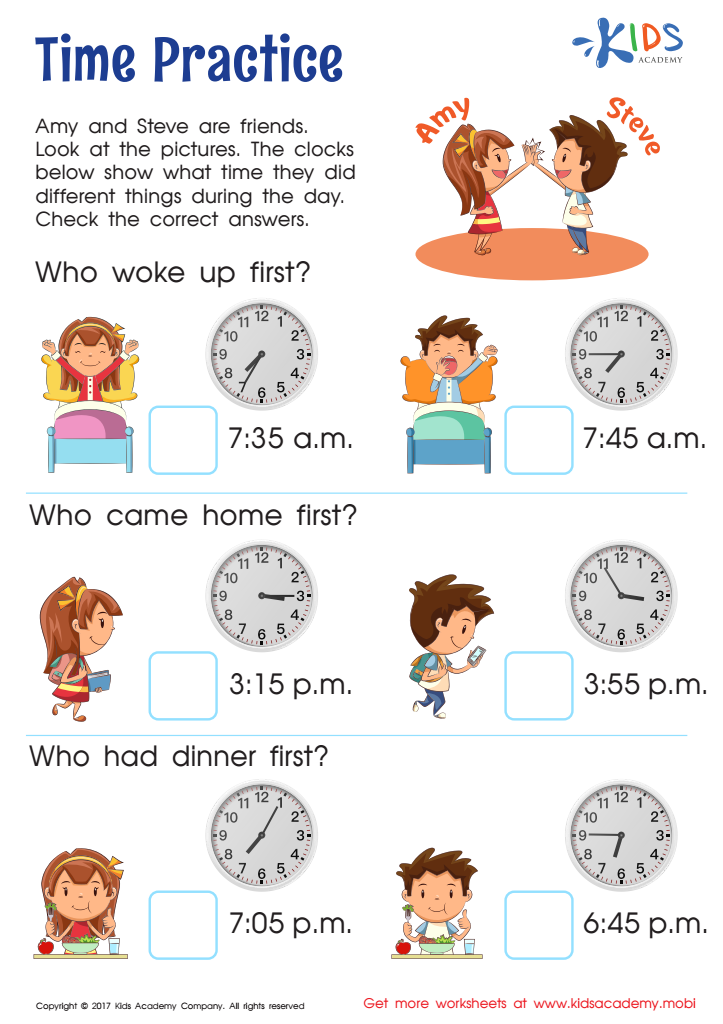
Time Practice Worksheet
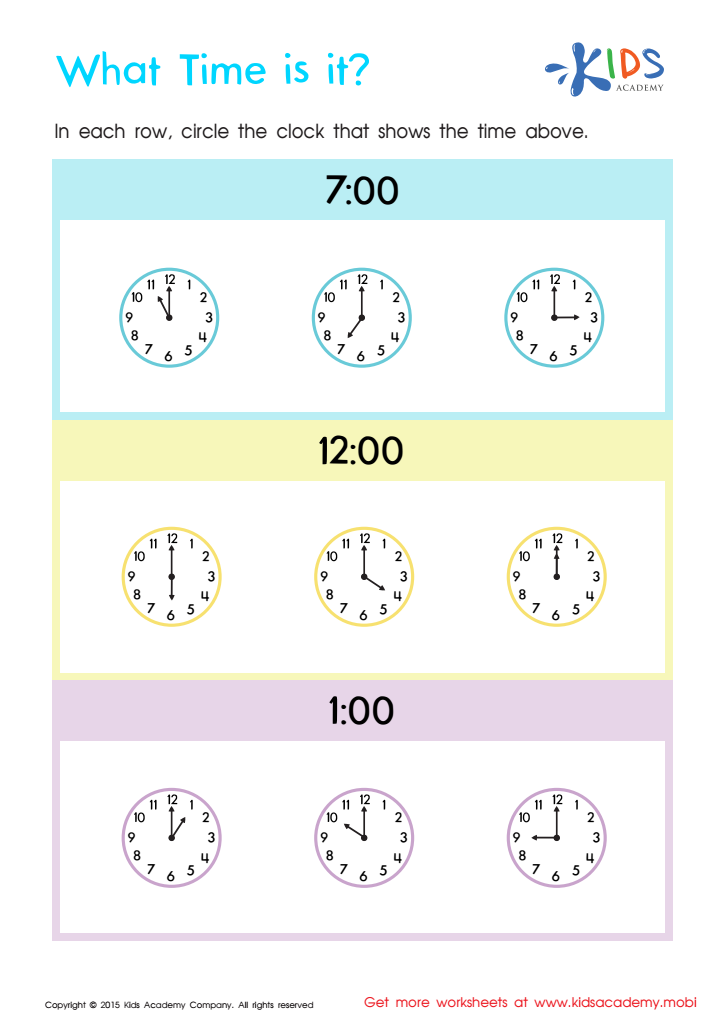
Telling The Time Worksheet: Part 3








Understanding analog clocks is crucial for children aged 7-9, as it lays a foundation for essential life skills beyond mere time-telling. Firstly, analog clocks aid in developing critical thinking and spatial awareness. Children learn to interpret visual cues, enhancing their ability to analyze information and make decisions. Additionally, reading an analog clock strengthens their understanding of fractions, as they grasp concepts like halves and quarters, fostering mathematical skills.
Furthermore, analog clock skills promote personal responsibility and time management; knowing how to read time encourages children to manage daily schedules, respect appointments, and plan activities efficiently. This skill also enhances independence, allowing them to navigate their daily routines confidently.
Particularly in today's digital age, where technology often dominates, maintaining proficiency in reading an analog clock serves as a valuable counterbalance. It enriches their understanding of time and its historical context. When educators and parents emphasize this skill, they not only bolster cognitive development but also instill practical abilities that prepare children for various academic and real-world challenges. Ultimately, fostering analog clock understanding helps children develop well-rounded skills that benefit both their education and personal lives.








