Building vocabulary Worksheets for Ages 7-9
4 filtered results
-
From - To
Enhance your child’s language skills with our engaging "Building Vocabulary Worksheets for Ages 7-9." Our thoughtfully crafted materials are designed to support children in expanding their vocabulary through fun, interactive exercises. These worksheets encourage word recognition, usage, and comprehension, making learning enjoyable and effective. Kids will explore synonyms, antonyms, and context clues while sharpening their reading and writing abilities. Ideal for classroom or home use, these resources promote a solid foundation in language arts, ensuring your child develops confidence in their communication skills. Start your vocabulary-building journey today with our easy-to-use worksheets, perfect for young learners eager to grow!
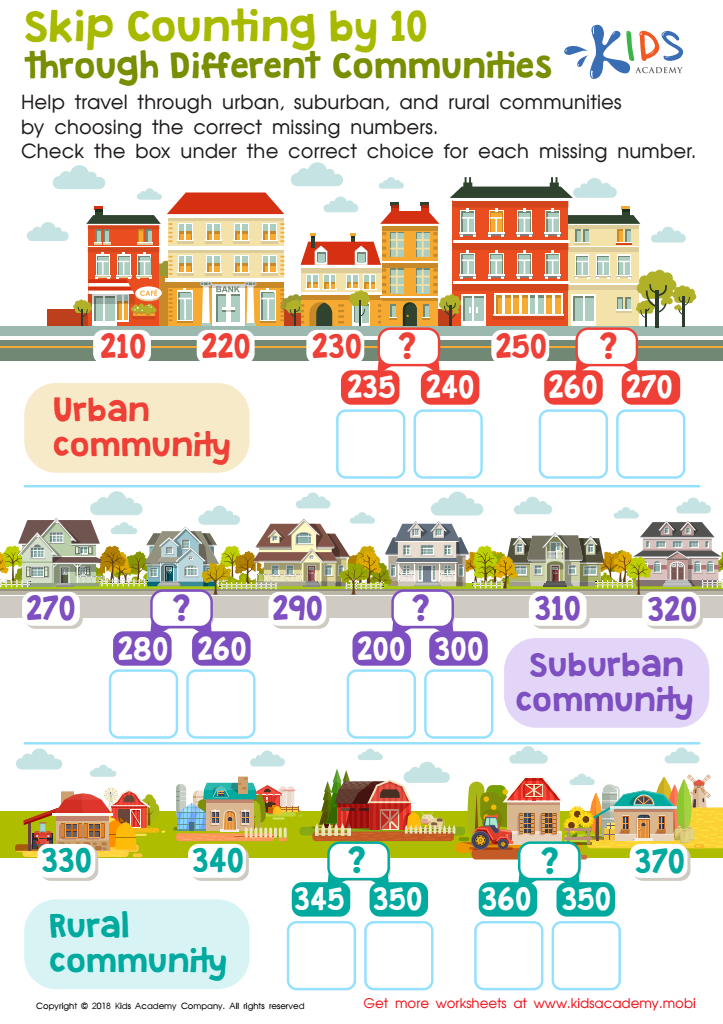
Skip Counting by 10 through Different Communities Worksheet
 Assign to My Students
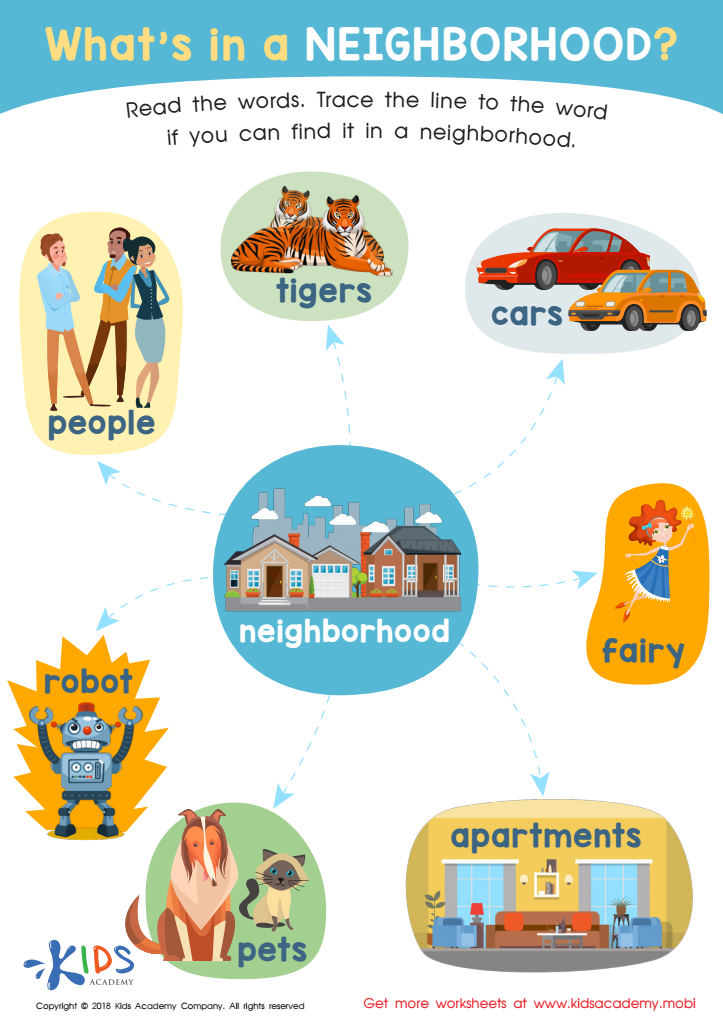
What's in a Neighborhood? Worksheet








Building vocabulary in children aged 7-9 is crucial for their overall academic and social development. At this stage, children begin to engage more deeply with reading and writing, and a robust vocabulary enables them to comprehend texts better, express their thoughts clearly, and participate meaningfully in discussions. An enriched vocabulary also promotes cognitive skills, fostering critical thinking and problem-solving abilities as children learn to connect words with meanings and ideas.
Furthermore, a strong vocabulary enhances children’s confidence in their language use, facilitating smoother communication with peers and adults. It allows them to articulate emotions, describe experiences, and engage in complex conversations, promoting social skills and emotional intelligence.
For teachers and parents, prioritizing vocabulary development can lead to improved literacy outcomes as children become competent readers and writers. The ability to understand and use varied vocabulary correlates with academic achievement; thus, a strong vocabulary can lay the groundwork for lifelong learning. Additionally, encouraging vocabulary growth fosters a love for reading, igniting curiosity and imagination. In summary, investing in vocabulary development in early education paves the way for richer learning experiences and equips children with essential skills for their future.








