
Chess knowledge Worksheets for Ages 7-9
5 filtered results
Difficulty Level
Grade
Age
-
From - To
Subject
Activity
Standards
Enhance your child's critical thinking and strategic skills with our "Chess Knowledge Worksheets for Ages 7-9." Specifically designed for young learners, these engaging worksheets are perfect for introducing the fundamentals of chess. Each worksheet presents fun, interactive activities that nurture logical reasoning and problem-solving abilities through chess tactics. Whether your child is a beginner or seeking to sharpen their chess prowess, our expertly crafted resources ensure an enjoyable and educational experience. Explore our collection to boost your child’s chess knowledge and cognitive development while igniting a lifelong love for this classic game. Start your chess journey today!
Favorites
With answer key
Interactive
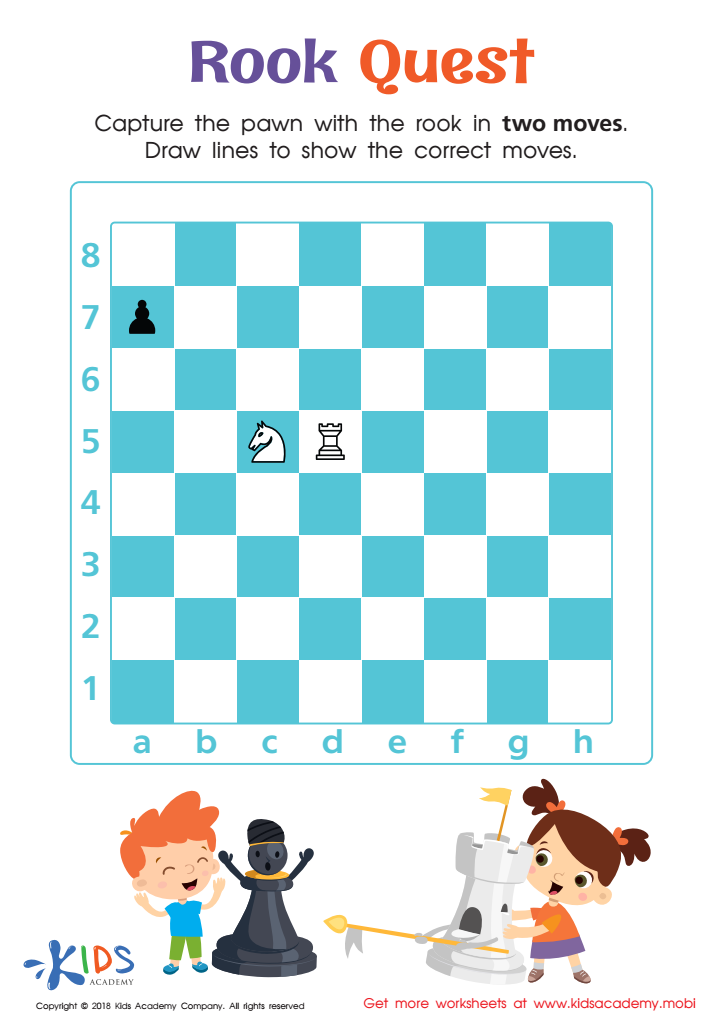
Rook Quest Worksheet
Is your child a chess whiz? Check their progress with this rook quest: get the enemy's pawn piece in just two moves. Have them draw the lines for the moves they'll make. See how quickly they master it!
 Assign to My Students
Rook Quest Worksheet
Worksheet
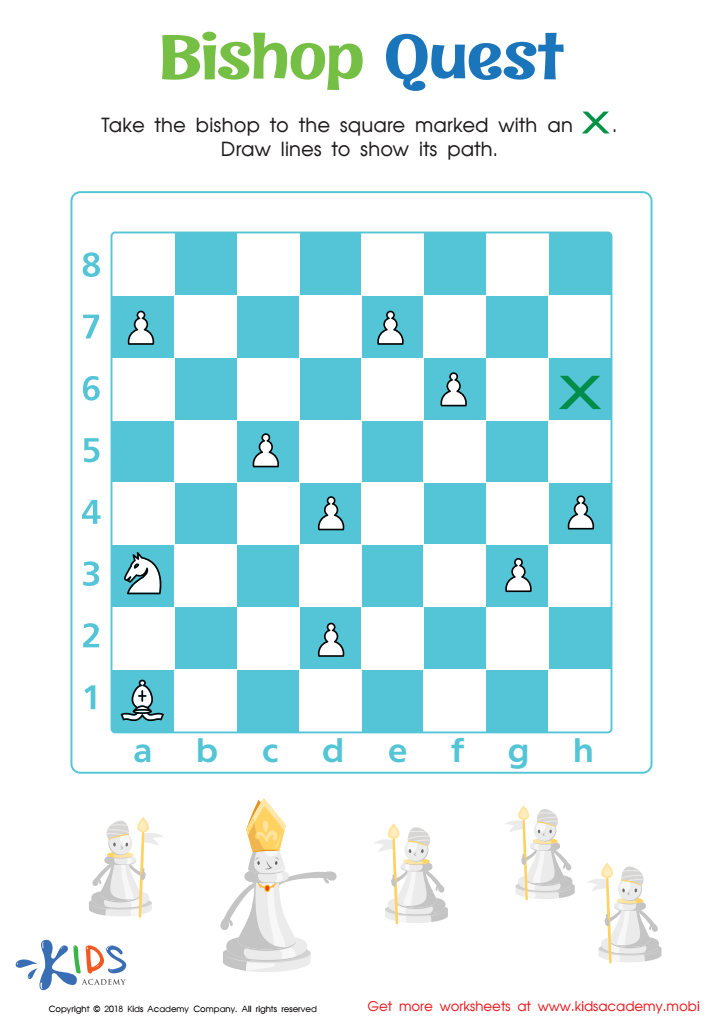
Bishop Quest Worksheet
Show kids the board and ask them to identify the bishop. Then ask them to move it to the square marked 'x', drawing lines to show its path. This worksheet helps teach kids how to move the bishop on a chessboard.
Bishop Quest Worksheet
Worksheet
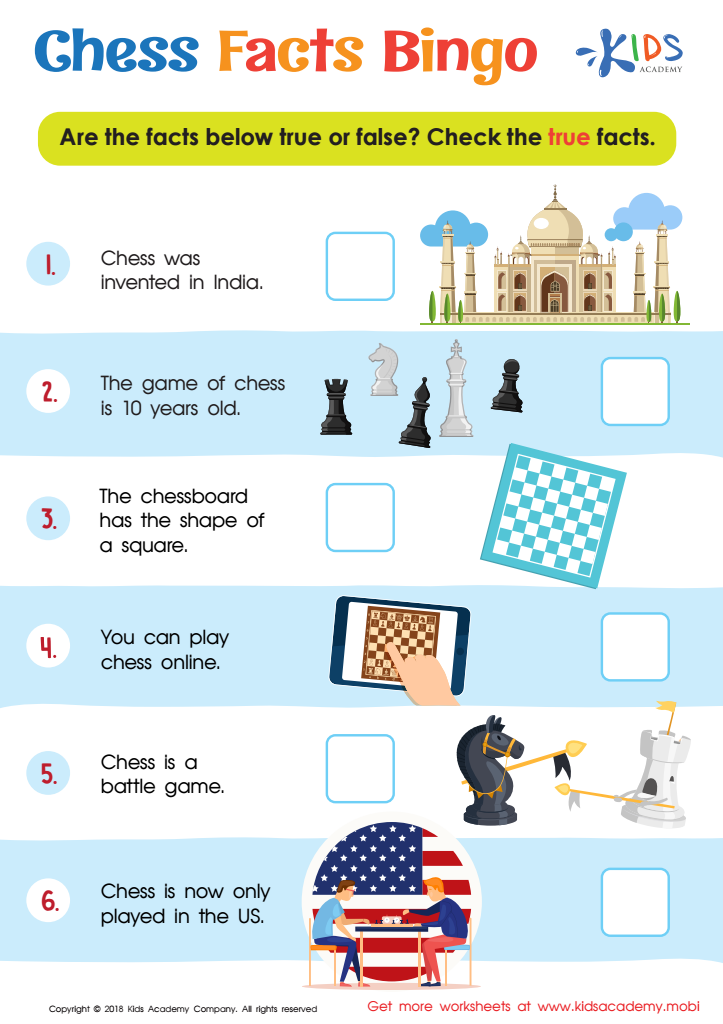
Chess Facts Bingo Worksheet
Help your child assess their knowledge of chess with our simple worksheet. It contains six questions; read them to your child and ask them if the statements are true or false. Once they check the boxes for the true statements, you'll have a better understanding of their understanding of the game.
Chess Facts Bingo Worksheet
Worksheet
Join Kids Academy for Free
Who is primarily going to use this learning content?








Parents and teachers should care about introducing chess knowledge to children aged 7-9 because it provides numerous cognitive, social, and emotional benefits during a critical period of their development. At this age, children’s brains are highly receptive and can absorb complex patterns and strategies. Chess encourages cognitive growth by enhancing problem-solving skills, improving concentration, and fostering critical thinking. Each move in chess requires players to consider the short-term and long-term consequences, helping children develop forethought and planning abilities that translate to better decision-making in everyday life.
Additionally, chess nurtures patience and discipline. Young players learn to think ahead and practice perseverance, especially when facing challenging positions. This instills a growth mindset, teaching them that effort and practice can lead to improvement and success.
Socially, chess can bridge language barriers and differences, creating a shared ground for interaction and collaboration among peers. It promotes good sportsmanship, as children must gracefully handle both victories and losses. Teachers and parents notice that kids who play chess often show improved academic performance, particularly in mathematics and reading comprehension.
By prioritizing chess knowledge, adults can support well-rounded development, laying a robust foundation for both academic achievements and essential life skills among children aged 7-9.








