Check out this FREE "Comparing Fractions" Trial Lesson for age 7-9!

Exactly the Same, or Not

Favorites
With answer key
Interactive
  • 7-9
  • Comparing Fractions
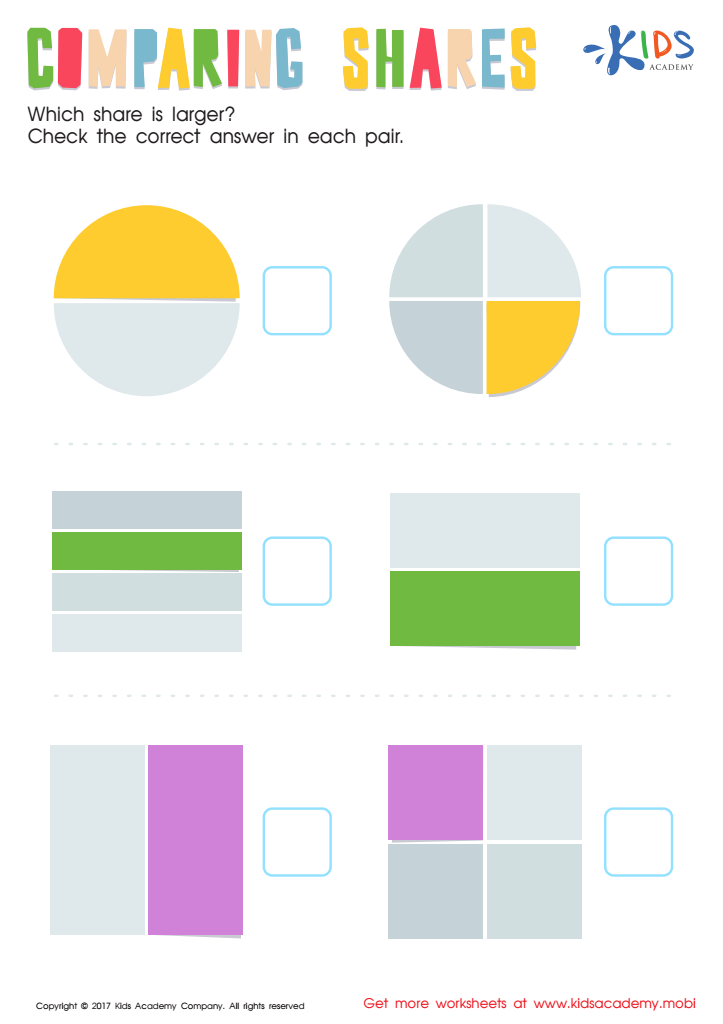
Comparing Shares Worksheet

Comparing Shares Worksheet

Can your students identify and draw shapes correctly? If so, this exercise may be too easy. For those who are still learning, extra help may be needed. The worksheet requires students to select which shape is larger in each pair; circles and squares are included.
Comparing Shares Worksheet
Worksheet
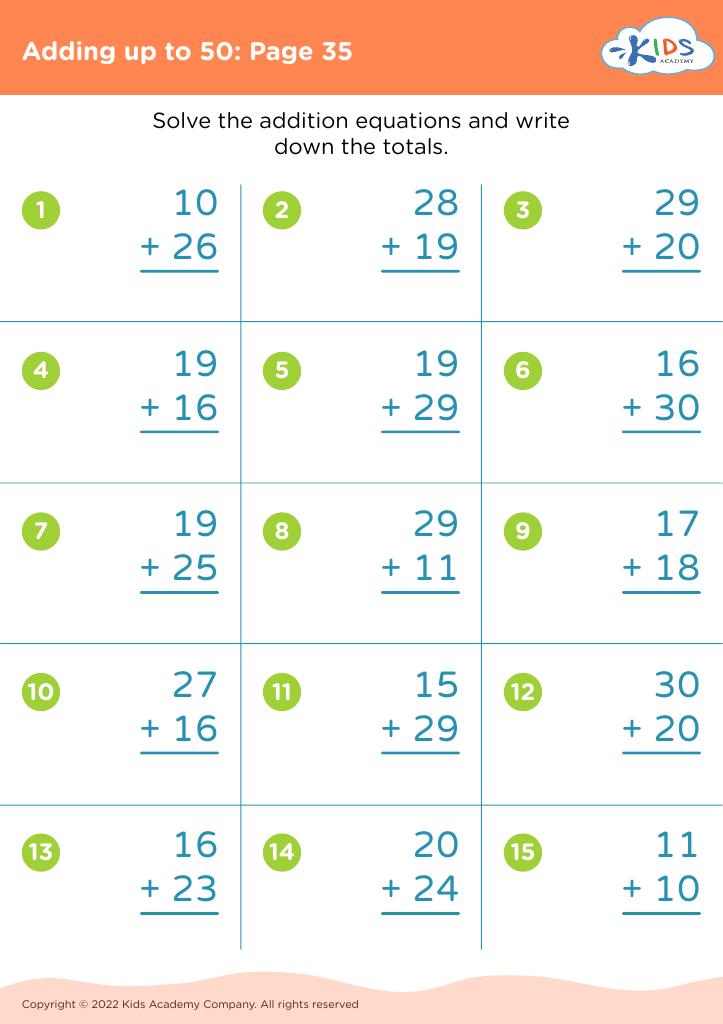
Adding up to 50: Page 35

Adding up to 50: Page 35

Adding up to 50: Page 35
Worksheet
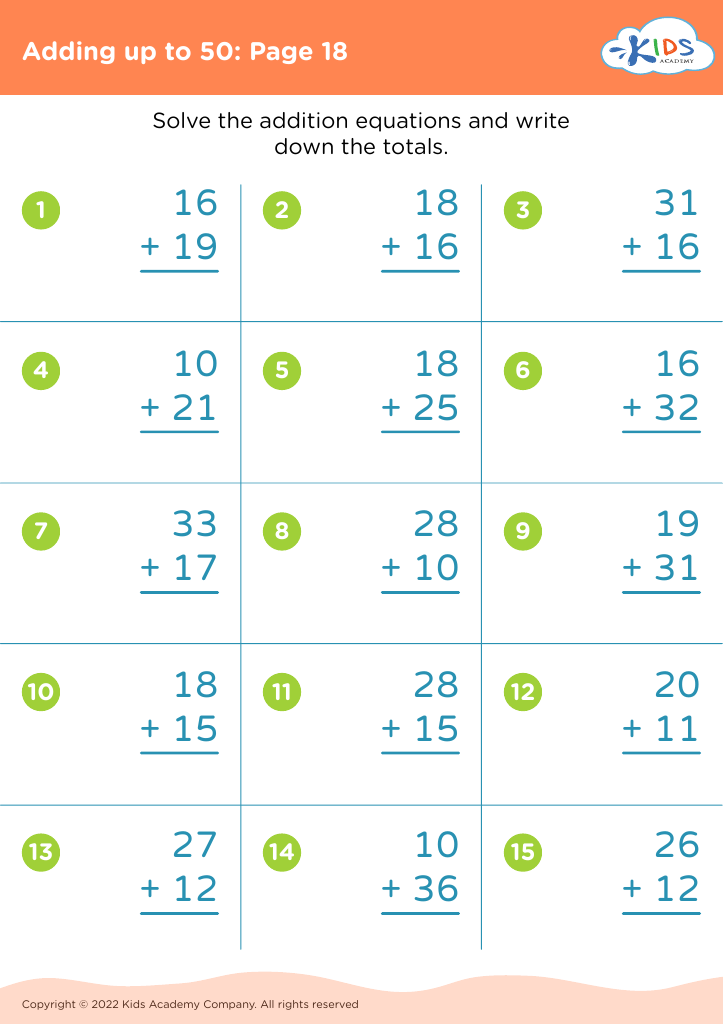
Adding up to 50: Page 18

Adding up to 50: Page 18

Adding up to 50: Page 18
Worksheet
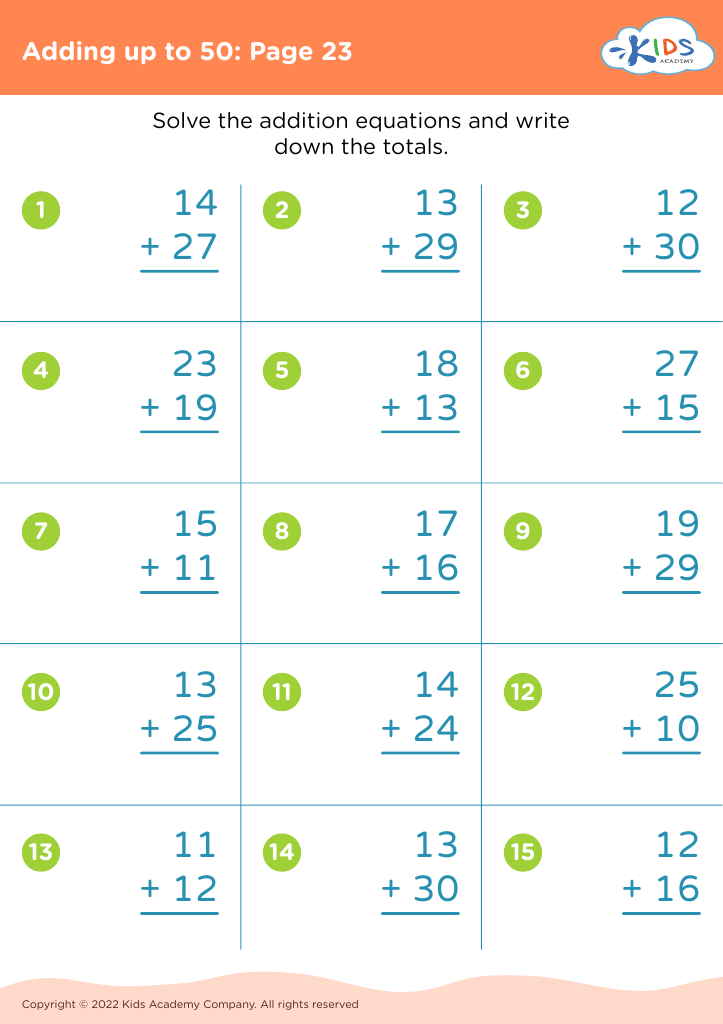
Adding up to 50: Page 23

Adding up to 50: Page 23

Adding up to 50: Page 23
Worksheet
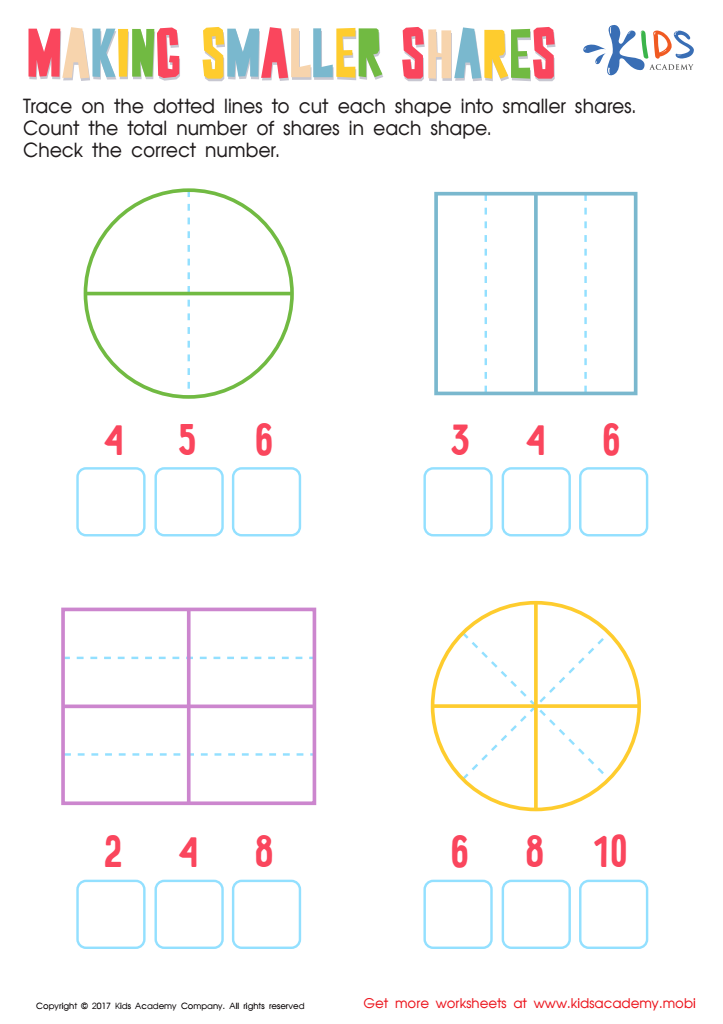
Making Smaller Shares Worksheet
Making Smaller Shares Worksheet
Help your kids learn shapes by having them cut out shapes on this tracing sheet. Point out the dotted lines, then guide their hand as they trace them, breaking shapes into smaller parts. Ask your children to count the number of parts and check the answers given.
Making Smaller Shares Worksheet
Worksheet
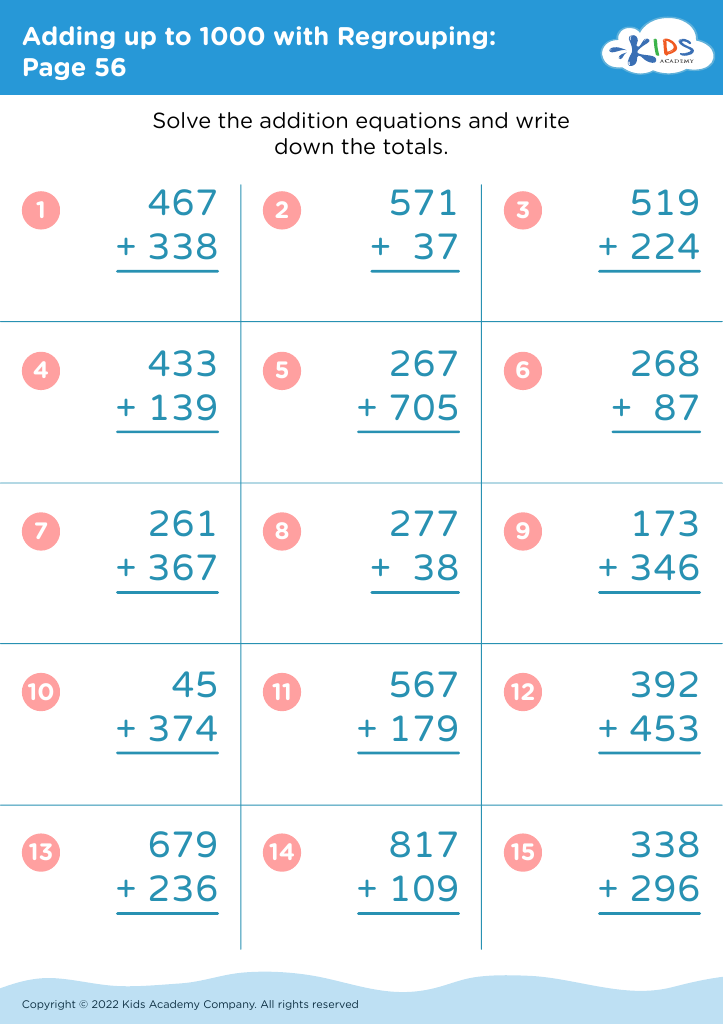
Adding up to 1000 with Regrouping: Page 56
Worksheet
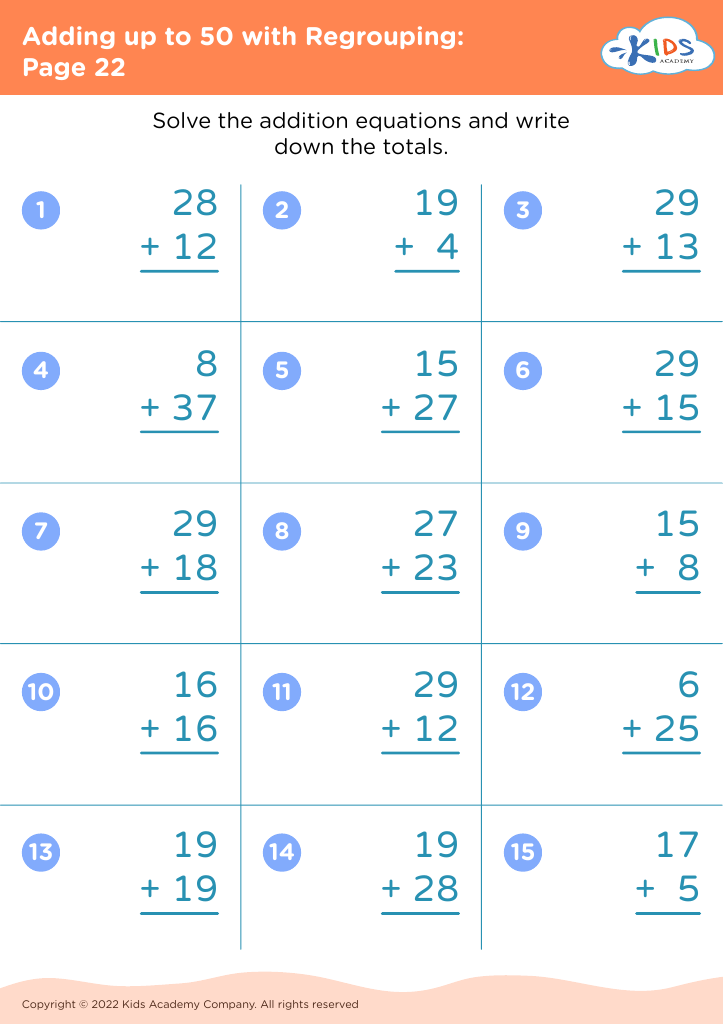
Adding up to 50 with Regrouping: Page 22
Worksheet
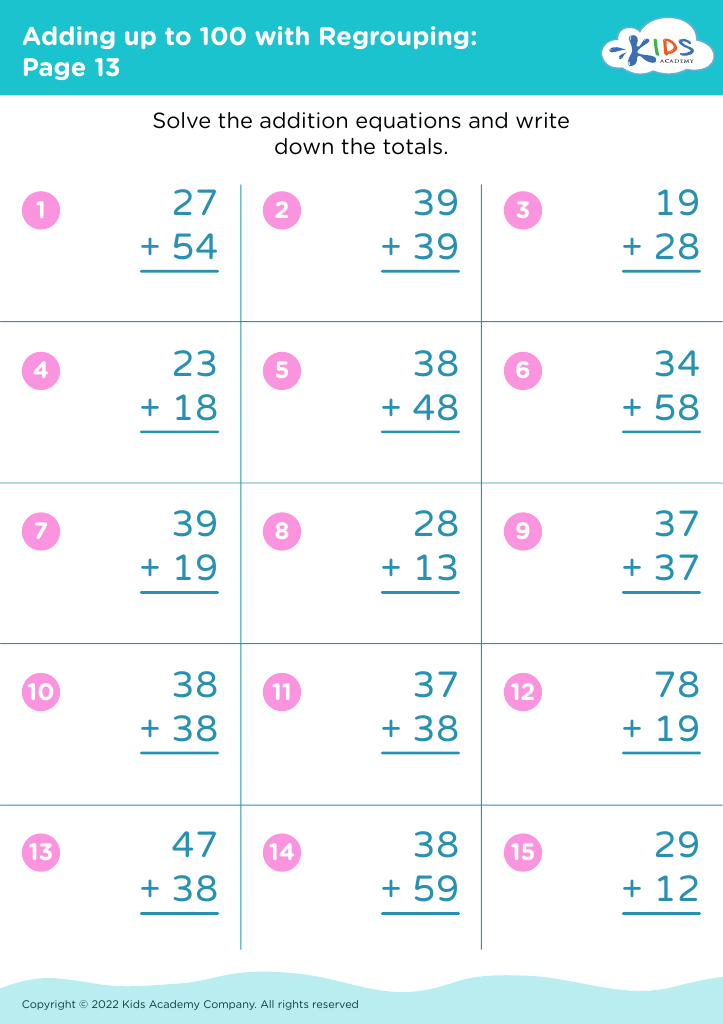
Adding up to 100 with Regrouping: Page 13
Worksheet
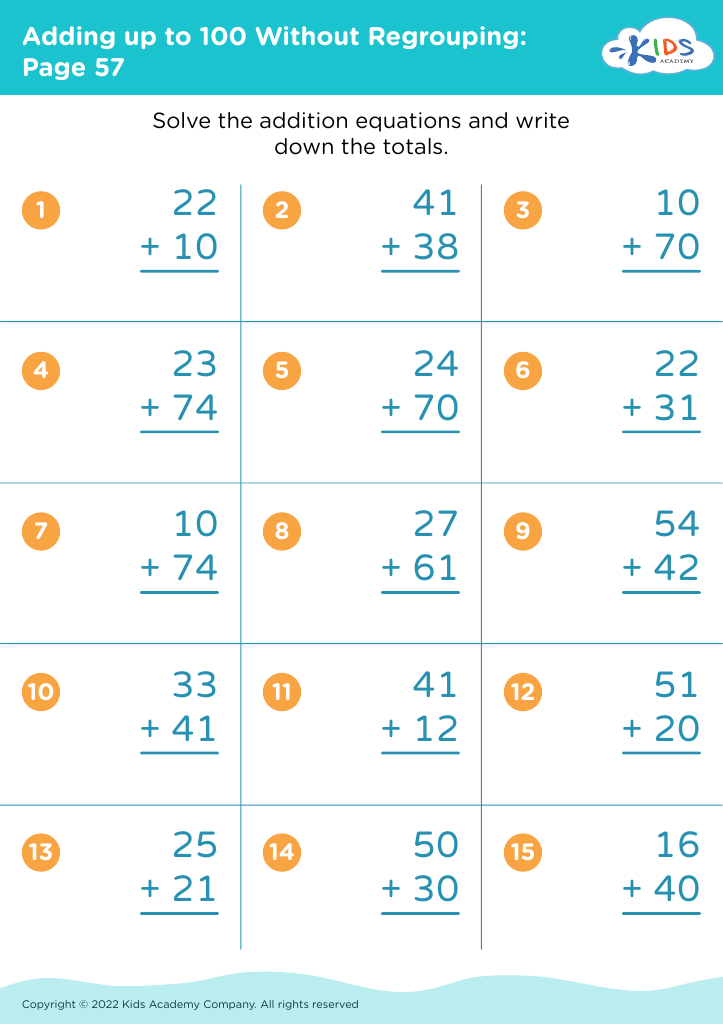
Adding up to 100 Without Regrouping: Page 57
Worksheet
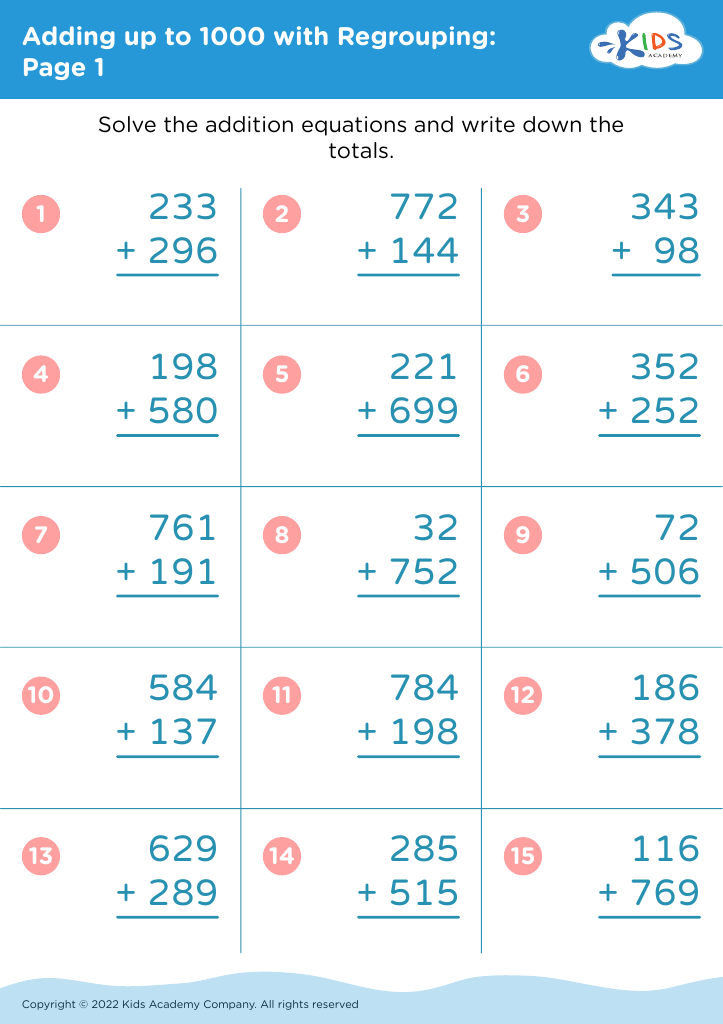
Adding up to 1000 with Regrouping: Page 1
Worksheet
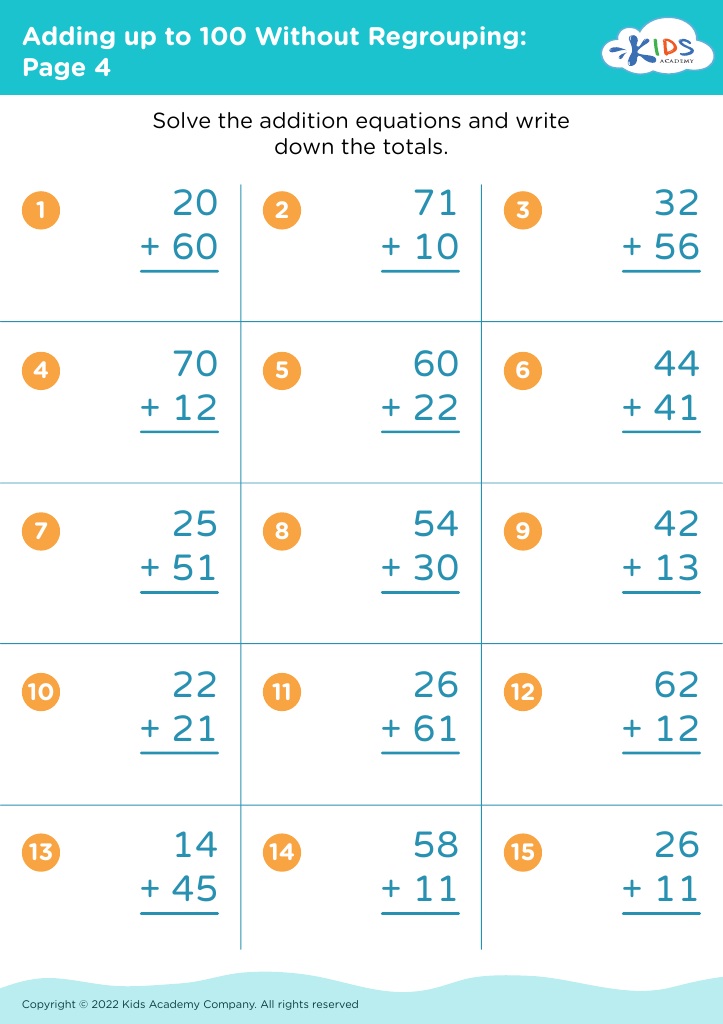
Adding up to 100 Without Regrouping: Page 4
Worksheet
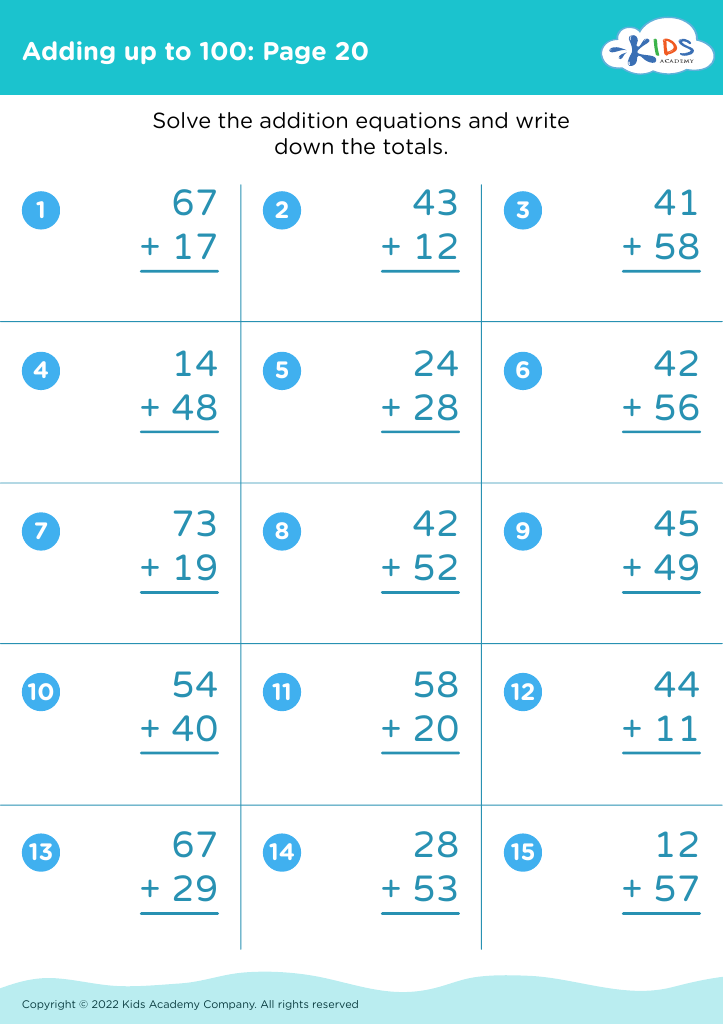
Adding up to 100: Page 20

Adding up to 100: Page 20

Adding up to 100: Page 20
Worksheet
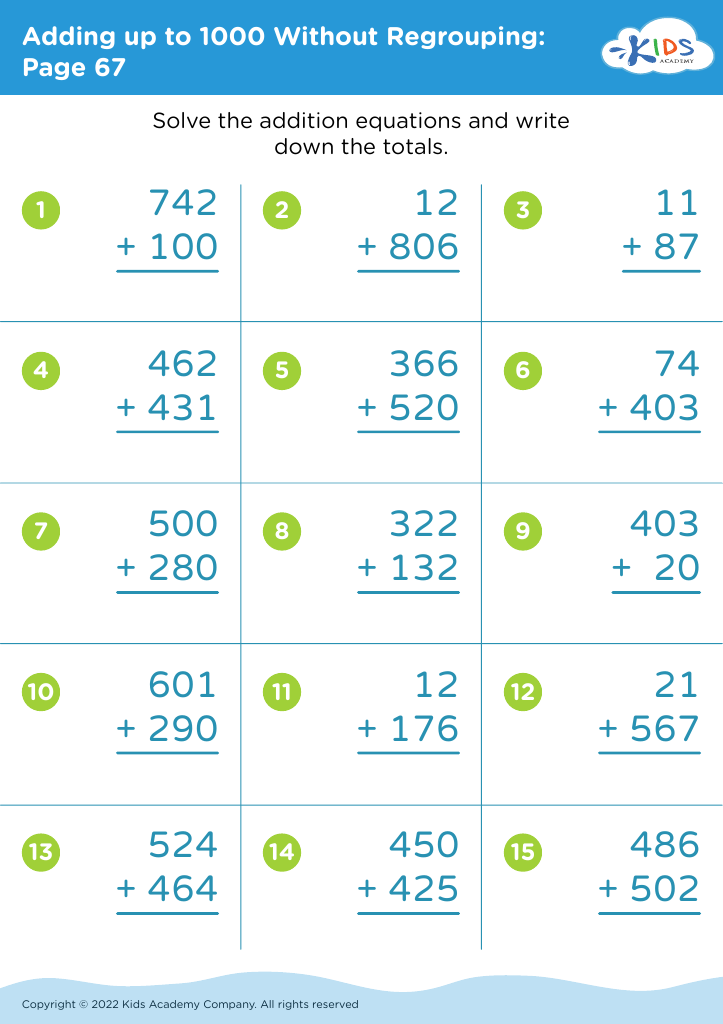
Adding up to 1000 Without Regrouping: Page 67
Worksheet
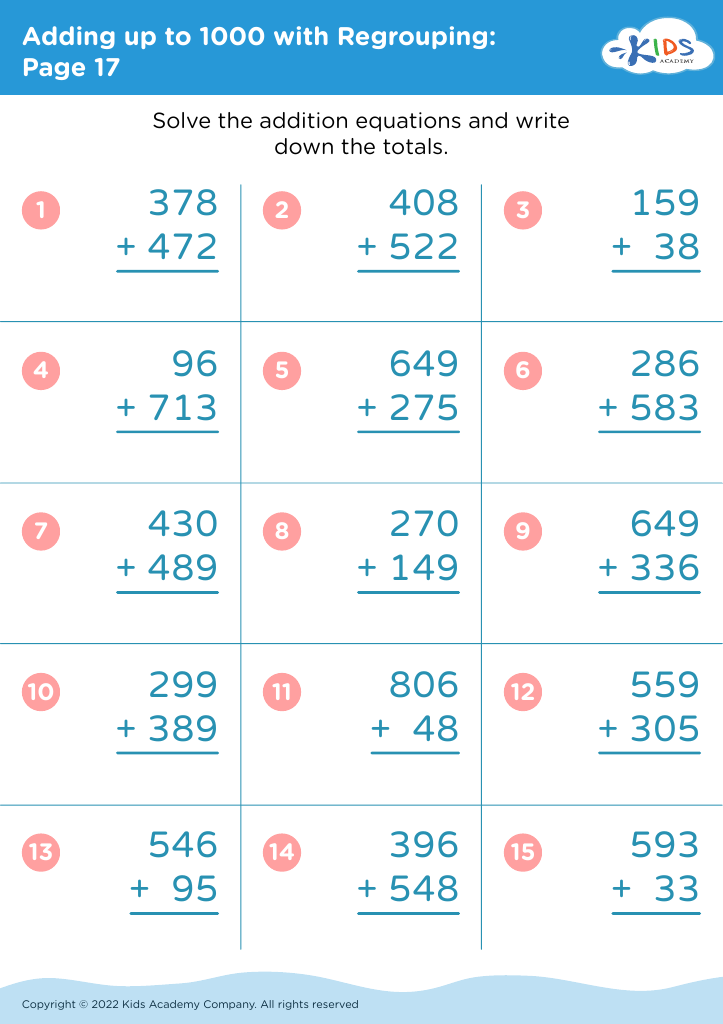
Adding up to 1000 with Regrouping: Page 17
Worksheet
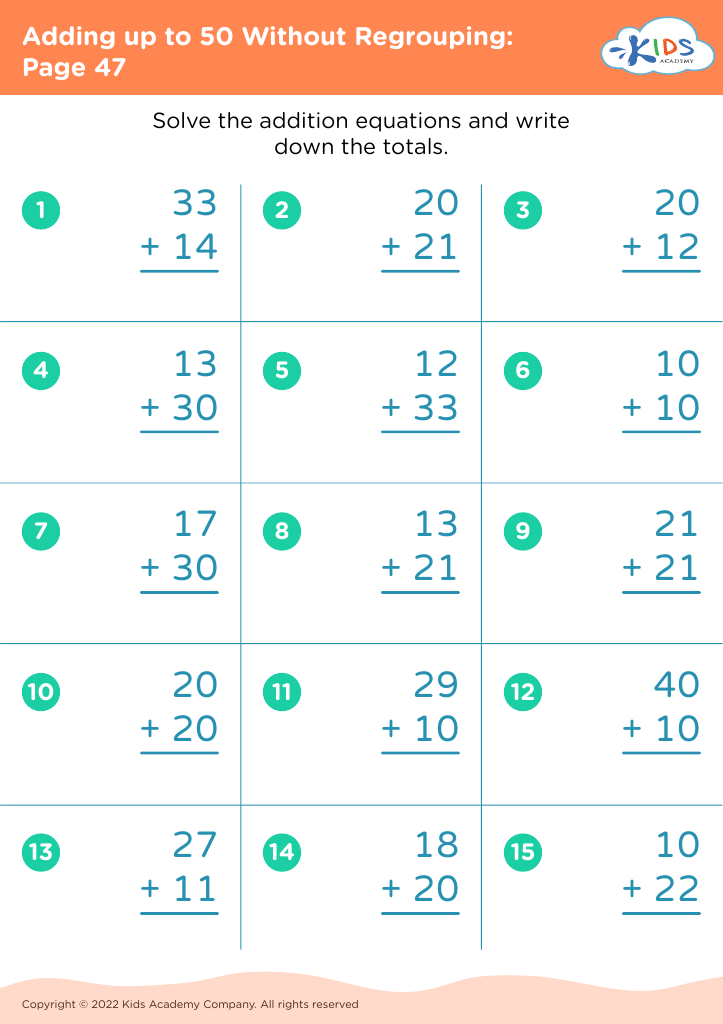
Adding up to 50 Without Regrouping: Page 47
Worksheet
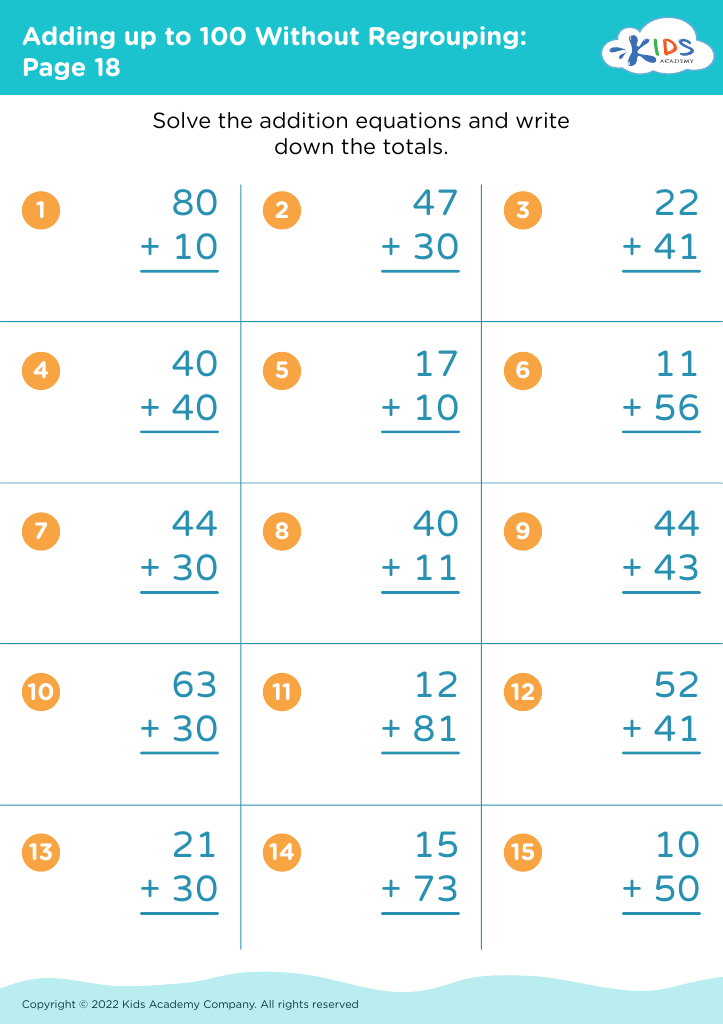
Adding up to 100 Without Regrouping: Page 18
Worksheet
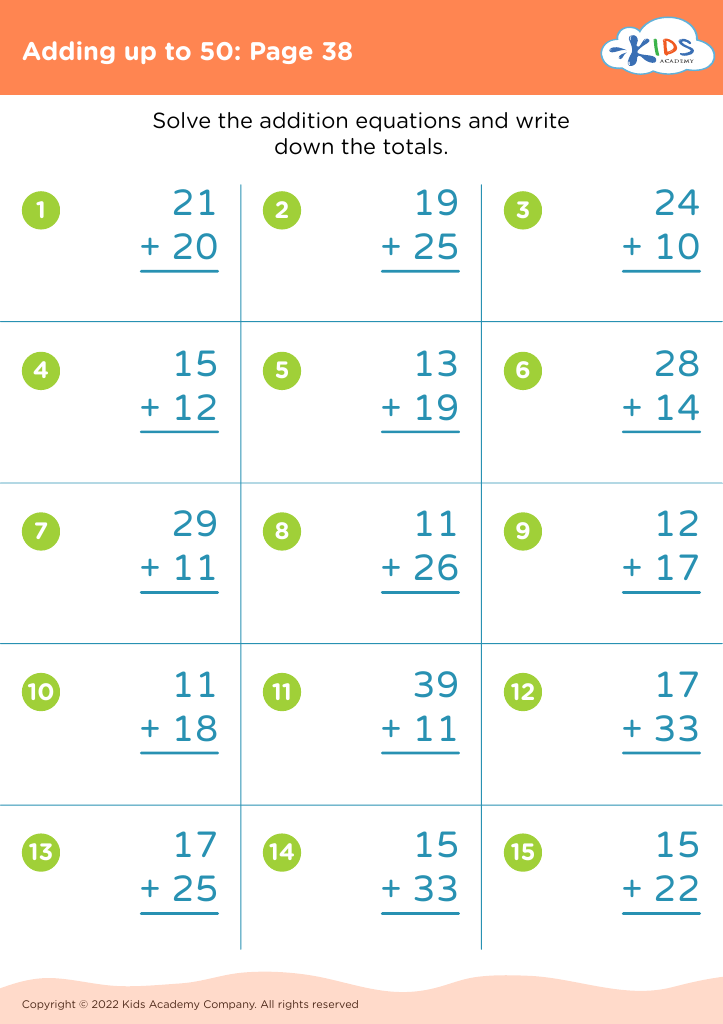
Adding up to 50: Page 38

Adding up to 50: Page 38

Adding up to 50: Page 38
Worksheet
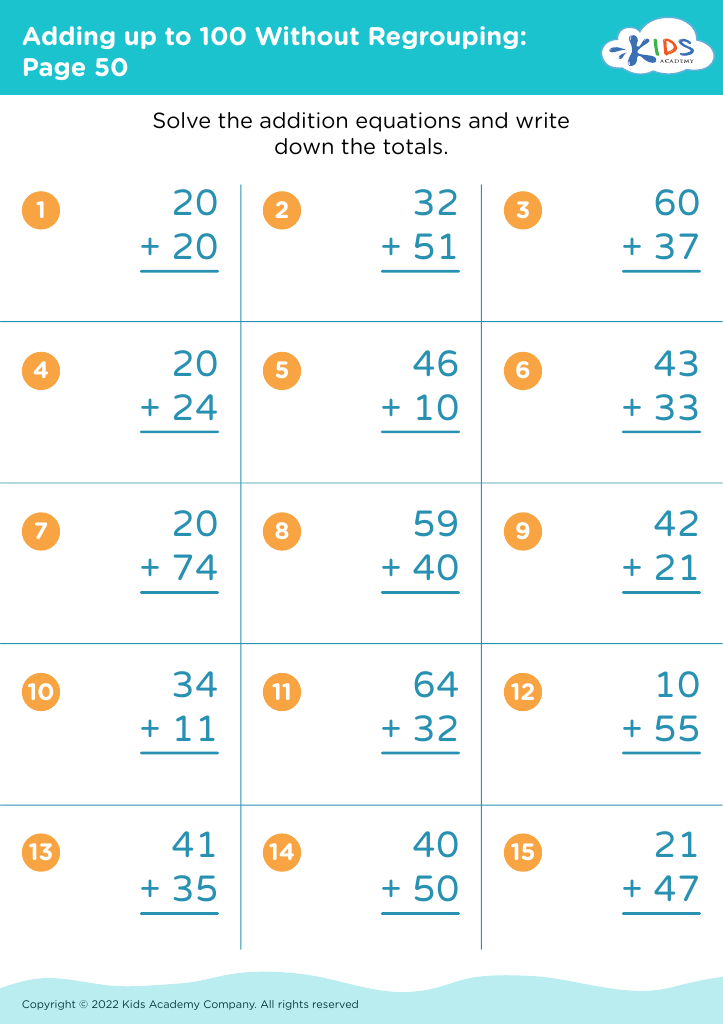
Adding up to 100 Without Regrouping: Page 50
Worksheet
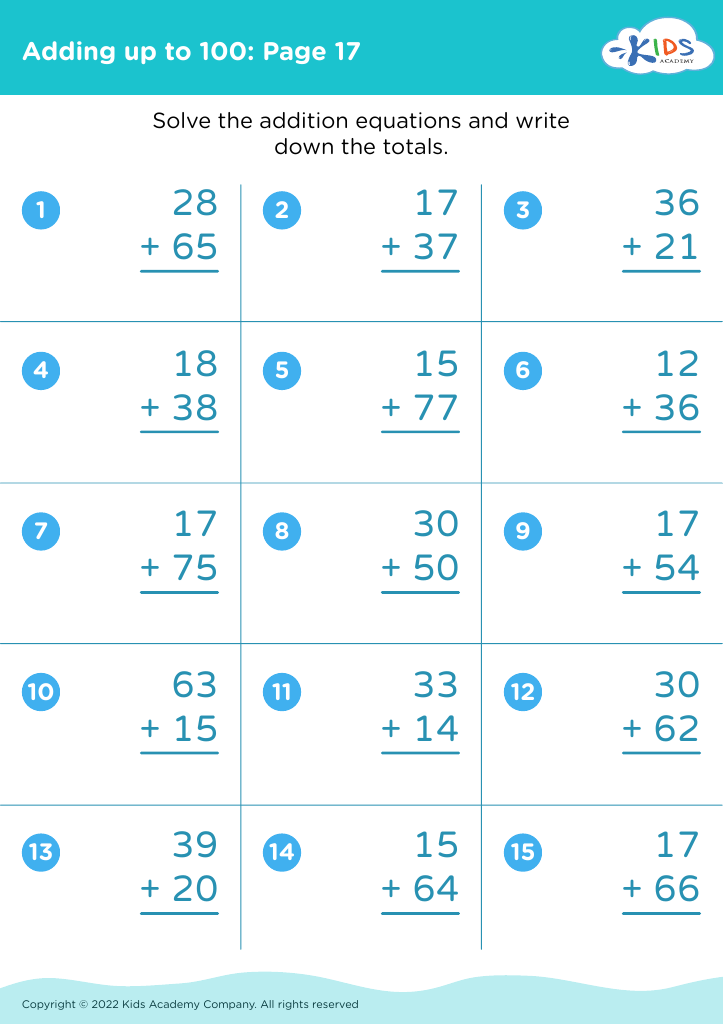
Adding up to 100: Page 17

Adding up to 100: Page 17

Adding up to 100: Page 17
Worksheet
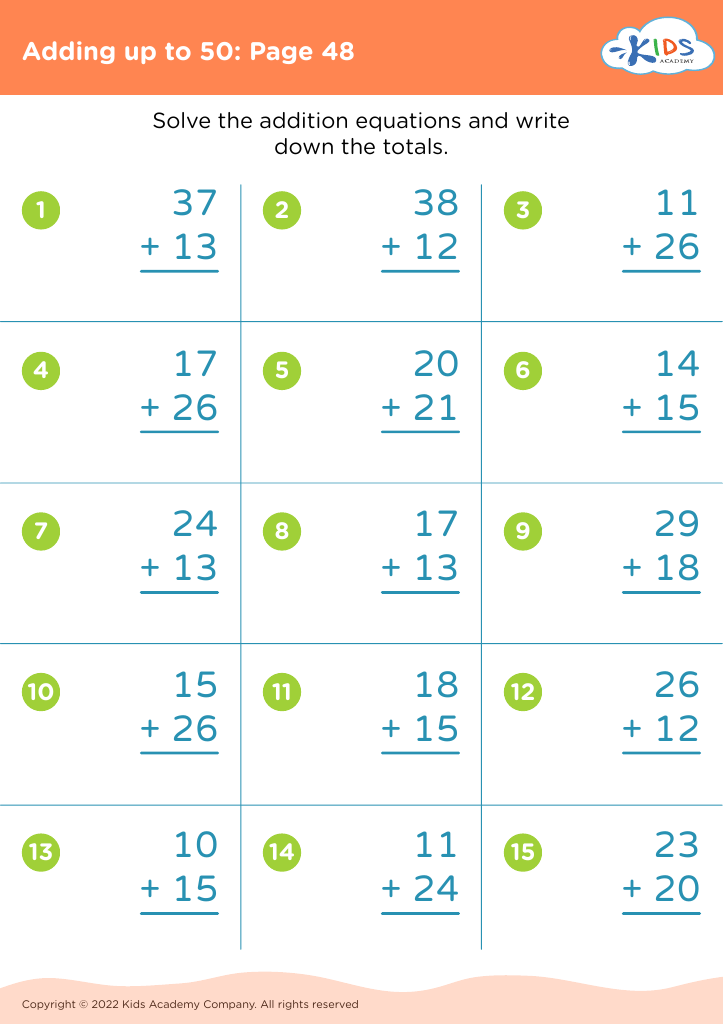
Adding up to 50: Page 48

Adding up to 50: Page 48

Adding up to 50: Page 48
Worksheet
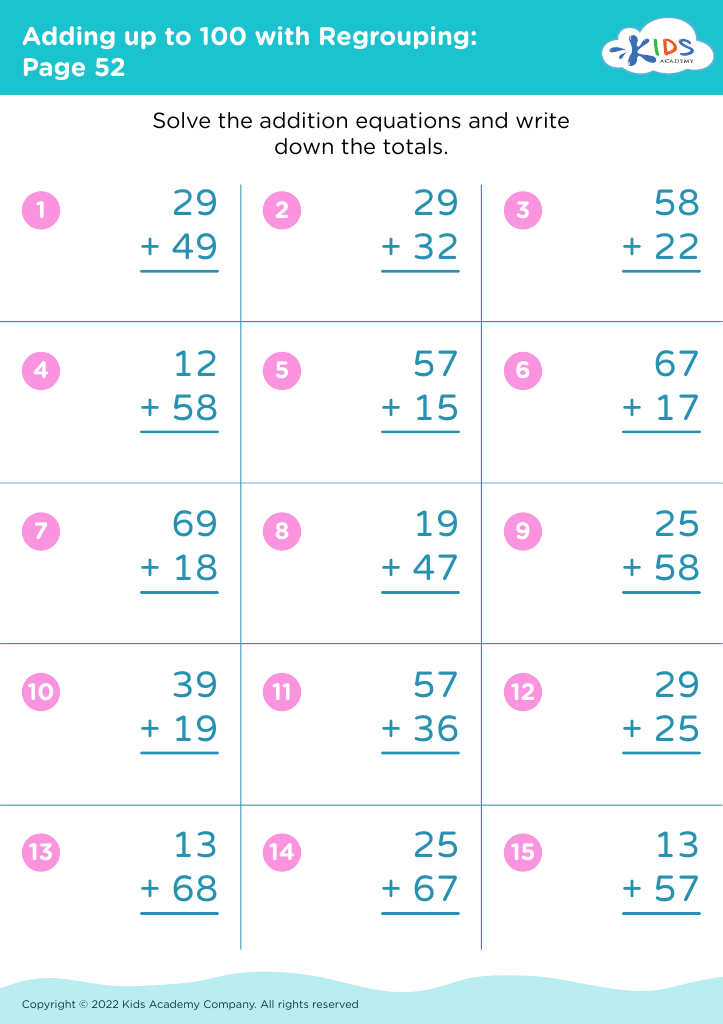
Adding up to 100 with Regrouping: Page 52
Worksheet
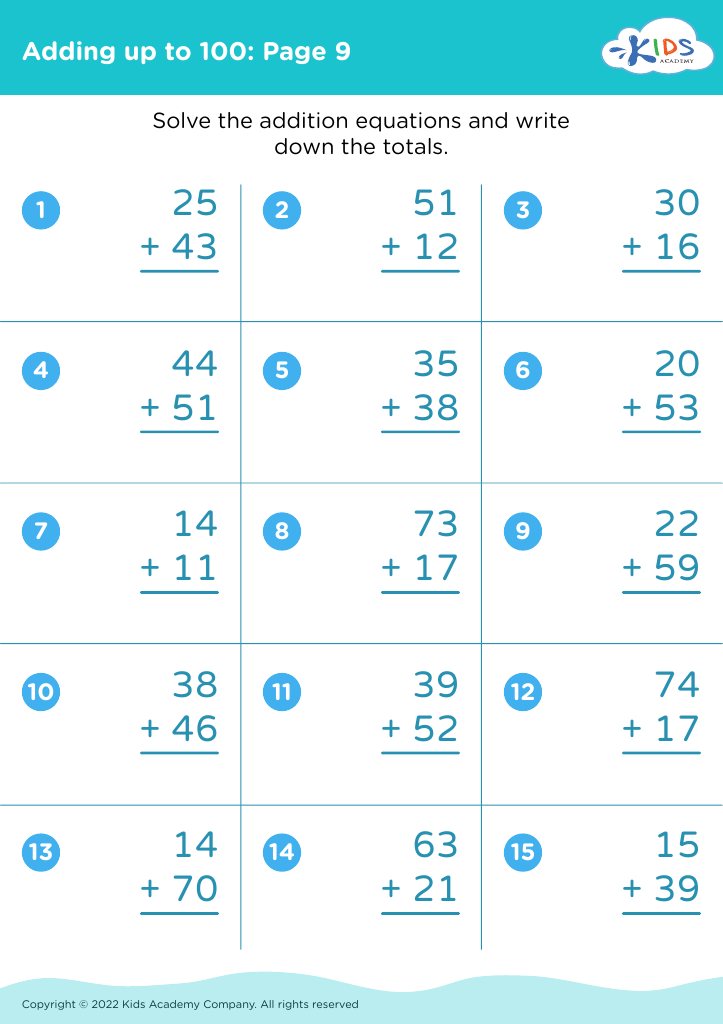
Adding up to 100: Page 9

Adding up to 100: Page 9

Adding up to 100: Page 9
Worksheet
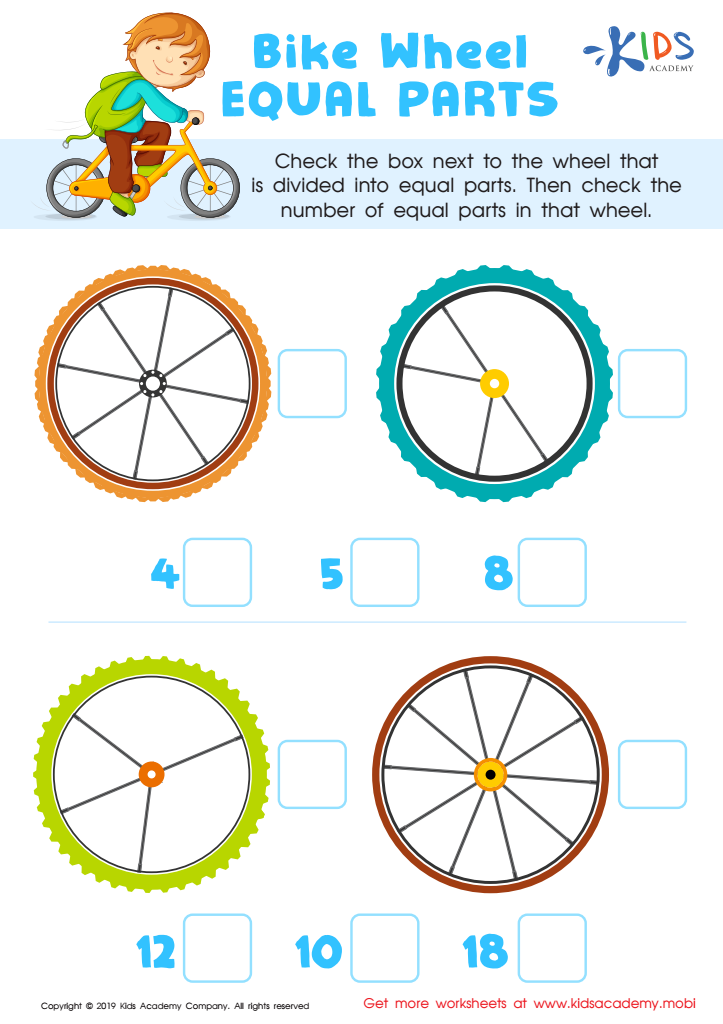
Bike Wheel Equal Parts Worksheet

Bike Wheel Equal Parts Worksheet

Help your kids have fun while they learn! Ask them to identify the object in the picture with four wheels. Guide them to count the spokes, then check the box on the wheel with equal parts. Lastly, check how many equal parts the wheel is divided into.
Bike Wheel Equal Parts Worksheet

Worksheet
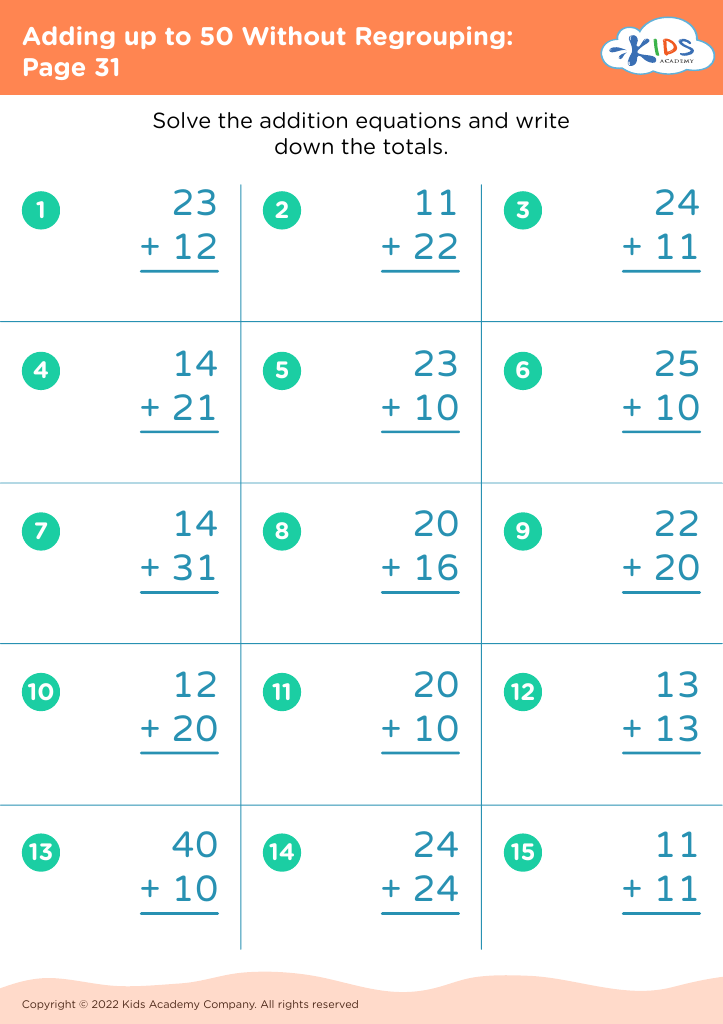
Adding up to 50 Without Regrouping: Page 31
Worksheet


Comparing fractions is a foundational skill critical for young learners aged 7-9, as it strengthens their understanding of basic math concepts. At this age, children are transitioning from recognizing simple fractions to manipulating and comparing them, which lays the groundwork for more advanced mathematical operations.

Parents and teachers should care about this subject because mastering fractional comparison fosters critical thinking and problem-solving skills. When children learn to compare fractions, they not only grasp the size and value of different quantities but also develop logical reasoning as they identify relationships between numbers.

Understanding fractions is essential for everyday situations, such as cooking or shopping, where measurement and division are key. Moreover, this skill prepares students for future topics, such as adding, subtracting, and multiplying fractions, thus ensuring a solid foundation for continued success in mathematics.

Additionally, proficiency in comparing fractions can build confidence in young learners, making them more engaged with math. Encouraging a positive attitude toward math from an early age creates lifelong learners who see math as a valuable and enjoyable skill. Ultimately, recognizing the importance of comparing fractions helps parents and teachers support children in becoming competent and confident mathematicians.