
Constellation identification Worksheets for Ages 7-9
3 filtered results
Difficulty Level
Grade
Age
-
From - To
Subject
Activity
Standards
Explore the mysteries of the night sky with our Constellation Identification Worksheets for ages 7-9! Designed to spark curiosity and enhance learning, these printable worksheets introduce young stargazers to the wonders of our galaxy. Each activity is carefully crafted to develop children's observation and critical thinking skills. Fun puzzles, engaging images, and vivid diagrams guide kids in recognizing and naming major constellations such as Orion, Ursa Major, and Cassiopeia. Perfect for home or classroom use, our worksheets make learning about the stars an exciting adventure. Inspire a lifelong love for astronomy in your child today!
Favorites
With answer key
Interactive
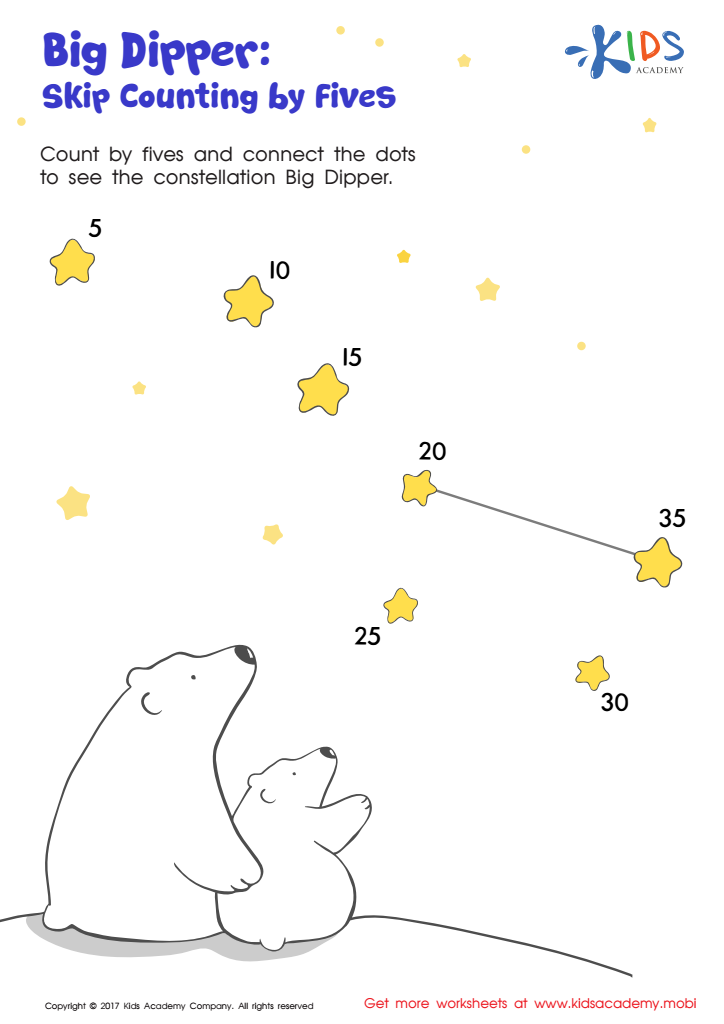
 Assign to My Students
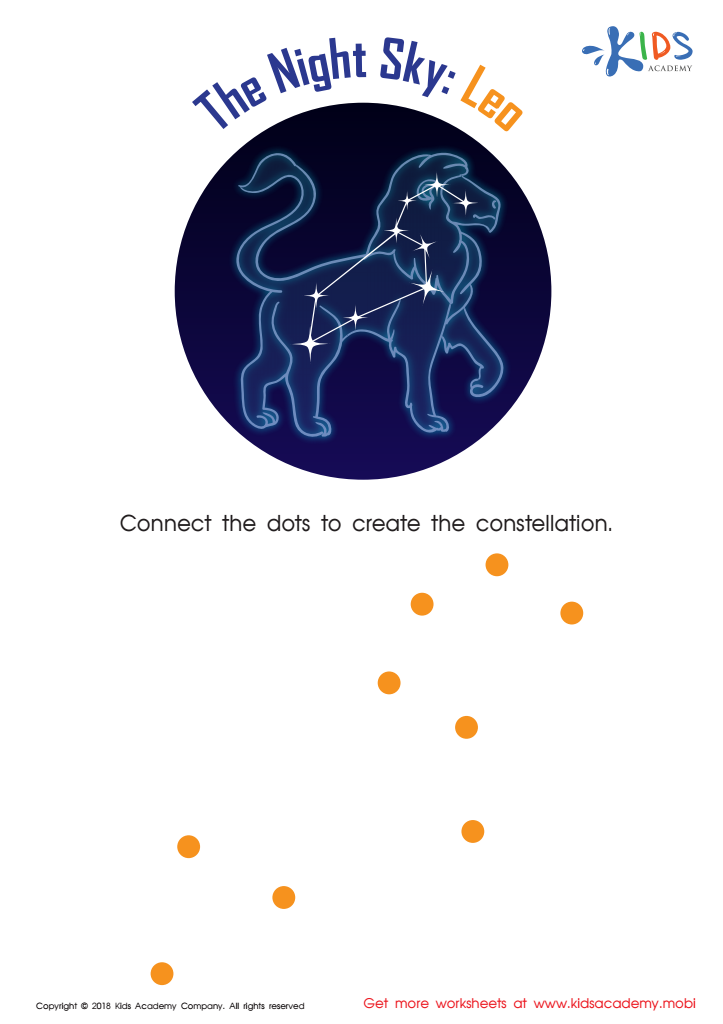
The Night Sky: Leo Worksheet
Let your kids explore the wonders of the stars with this fun worksheet! They'll connect the dots to create the constellation Leo. Night gazing instruments, a telescope or this printout can help your kids learn about constellations and horoscopes. Download the worksheet and let the star watching begin!
The Night Sky: Leo Worksheet
Worksheet
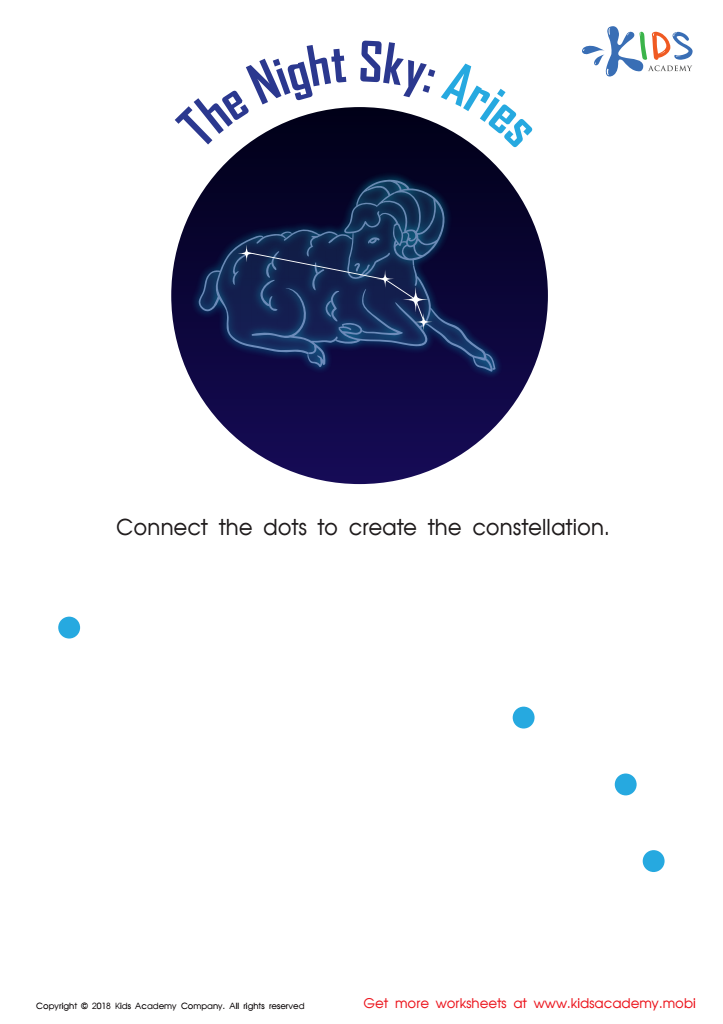
The Night Sky: Aries Worksheet
Does your child know constellations and horoscope? If you've got them interested in horoscope readings and star gazing, the Aries constellation in the pdf should be familiar. Have them look at the picture and identify it. If they can't, tell them it's Aries. Then, help them connect the dots to form the constellation.
The Night Sky: Aries Worksheet
Worksheet
Join Kids Academy for Free
Who is primarily going to use this learning content?








Understanding constellation identification offers numerous educational and developmental advantages for children aged 7-9, making it valuable for parents and teachers to engage in teaching this topic. Constellations serve as an excellent introduction to astronomy, sparking curiosity about the universe. By learning the stars, children expand their knowledge beyond Earth, fostering a sense of wonder and engaging them in scientific thinking.
The process of identifying constellations enhances important cognitive skills. It requires pattern recognition, linking the dots in the sky to form images, boosting children's spatial reasoning and visual memory skills. Additionally, it provides a great opportunity for storytelling. Many constellations are tied to myths and legends from various cultures, promoting an interest in literature and expanding cultural awareness.
Hands-on, practical experiences, like stargazing, also enrich children's learning. These activities can improve patience, attention to detail, and even provide calming, screen-free time—with the added possibility of family bonding during group stargazing sessions. Therefore, introducing children aged 7-9 to the wonders of constellations is not only educational but also nurtures well-rounded development and a lifelong appreciation for the natural world.








