
Enhancing analytical thinking Worksheets for Ages 7-9
3 filtered results
Difficulty Level
Grade
Age
-
From - To
Subject
Activity
Standards
Discover our engaging worksheets designed to enhance analytical thinking for children aged 7-9! These thoughtfully crafted activities encourage young learners to develop critical thinking skills through puzzles, logical reasoning challenges, and fun problem-solving tasks. Our worksheets aim to stimulate curiosity and creativity, supporting cognitive growth while keeping learning enjoyable. Ideal for home or classroom use, these resources help children analyze information, identify patterns, and make connections, building a strong foundation for future academic success. Boost your child’s analytical skills and inspire a lifelong love for learning with our interactive and educational worksheets! Explore the collection today!
Favorites
With answer key
Interactive
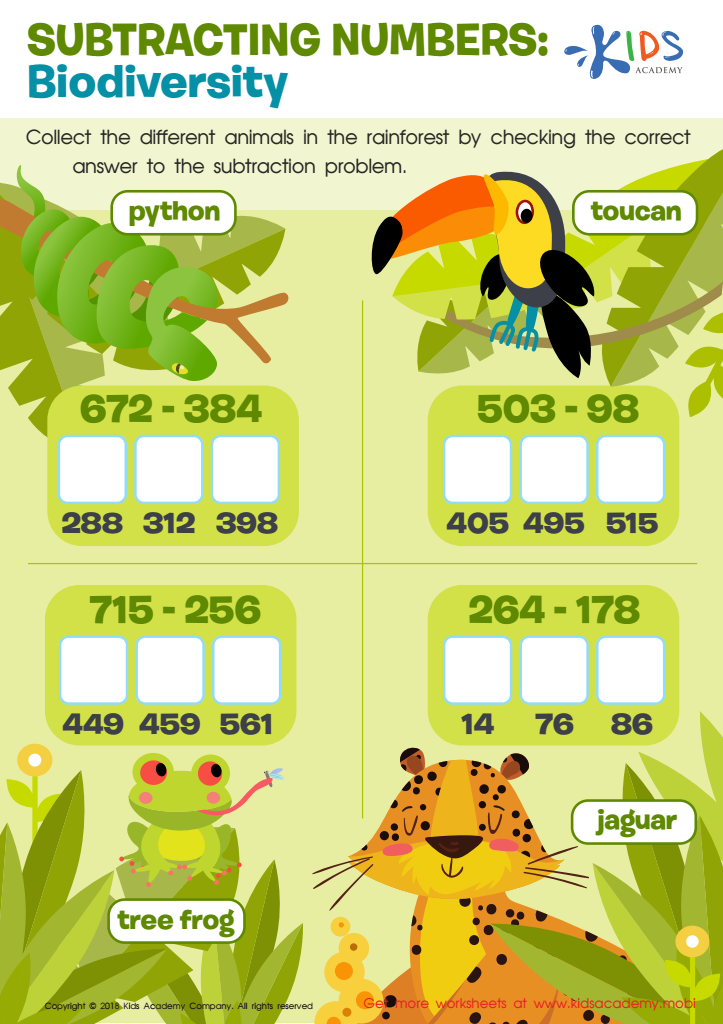
Subtracting Numbers: Biodiversity Worksheet
Engage students in simple tasks to make subtraction enjoyable and easier to understand. Use worksheets with colorful print and enjoyable concepts. Ask students to identify the animals and read their names. Check the correct answer to the subtraction problem to help them collect the animals in the rainforest.
 Assign to My Students
Subtracting Numbers: Biodiversity Worksheet
Worksheet
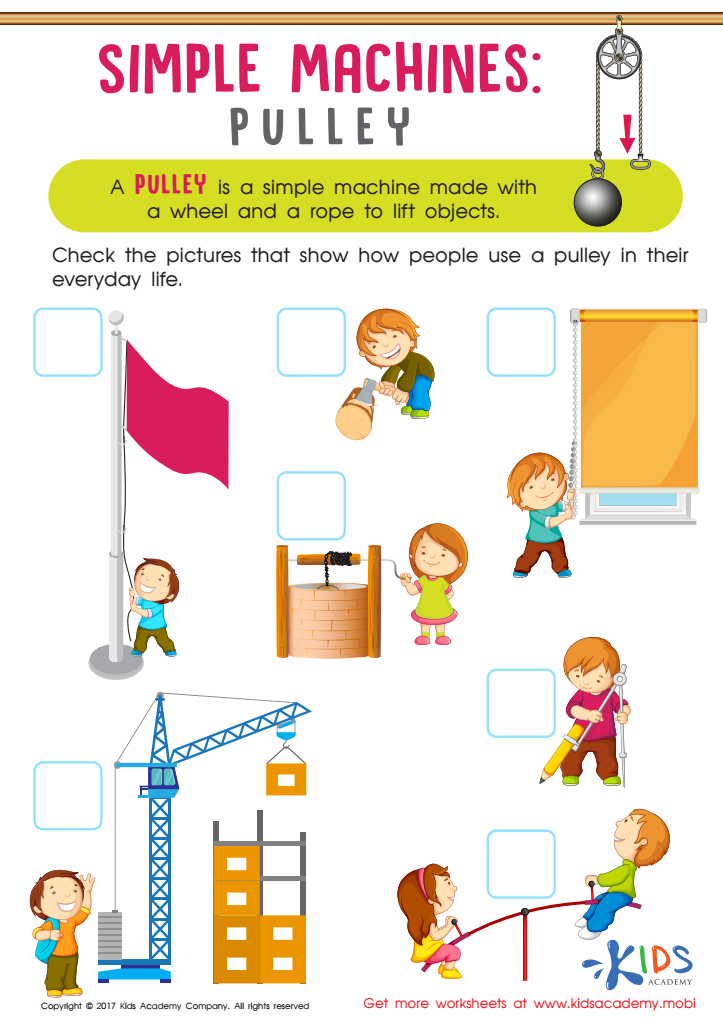
Simple Machines Pulley Worksheet
Pulleys make everyday life easier, from flag poles to elevators. This worksheet helps kids recognize and appreciate how pulleys simplify our lives. They'll learn about the many practical uses for these simple rope and wheel systems.
Simple Machines Pulley Worksheet
Worksheet
Join Kids Academy for Free
Who is primarily going to use this learning content?








Enhancing analytical thinking in children aged 7-9 is vital for their cognitive development and future success. At this age, children are beginning to engage with more complex concepts and can benefit greatly from skills that encourage critical reasoning and problem-solving. By fostering analytical thinking, parents and teachers equip children with the tools to dissect information, evaluate various options, and make informed decisions.
This stage of development is key, as children start to question their surroundings and express curiosity. Cultivating analytical skills not only supports academic performance across all subjects but also aids in self-confidence and independence. Skills such as hypothesizing, comparing, and categorizing set a solid foundation for effective learning. Furthermore, enhancing these skills helps children navigate everyday challenges, understanding cause and effect relationships, and developing strategic thinking.
Moreover, a strong analytical mindset encourages creativity, as children learn to approach problems from diverse angles. This skill set becomes increasingly important in a world that values innovation and adaptability. Involving parents and teachers in this developmental process creates a collaborative effort, reinforcing learning both at home and in the classroom. Ultimately, prioritizing analytical thinking helps nurture thoughtful, capable individuals prepared to engage meaningfully with the world around them.








