Event sequencing Worksheets for Ages 7-9
3 filtered results
-
From - To
Explore our engaging Event Sequencing Worksheets designed for children ages 7-9! These worksheets help young learners develop critical thinking skills and narrative comprehension by organizing events in the correct order. With a variety of scenarios and colorful illustrations, your child will love practicing this essential skill while enhancing their ability to understand story progression. Perfect for classroom use or at-home learning, our worksheets promote creativity and enhance cognitive skills through fun activities. Help your child master sequencing with our thoughtfully crafted resources that foster a love for learning and storytelling! Visit our website to download printable worksheets today!
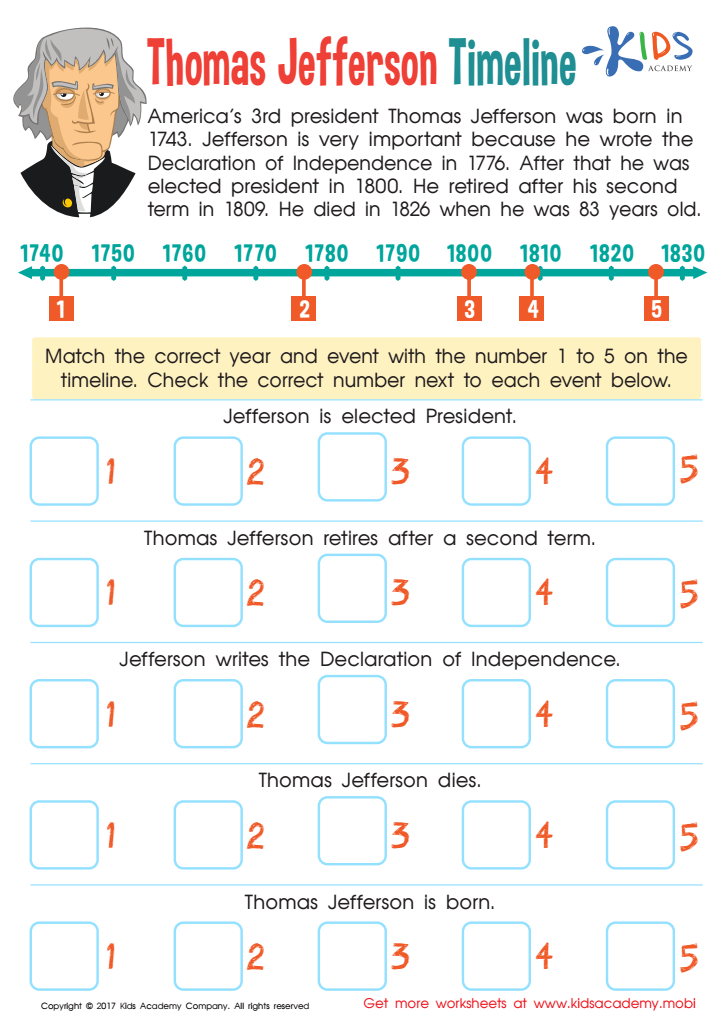
Thomas Jefferson Timeline Worksheet
 Assign to My Students
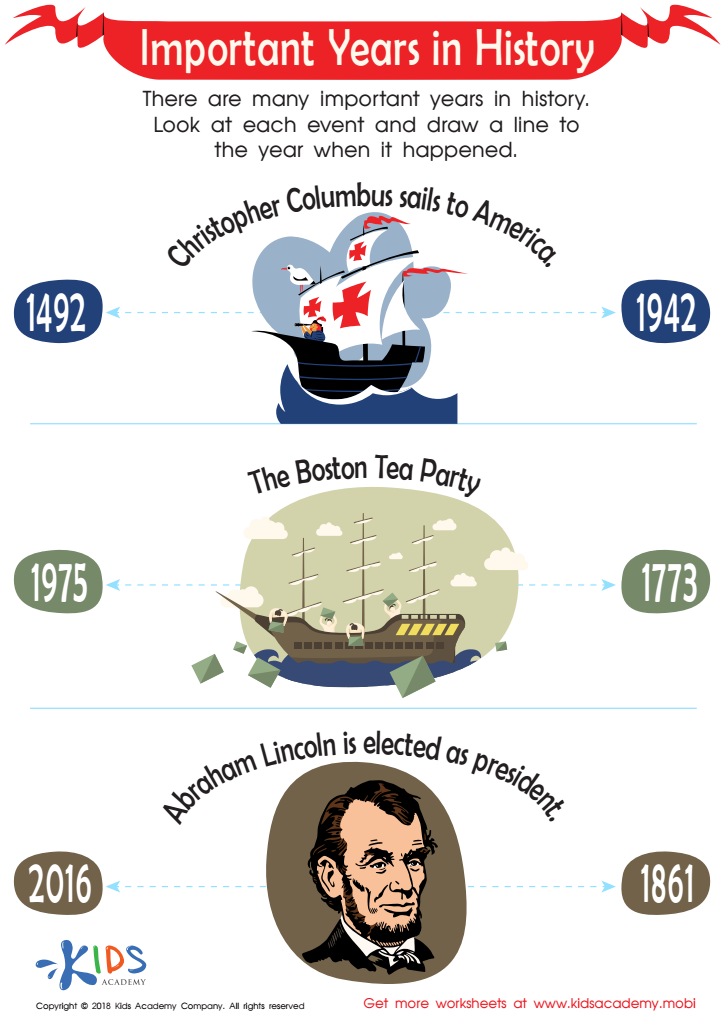
Important Years in History Worksheet
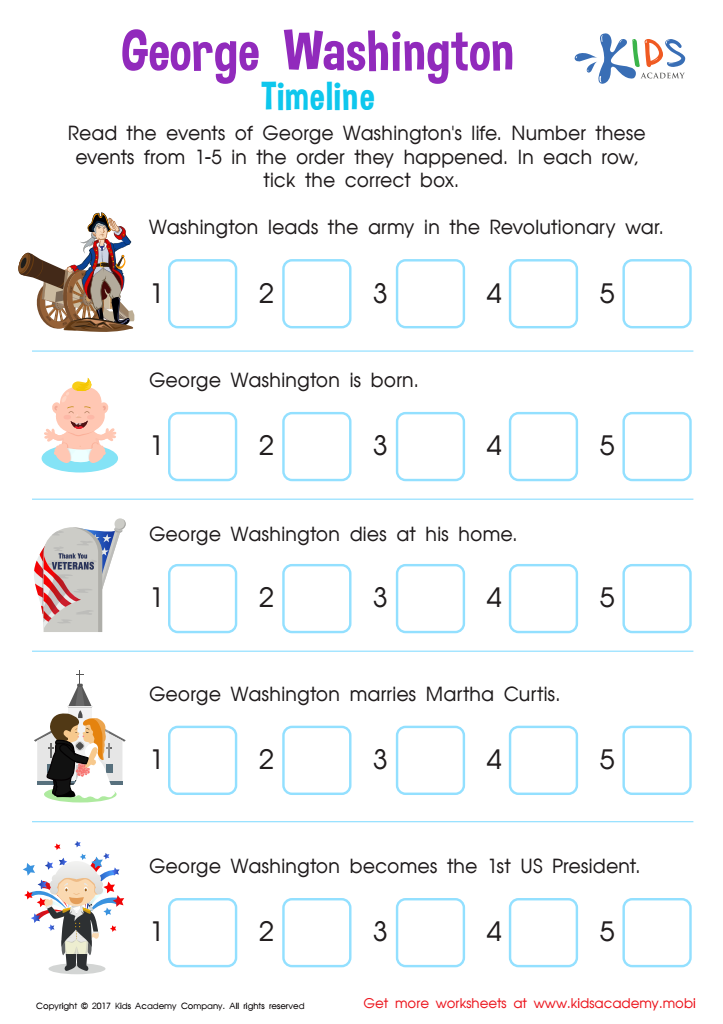
George Washington Timeline Worksheet






Event sequencing is a vital skill for children aged 7-9 as it lays the foundation for effective comprehension and communication. At this age, children are transitioning from basic reading and writing to more complex stories and ideas. Understanding the order of events enhances their ability to follow narratives, make predictions, and summarize texts, which are crucial skills for academic success.
Parents and teachers should care about event sequencing because it promotes critical thinking and problem-solving abilities. Children learn to identify the cause-and-effect relationships between actions, allowing them to better analyze situations both in stories and in real life. Moreover, mastering event sequencing helps improve writing abilities; children can create clearer, more organized stories and convey their thoughts coherently.
Additionally, fostering strong sequencing skills supports social-emotional learning. Children can better understand social narratives and navigate their interactions, recognizing the sequence of social cues and responses. This awareness aids in their emotional intelligence and empathy.
By prioritizing event sequencing, parents and teachers equip children with essential life skills—improving literacy, enhancing cognitive skills, and building emotional understanding—essential tools for their growth, both in and out of the classroom.








