Fine motor development Worksheets for Ages 7-9
5 filtered results
-
From - To
Our Fine Motor Development Worksheets for Ages 7-9 are expertly designed to enhance coordination, dexterity, and muscle control in young learners. Each fun and engaging activity aims to fine-tune the small muscle movements in hands and fingers, crucial for tasks like writing, cutting, and dressing. With a variety of exercises including tracing, drawing, and crafting, these worksheets help improve precision, control, and hand-eye coordination. Ideal for at-home practice or classroom use, our worksheets support your child's developmental journey, making learning both effective and enjoyable. Empower your child to achieve motor skill milestones with our comprehensive set of printable resources!
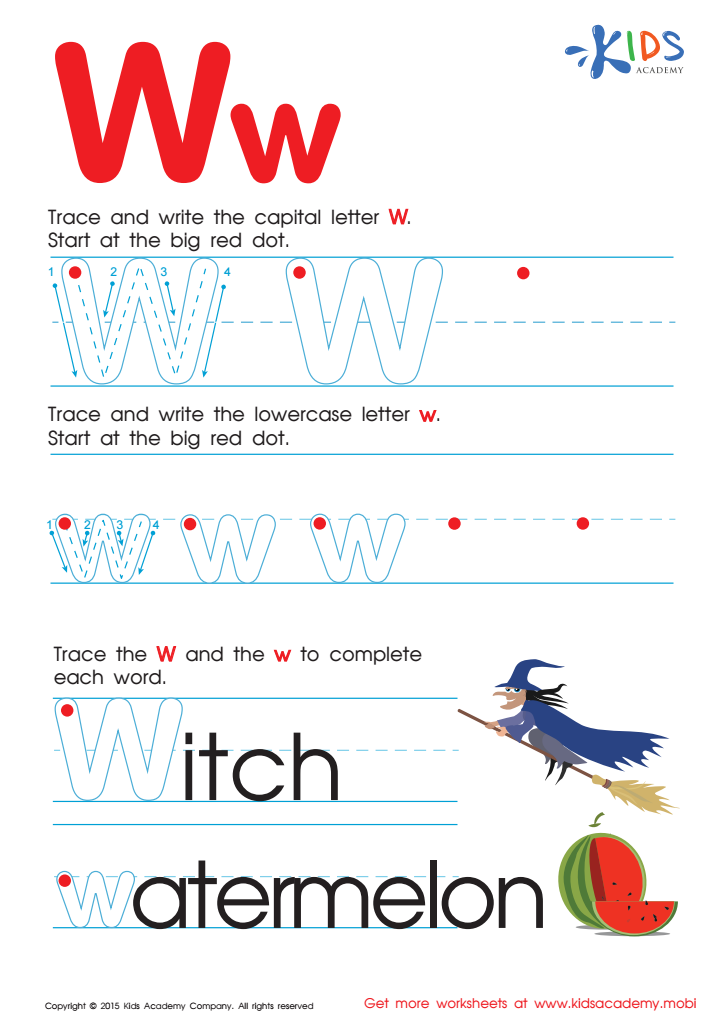
Letter W Tracing Page
 Assign to My Students
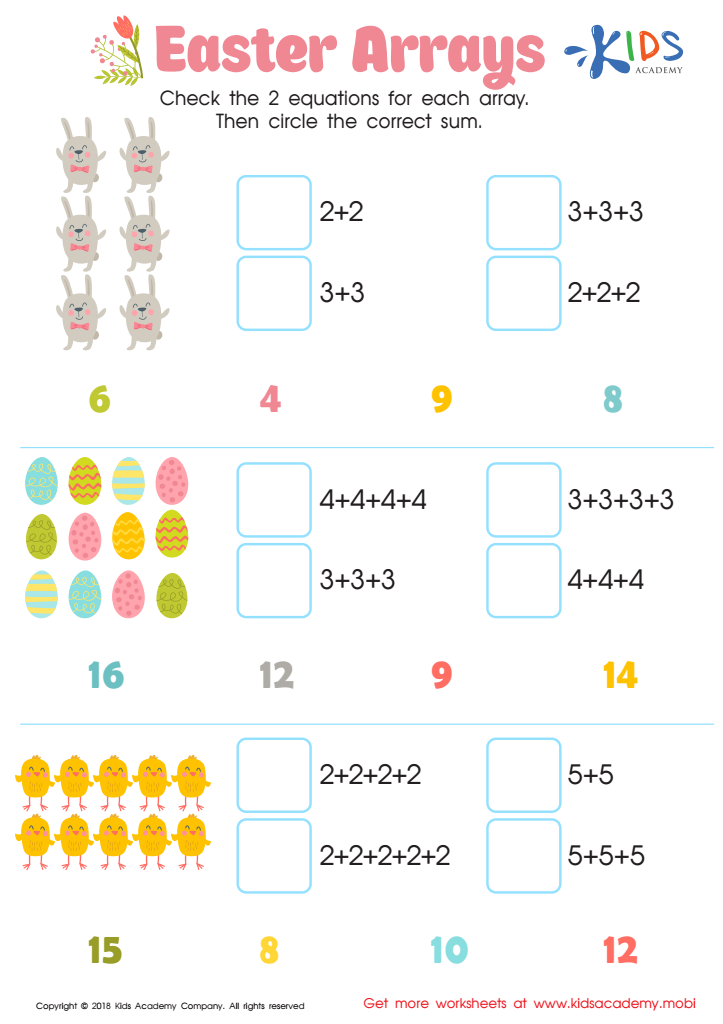
Easter Arrays Worksheet

Check Bingo Worksheet
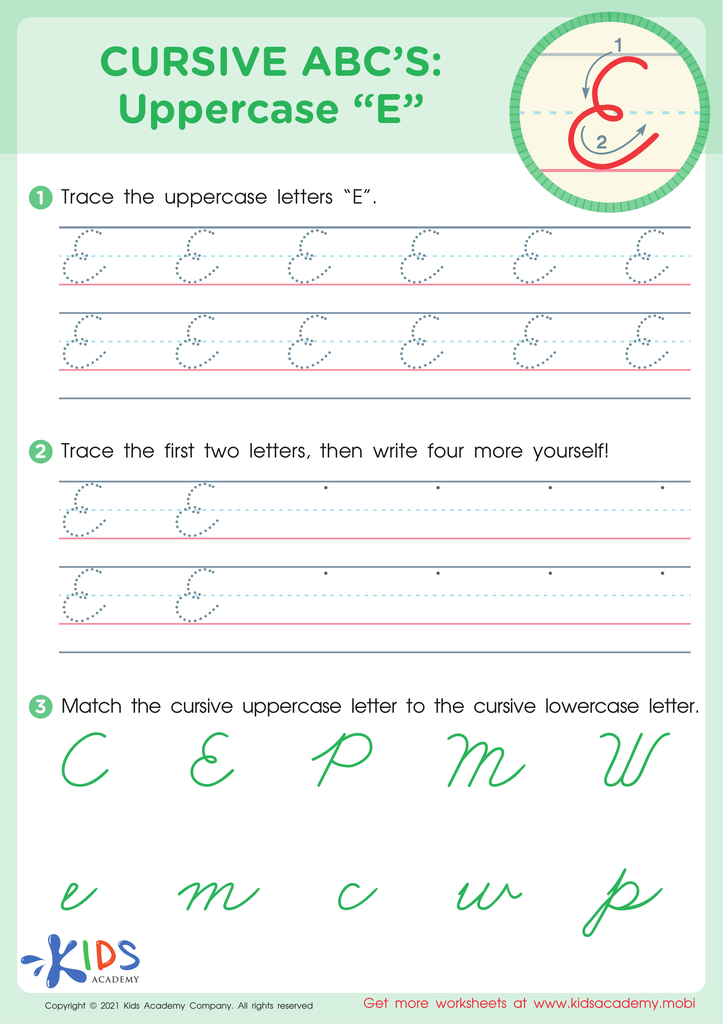
Cursive ABCs: Uppercase E









Fine motor development plays a critical role in a child's overall growth and their ability to perform everyday tasks efficiently. For children aged 7-9, honing these skills is crucial for several reasons.
Firstly, fine motor skills are directly linked to academic success. At this stage, children begin engaging in more complex writing and drawing activities. Proficient pencil grip, control, and hand-eye coordination are necessary for legible handwriting, detailed artwork, and even typing on a keyboard. Struggles in these areas can lead to frustration and lower academic performance, impacting self-esteem and motivation.
Secondly, fine motor development promotes independence. Everyday activities, such as buttoning shirts, tying shoelaces, and using utensils, all rely on these skills. Mastery of these tasks fosters independence, encouraging children to take care of their personal needs confidently. This independence bolsters self-awareness and responsibility, essential traits as they navigate more complex social and academic environments.
Lastly, refined fine motor skills enhance cognitive development. Engaging in activities like puzzles, crafts, and building models requires planning, problem-solving, and sequential thinking. These cognitive processes are foundational for higher-level thinking and effective learning strategies.
In conclusion, both parents and teachers should prioritize fine motor development to support academic achievement, foster independence, and enhance cognitive abilities, ensuring a well-rounded growth trajectory for children aged 7-9.








