Identify colors Worksheets for Ages 7-9
3 filtered results
-
From - To
Help your child enhance their color identification skills with our engaging "Identify Colors Worksheets" perfect for ages 7-9! Designed to foster creativity and promote learning, these worksheets provide a variety of fun activities that captivate young learners. Children will explore the world of colors through vibrant images, interactive exercises, and challenging puzzles. Our resources not only reinforce color recognition but also support cognitive development and critical thinking. With easy access to printable worksheets, you can mix learning with play, ensuring your child enjoys every step of their educational journey. Download now and watch their confidence flourish as they master colors!
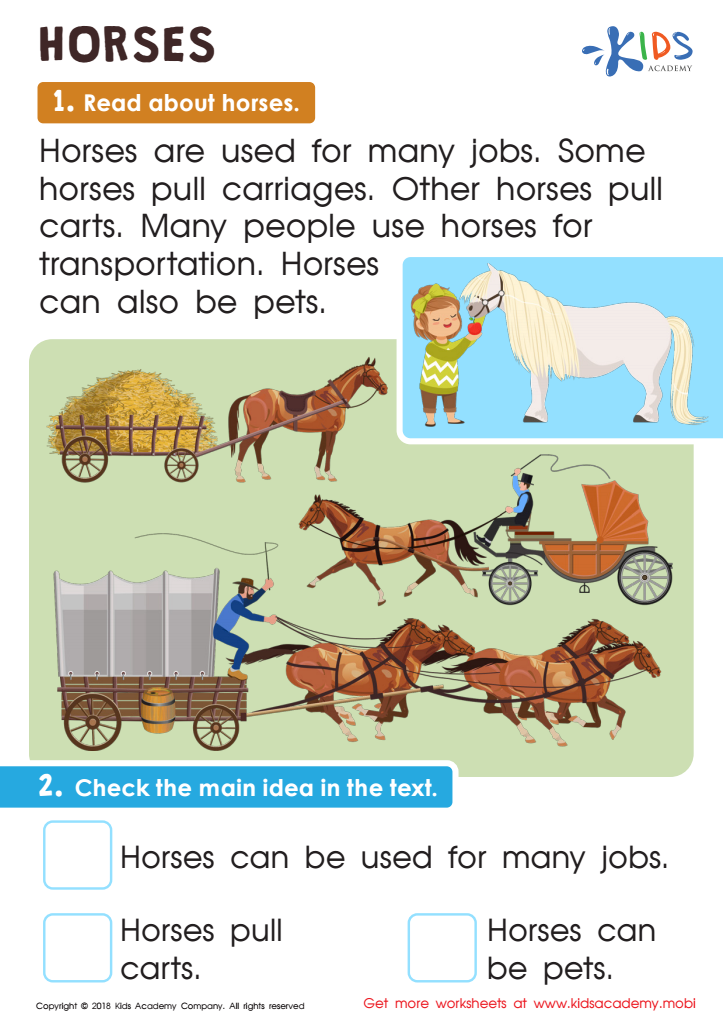
Horses Worksheet
 Assign to My Students








Understanding colors is crucial for children ages 7-9, as it plays a significant role in their cognitive and emotional development. At this age, children are refining their observation skills and developing critical thinking. Recognizing and identifying colors enhances their ability to categorize and make sense of the world around them, fostering intellectual growth.
Moreover, colors are integral to communication. They help children express their feelings and experiences, allowing for better emotional intelligence. For instance, a child may describe a bright yellow sun as happy and cheerful or a gloomy gray day as sad. Engaging with colors in creative projects such as art or storytelling can boost a child's confidence and encourage self-expression.
Additionally, color identification is important in education and daily life. It aids in understanding subjects such as art, science, and even mathematics, where color-coded information systems are common. As children learn to label and explore color variations, they enhance their vocabulary and descriptive skills.
Parents and teachers play a vital role in this learning process. By encouraging exploration and discussion of colors in various contexts—like nature, art, or clothing—they support children's overall development, fostering a richer, more engaging learning environment. This attention to color helps children thrive academically and socially.








