
Identify numbers Worksheets for Ages 7-9
3 filtered results
Difficulty Level
Grade
Age
-
From - To
Subject
Activity
Standards
Explore our engaging "Identify Numbers Worksheets" tailored for children ages 7-9! These interactive worksheets are designed to enhance number recognition and understanding, helping young learners master essential math skills in a fun and entertaining way. With a variety of activities, including number matching, counting exercises, and visual discrimination tasks, students will develop confidence in identifying numbers both in writing and visually. Ideal for classroom use or at-home learning, these worksheets support curriculum standards while making learning enjoyable. Access a selection of printable worksheets and unleash your child's mathematical potential today! Perfect for reinforcing important foundational skills in a playful environment.
Favorites
With answer key
Interactive
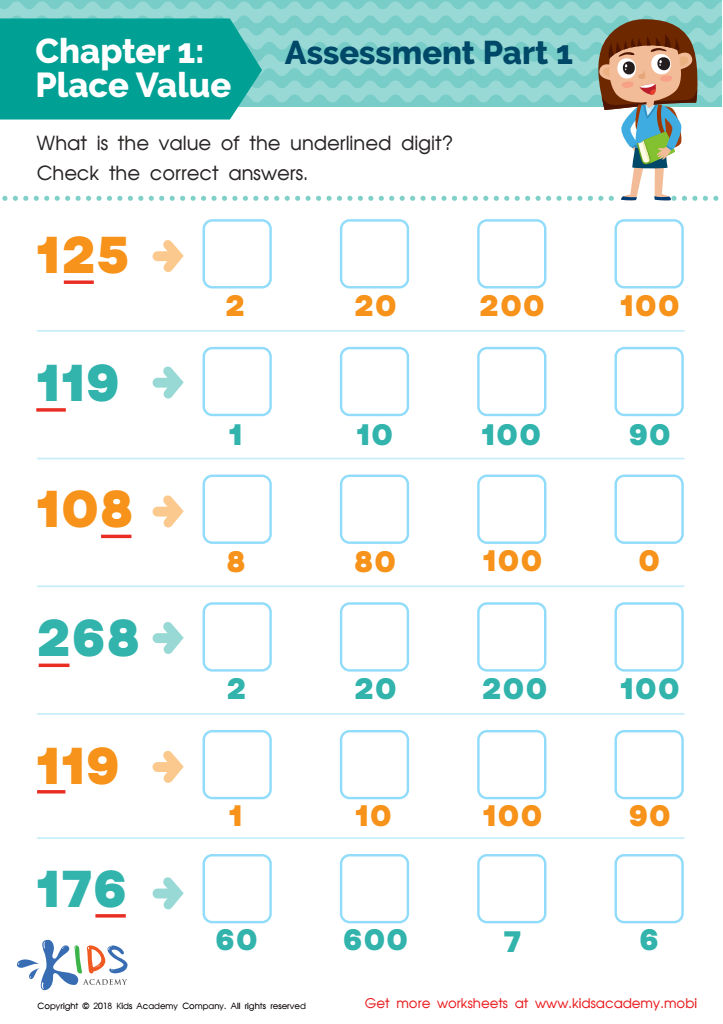
Place Value: Chapter 1 Worksheet
Check your kid's place value understanding with this assessment worksheet. It features 6 questions with one digit underlined for your child to determine the correct value of. Get the download and see if they can correctly choose the answer from the options given. It's a great way to test progress and keep their minds sharp!
 Assign to My Students
Place Value: Chapter 1 Worksheet
Worksheet
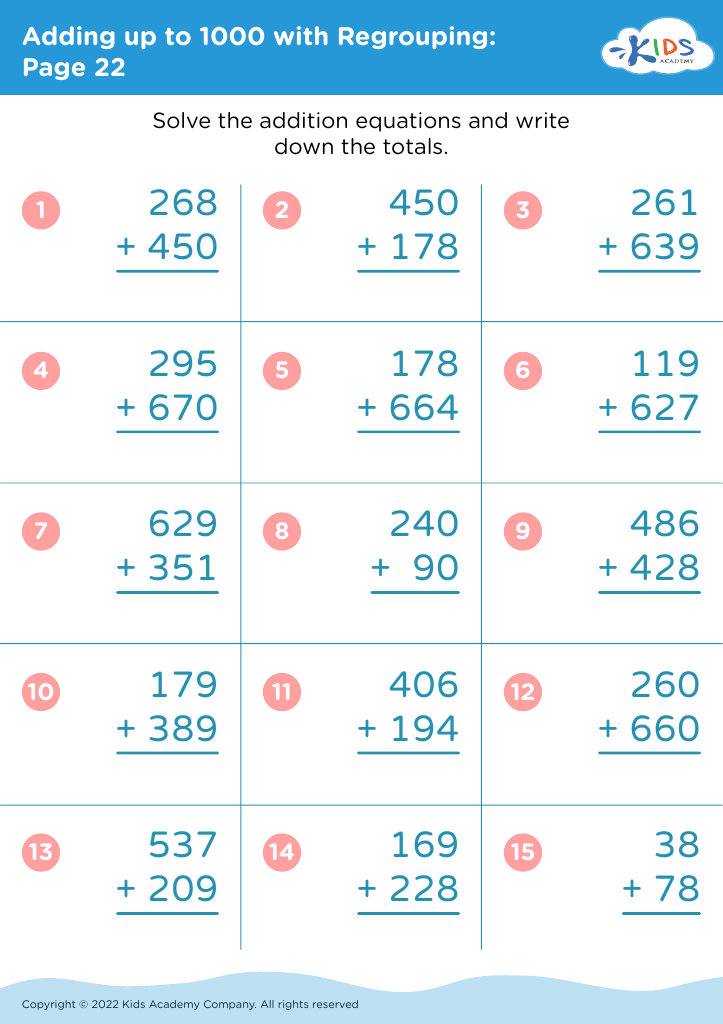
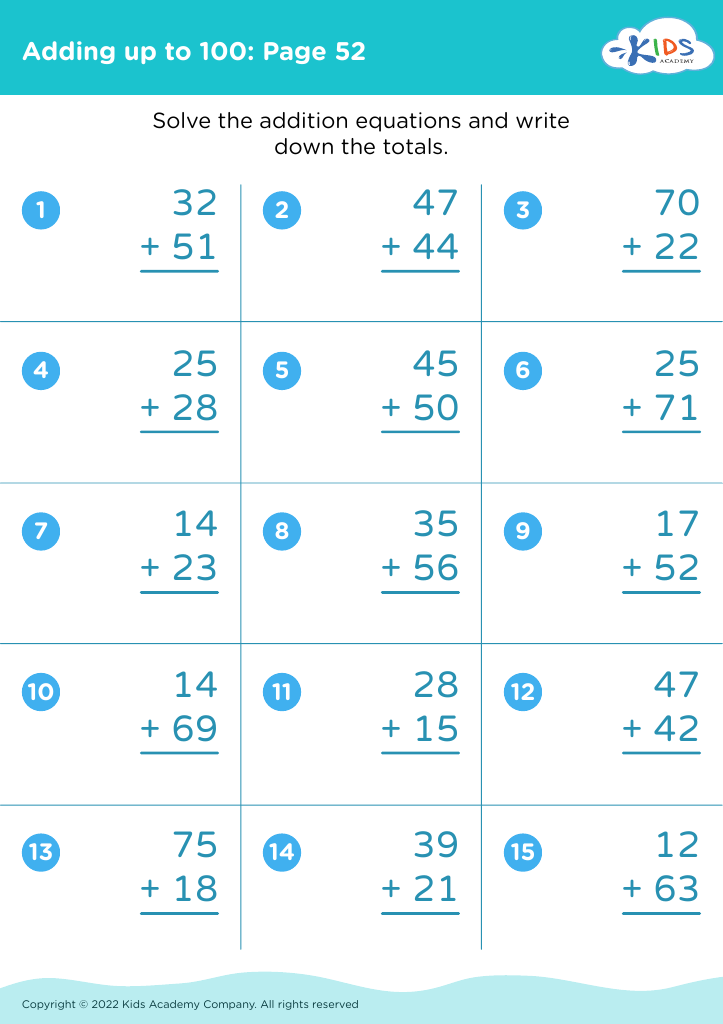
Join Kids Academy for Free
Who is primarily going to use this learning content?



.jpg)



Identifying numbers is a fundamental skill for children aged 7-9, as it forms the basis for their mathematical understanding and cognitive development. At this age, students transition from basic counting to more complex concepts such as addition, subtraction, and the understanding of place value. By mastering number identification, students build confidence in their abilities, enabling them to tackle more advanced math problems in the future.
Furthermore, number identification plays a key role in developing problem-solving skills and logical reasoning. As children learn to recognize and manipulate numbers, they become adept at applying these skills in real-life situations, including budgeting, time management, and critical thinking tasks.
Moreover, parents and teachers should emphasize this skill to foster collaboration and communication. By engaging in number-related activities at home or in class, adult involvement can enhance a child’s understanding and retention of concepts.
Lastly, recognizing and identifying numbers opens doors to exploring patterns and relationships in mathematics, setting the groundwork for algebra and geometry. In conclusion, prioritizing number identification equips children with essential tools for academic success and daily life, fostering a love for learning and preparing them for future challenges.








