
Improve counting Worksheets for Ages 7-9
3 filtered results
Difficulty Level
Grade
Age
-
From - To
Subject
Activity
Standards
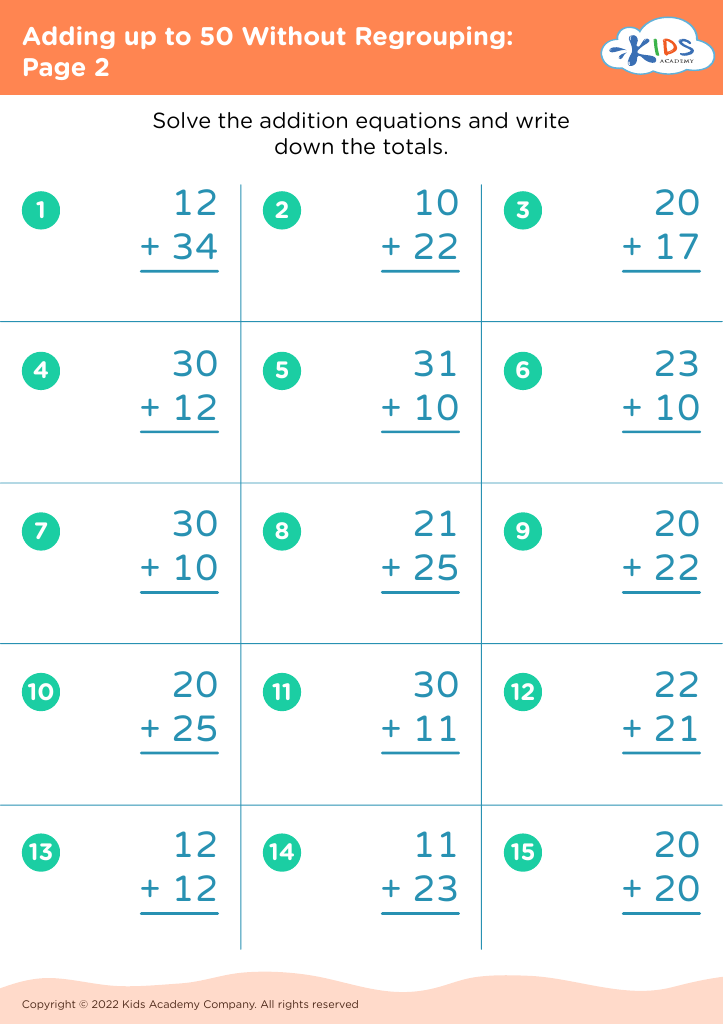
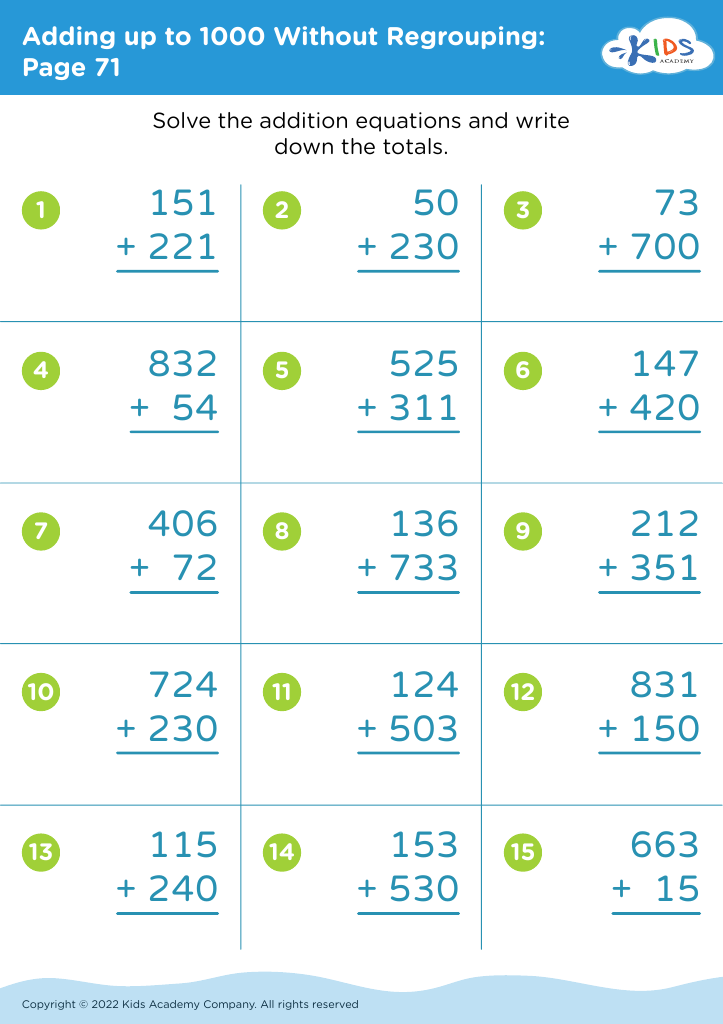
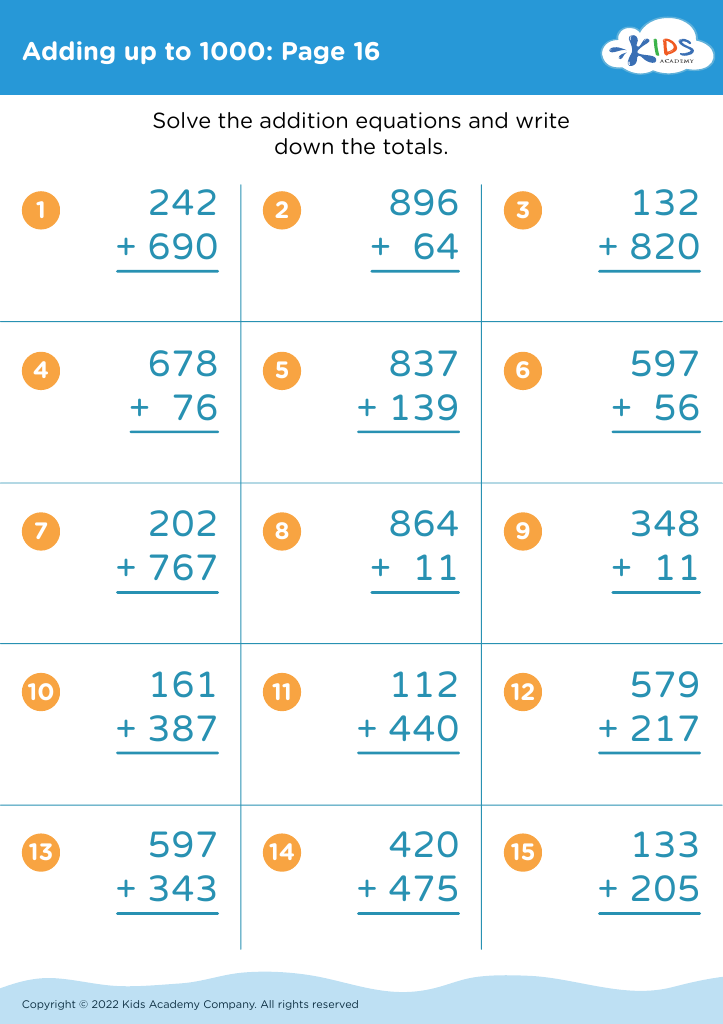
Enhance your child's mathematical skills with our "Improve Counting Worksheets for Ages 7-9." Perfect for young learners, these engaging worksheets are designed to build a strong foundation in number recognition, sequencing, and arithmetic. With a variety of fun and interactive exercises, children will develop essential counting skills while enjoying the process. From simple counting tasks to more complex number patterns, our worksheets cater to different skill levels, ensuring effective learning. Boost your child's confidence and proficiency in math by incorporating these worksheets into their daily routine. Visit Kids Academy to download and start practicing today!
Favorites
With answer key
Interactive
Join Kids Academy for Free
Who is primarily going to use this learning content?



.jpg)




Improving counting skills for children aged 7-9 is fundamental to developing their overall mathematical abilities and cognitive development. At this age, children transition from basic counting to more complex arithmetic operations, such as addition, subtraction, multiplication, and division. Mastery of counting provides a solid foundation for these advanced skills.
First and foremost, proficient counting aids in the understanding of number relationships and patterns. This understanding is crucial for solving math problems, a key competency in both academic assessments and everyday life. Counting also enhances estimation skills, enabling children to make quick, reasonable guesses about quantities in various situations.
Moreover, fluency in counting fosters a positive attitude towards mathematics. When children feel confident in their counting abilities, they are more likely to tackle challenging math problems with enthusiasm rather than apprehension. This confidence can lead to greater success across all math-related subjects, boosting their overall academic performance.
From a developmental perspective, counting enhances cognitive skills such as memory, attention to detail, and logical thinking. These cognitive benefits can spill over into other subjects, such as science and reading comprehension, supporting well-rounded intellectual growth.
Ultimately, investing time and effort to improve counting skills at this critical stage creates a ripple effect, benefiting varied aspects of a child's education and laying a strong groundwork for future academic and real-life successes.








