
Moral understanding Worksheets for Ages 7-9
6 filtered results
Difficulty Level
Grade
Age
-
From - To
Subject
Activity
Standards
Enhance your child's ethical growth with our Moral Understanding Worksheets for Ages 7-9. These engaging printables help young learners grasp crucial values like honesty, kindness, and responsibility. Each activity is carefully designed to provoke thoughtful discussion and reflection, fostering strong moral principles. Ideal for both classroom and home use, our worksheets encourage children to practice empathy, make better choices, and develop a solid moral foundation. Plus, they're fun and visually appealing to keep kids interested and motivated. Empower your children with tools they need to navigate our complex world with integrity and compassion.
Favorites
With answer key
Interactive
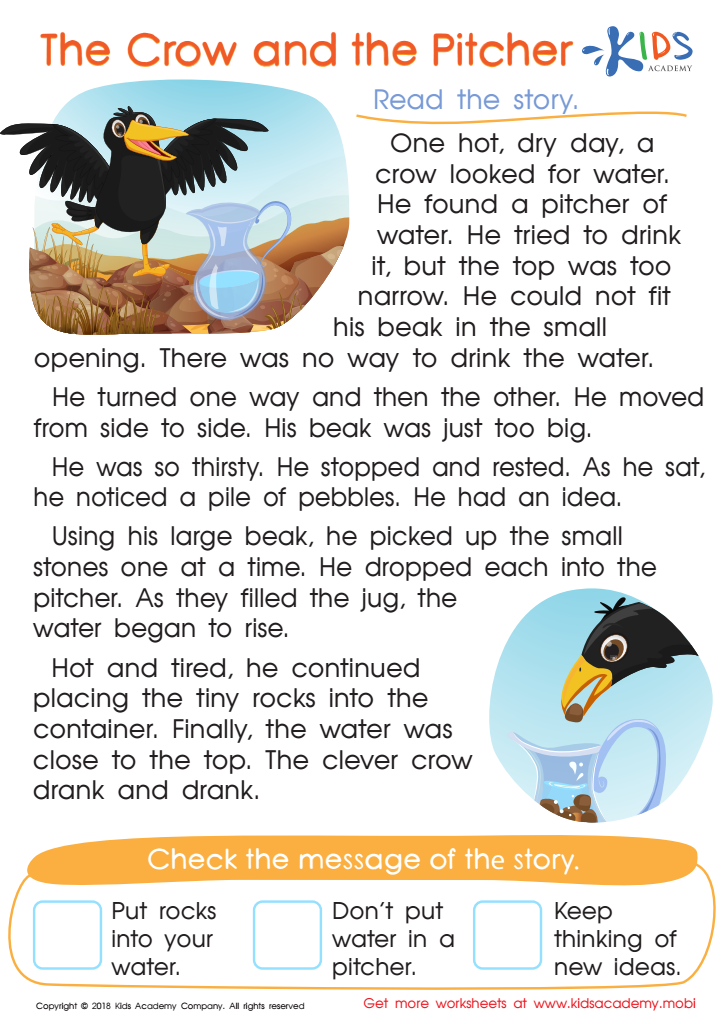
The Crow and the Pitcher Worksheet
Introduce your child to reading comprehension with this fascinating worksheet from Kids Academy! Featuring Aesop's fable of a thirsty crow, your child will enjoy reading and determining the central theme of the passage. This worksheet is a great way to give your child a purpose for reading while helping to build their comprehension skills.
 Assign to My Students
The Crow and the Pitcher Worksheet
Worksheet
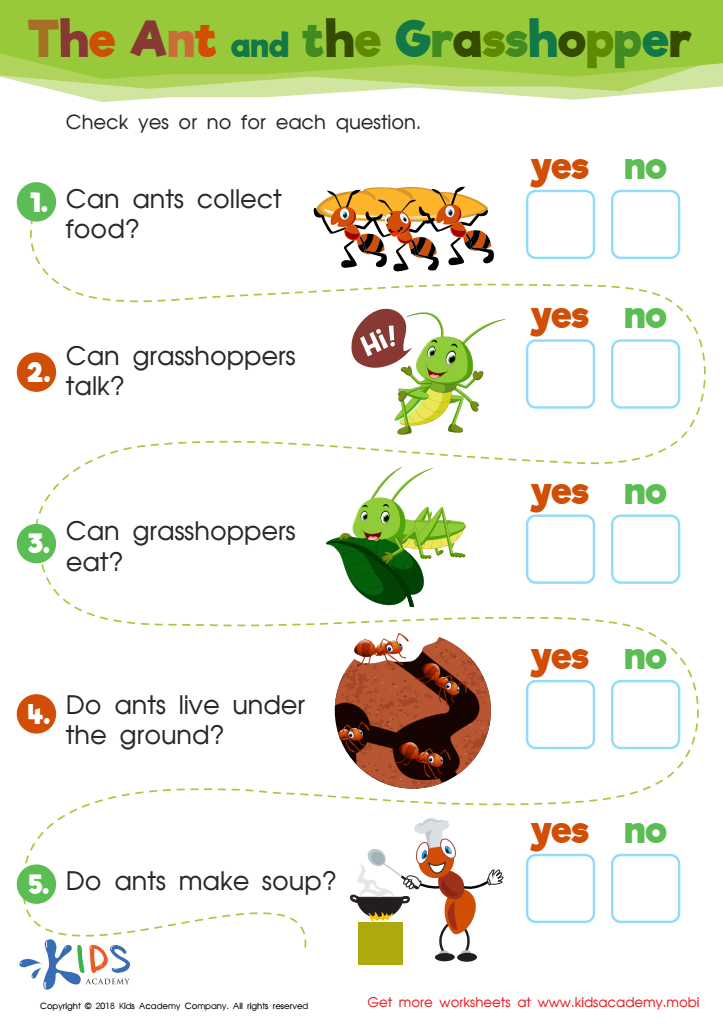
The Ant and The Grasshopper Worksheet
Does your child know about insects? If they're a nature lover or scared of them, use this worksheet to learn more. Read each of the questions and help them fill in the yes or no boxes. This may help them become less scared of insects.
The Ant and The Grasshopper Worksheet
Worksheet
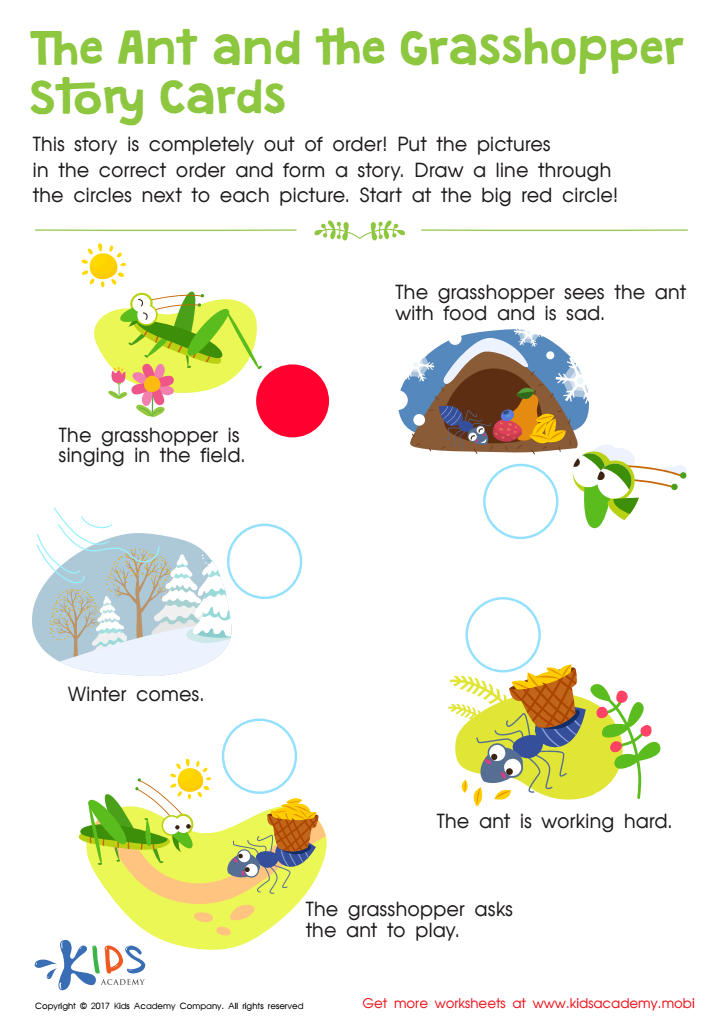
The Ant and The Grasshopper Worksheet
This worksheet uses the beloved childhood fable "The Ant and the Grasshopper" to teach your child about plot and order of events. Your child must read the events and put them in the right order. Once completed, review the story with your child to ensure its accuracy.
The Ant and The Grasshopper Worksheet
Worksheet
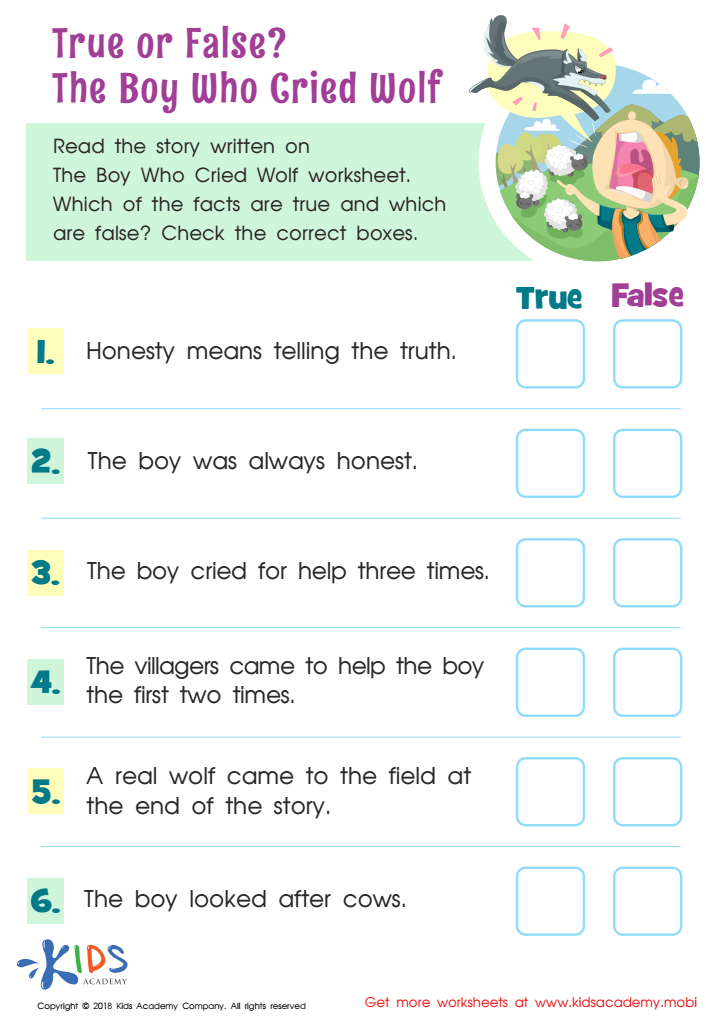
True or False? The Boy Who Cried Wolf Worksheet
Test students' understanding of The Boy Who Cried Wolf with this free downloadable worksheet. It contains true/false questions to assess comprehension of key events. Easy to complete, it checks students can recall facts from the story. Try it and see!
True or False? The Boy Who Cried Wolf Worksheet
Worksheet
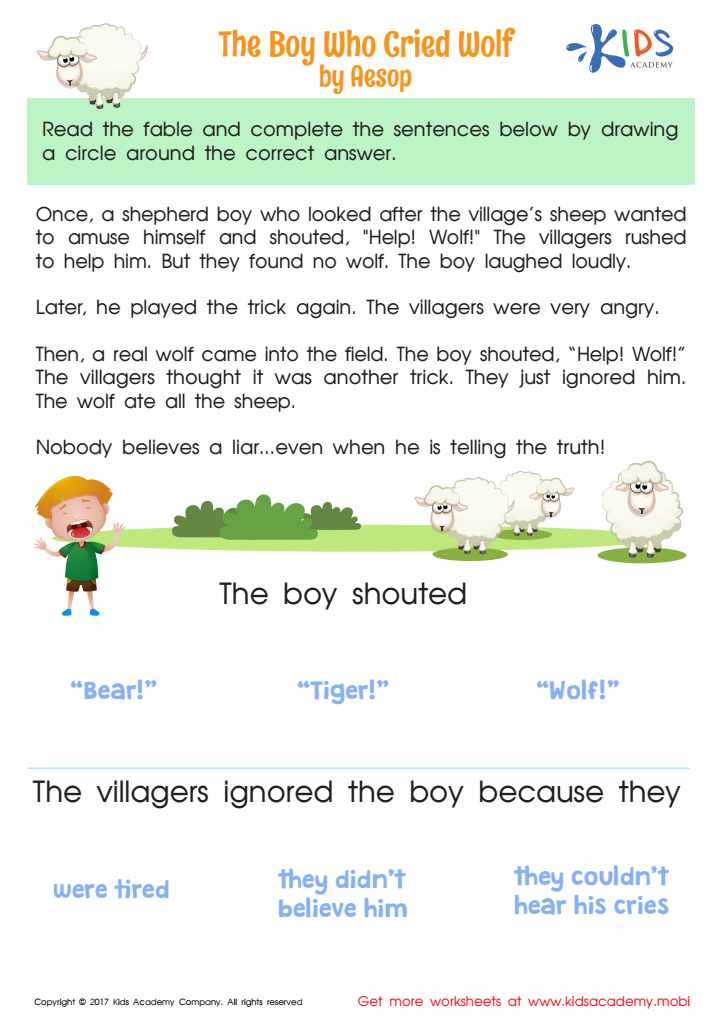
The Boy Who Cried Wolf Worksheet
Test your child's reading comprehension with The Boy Who Cried Wolf worksheet. Read the fable, then answer the questions. Use the text to help your child check their answers are correct. Boost reading skills in a fun, interactive way!
The Boy Who Cried Wolf Worksheet
Worksheet
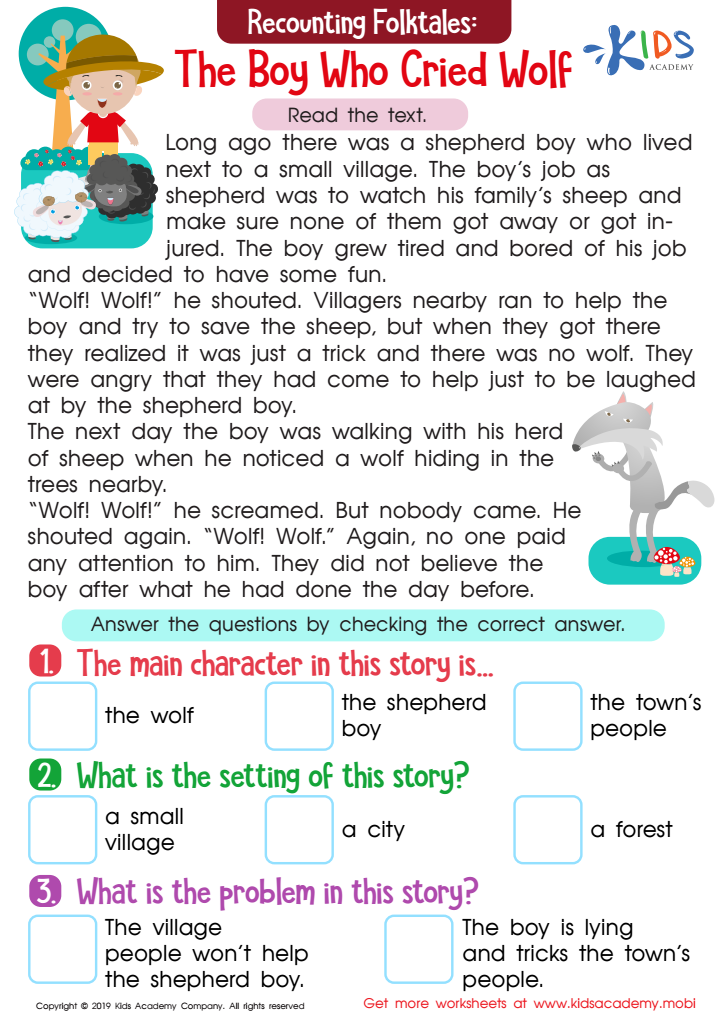
The Boy Who Cried Wolf Part 1 Worksheet
Storytime can be your kid's favorite part of the day. Ask them what their favorite stories are, then read the text in the printout. Read along with them, making sure they understand each word. At the end, go over the questions and have them check the correct answers.
The Boy Who Cried Wolf Part 1 Worksheet
Worksheet
Join Kids Academy for Free
Who is primarily going to use this learning content?







Fostering moral understanding in children aged 7-9 is crucial for their holistic development and future success. At this age, children are developing their sense of empathy and fairness, solidifying concepts of right and wrong. Teaching moral values helps build a strong ethical foundation, guiding them in making positive choices and taking responsibility for their actions. When parents and teachers emphasize moral understanding, they equip children with the skills to navigate social interactions effectively, promoting better relationships with peers and adults.
During these formative years, children are exceptionally impressionable. Positive moral guidance can shape their character, helping them to develop virtues like honesty, kindness, and respect. This not only averts behavioral problems but also contributes to their emotional well-being. Students exhibiting strong moral values are often more considerate, cooperative, and resilient, which can enhance their academic performance and social life.
Parents and teachers play pivotal roles in modeling and reinforcing these values through discussions, stories, and practical examples. They create environments where ethical behavior is praised and ethical dilemmas are explored thoughtfully. Ensuring children understand and internalize moral values prepares them to grow into conscientious adults who contribute positively to society, thereby creating a better future for all.








