
Phonetic awareness Worksheets for Ages 7-9
3 filtered results
Difficulty Level
Grade
Age
-
From - To
Subject
Activity
Standards
Enhance your child's phonetic awareness with our curated worksheets designed specifically for ages 7-9. These engaging materials focus on vital skills, including sound recognition, blending, and word identification, helping young learners master the foundational elements of reading. Each worksheet features interactive activities that make learning fun and accessible, ensuring your child can practice at their own pace. Perfect for both homeschool environments and classroom settings, our resources support early literacy development by reinforcing phonetic concepts through varied exercises. Empower your child to build confidence in their reading abilities with our thoughtfully crafted phonetic awareness worksheets!
Favorites
With answer key
Interactive
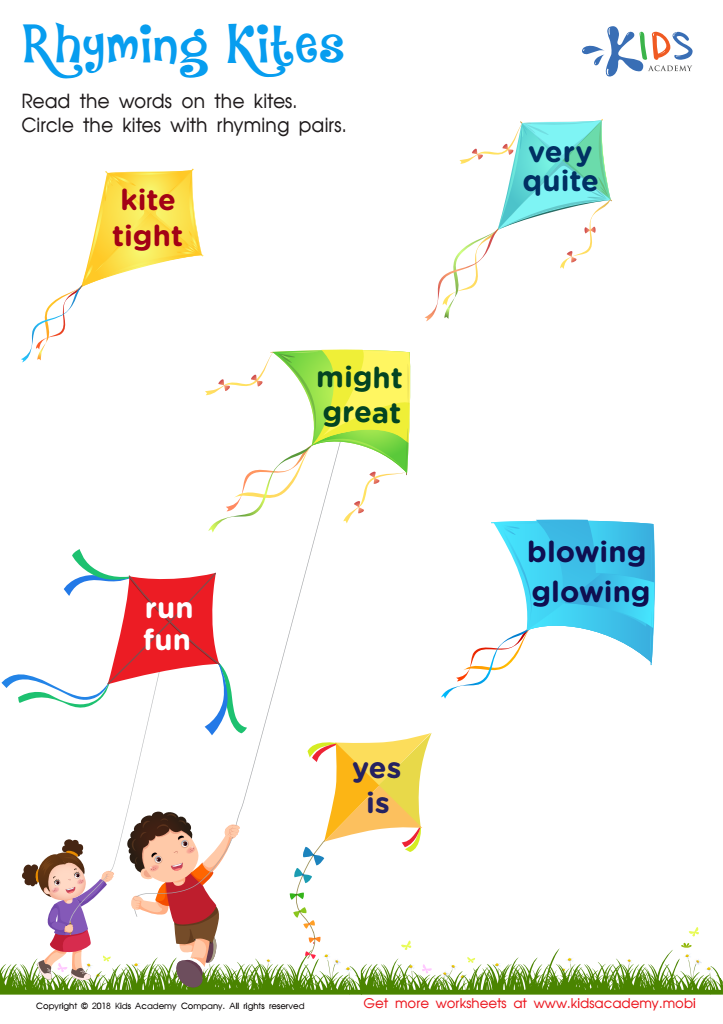
Rhyming Kites Worksheet
On a spring day, fly a kite! Kids Academy has a rhyming worksheet to boost your child's skills. Read the pairs of words aloud. Circle the kites if they rhyme, leave them blank if they don't. Listen carefully and find all the rhyming word pairs to complete this sheet!
 Assign to My Students
Rhyming Kites Worksheet
Worksheet
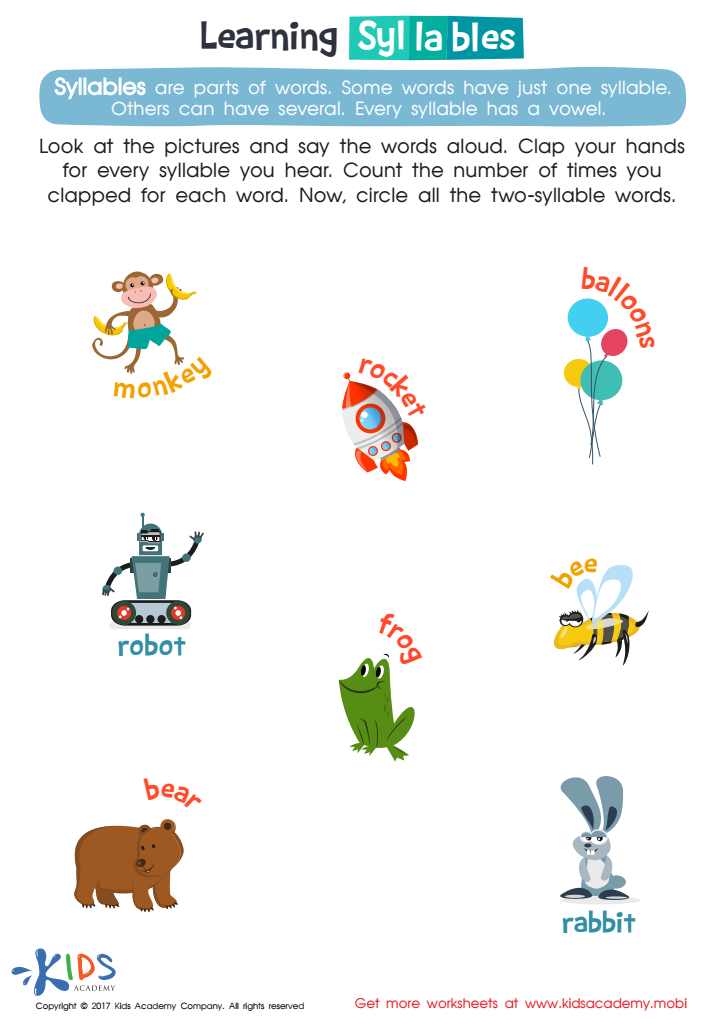
Learning Syllables Word Structure Worksheet
Teach kids to read and spell with our fun Learning Syllables worksheet. Kids will have a blast clapping and saying familiar words while counting syllables. Colorful and catchy, it's a great way to make learning enjoyable!
Learning Syllables Word Structure Worksheet
Worksheet
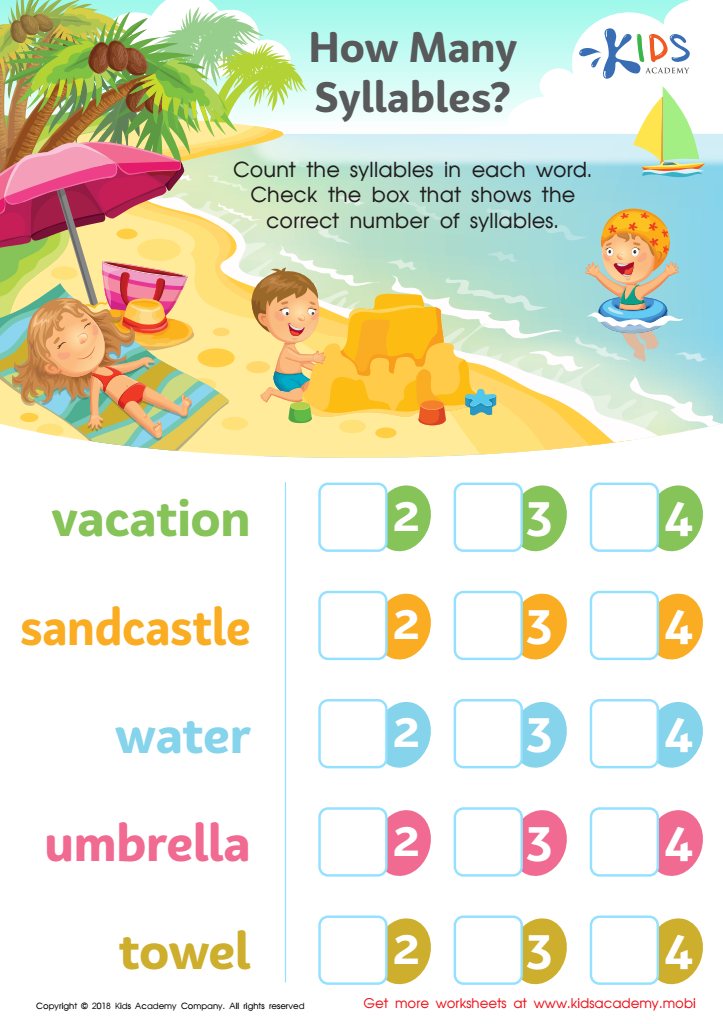
How Many Syllables Worksheet
Draw up memories of sunny beach days with your child. Ask them to tell you their favourite activities, objects seen. Read the words in the picture aloud and help them count the syllables. Then check the box with the right number of syllables.
How Many Syllables Worksheet
Worksheet
Join Kids Academy for Free
Who is primarily going to use this learning content?







.jpg)
Phonetic awareness is crucial for children aged 7-9 as it serves as a foundational skill for reading, writing, and overall literacy development. At this age, children branch into more complex texts, making a strong command of phonics essential for decoding unfamiliar words and improving reading fluency. A solid understanding of phonetic sounds enables them to make connections between letters and their corresponding sounds, which eases the reading process and boosts their confidence.
With phonetic awareness, children can better implement spelling rules and strategies, aiding their writing abilities as they learn to spell new words accurately. Teachers and parents should prioritize phonetic skills because challenges in this area can lead to difficulties in literacy, impacting academic performance across subjects.
Moreover, when children master phonetic awareness, they experience a sense of achievement, promoting a love for reading and exploration of new ideas and stories. Encouraging phonetic skills through interactive games, rhymes, and reading sessions can foster a supportive learning environment. Ultimately, strong phonetic awareness not only contributes to individual academic success but enables children to engage more fully with the world around them, fostering lifelong learning and confidence.








