Practice multiplication Worksheets for Ages 7-9
11 filtered results
-
From - To
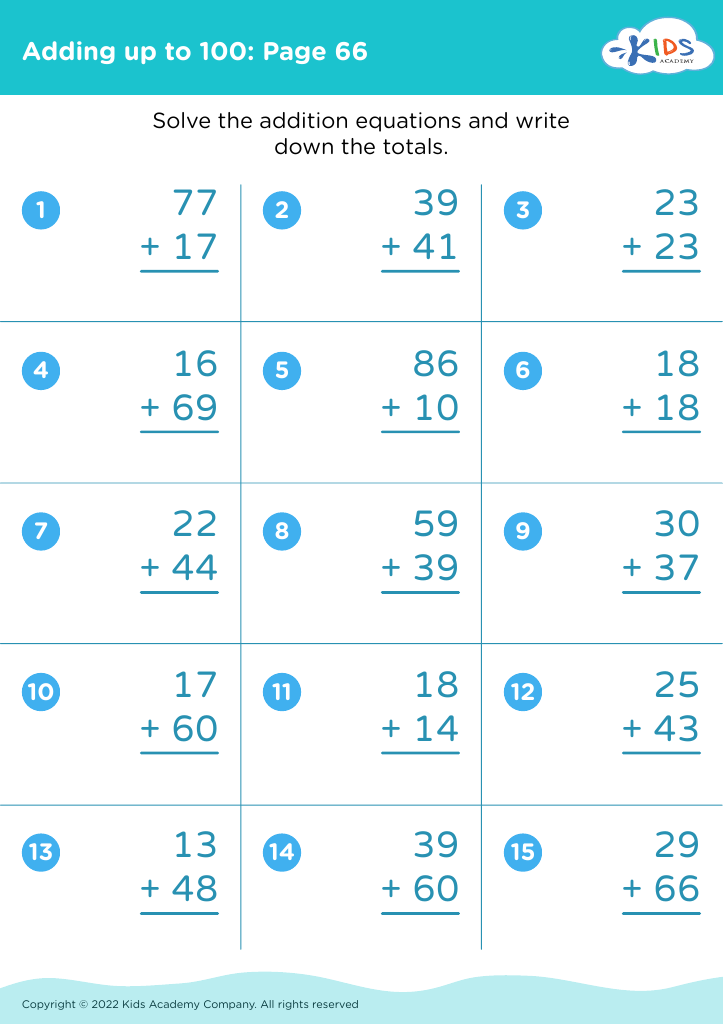
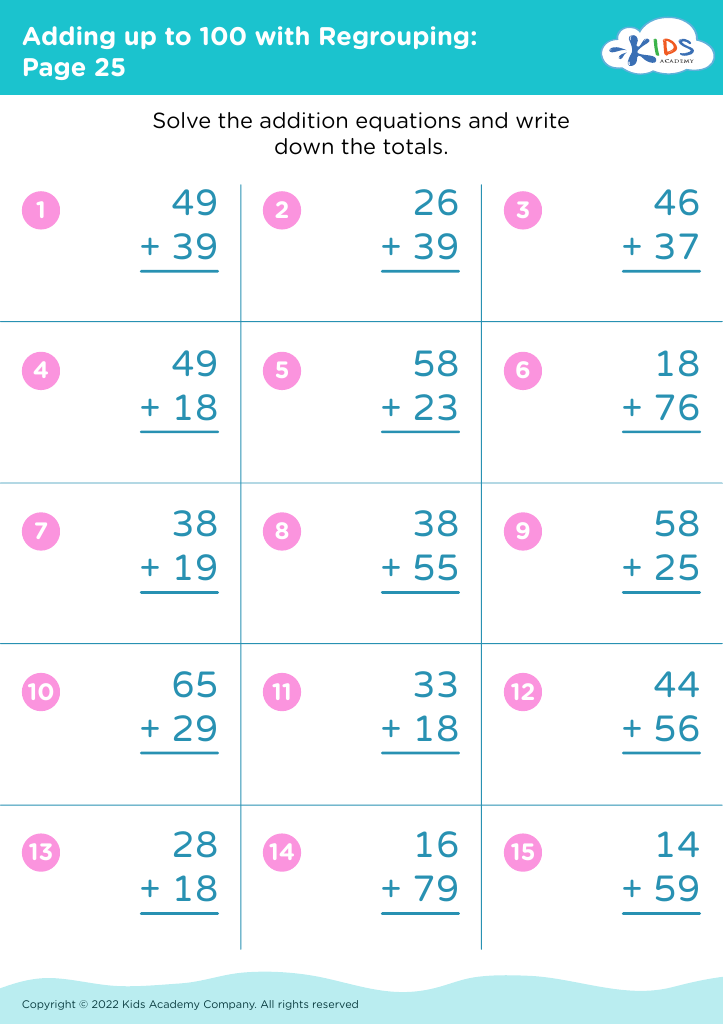
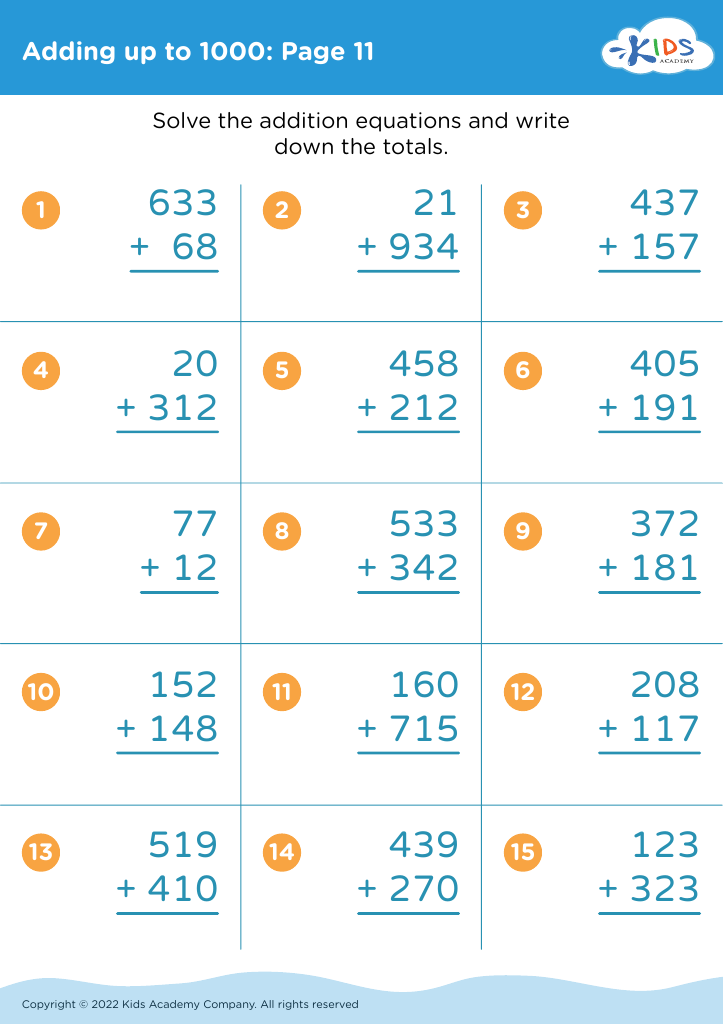
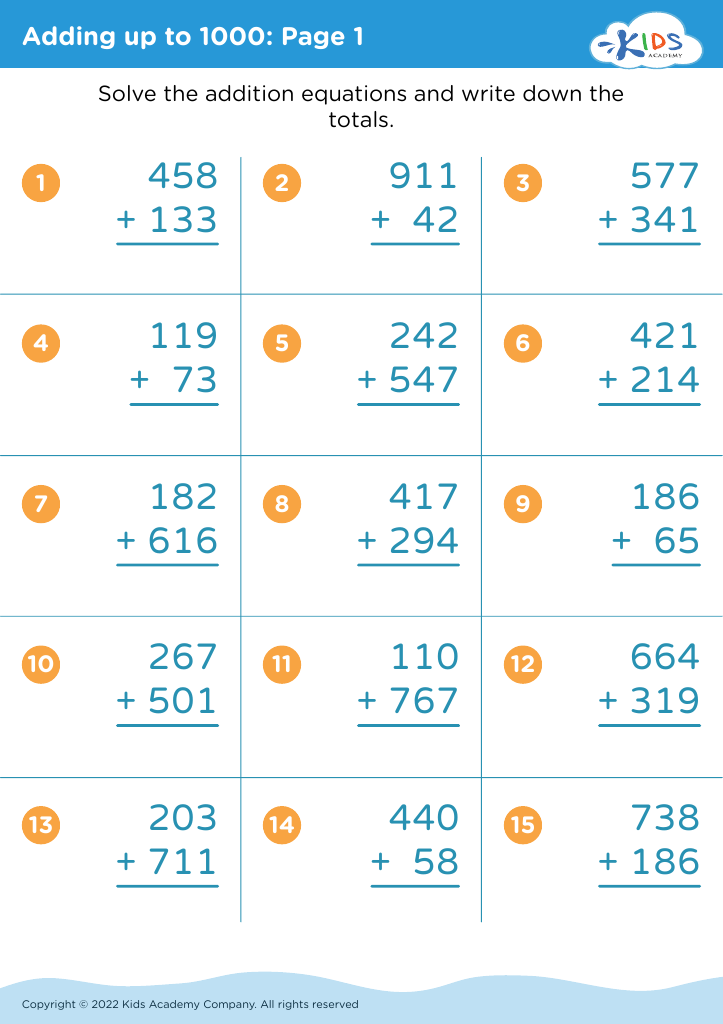
Enhance your child’s math skills with our expertly designed practice multiplication worksheets for ages 7-9. These engaging resources from Kids Academy help students master multiplication through fun, interactive exercises. Our worksheets cater to various learning styles, offering diverse problems that build confidence and proficiency. Perfect for both classroom use and at-home practice, the worksheets progressively challenge students, solidifying essential math foundations necessary for more advanced concepts. Most importantly, they turn multiplication practice into an enjoyable and rewarding experience, fostering a love for learning and a strong mathematical mindset. Help your child excel with Kids Academy’s outstanding multiplication practice resources!
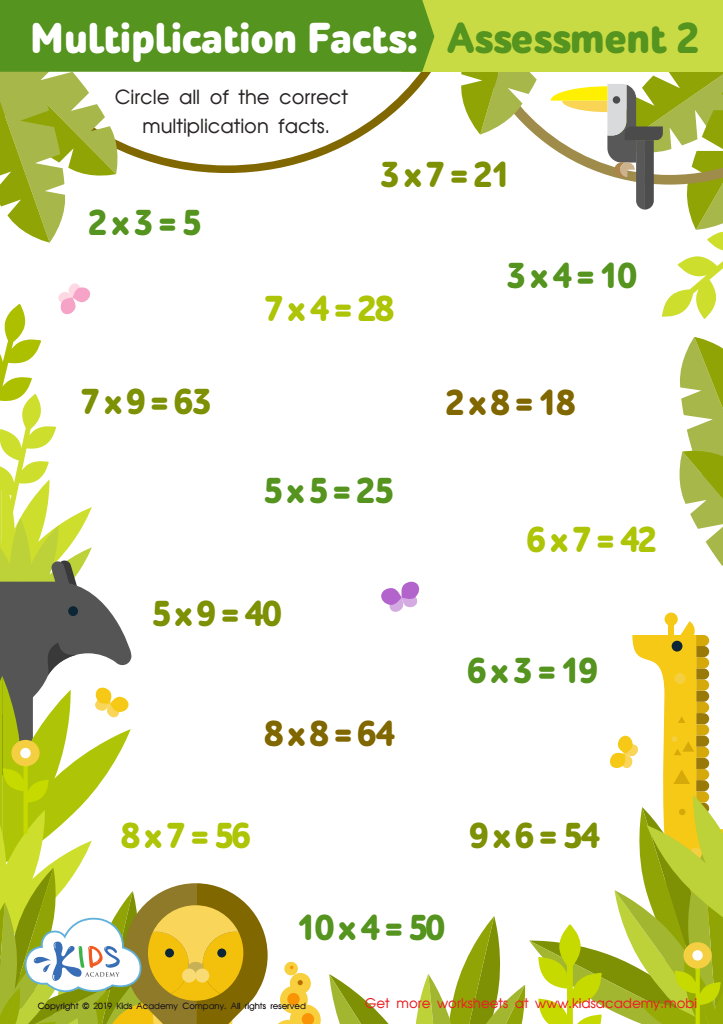
Multiplication Facts: Assessment 2 Worksheet
 Assign to My Students







Parents and teachers should prioritize practicing multiplication for children aged 7-9 because it lays a crucial foundation for their future math skills. At this age, kids are in a prime developmental stage where their cognitive abilities are growing rapidly. This period, typically in second or third grade, is the ideal time to introduce and reinforce multiplication concepts.
Multiplication is more than just repeated addition; it's a building block for more advanced math topics, such as division, fractions, and algebra. A strong grasp of multiplication can enhance problem-solving skills, boost mathematical confidence, and increase overall academic performance.
Furthermore, mastering multiplication tables helps children develop memory and recall skills, which are essential for academic success across various subjects. It also encourages logical thinking and number sense, important skills that extend beyond math and into real-world applications.
Practicing multiplication also prepares kids for standardized tests and assessments that often include multiplication-related problems. Early competency in multiplication reduces future math anxiety and builds a growth mindset, as children realize that practice and persistence lead to improvement.
In summary, focusing on multiplication for children aged 7-9 is critical because it supports mathematical understanding, cognitive development, and lifelong learning skills. By providing practice opportunities, parents and teachers equip children with the tools they need for future success.








