Problem-solving ability Worksheets for Ages 7-9
3 filtered results
-
From - To
Unlock your child's critical thinking skills with our engaging Problem-Solving Ability Worksheets designed specifically for ages 7-9. These printable worksheets promote cognitive development by challenging young learners to tackle age-appropriate puzzles, riddles, and scenarios, enhancing their analytical thinking and decision-making skills. Each activity is carefully crafted to make learning fun, encouraging children to think creatively and logically while fostering perseverance. Ideal for home or classroom use, these worksheets provide a diverse range of problems that captivate curious minds. Explore our collection today and empower your child to become an adept problem solver!
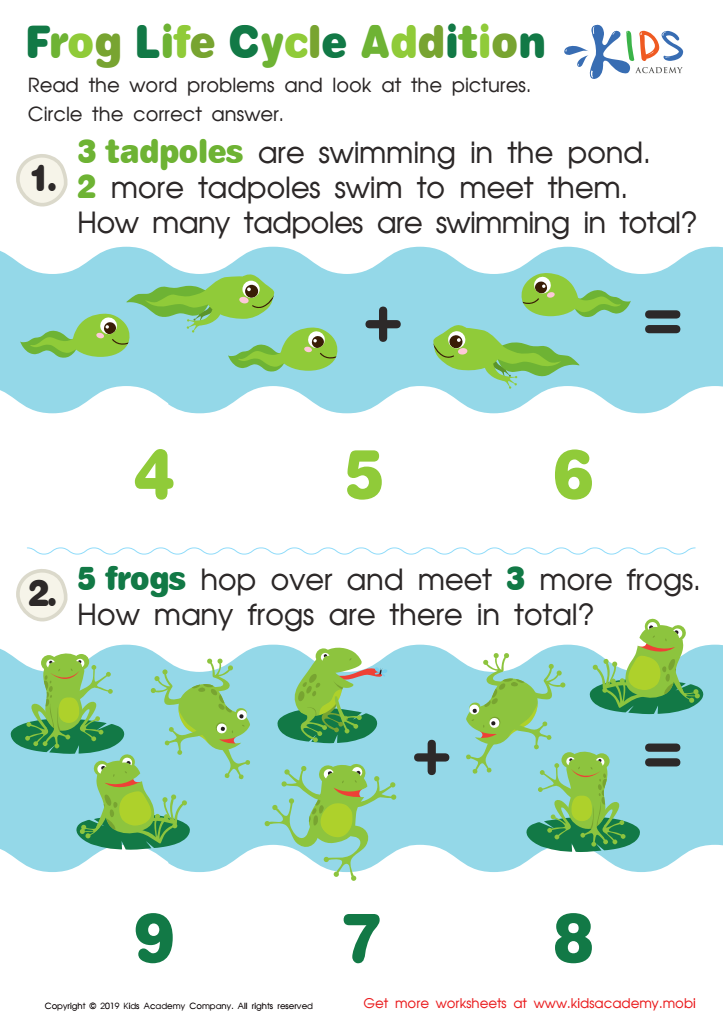
Frog Life Cycle Addition Worksheet
 Assign to My Students

Animal Hide and Seek Worksheet








Problem-solving ability is a crucial skill for children aged 7-9, and both parents and teachers should prioritize its development for several key reasons. First, this age group is at a pivotal stage in cognitive and emotional development, where they are learning to think critically and assess situations independently. By fostering problem-solving skills, adults provide children with tools to navigate challenges, enhancing their resilience and confidence.
Secondly, problem-solving activities promote creativity and innovation. When children engage in solving puzzles, conducting experiments, or tackling real-world tasks, they learn to approach situations from different angles, encouraging open-mindedness and flexibility. These traits are vital not only in academics but in daily life and future workplaces.
Moreover, strong problem-solving skills have a positive impact on academics. Children who can analyze problems and develop strategies are better equipped to excel in subjects like math and science, where logical thinking is essential. They also learn the value of persistence; understanding that mistakes are part of learning encourages a growth mindset.
In summary, by emphasizing problem-solving abilities, parents and teachers equip children with essential skills for lifelong learning, personal growth, and social development, laying a strong foundation for future success.








