
Rhyming skills Worksheets for Ages 7-9
4 filtered results
Difficulty Level
Grade
Age
-
From - To
Subject
Activity
Standards
Enhance your child's literacy with our engaging Rhyming Skills Worksheets designed for ages 7-9! These worksheets provide a fun and interactive way for young learners to explore the world of rhymes. Through a variety of activities, including word matching, fill-in-the-blanks, and creative writing prompts, children will develop their phonemic awareness and improve their vocabulary. Each worksheet is thoughtfully crafted to ensure children not only learn but enjoy the process of discovering rhymes. Perfect for both classroom and home use, our comprehensive resources help foster a love for reading and language. Start your child's rhyming journey today!
Favorites
With answer key
Interactive
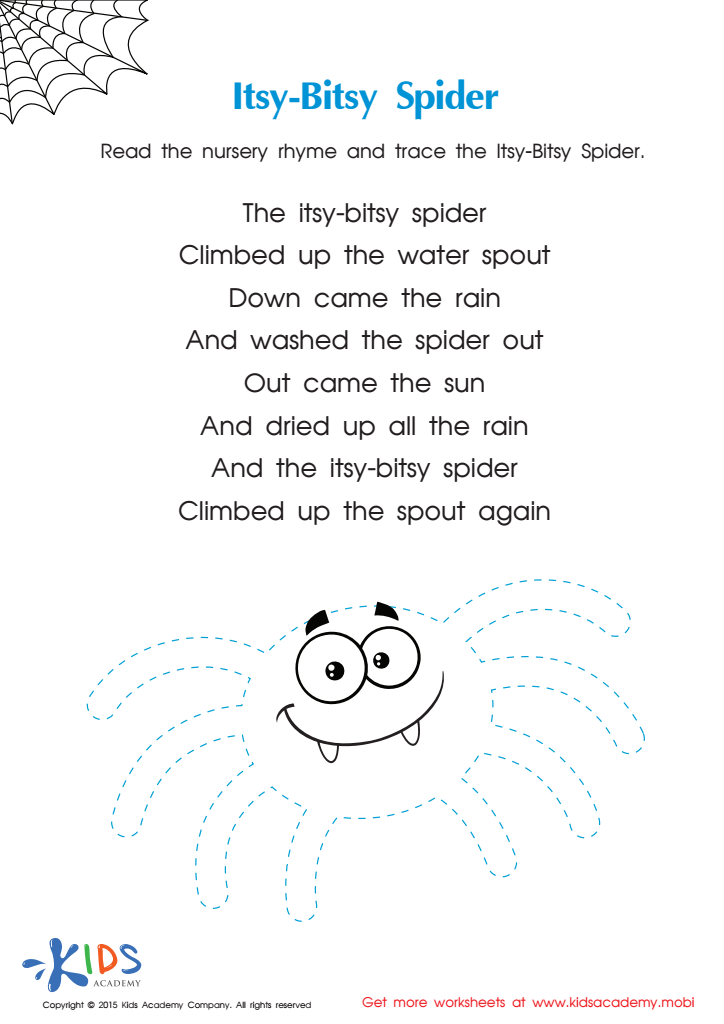
Itsy Bitsy Spider Nursery Rhyme PDF Worksheet
Introduce your child to the classic nursery rhyme with this worksheet. They'll learn the song, develop their motor skills, and find and count the letters 'A'. Pick up your crayons and add some color to the missing spider!
 Assign to My Students
Itsy Bitsy Spider Nursery Rhyme PDF Worksheet
Worksheet
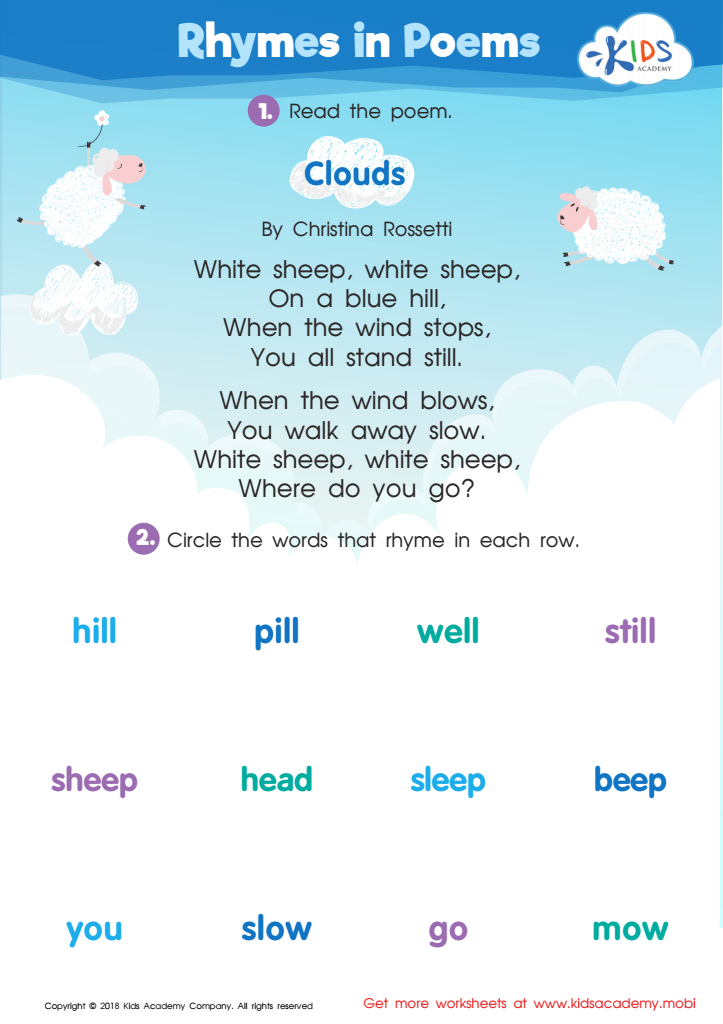
Rhymes in Poems Worksheet
Poems are lovely works of literature; some with rhymes, and some without. This poem for kids is full of rhymes and tells the tale of a sheep. Read it aloud to your kids, then help them circle the rhyming words.
Rhymes in Poems Worksheet
Worksheet
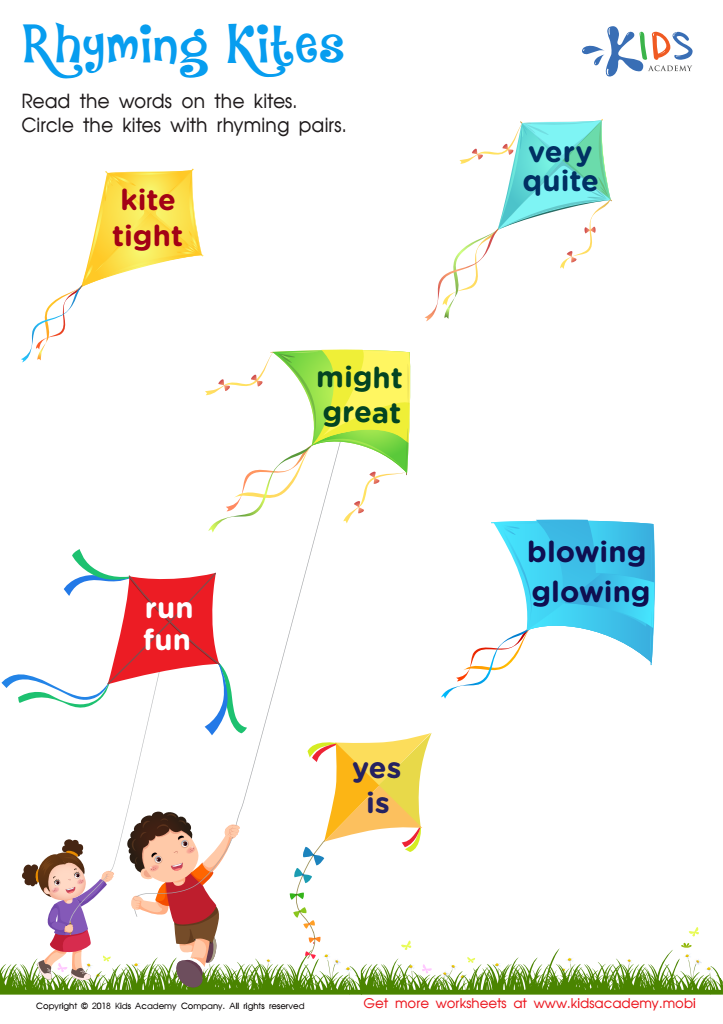
Rhyming Kites Worksheet
On a spring day, fly a kite! Kids Academy has a rhyming worksheet to boost your child's skills. Read the pairs of words aloud. Circle the kites if they rhyme, leave them blank if they don't. Listen carefully and find all the rhyming word pairs to complete this sheet!
Rhyming Kites Worksheet
Worksheet
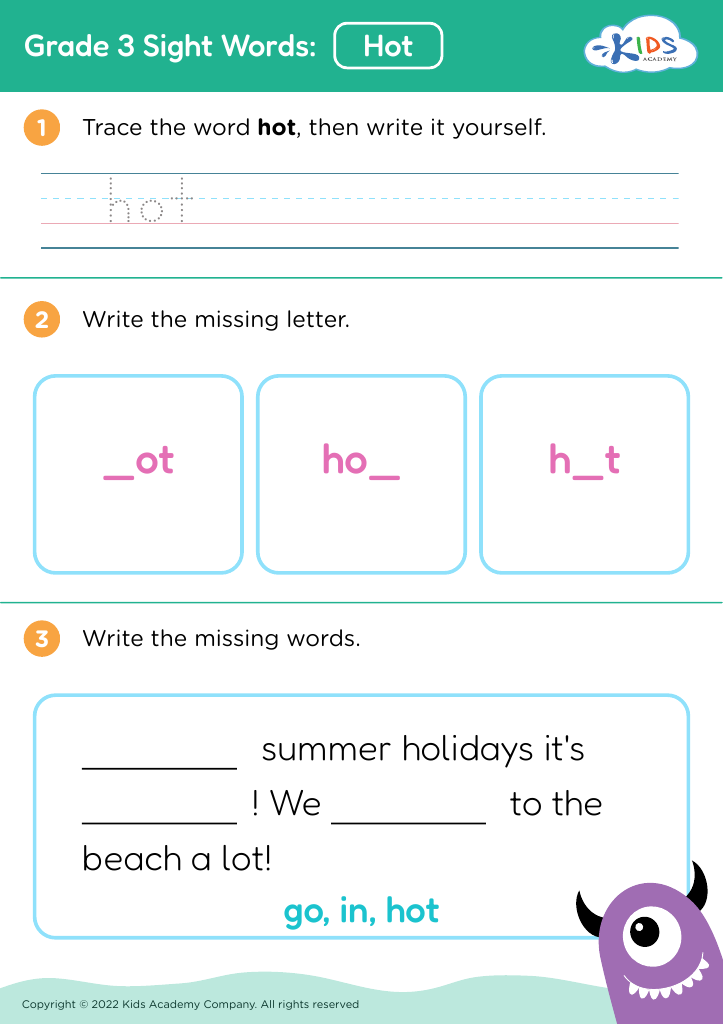
Join Kids Academy for Free
Who is primarily going to use this learning content?








Rhyming skills are crucial for children ages 7-9 as they lay the foundation for key literacy abilities. At this age, children are developing their reading and writing skills, and understanding rhyme helps enhance phonemic awareness—the ability to hear, identify, and manipulate sounds in words. This is particularly important for decoding unfamiliar words and improving reading fluency.
Rhyming also fosters vocabulary development. When children explore different rhyming words, they encounter new vocabulary. This enriches their language skills and deepens their understanding of word meanings and relationships. Furthermore, rhyming can be pivotal in enhancing memory retention; rhythmic patterns make it easier for children to remember information.
From a cognitive-linguistic perspective, engaging with rhyme activities stimulates critical thinking as children begin to analyze word patterns and sounds. This reinforces problem-solving skills. Additionally, incorporating rhymes into learning can make literacy activities more enjoyable. Fun, engaging activities quickly capture children’s attention and promote participation, which can increase their enthusiasm for reading and writing.
For parents and teachers, emphasizing the importance of rhyming can cultivate a love for language in children and build a solid groundwork for academic success, ultimately preparing them for future reading challenges.








