
Science knowledge application Worksheets for Ages 7-9
3 filtered results
Difficulty Level
Grade
Age
-
From - To
Subject
Activity
Standards
Explore our engaging Science Knowledge Application Worksheets designed for children aged 7-9! These interactive resources help young learners grasp essential science concepts through fun exercises that encourage critical thinking and practical application. Each worksheet is thoughtfully crafted to not only reinforce classroom learning but also spark curiosity about the natural world. Students will enjoy hands-on activities that connect scientific principles to everyday life. Whether it's exploring ecosystems, understanding simple machines, or investigating weather patterns, these worksheets are perfect for enhancing knowledge and fostering a love for science. Download and inspire the budding scientist in your child today!
Favorites
With answer key
Interactive
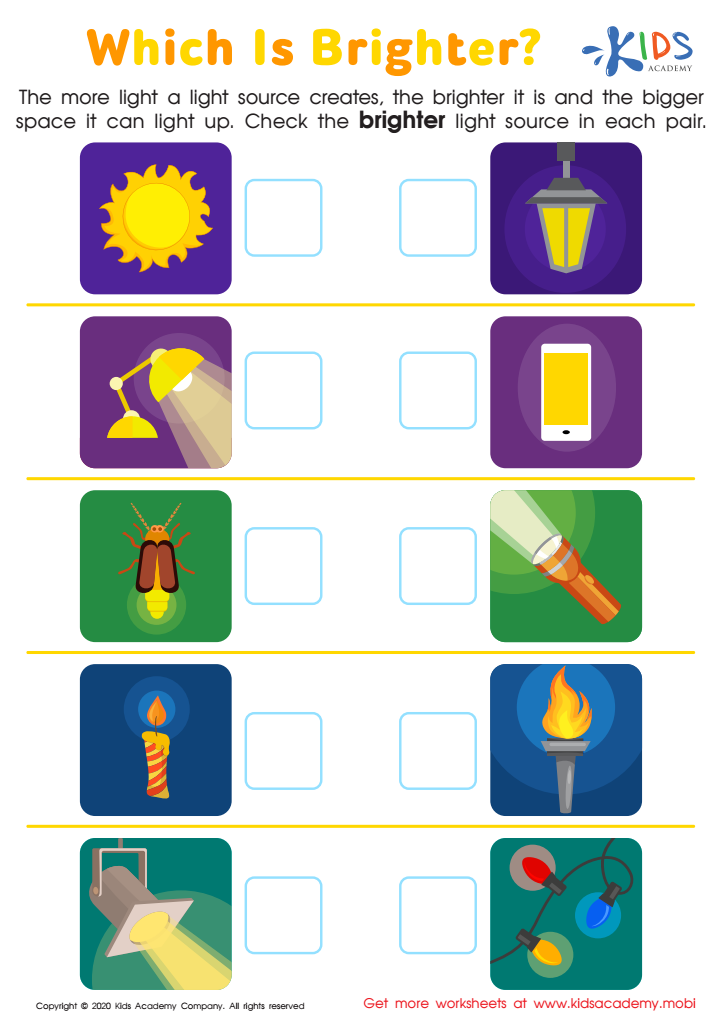
Which Is Brighter? Worksheet
Before the exercise, ask students to recall sources of light. Use this worksheet to explain that the brighter the light source, the more space it can light up. Identify the different light sources in the pictures, then check the brighter light source in each pair. The biggest natural source of light is the sun.
 Assign to My Students
Which Is Brighter? Worksheet
Worksheet
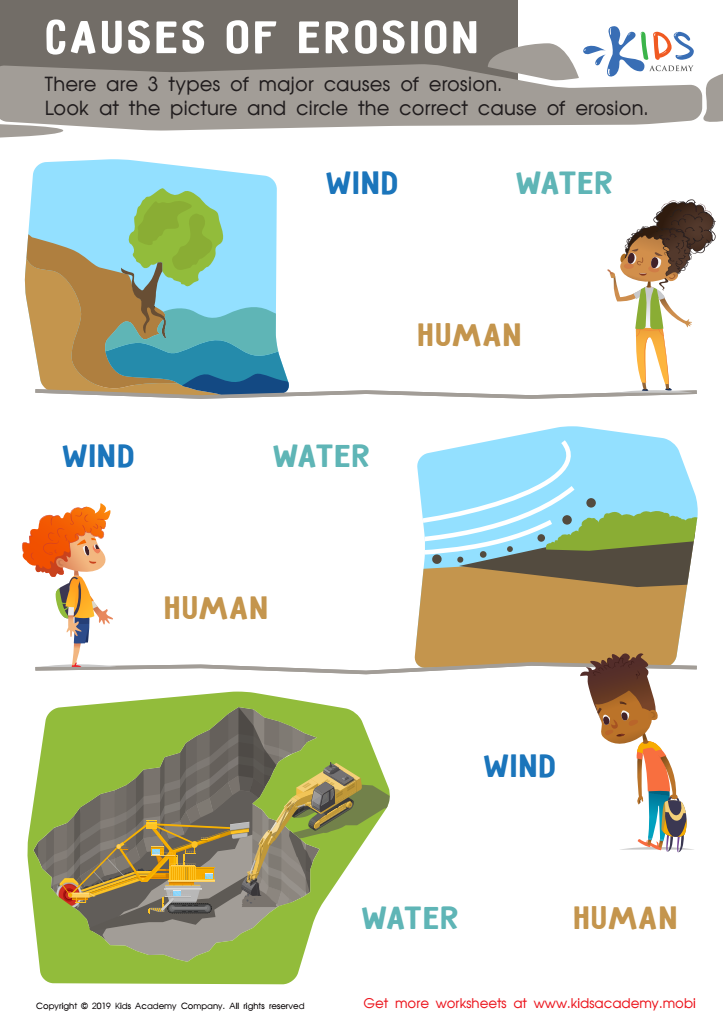
Causes of Erosion Worksheet
Earth is a habitable planet for humans and all life forms, providing us with what we need to survive. However, erosion caused by air, water or man can destroy or crumble parts of its surface. Teach kids the three causes of erosion and help them circle the correct one on a worksheet.
Causes of Erosion Worksheet
Worksheet
Join Kids Academy for Free
Who is primarily going to use this learning content?








Parents and teachers should care about science knowledge application for children aged 7 to 9 for several compelling reasons. At this developmental stage, children are naturally curious and eager to explore the world around them. By emphasizing science knowledge application, we nurture this curiosity and help children understand the relevance of science in their everyday lives. Engaging in hands-on experiments and practical activities promotes critical thinking and problem-solving skills, crucial for their intellectual development.
Additionally, applying science knowledge fosters a sense of responsibility and awareness about environmental and health-related issues. Children learn to ask questions, formulate hypotheses, and seek evidence, instilling a scientific mindset that transcends the classroom. This alignment of theoretical knowledge with practical applications encourages deeper learning, making concepts memorable and understandable.
Furthermore, a strong foundation in science prepares children for future academic pursuits and careers in STEM fields, essential in our increasingly technology-driven society. Engaging children in science fosters creativity and innovation, empowering them to think creatively when faced with new challenges. Ultimately, by reinforcing the application of science knowledge, parents and teachers equip young learners with the skills and understanding required for lifelong learning and informed citizenship.








