Time recognition Worksheets for Ages 7-9
6 filtered results
-
From - To
Welcome to our comprehensive collection of Time Recognition Worksheets designed specifically for children ages 7-9. These engaging and interactive printable worksheets help young learners master essential time-telling skills, from reading analog and digital clocks to understanding concepts like hours, minutes, and half-past. Our carefully crafted activities encourage students to practice time-related questions and solve real-world problems, fostering both independence and confidence. With colorful illustrations and varied exercises, these worksheets make learning fun and enjoyable. Perfect for at-home learning or classroom use, our resources are tailored to support your child's development in understanding and recognizing time. Explore the materials today and watch your child's skills soar!
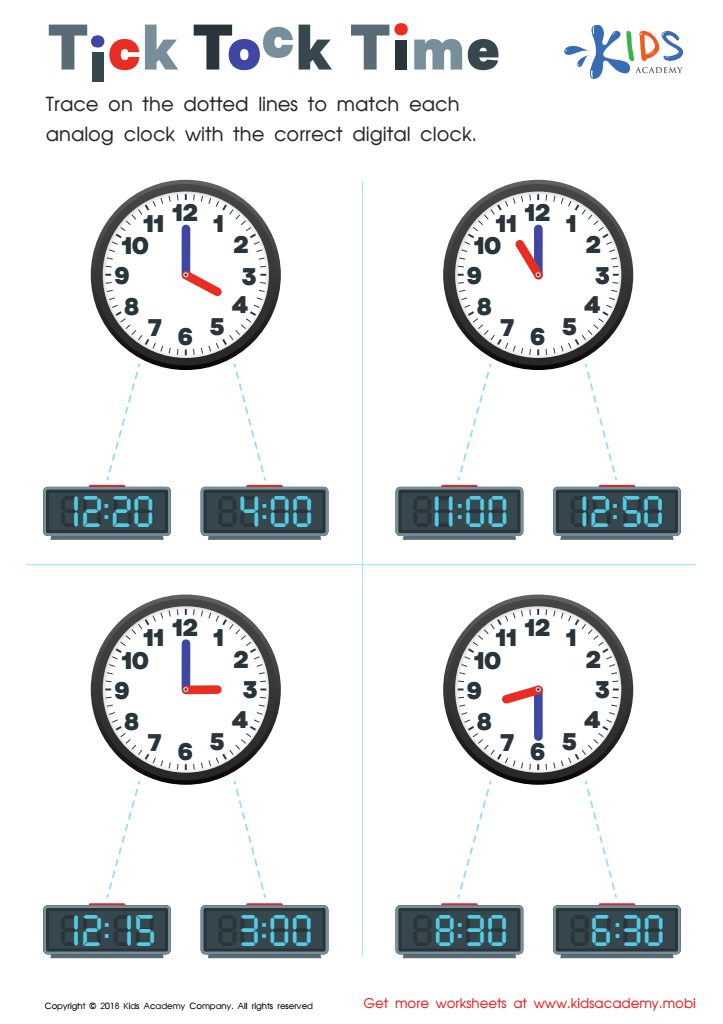
Tick Tock Time Worksheet
 Assign to My Students
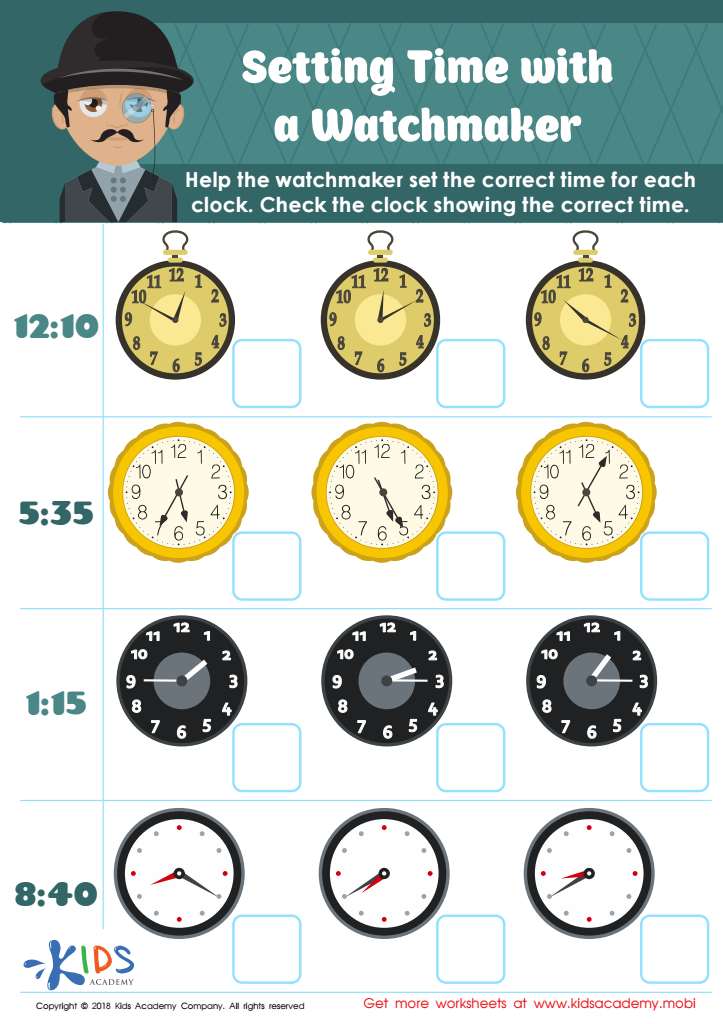
Setting Time with Watchmaker Worksheet
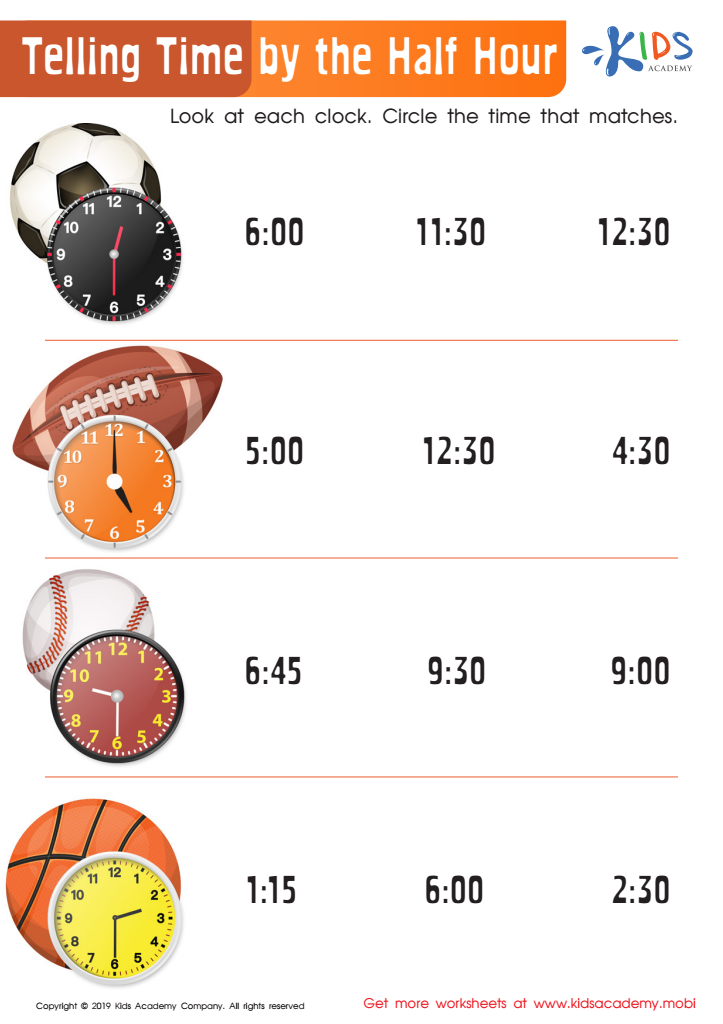
Telling Time by the Half Hour Worksheet
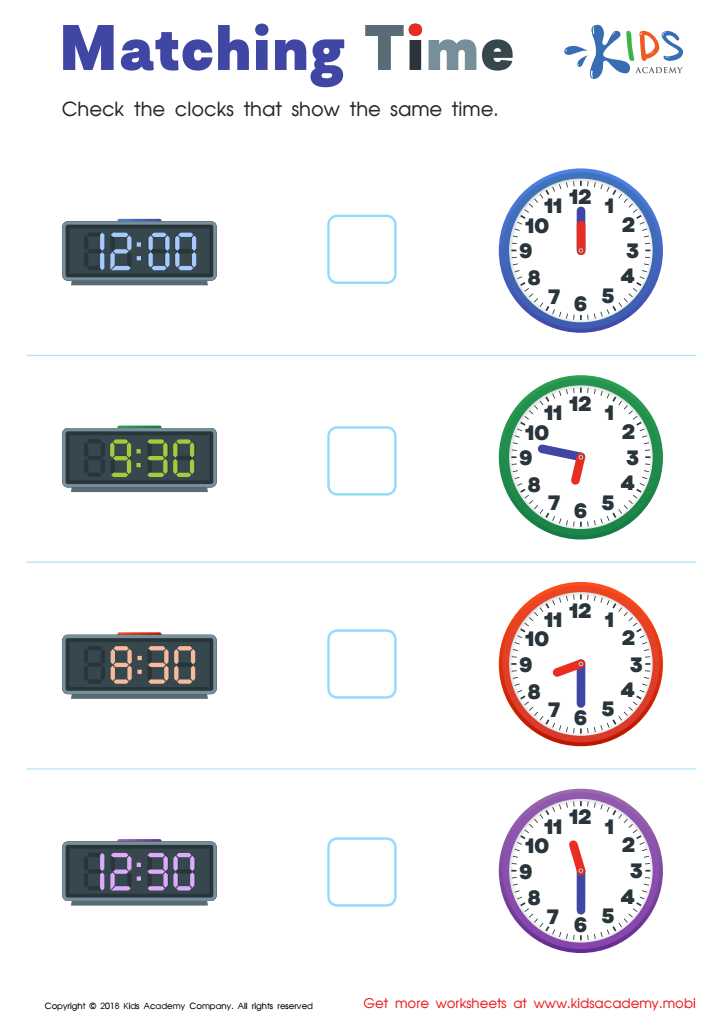
Matching Time Worksheet
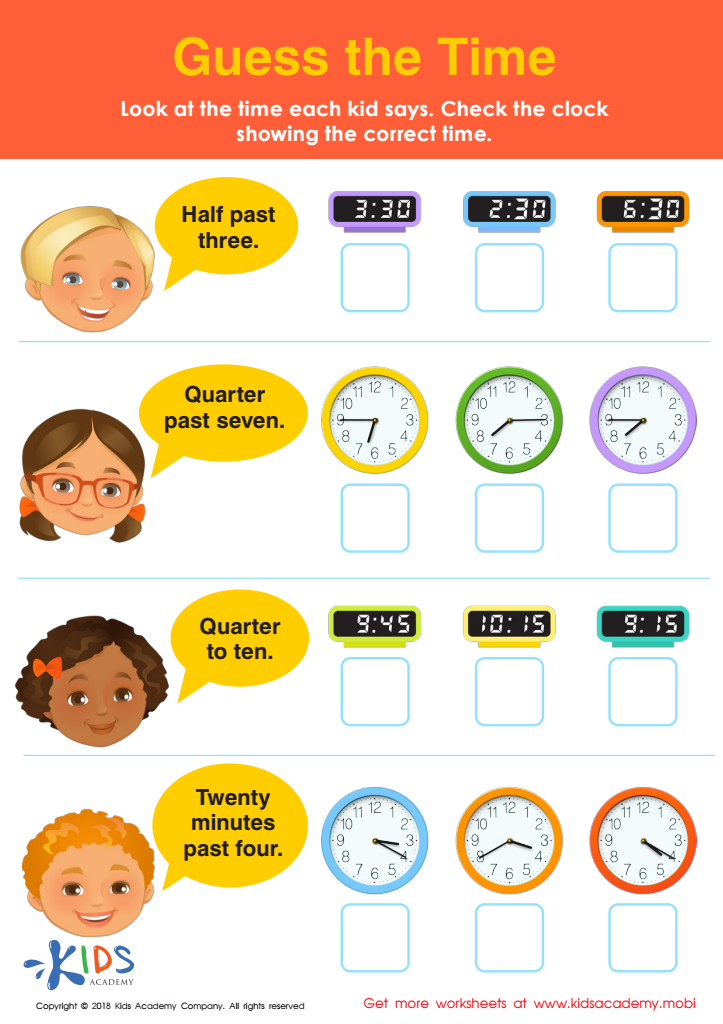
Guess the Time Worksheet
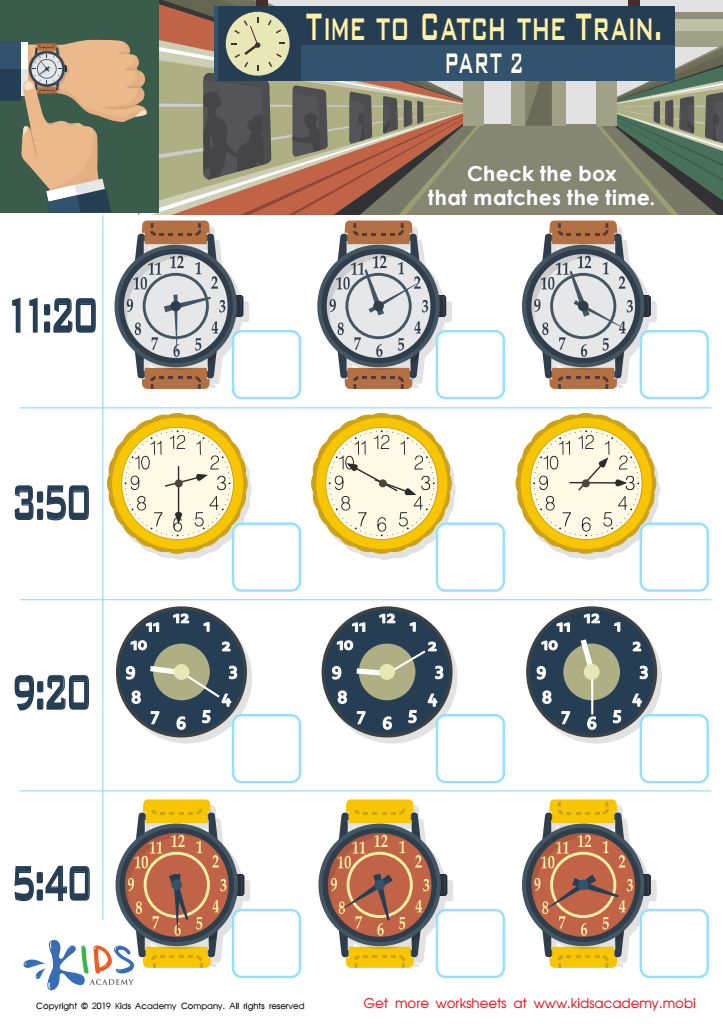
Time to Catch the Train Part 2 Worksheet








Time recognition is a crucial skill for children ages 7 to 9, as it lays the foundation for effective time management and responsibility. At this developmental stage, children begin to navigate more complex routines—such as school schedules, extracurricular activities, and social commitments. Understanding how to read clocks, tell time, and estimate durations helps them develop a sense of independence and self-discipline.
Parents and teachers should prioritize time recognition because it fosters essential life skills, such as organization and planning. When children can manage their time effectively, they are better equipped to complete homework, prepare for tests, and participate in family activities. Moreover, time awareness supports cognitive development, as it encourages mathematical thinking and comprehension.
Additionally, developing time recognition helps children engage in conversations about duration and scheduling, enhancing their communication skills. It also builds their confidence, leading to improved academic performance and social interactions. Ultimately, when parents and teachers emphasize time recognition, they contribute to children's overall development, equipping them with competencies that are crucial throughout their lives. By nurturing this foundation, we prepare children to thrive in an increasingly fast-paced world, instilling a sense of agency, responsibility, and well-being in them.








