Understanding biodiversity Worksheets for Ages 7-9
4 filtered results
-
From - To
Explore the wonders of nature with our "Understanding Biodiversity Worksheets" designed specifically for kids ages 7-9. These engaging and educational resources will help young learners discover the rich variety of life on Earth, from plants and animals to ecosystems. Through fun activities and thought-provoking questions, children will gain insights into the importance of biodiversity and the ways it impacts our world. Perfect for home or classroom use, these worksheets foster curiosity and environmental awareness while developing critical thinking skills. Join us in inspiring the next generation to appreciate and protect the diverse life that surrounds us!
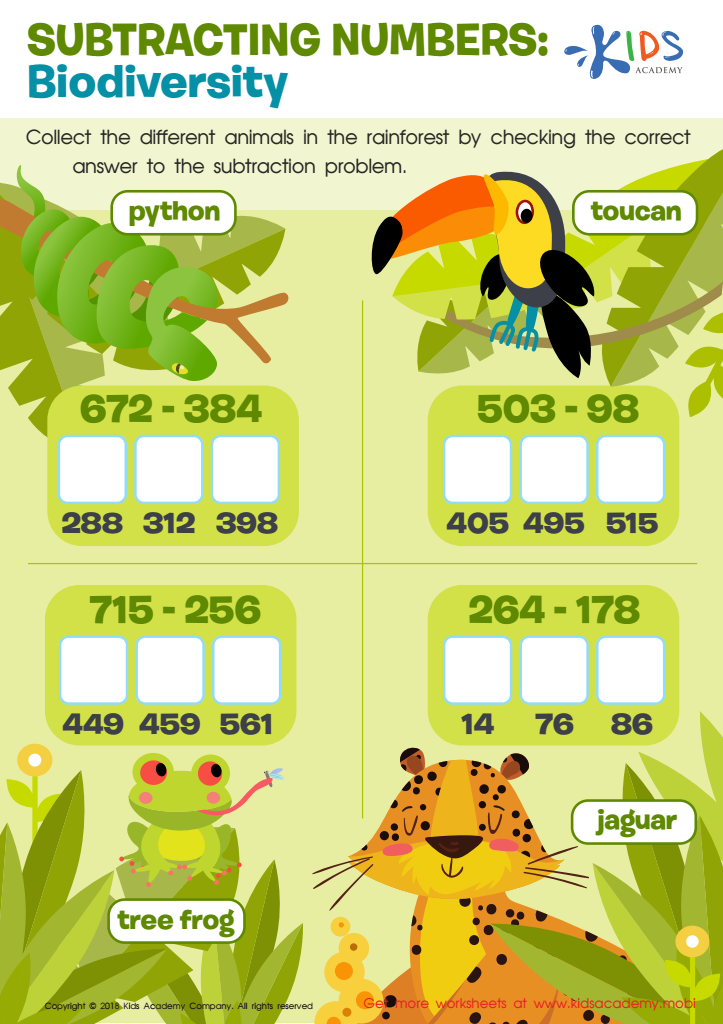
Subtracting Numbers: Biodiversity Worksheet
 Assign to My Students
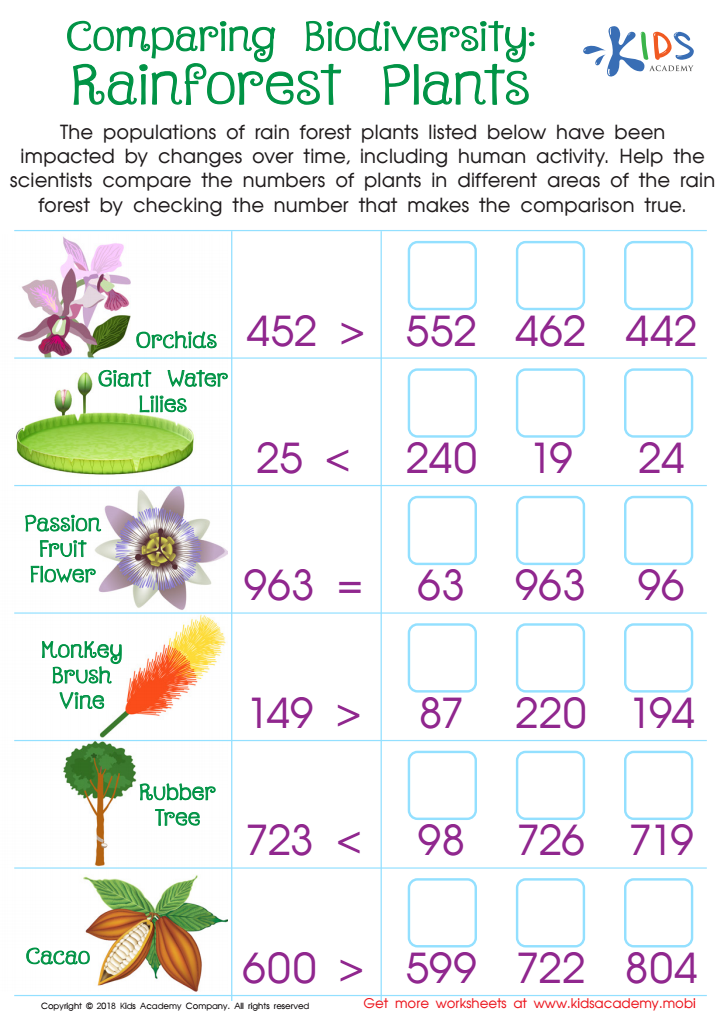
Comparing Biodiversity: Rainforest Plants Worksheet
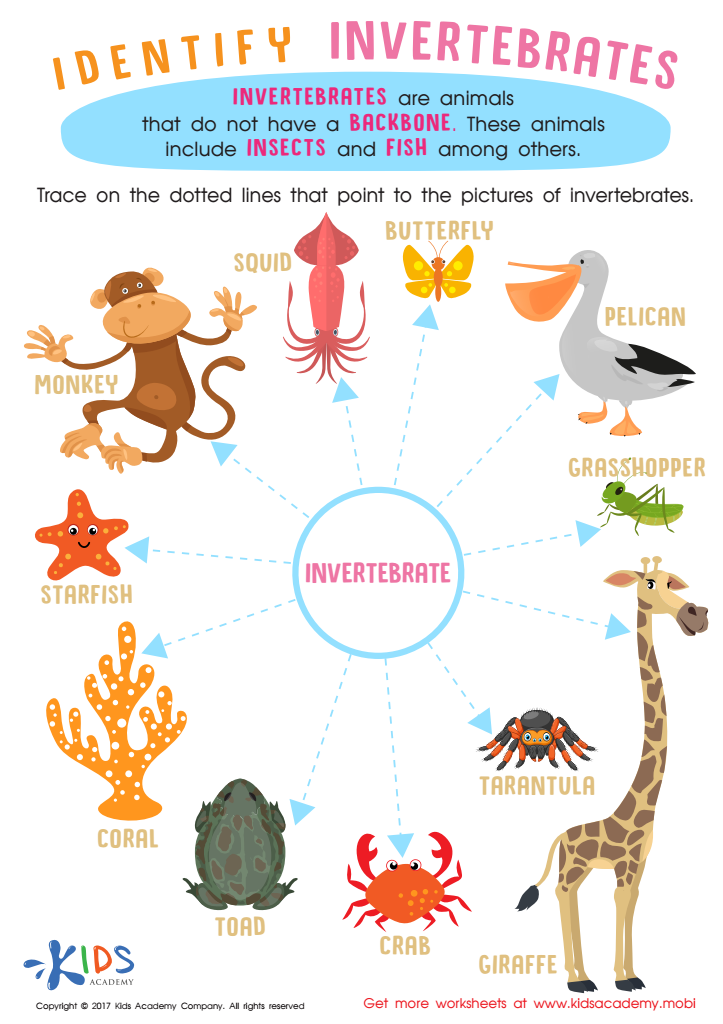
Invertebrates Worksheet for Grade 3
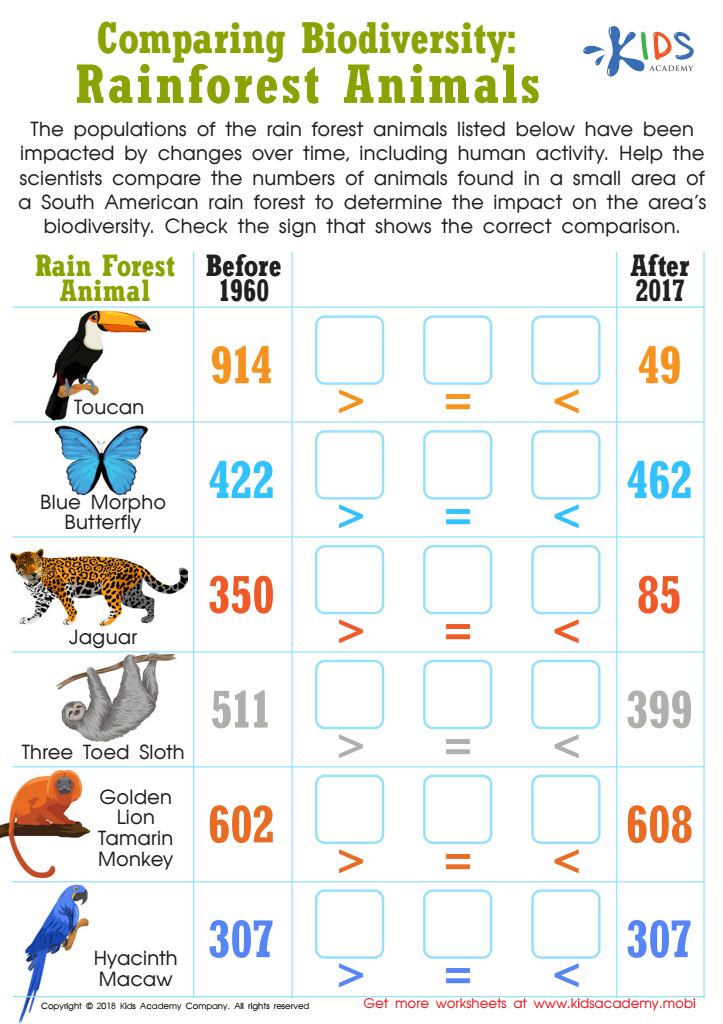
Comparing Biodiversity: Rainforest Animals Worksheet






.jpg)

Understanding biodiversity is crucial for children aged 7-9 as it fosters a deep appreciation for the natural world, which is essential for their development. At this age, children are naturally curious and eager to explore their environment, making it the perfect time to introduce concepts of biodiversity. Learning about the variety of life on Earth—plants, animals, and ecosystems—helps children grasp the interconnectedness of living organisms.
This knowledge encourages a sense of responsibility toward the environment. Children who comprehend the importance of biodiversity are more likely to develop eco-friendly habits and advocate for conservation efforts in their communities. Moreover, understanding biodiversity enhances critical thinking and problem-solving skills as children learn about ecosystems' roles and the effects of environmental changes.
Incorporating biodiversity into the curriculum through engaging activities—like nature walks or interactive science projects—can make learning fun and impactful. This foundational knowledge not only aligns with educational standards but also prepares children to be mindful citizens who value and protect our planet. Ultimately, teaching kids about biodiversity enriches their understanding of life’s complexities and promotes a nurturing attitude toward the Earth—all of which contribute to a healthier future for generations to come.








