Understanding comparisons Worksheets for Ages 7-9
4 filtered results
-
From - To
Our "Understanding Comparisons Worksheets for Ages 7-9" are designed to enhance critical thinking and analytical skills in young learners. Through engaging exercises, children will learn to compare and contrast a variety of objects, ideas, and scenarios, helping them to develop essential cognitive skills. These worksheets offer a range of fun activities that make learning about comparisons understandable and enjoyable. Perfect for both classroom and home use, they aid in mastering the concept through practice. Foster your child's ability to analyze differences and similarities with our expertly designed, educational worksheets, tailored for ages 7-9.
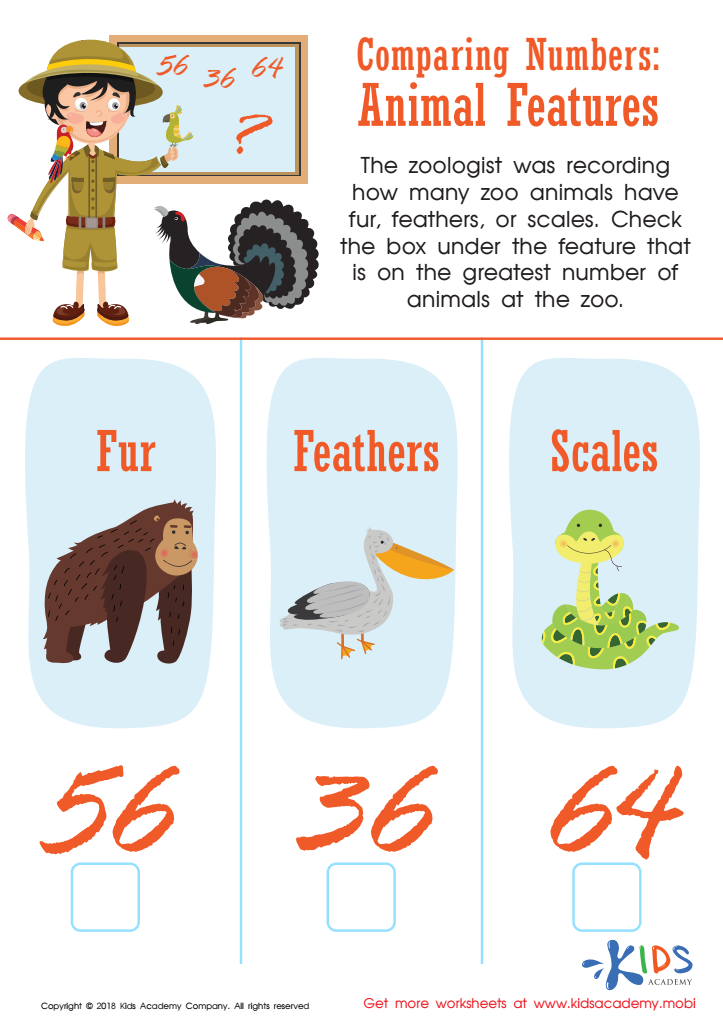
Animal Features Worksheet
 Assign to My Students
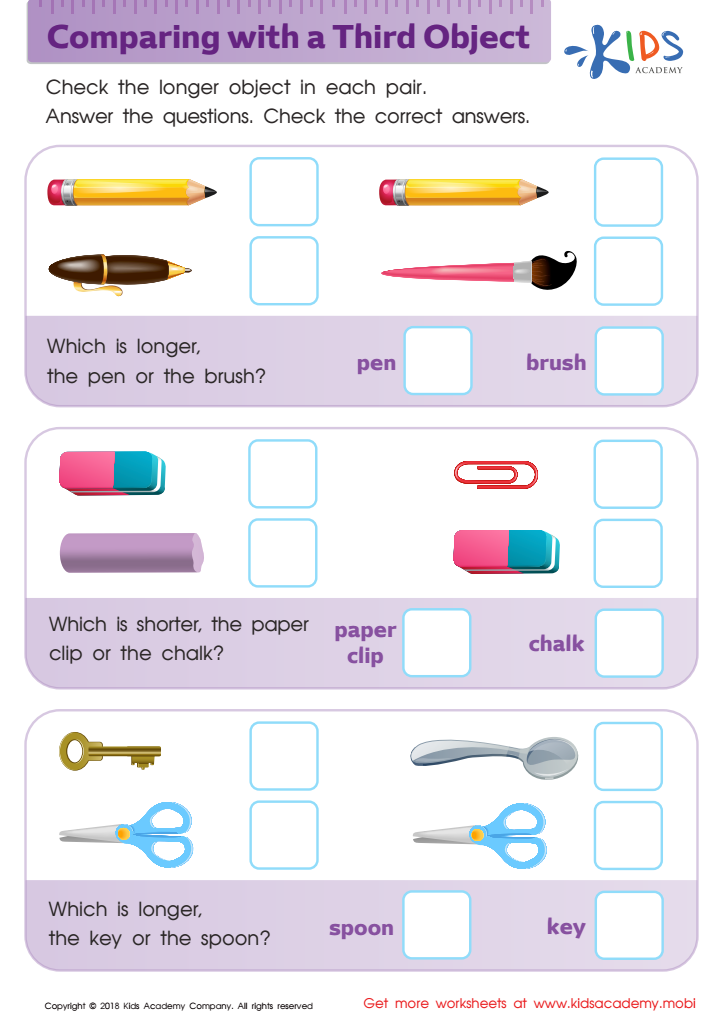
Comparing with a Third Object Worksheet
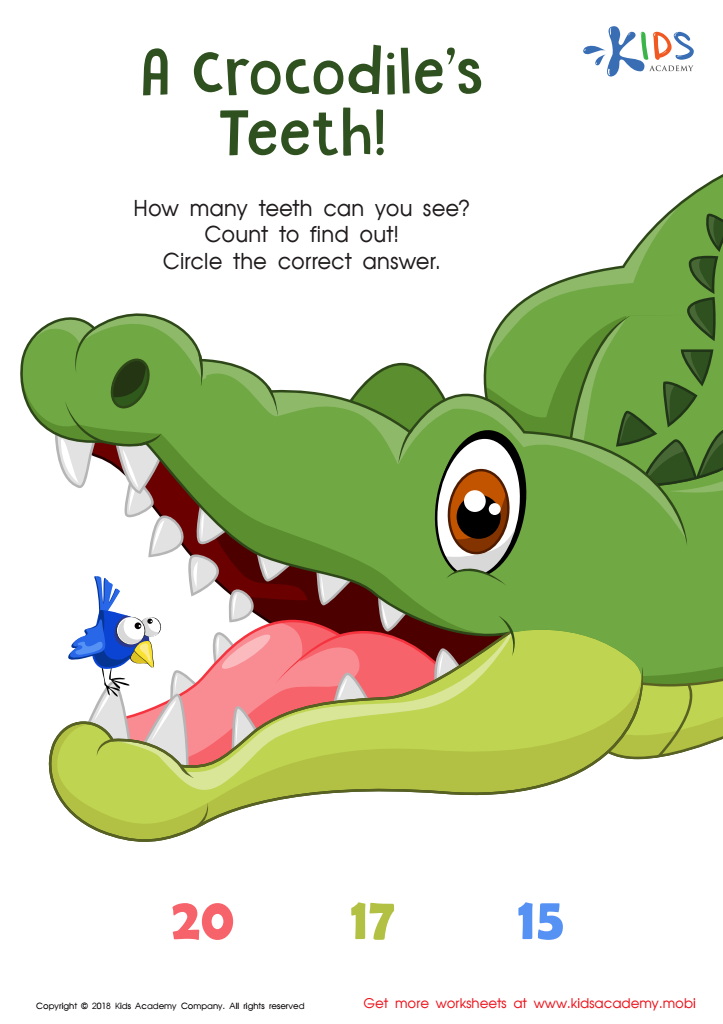
A Crocodile's Teeth Worksheet
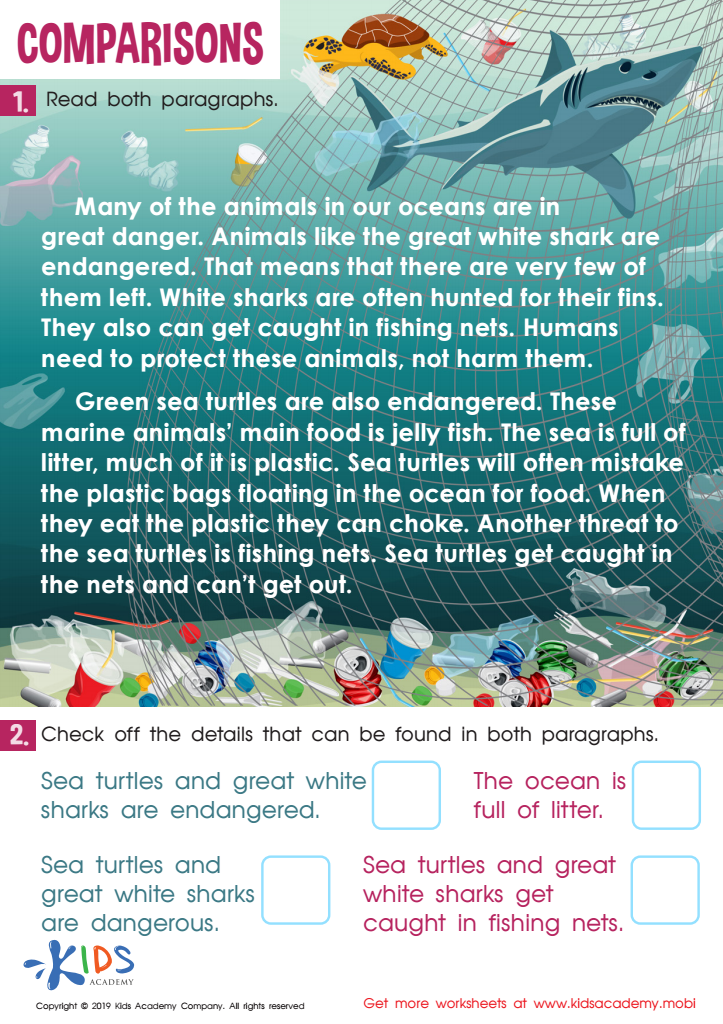
Comparisons Worksheet





Understanding comparisons is a crucial skill for children ages 7-9 because it forms the foundation for critical thinking and problem-solving, which are essential for lifelong learning. Comparing helps kids make sense of their world by identifying similarities and differences among objects, ideas, and behaviors. This ability contributes directly to their academic progress, especially in subjects like math and science, where comparing numbers, measurements, or data is routine.
For example, when a child compares the heights of different plants or the weights of various items, they learn to quantify and analyze real-world attributes. These skills translate to higher-level abilities such as evaluating evidence and making informed decisions. In literacy development, understanding comparisons helps children enhance their comprehension and analytical thinking. Recognizing how characters, settings, or events are alike or different improves their ability to understand stories and texts.
Moreover, social and emotional growth also benefits. Children learn to appreciate diversity and empathy by comparing and contrasting their experiences with those of others. Therefore, parents and teachers should prioritize teaching comparisons, as mastering this skill supports the holistic development of children, equipping them with tools for both academic success and personal growth.








