Understanding landforms Worksheets for Ages 7-9
3 filtered results
-
From - To
Explore the fascinating world of landforms with our "Understanding Landforms Worksheets" designed for children ages 7-9. These engaging worksheets encourage young learners to discover various types of landforms, such as mountains, valleys, and rivers, while enhancing their critical thinking and geographical knowledge. Each activity allows children to illustrate, label, and identify key characteristics of different landforms, making learning both fun and interactive. Our thoughtfully crafted resources support curriculum goals while fostering creativity and curiosity. Perfect for classroom use or home learning, these worksheets help young explorers gain a solid understanding of the Earth's features, instilling a love for nature and geography!
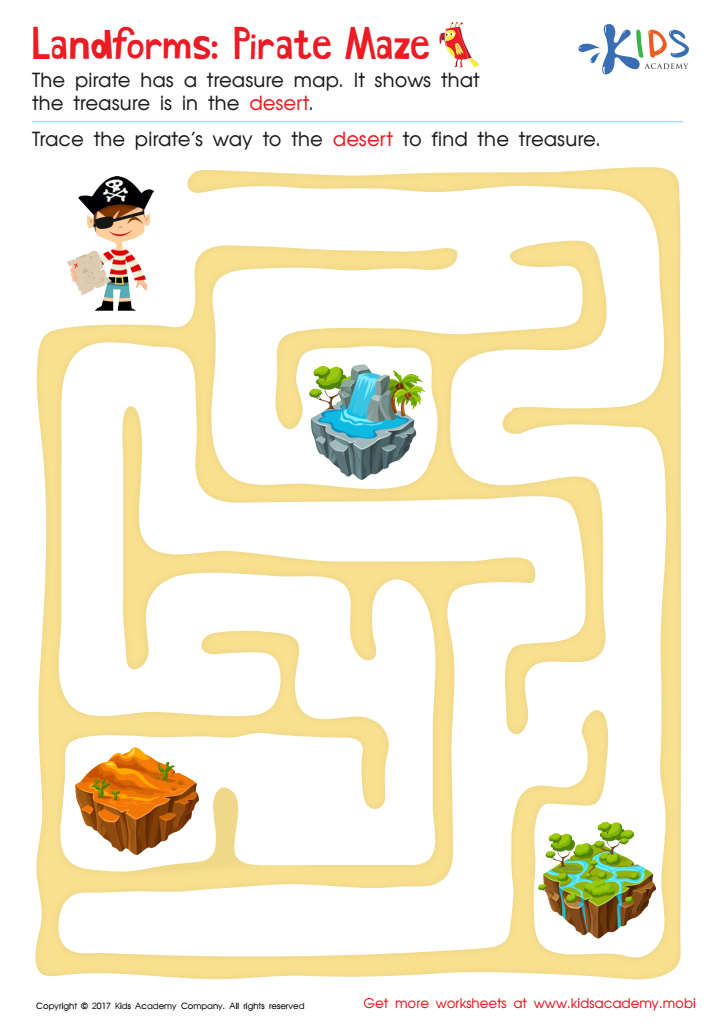
Landforms: Pirate Maze Printable
 Assign to My Students
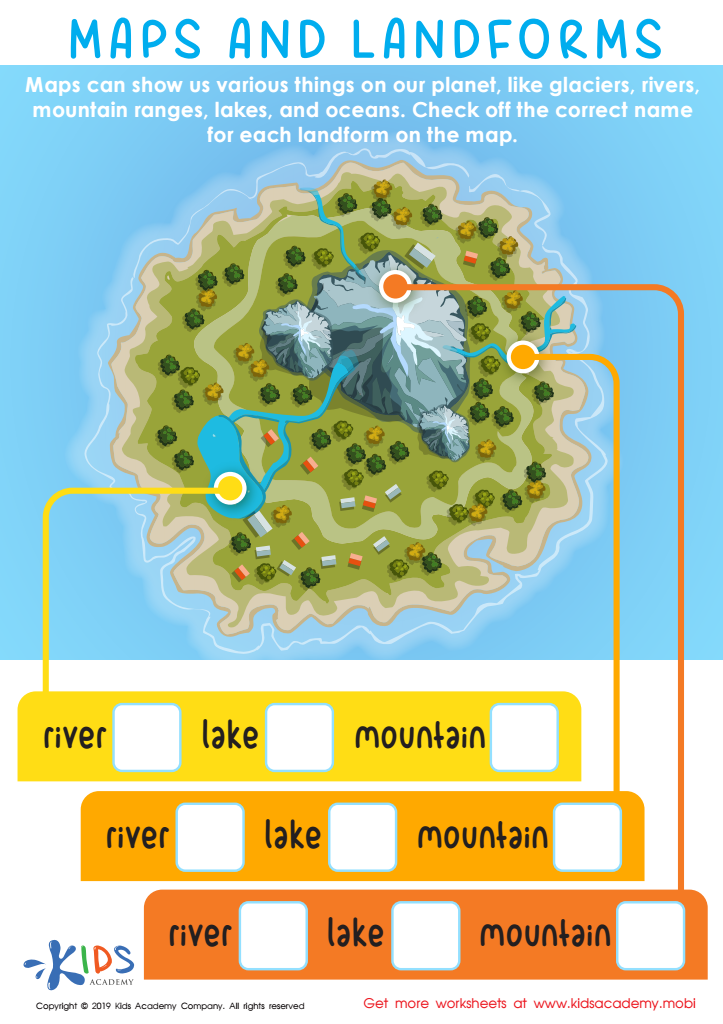
Maps and Landforms Worksheet
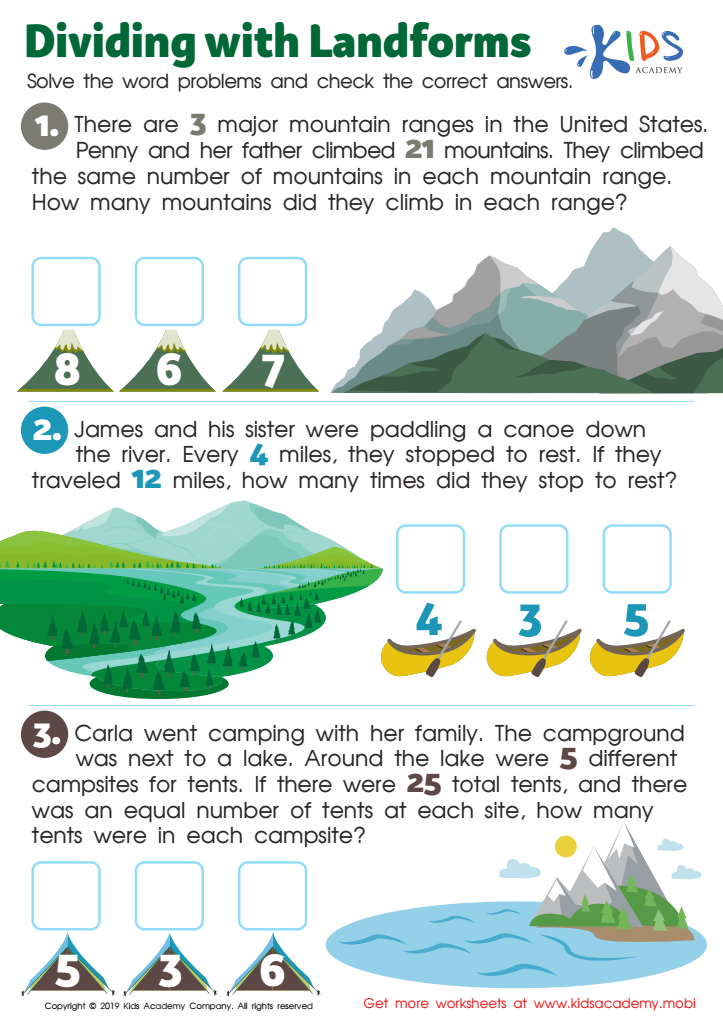
Dividing with Landforms








Understanding landforms is crucial for children aged 7-9 because it forms the foundation for their knowledge of geography, science, and environmental awareness. At this age, kids are naturally curious about the world around them, and learning about landforms—like mountains, rivers, valleys, and hills—helps them make sense of their environment. Parents and teachers should care because this understanding fosters critical thinking and observation skills.
By exploring landforms, children learn about ecosystems and how they interact with human activities, such as urban development or agriculture. This awareness promotes environmental stewardship, encouraging them to appreciate and protect nature. Furthermore, knowledge of landforms can support literacy skills as students engage with diverse texts that incorporate geographical elements.
Teaching children about landforms enhances their geography skills and encourages creativity through exploration and hands-on activities, such as mapping projects or nature walks. Ultimately, this foundation enables children to comprehend broader concepts, such as climate change and natural disasters, leading to informed, responsible future citizens. Investing time in teaching landforms allows parents and teachers to help children nurture their innate curiosity and develop a solid base for lifelong learning.








