Unlock the wonders of symmetry for your child with our engaging worksheets designed for ages 7-9. These fun and educational activities help young learners grasp the concept of symmetry through hands-on practice. Each worksheet features exciting tasks such as identifying symmetrical shapes, drawing symmetrical patterns, and completing symmetrical figures, which enhance critical thinking and spatial awareness. Ideal for reinforcing classroom lessons or enjoying at home, our worksheets make understanding symmetry a joyful learning adventure. Prepare to see their confidence soar as they master this essential math skill with ease!

Check out this FREE "Understanding symmetry" Trial Lesson for age 7-9!

Objects in the Environment- Circle, Square, Triangle & Rectangle

Favorites
With answer key
Interactive
  • 7-9
  • Understanding symmetry
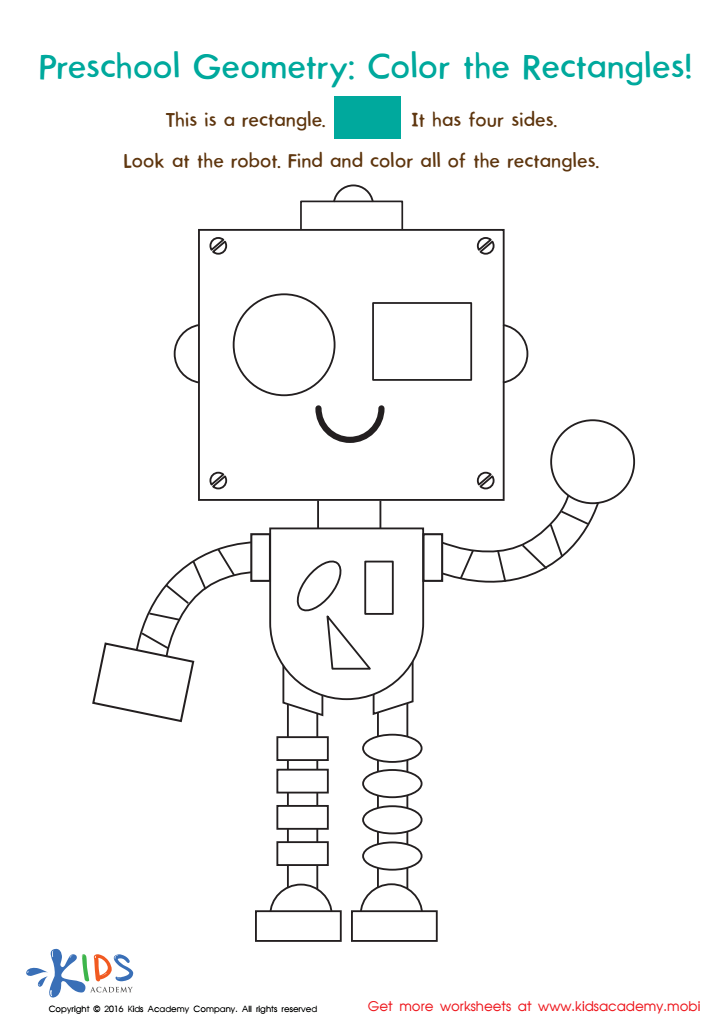
Preschool geometry worksheet

Geometry Worksheet

Geometry can be fun for kids! They explore shapes that create their favorite pics and objects. This preschool worksheet explains that rectangles have four sides, then kids color rectangles on a funny robot!
Geometry Worksheet
Worksheet
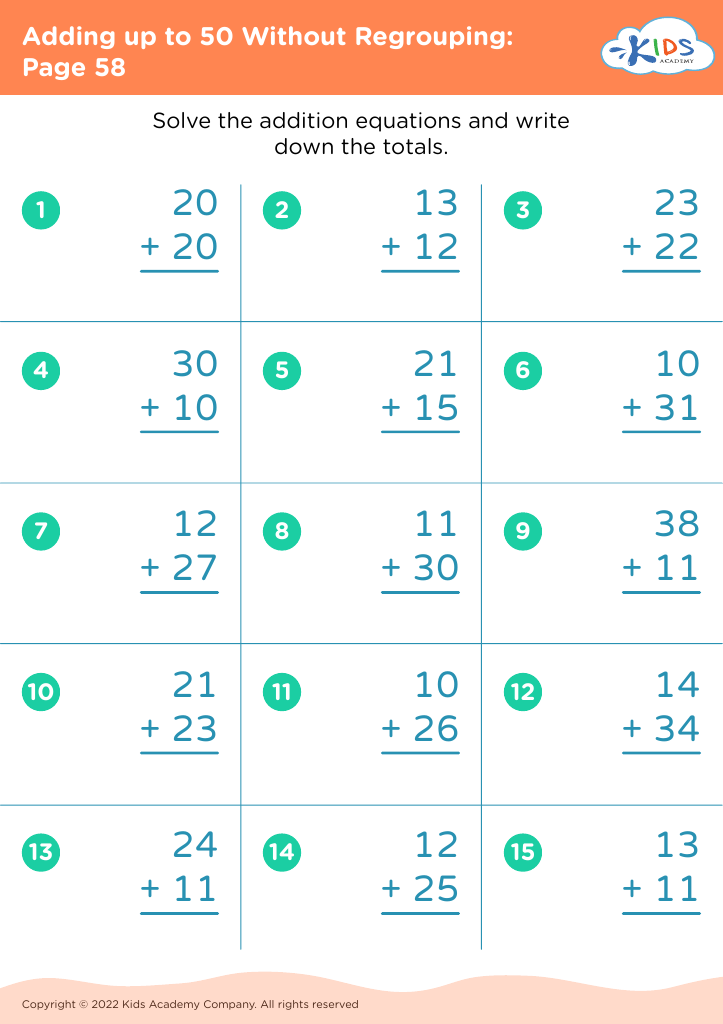
Adding up to 50 Without Regrouping: Page 58
Worksheet
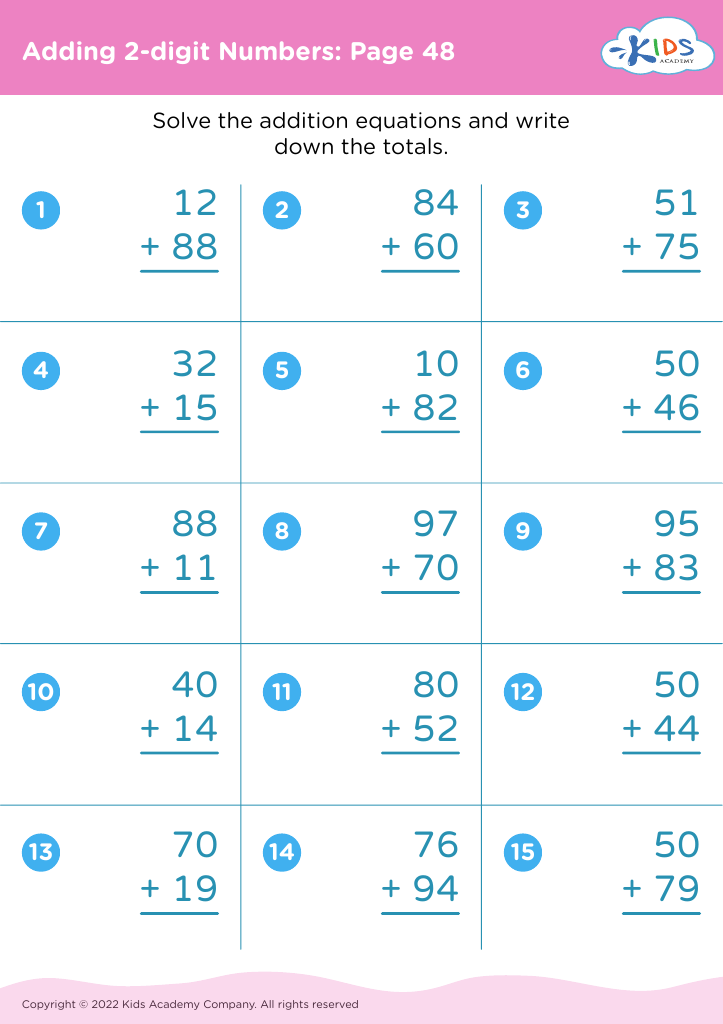
Adding 2-digit Numbers: Page 48

Adding 2-digit Numbers: Page 48

Adding 2-digit Numbers: Page 48
Worksheet
Butterfly Addition Worksheet

Butterfly Addition Worksheet

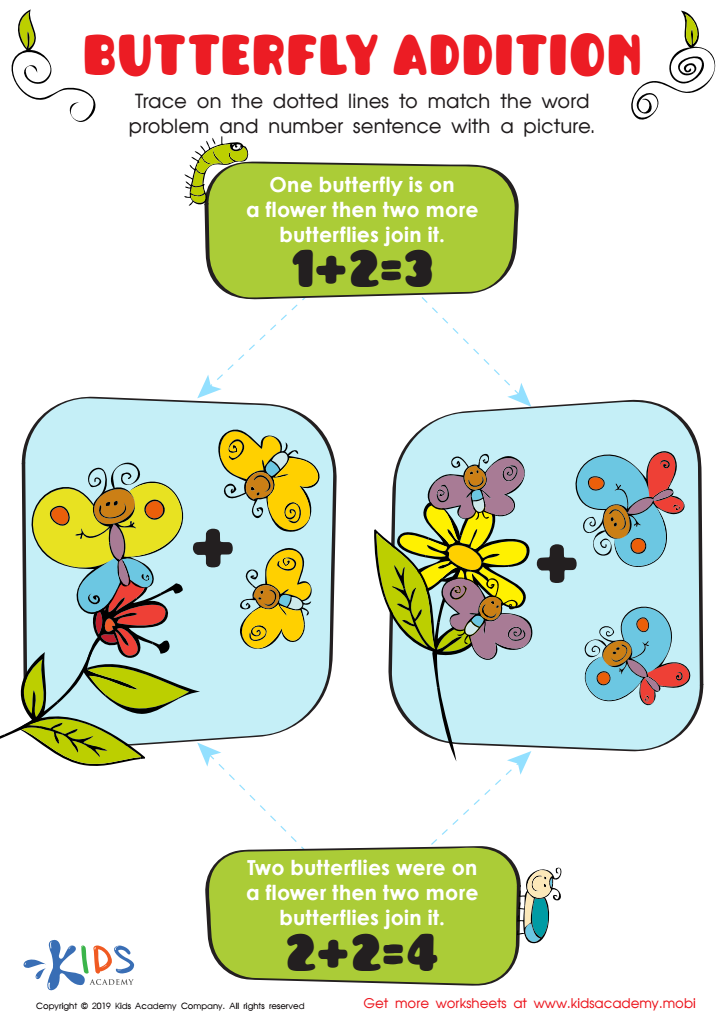
This tracing sheet is great for kids to work on math skills and have fun too. Read the word problems to them, then help them trace the dotted lines to match the problem and number sentence to a picture. Not only is it educational, it's beautiful too - your kids will love learning about butterflies!
Butterfly Addition Worksheet
Worksheet
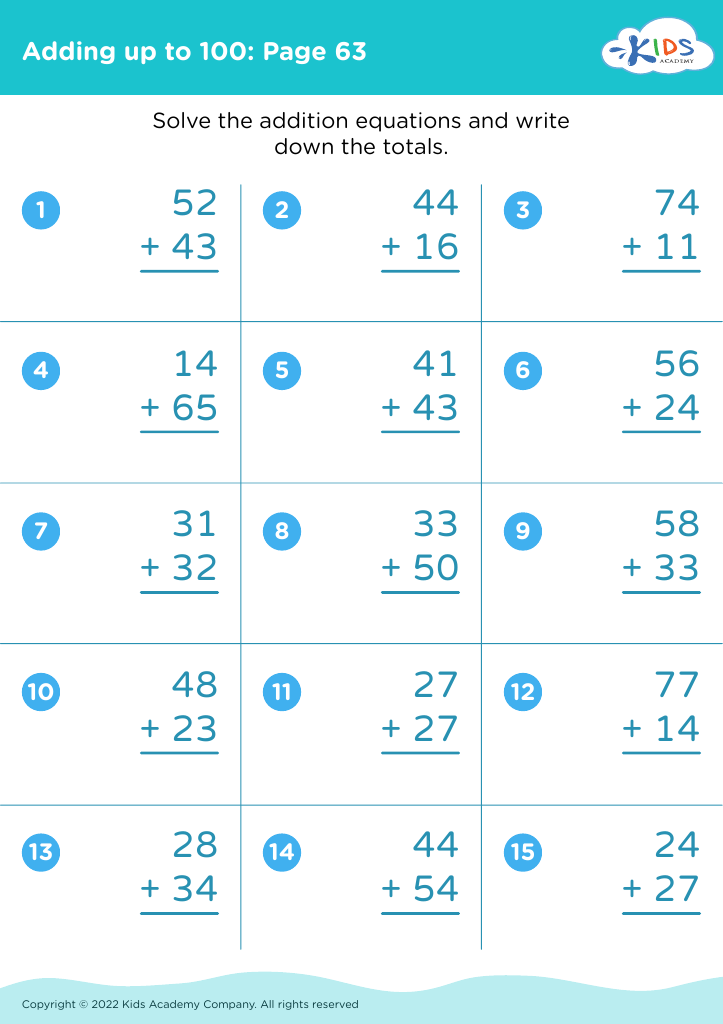
Adding up to 100: Page 63

Adding up to 100: Page 63

Adding up to 100: Page 63
Worksheet
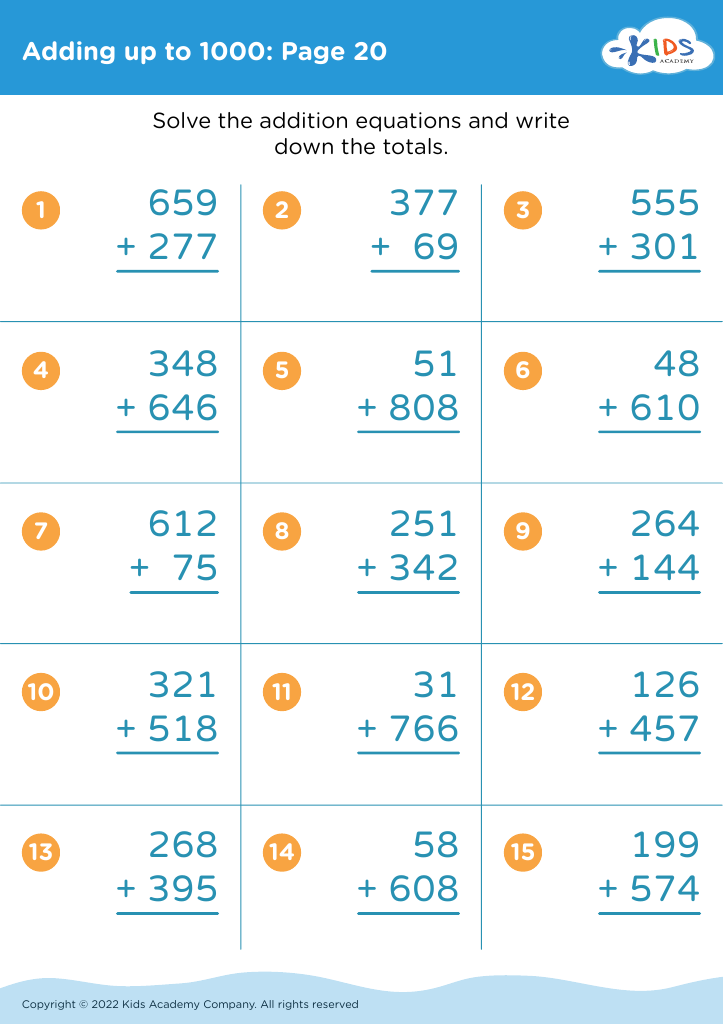
Adding up to 1000: Page 20

Adding up to 1000: Page 20

Adding up to 1000: Page 20
Worksheet
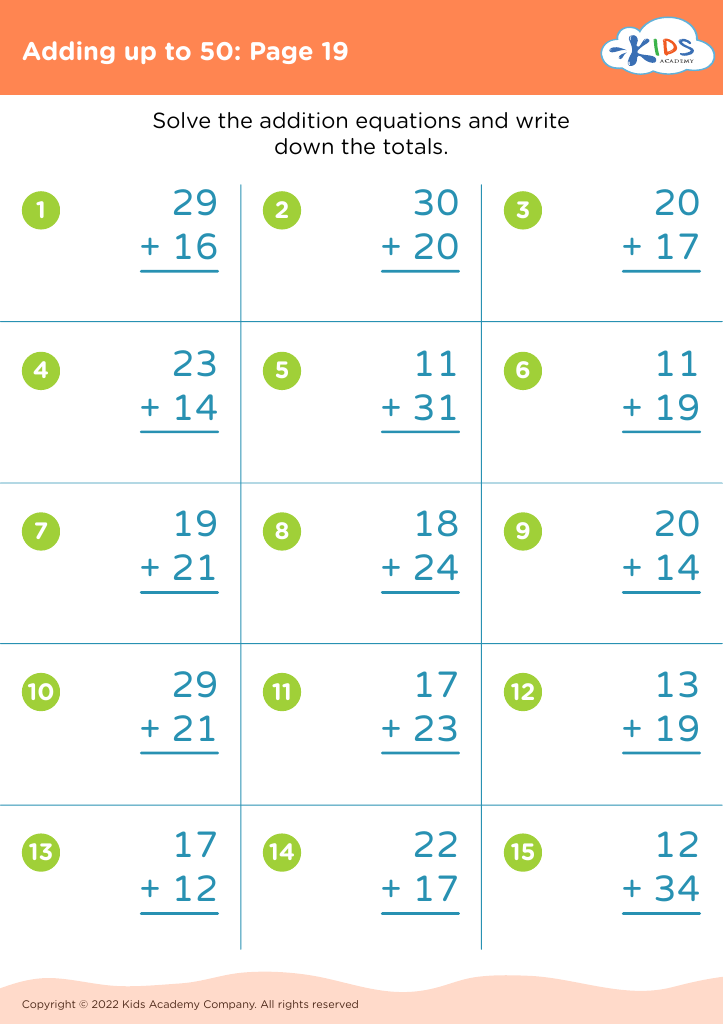
Adding up to 50: Page 19

Adding up to 50: Page 19

Adding up to 50: Page 19
Worksheet
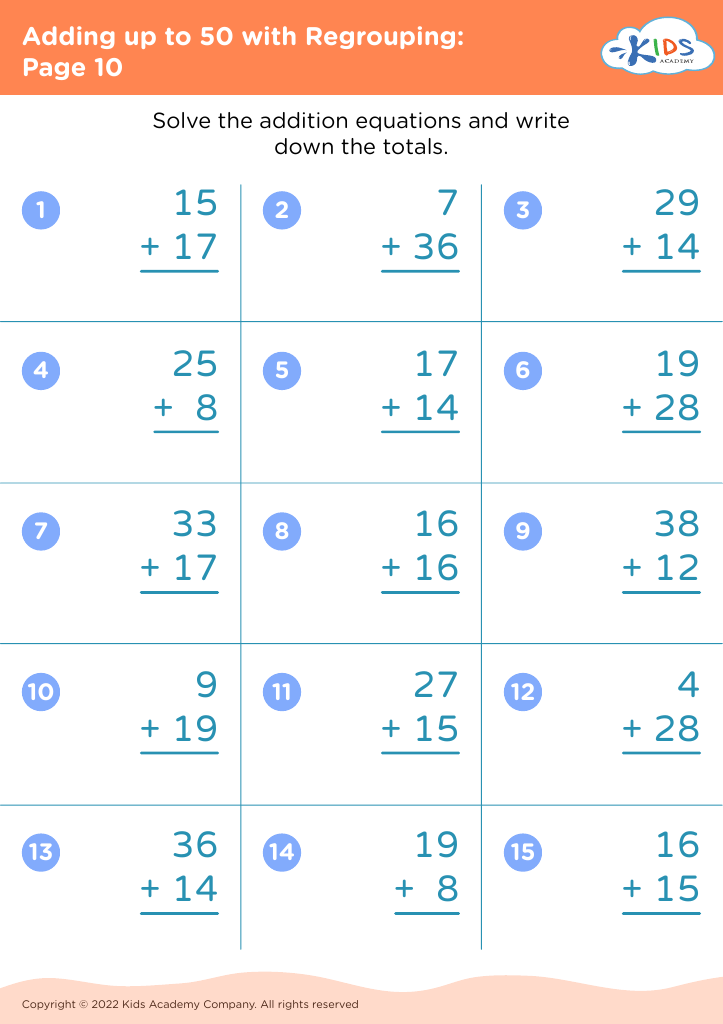
Adding up to 50 with Regrouping: Page 10
Worksheet
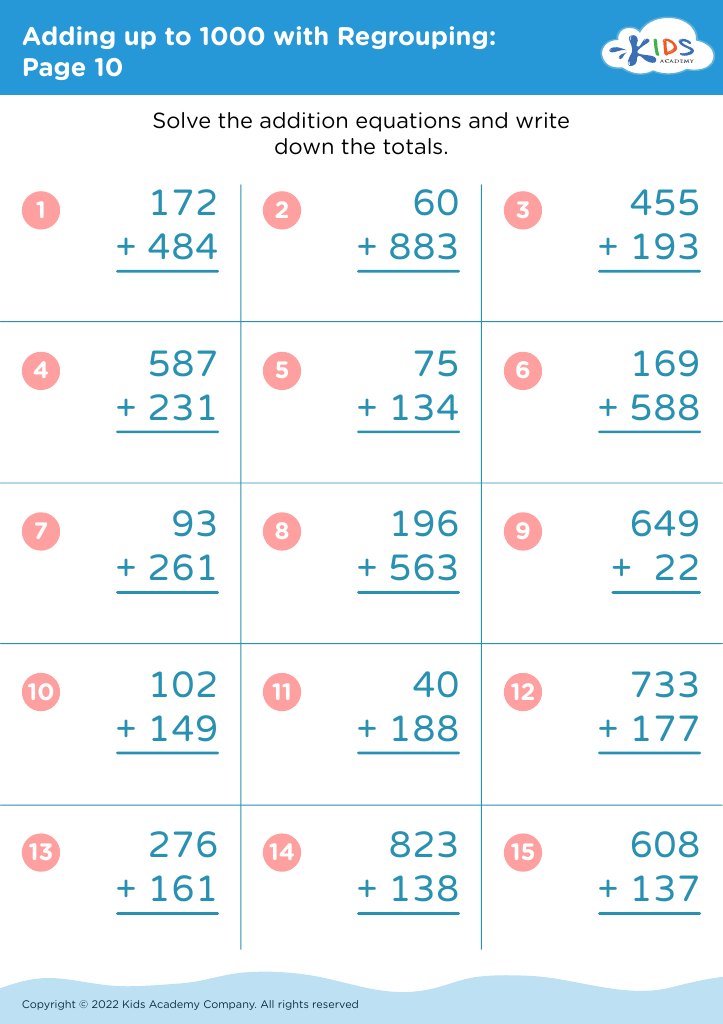
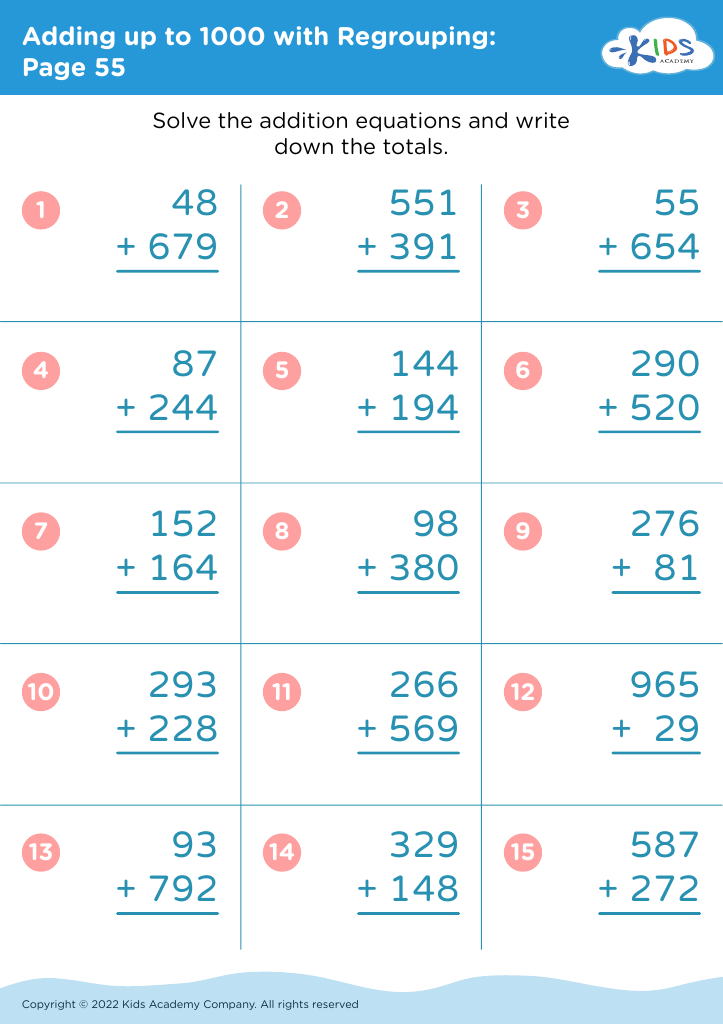
Adding up to 1000 with Regrouping: Page 10
Worksheet
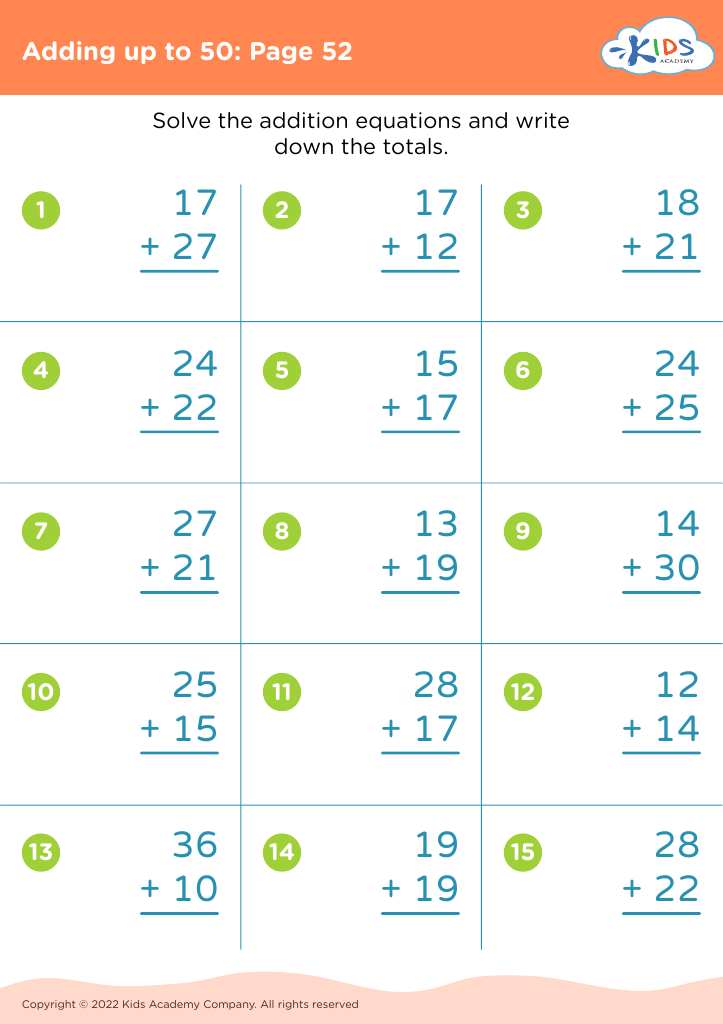
Adding up to 50: Page 52

Adding up to 50: Page 52

Adding up to 50: Page 52
Worksheet
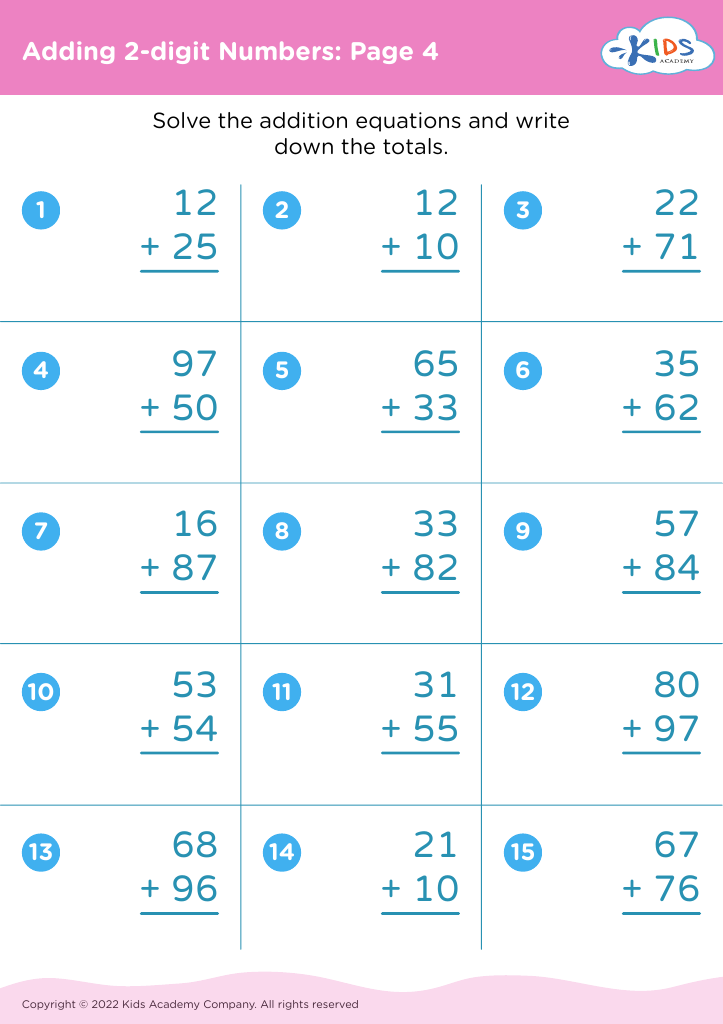
Adding 2-digit Numbers: Page 4

Adding 2-digit Numbers: Page 4

Adding 2-digit Numbers: Page 4
Worksheet
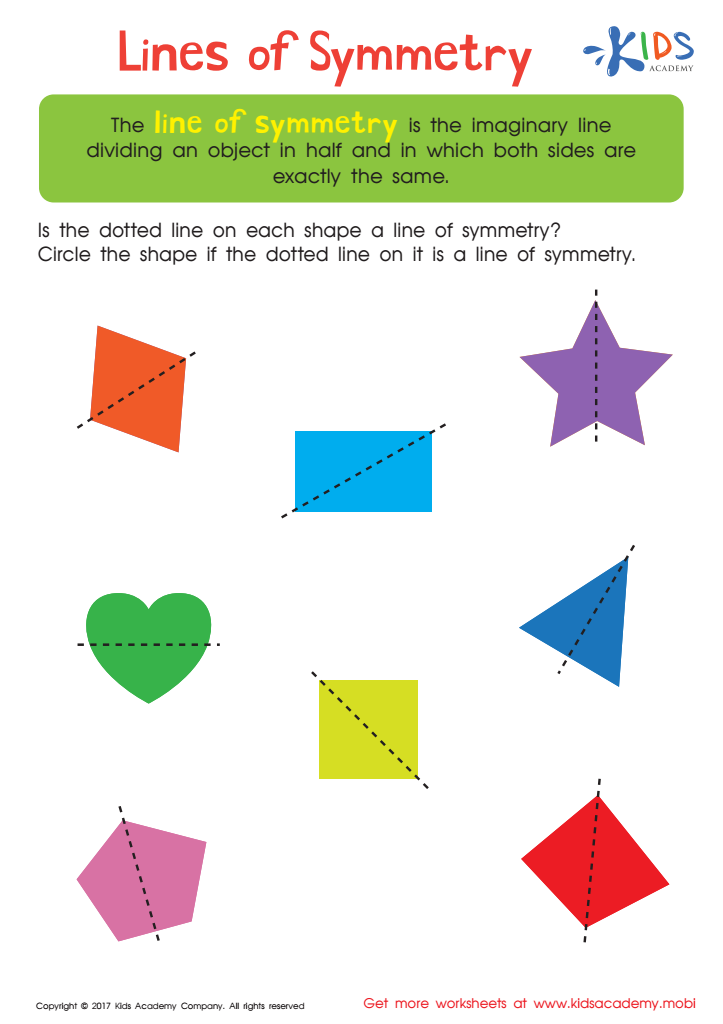
Lines of symmetry worksheet

Lines of Symmetry Printable
Symmetry is a key math concept that kids must learn to develop their geometry skills. This fun worksheet helps build this skill, by encouraging kids to recognize symmetrical shapes and find equal parts.
Lines of Symmetry Printable
Worksheet
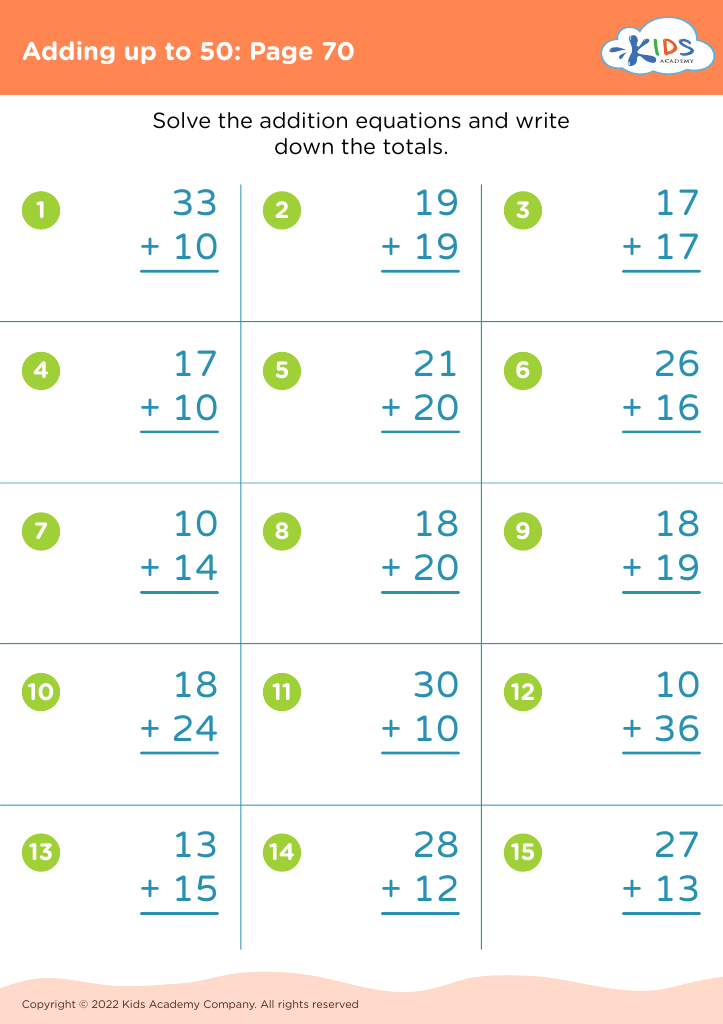
Adding up to 50: Page 70

Adding up to 50: Page 70

Adding up to 50: Page 70
Worksheet
X Marks the Spot Worksheet

X Marks the Spot Worksheet

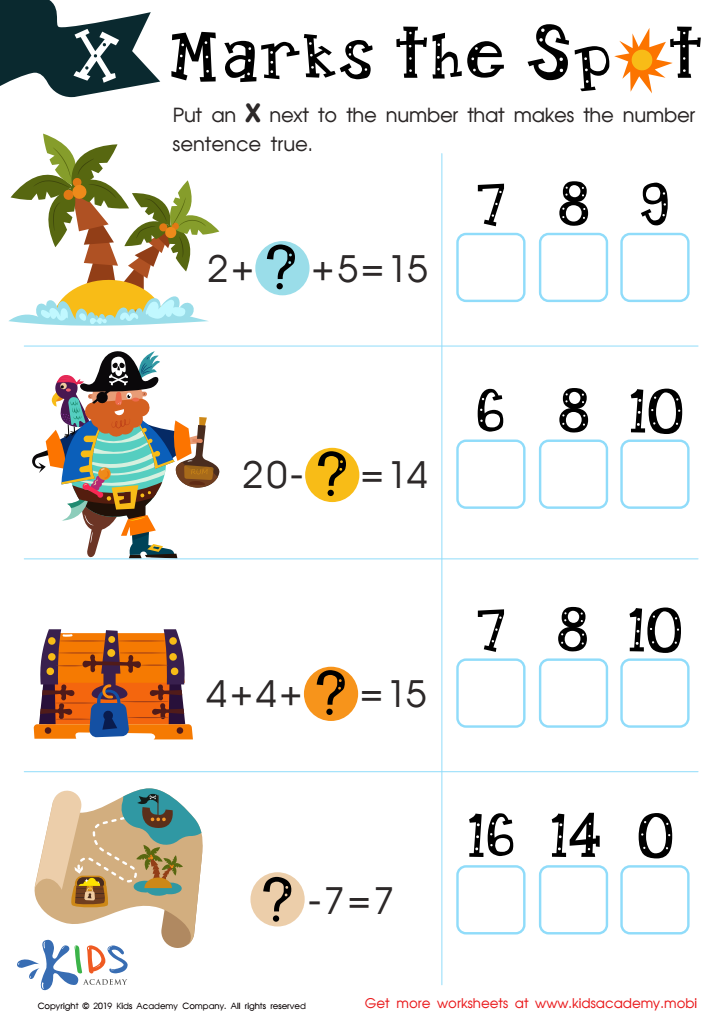
Let your kids explore the world of pirates! Ask them what they know about them, what they do and the phrases they like. Download the printout and point at the images, asking them to tell you what they see. Help them tick the box for the number that makes the sentence true. Let them have fun learning about pirates! (80 words)
X Marks the Spot Worksheet
Worksheet
Counting: Assessment 5 Worksheet
Counting: Assessment 5 Worksheet
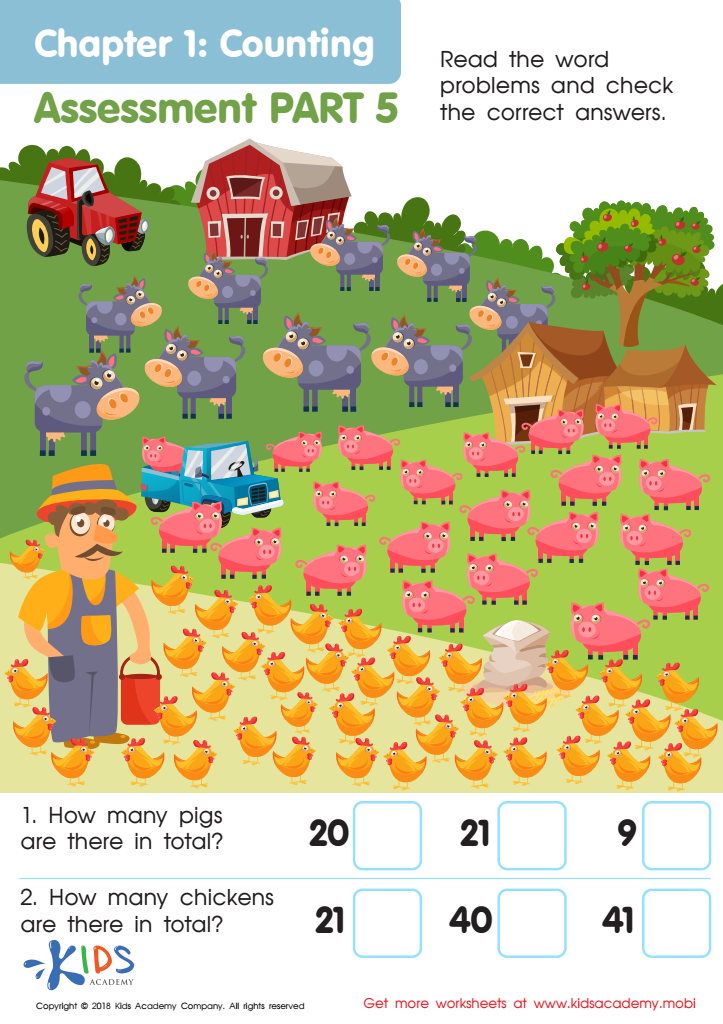
Let your kids have fun counting farm animals on this worksheet! Help the farmer count the animals and have your child check the answers to assess their counting skills. Read the word problem at the bottom of the page and count the animals together. It's an entertaining way to practice counting and have a great time!
Counting: Assessment 5 Worksheet
Worksheet
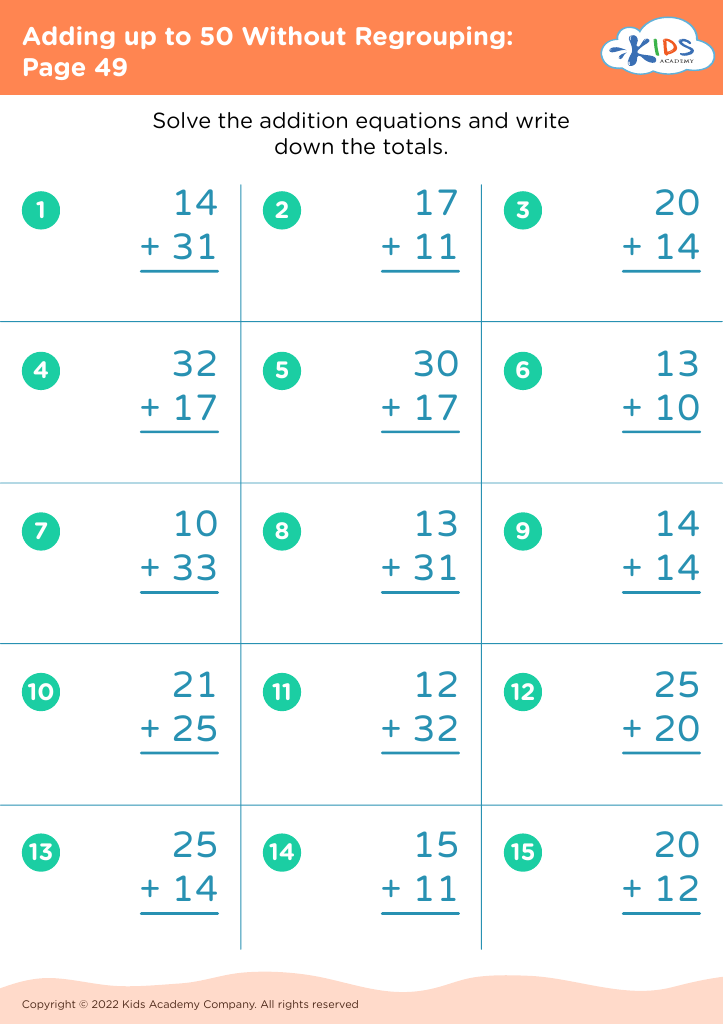
Adding up to 50 Without Regrouping: Page 49
Worksheet
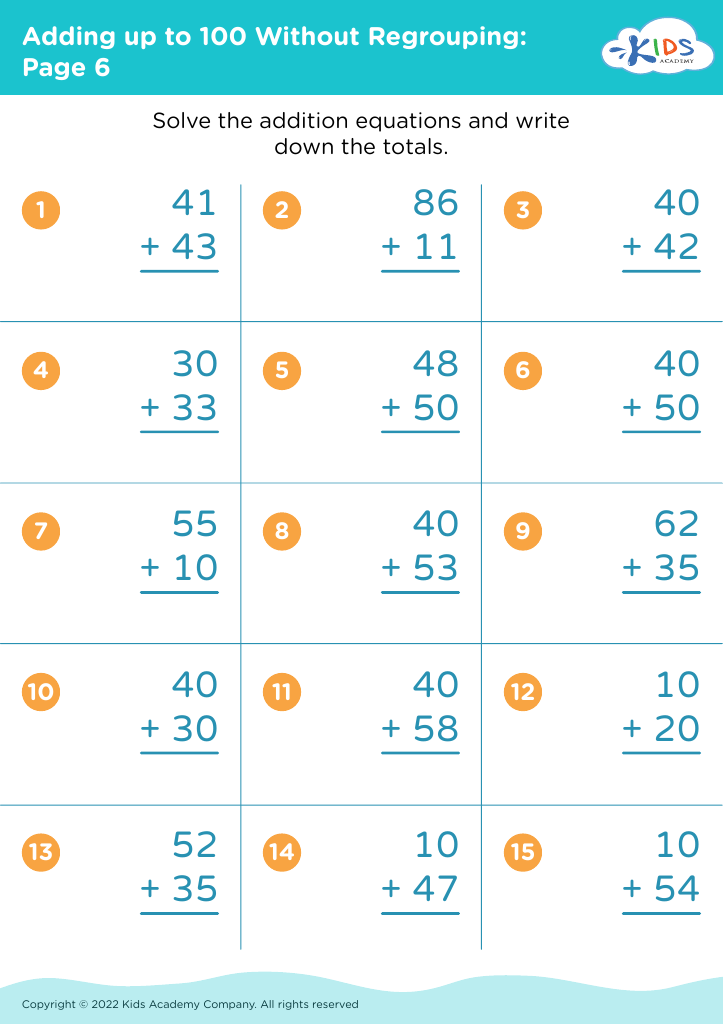
Adding up to 100 Without Regrouping: Page 6
Worksheet
Adding up to 1000 with Regrouping: Page 55
Worksheet
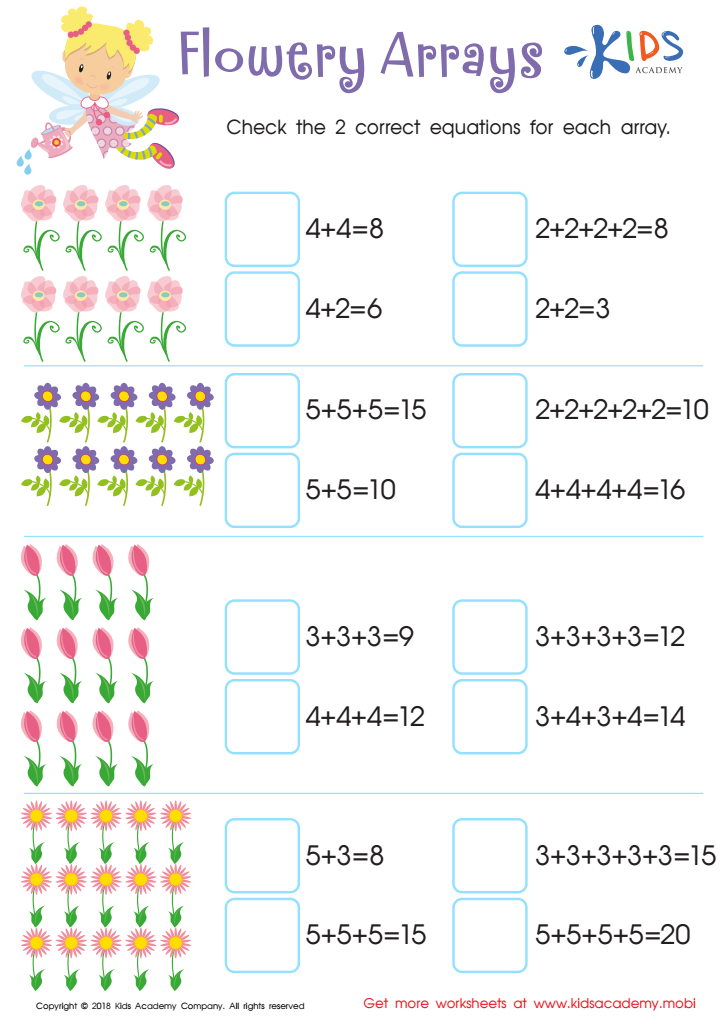
Flowery Arrays Worksheet
Flowery Arrays Worksheet
This worksheet helps your child learn to identify and represent arrays. For example, both 3+3+3+3=12 and 4+4+4=12 are arrays but the first is arranged in rows and the second in columns. Let your child use this knowledge to answer the four questions in this pdf and check the two correct equations.
Flowery Arrays Worksheet

Worksheet
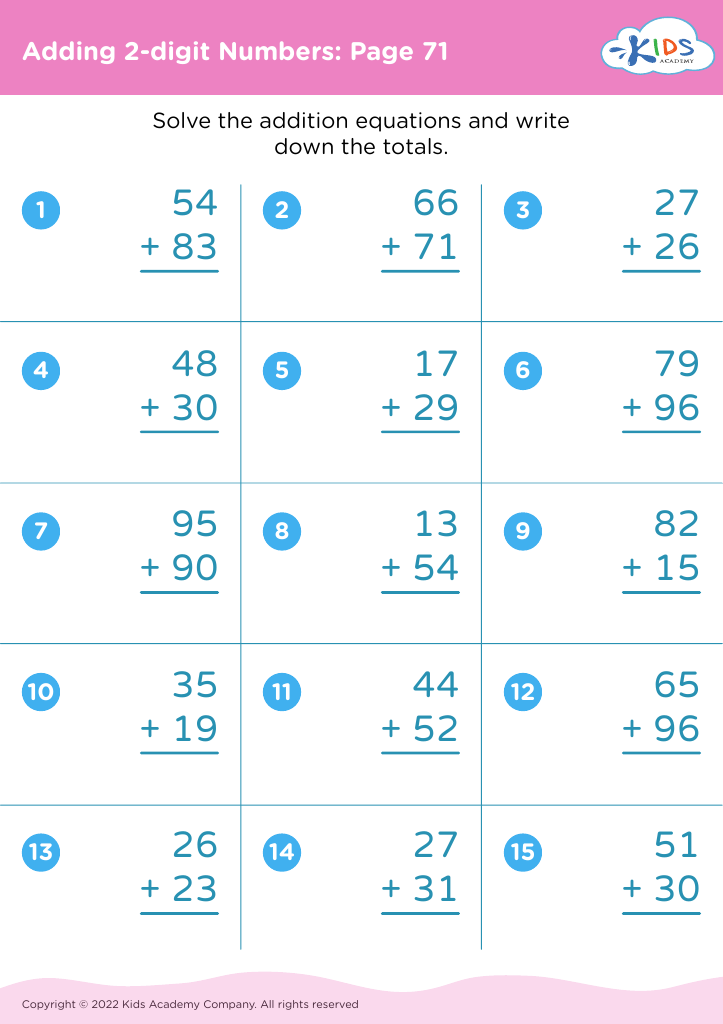
Adding 2-digit Numbers: Page 71

Adding 2-digit Numbers: Page 71

Adding 2-digit Numbers: Page 71
Worksheet
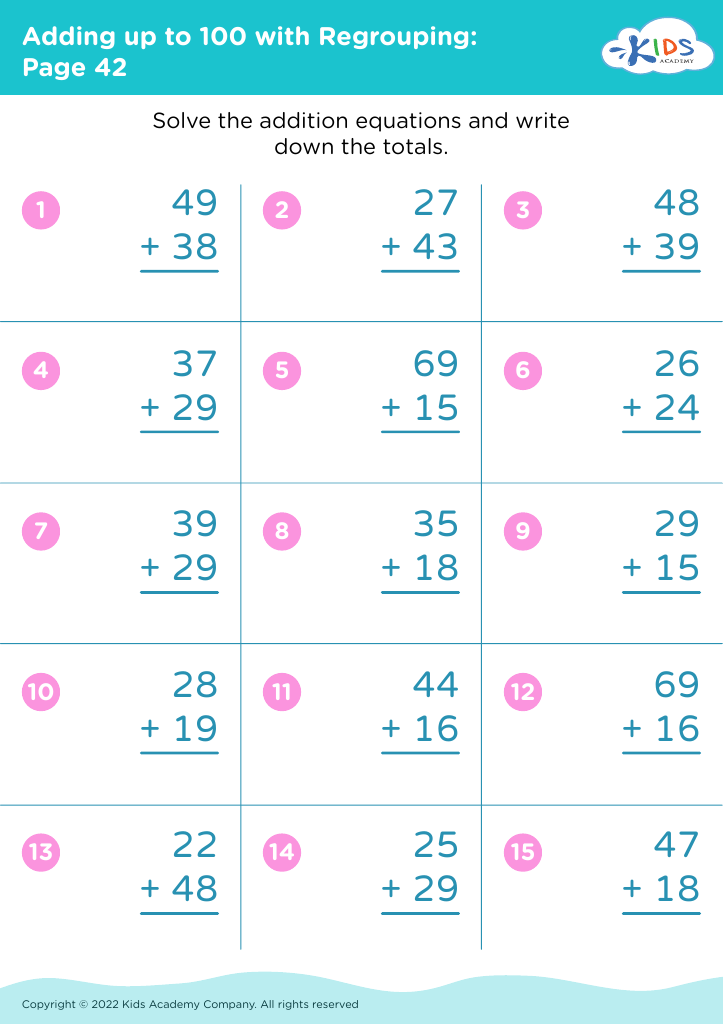
Adding up to 100 with Regrouping: Page 42
Worksheet
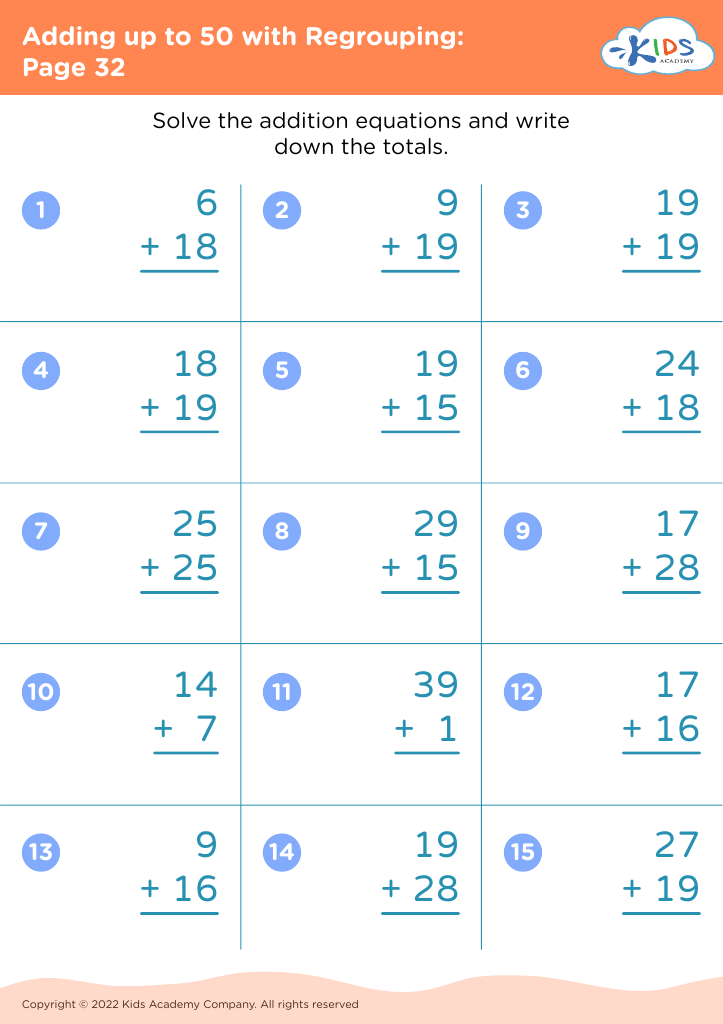
Adding up to 50 with Regrouping: Page 32
Worksheet
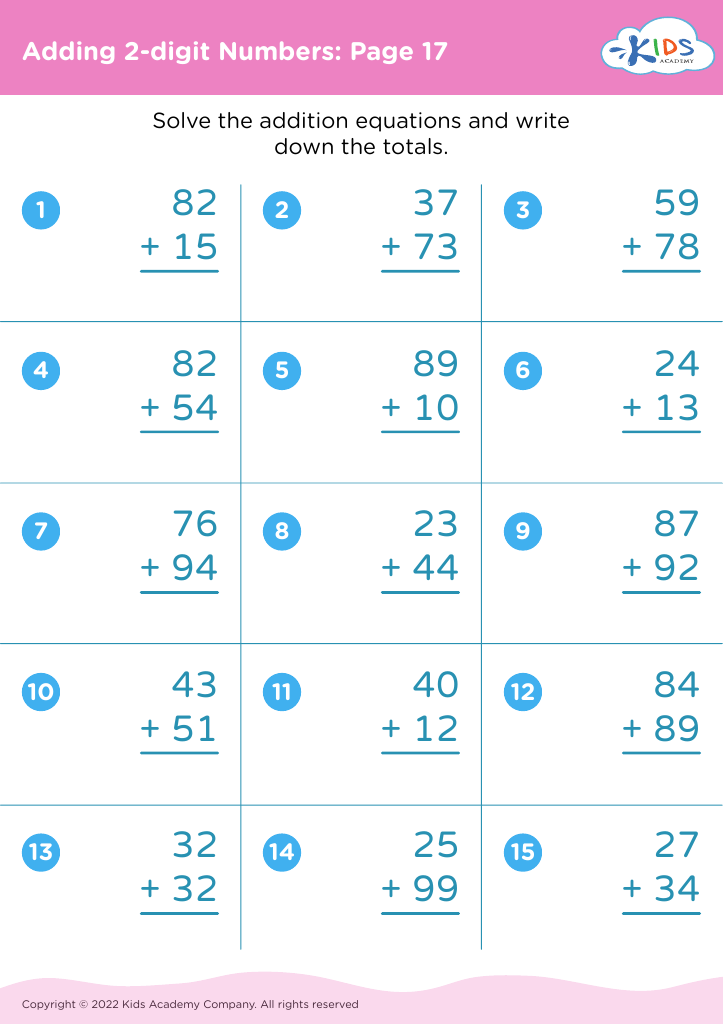
Adding 2-digit Numbers: Page 17

Adding 2-digit Numbers: Page 17

Adding 2-digit Numbers: Page 17
Worksheet
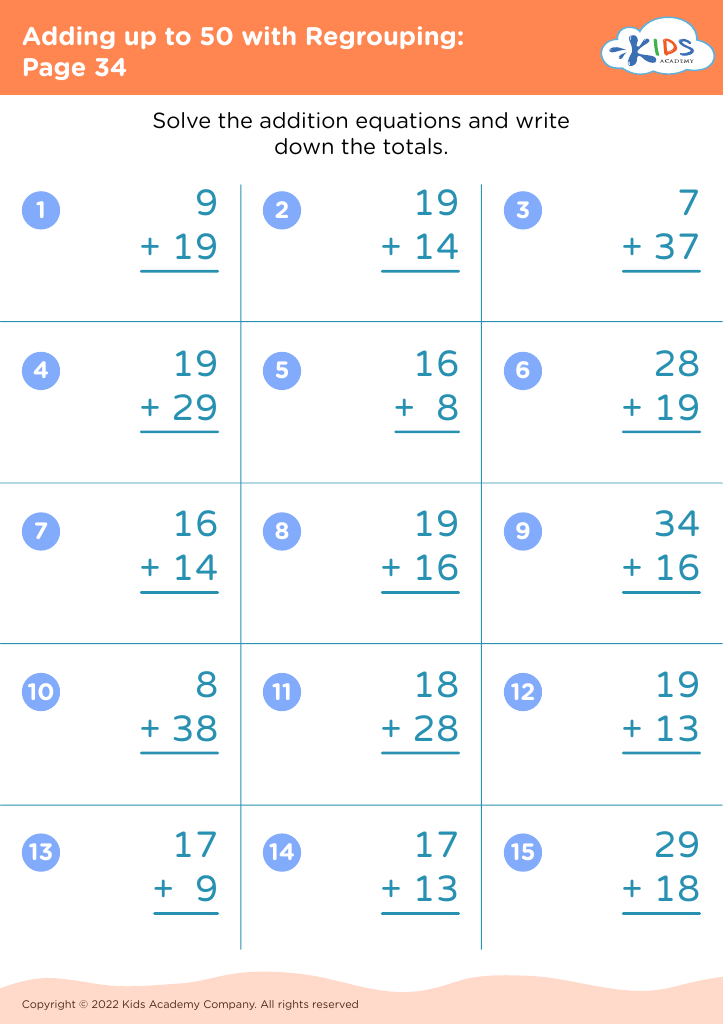
Adding up to 50 with Regrouping: Page 34
Worksheet


Understanding symmetry is a foundational concept in mathematics and has several significant benefits, especially for children aged 7-9. At this age, kids are developing crucial cognitive and spatial reasoning skills. When parents and teachers introduce symmetrical patterns and shapes, they are helping children to enhance these skills, which is vital for their overall cognitive development.

Symmetry is all around us — in nature, art, architecture, and everyday objects. By recognizing and understanding symmetry, children learn to see order and predictability in their environment. This boosts their visual perception and enhances their ability to organize and navigate the world around them.

From an educational standpoint, symmetry lays the groundwork for more advanced mathematical concepts. Early exposure to symmetry helps children improve their geometric skills, understand balance, and recognize patterns. These capabilities are fundamental in problem-solving and critical thinking, skills that are indispensable not only in math but across various subjects and real-life scenarios.

Moreover, exploring symmetry can be highly engaging and fun for young learners. Activities like drawing symmetrical figures, creating art projects, or finding symmetry in nature help children personalize their learning experience and foster a genuine interest in math and science. Engaging with symmetry can also build persistence and attention to detail — qualities that will benefit them academically and personally.

In summary, understanding symmetry for children aged 7-9 is crucial as it enhances cognitive and spatial reasoning, builds a foundation for advanced math skills, enriches their perception of the world, and makes learning enjoyable.