Understanding synonyms Worksheets for Ages 7-9
3 filtered results
-
From - To
Enhance your child's vocabulary with our "Understanding Synonyms Worksheets" designed specifically for ages 7-9! These engaging and educational activities help young learners explore the concept of synonyms—words that have similar meanings. By working through fun exercises, children will develop essential reading and writing skills, improve their language comprehension, and expand their word choices. Our worksheets are interactive and age-appropriate, allowing kids to learn at their own pace while enjoying the process. Perfect for at-home learning or classroom use, these resources make mastering synonyms enjoyable and effective! Help your child become a confident communicator today with our dynamic worksheets!
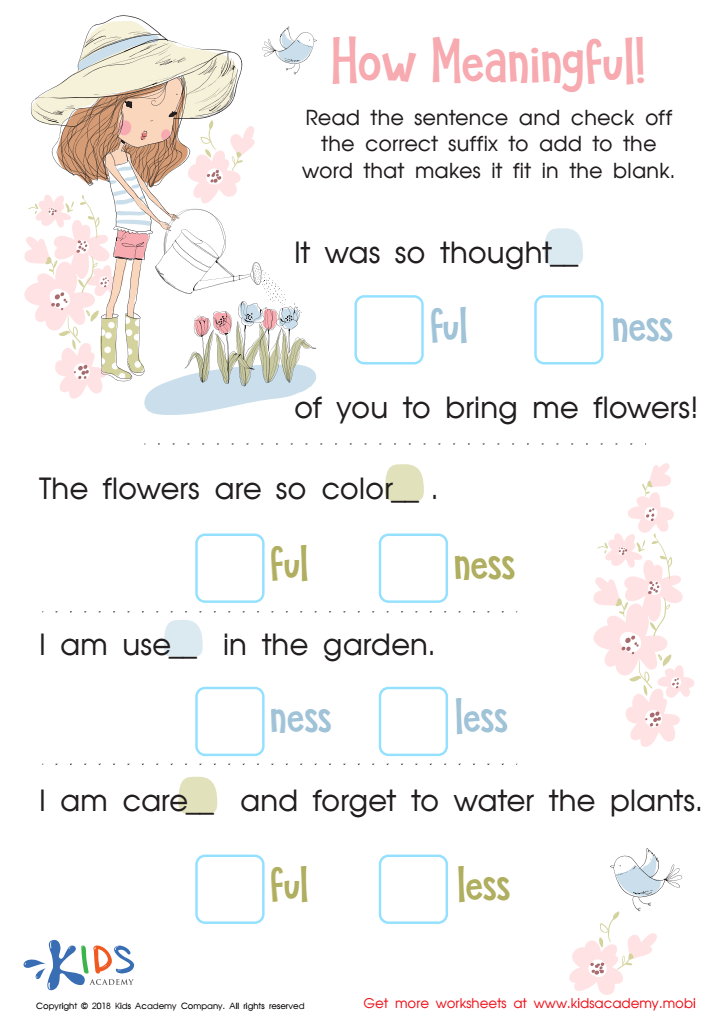
How Meaningful! Worksheet
 Assign to My Students
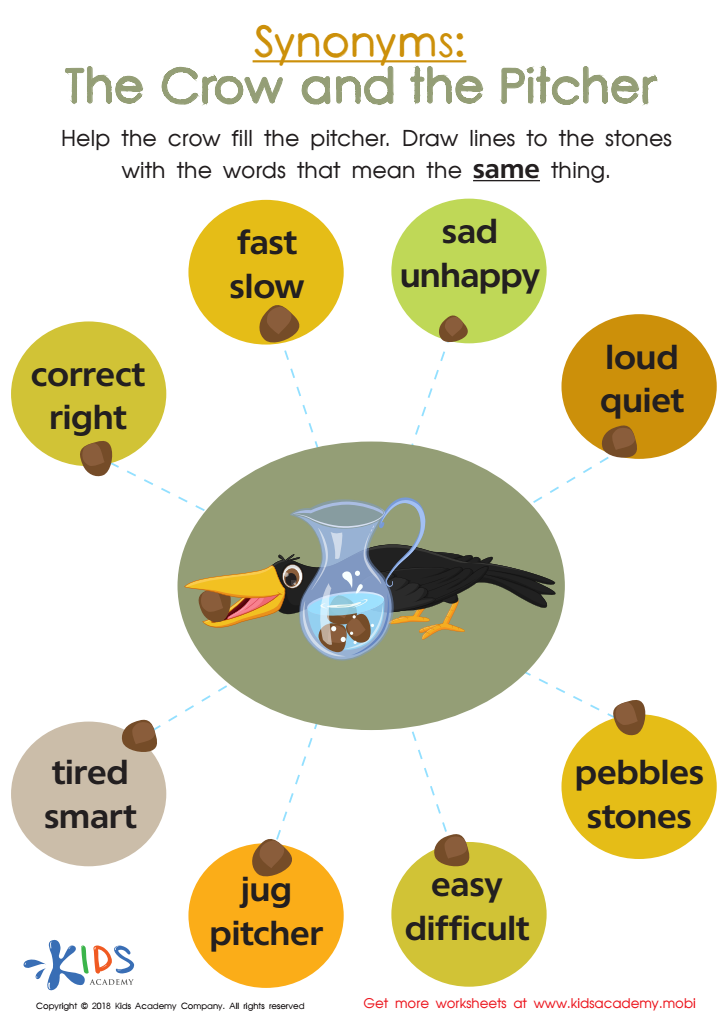
The Crow and the Pitcher Synonyms Worksheet





.jpg)


Understanding synonyms is essential for children aged 7-9 as it significantly enhances their language skills and overall literacy development. First, synonyms enrich vocabulary, enabling children to express themselves more precisely. By learning different words that carry similar meanings, they can avoid repetition and add variety to their writing and speaking. This skill promotes creativity and encourages children to explore language, making communication more engaging and effective.
Moreover, understanding synonyms aids in reading comprehension. When children encounter unfamiliar words in texts, recognizing a synonym can provide context clues that help them grasp the meaning of the entire passage. This ability boosts their confidence and motivation, making reading a more enjoyable experience.
Additionally, teaching synonyms cultivates critical thinking. Children learn to discern subtle differences in meaning between words, which enhances their analytical skills. This exploration fosters curiosity about language, prompting them to ask questions and make connections.
Lastly, synonym knowledge lays a solid foundation for more advanced language studies in the future. By encouraging understanding of synonyms now, parents and teachers empower children to become more articulate and articulate communicators as they grow. Ultimately, investing time in this concept pays dividends in their educational journey and lifelong learning.








