Understanding tally marks Worksheets for Ages 7-9
5 filtered results
-
From - To
Discover our engaging "Understanding Tally Marks Worksheets" designed for children aged 7-9. These resources provide an intuitive way for young learners to grasp the concept of tally marks and enhance their counting skills. With a variety of exercises, your child will learn to create, read, and interpret tally marks confidently. Our printable worksheets combine fun visuals and interactive activities, making learning statistics enjoyable and challenging. Perfect for classroom use or at-home practice, these worksheets foster critical thinking and improve numerical understanding. Equip your child with essential math skills through our comprehensive and accessible tally marks resources today!
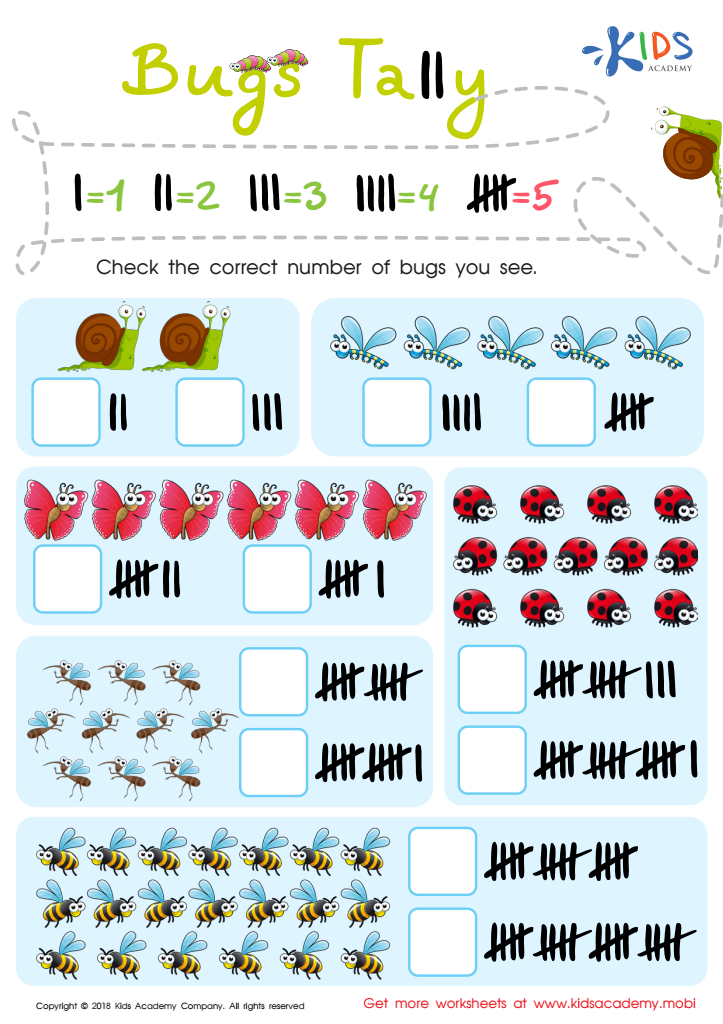
Bugs Tally Worksheet
 Assign to My Students
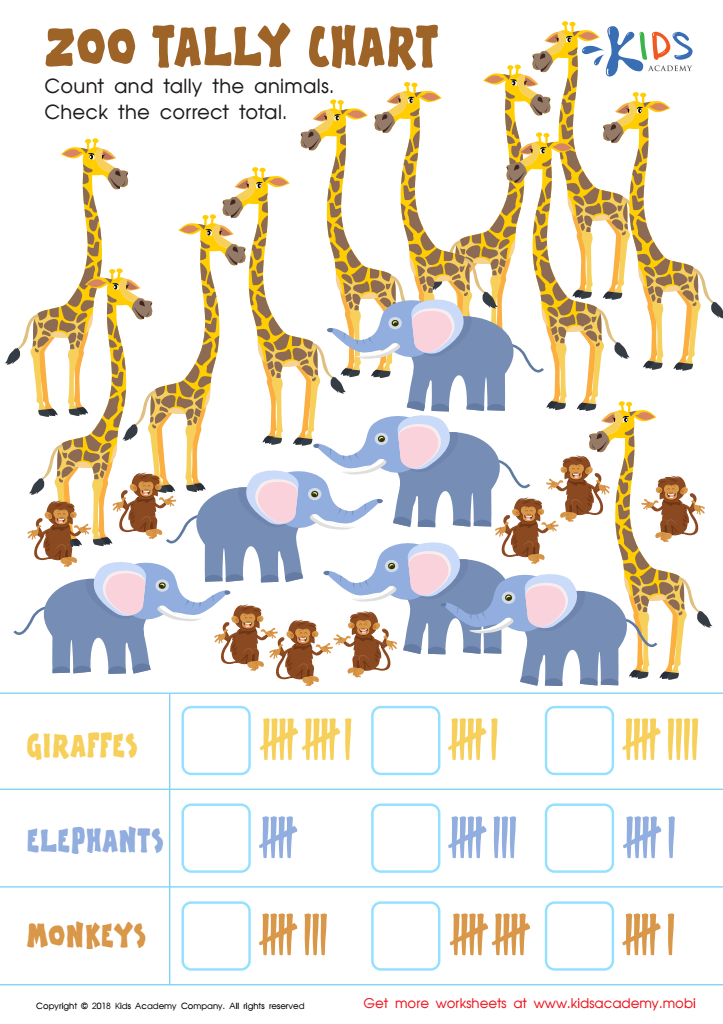
Zoo Tally Chart Worksheet
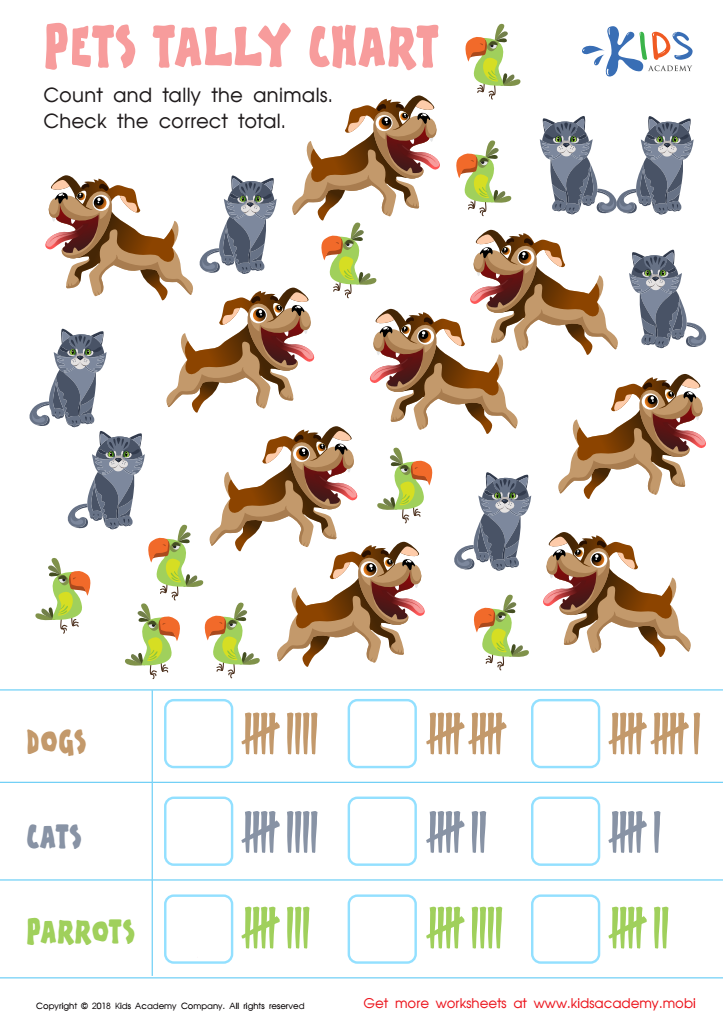
Pets Tally Chart Worksheet
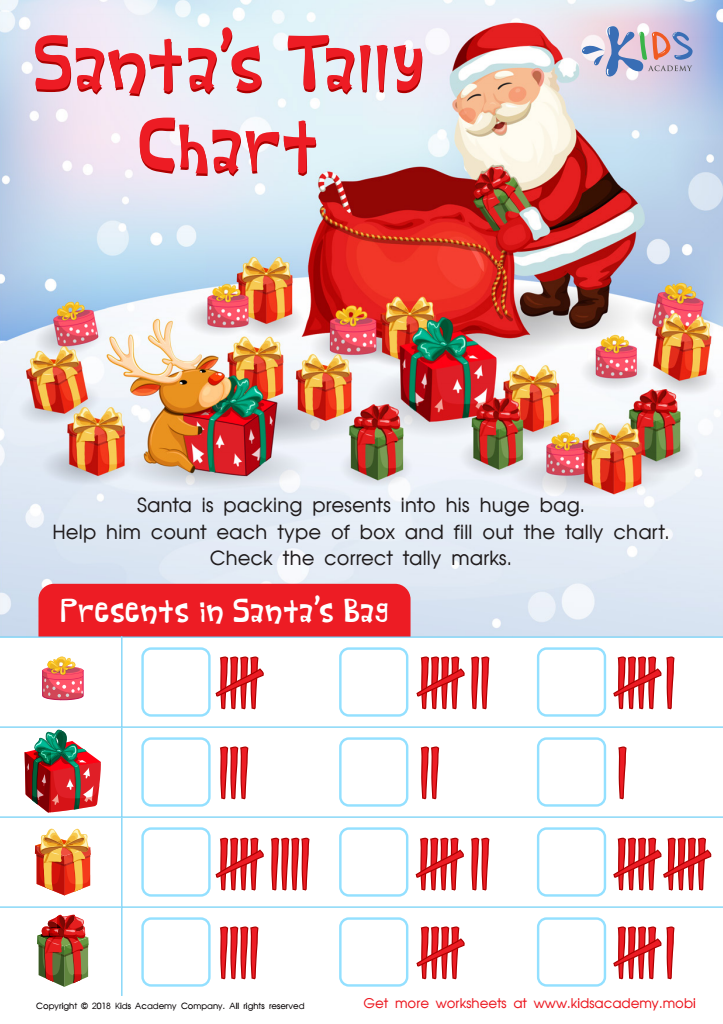
Santa Tally Chart Worksheet
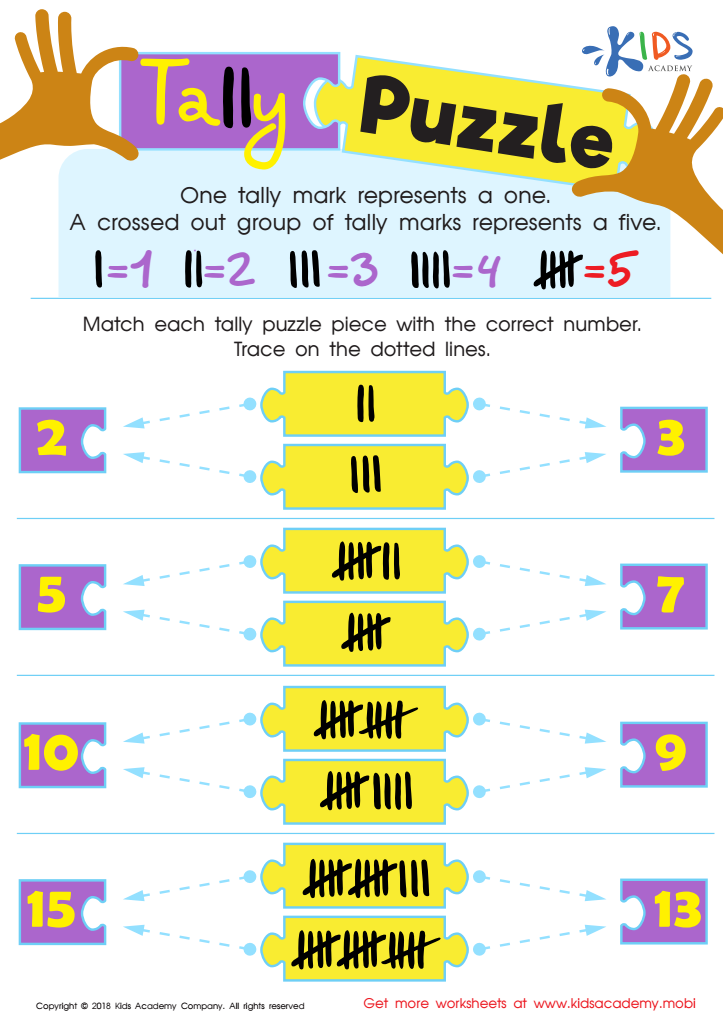
Tally Puzzle Worksheet





.jpg)


Understanding tally marks is essential for children aged 7-9 as it lays a foundation for key mathematical skills. Tally marks serve as a visual representation of counting and data organization, which is critical at this developmental stage. By learning to use tally marks, children enhance their ability to count, categorize data, and comprehend simple statistics, thereby improving their analytical skills.
Moreover, tally marks are often used in various real-life situations, such as keeping scores in games or tracking chores. Familiarity with this concept empowers children to engage more actively in everyday activities, reinforcing their mathematical understanding through practical application.
Teaching tally marks also fosters collaboration and communication among peers. Group activities involving tally charts encourage teamwork, promoting social skills along with cognitive development. Additionally, integrating tally marks into lessons can make learning fun and interactive, capturing students' interest and keeping them motivated.
By instilling an understanding of tally marks, parents and teachers equip children with the tools they need for more advanced mathematical concepts. It not only addresses essential curriculum goals but also cultivates critical thinking and problem-solving skills that are indispensable for their overall academic growth.








