Understanding timelines Worksheets for Ages 7-9
7 filtered results
-
From - To
Discover a fun and engaging way for children ages 7-9 to learn about timelines with our “Understanding Timelines” worksheets. These resources are designed to help young learners grasp the concept of chronological order, enabling them to plot events and milestones accurately. Through enjoyable activities, kids will practice sequencing information, improving their comprehension of history and personal experiences. Ideal for both classroom and home learning, our worksheets encourage critical thinking and foster a solid foundational understanding of timelines. Equip your child with essential skills for organizing information and exploring the past with creativity and confidence! Access our worksheets today and make learning exciting!
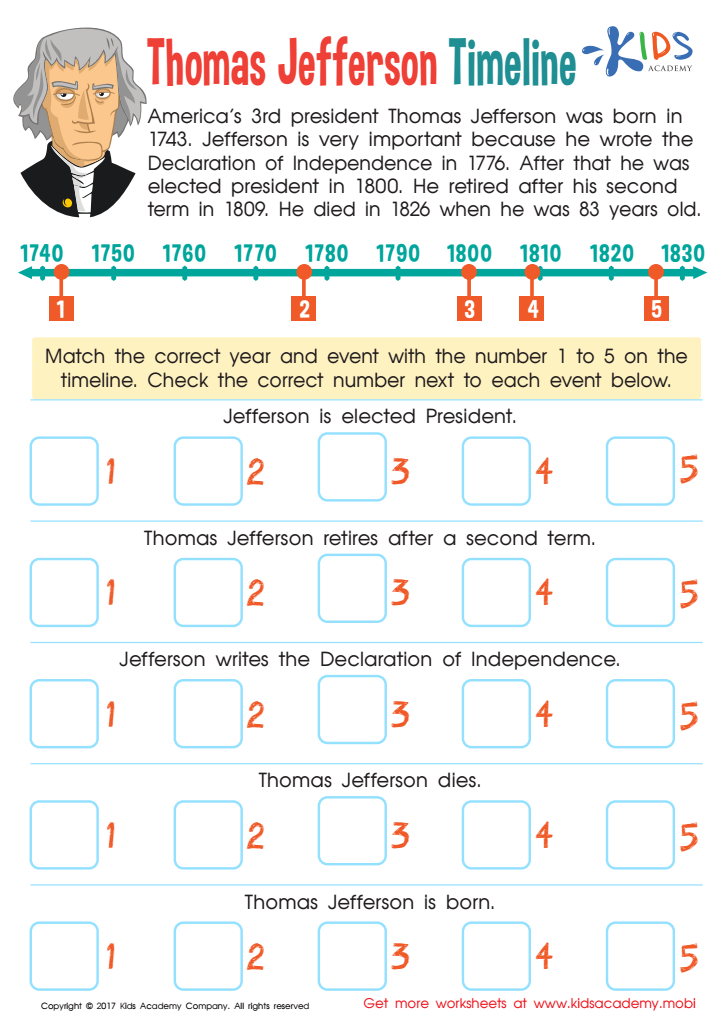
Thomas Jefferson Timeline Worksheet
 Assign to My Students
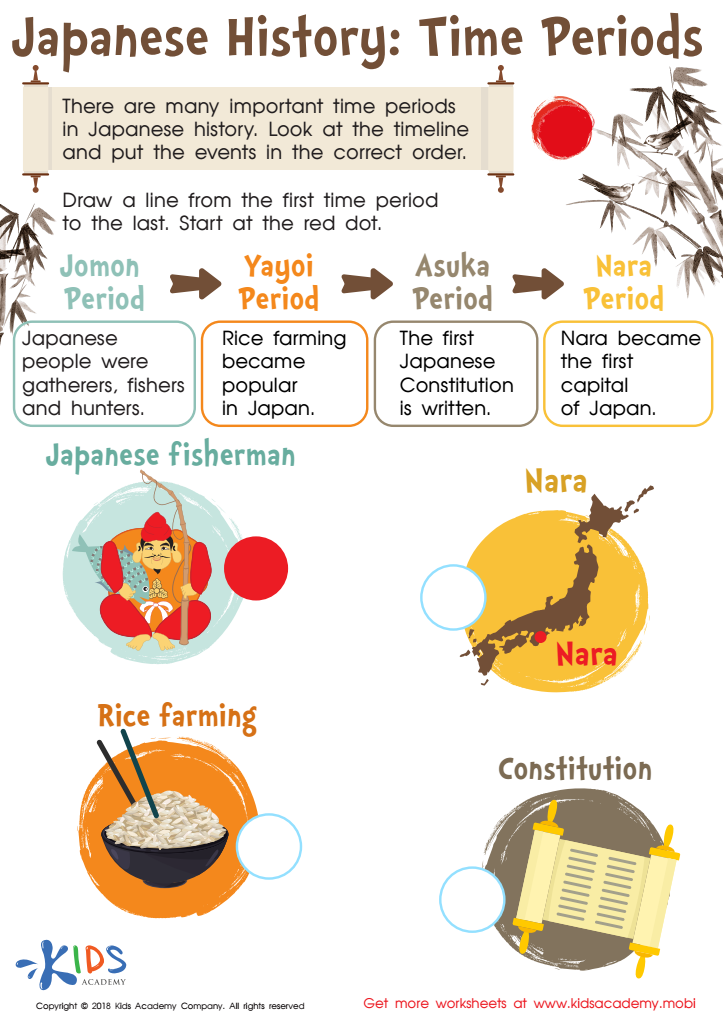
Japanese History: Time Periods Worksheet
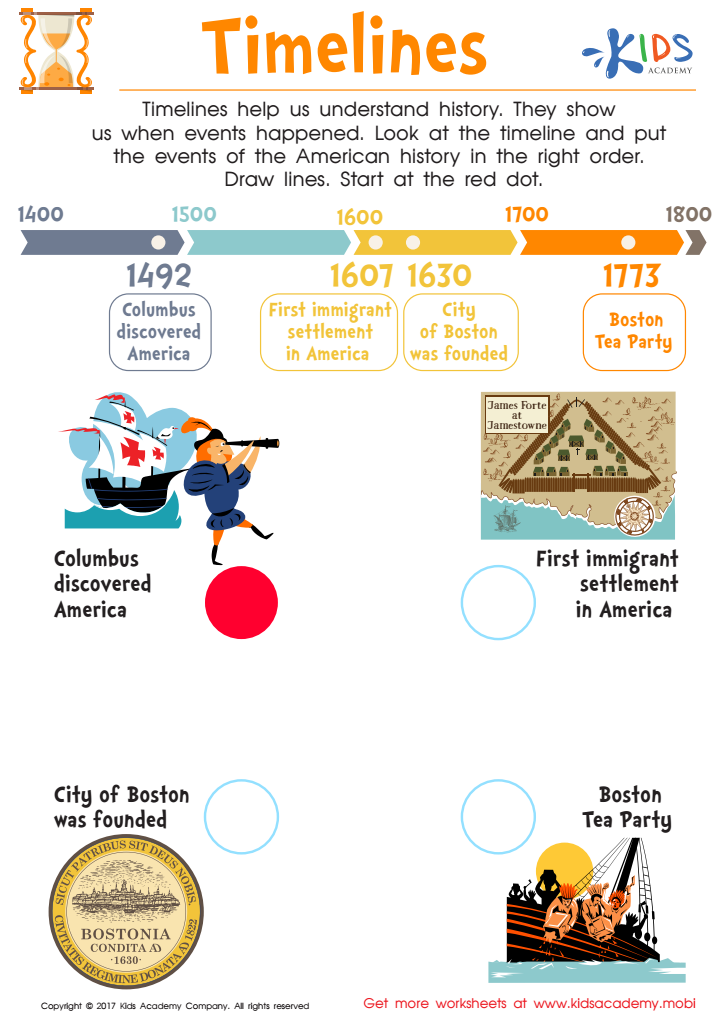
American History Timeline Worksheet
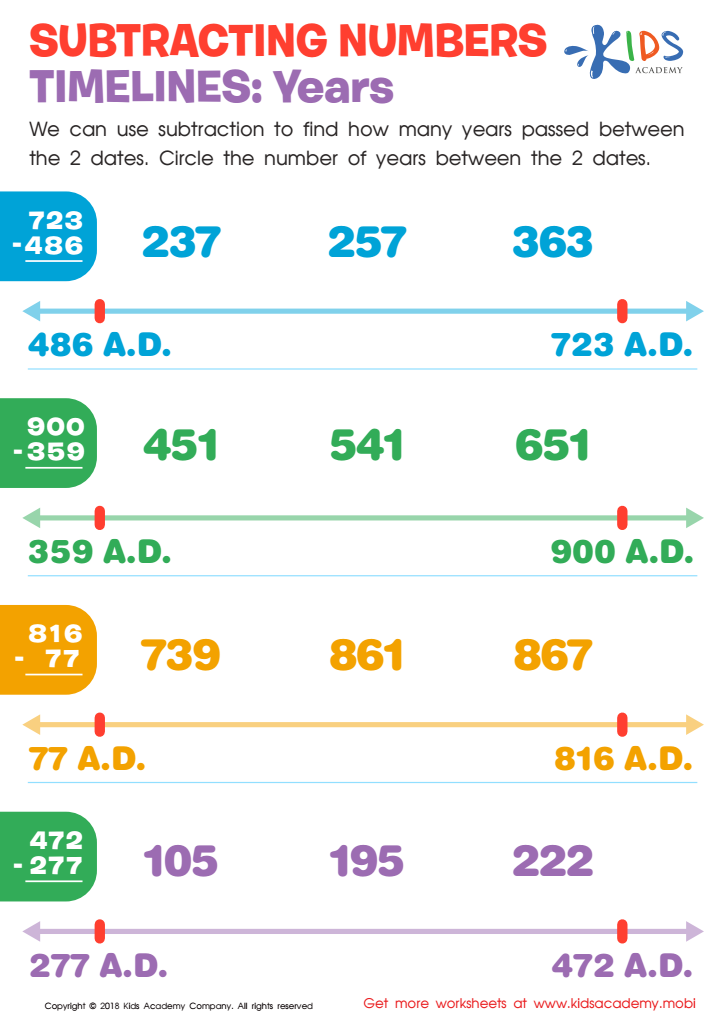
Subtracting Numbers Timelines: Years Worksheet
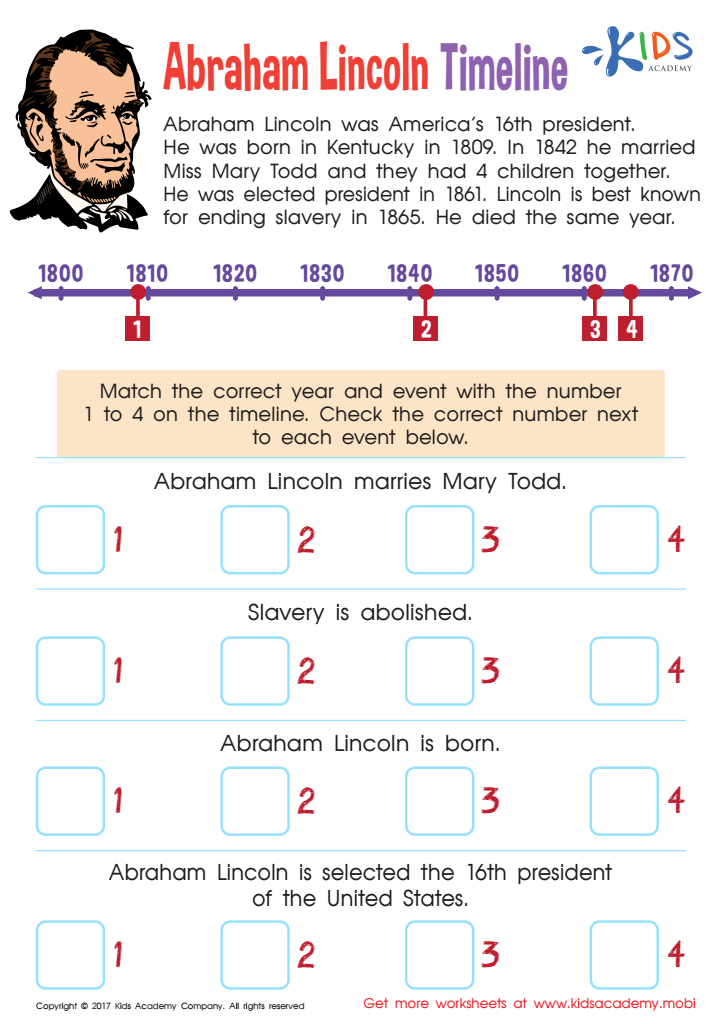
Abraham Lincoln Timeline Worksheet
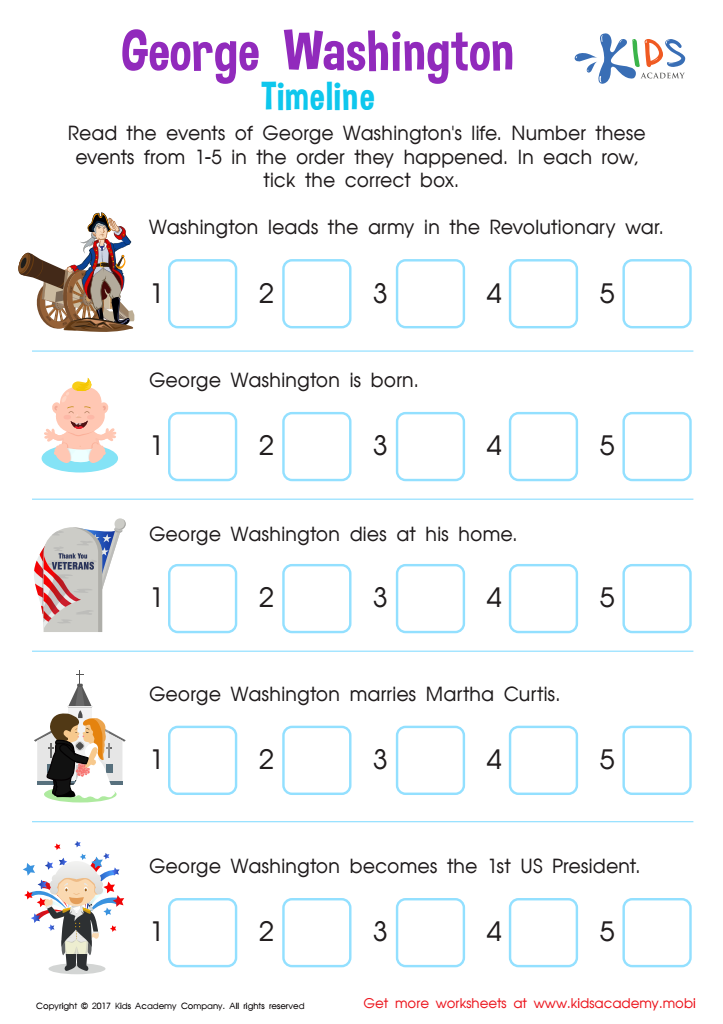
George Washington Timeline Worksheet






Understanding timelines is crucial for children ages 7-9, as it lays the foundation for effective organizing, planning, and critical thinking skills. During this developmental stage, children begin to grasp abstract concepts like the sequence of events, the passage of time, and cause-and-effect relationships. By learning to navigate timelines, they can better contextualize historical events, understand personal milestones, and appreciate the lifecycle of people, animals, and plants.
For parents and teachers, fostering an understanding of timelines encourages children to develop a sense of responsibility and goal-setting. Kids can learn to plan for upcoming events, assignments, or personal goals, which enhances their time management skills. Furthermore, recognizing timelines aids in cognitive development by sharpening memory, as children connect different moments in time to their emotional experiences and knowledge.
Additionally, timelines can enhance engagement in history and storytelling, making learning more interactive and relatable. This builds a greater appreciation for their own family's history and cultural heritage as they practice visualizing events leading to significant life changes. Therefore, investing time into teaching timelines not only supports academic growth but also fosters social and emotional development, providing a comprehensive approach to understanding their world.








