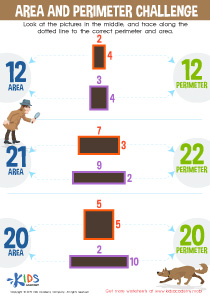
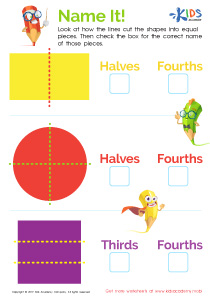
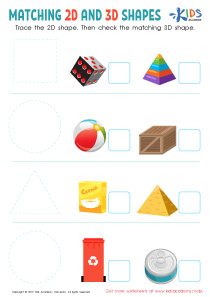
Recognizing shapes 2D Shapes Worksheets for Ages 7-9
4 filtered results
-
From - To
Unlock your child’s creativity and mathematical skills with our “Recognizing Shapes 2D Shapes Worksheets” tailored for ages 7-9. This engaging collection of printable worksheets helps students learn to identify, describe, and differentiate between various two-dimensional shapes. From circles and triangles to squares and rectangles, these activities provide a fun and interactive way to reinforce shape recognition through vibrant visuals and exciting exercises. Perfect for classroom use or at-home practice, our worksheets promote critical thinking and enhance problem-solving abilities. Equip your child with essential geometric understanding while making learning enjoyable—download your worksheets today and watch their confidence soar!
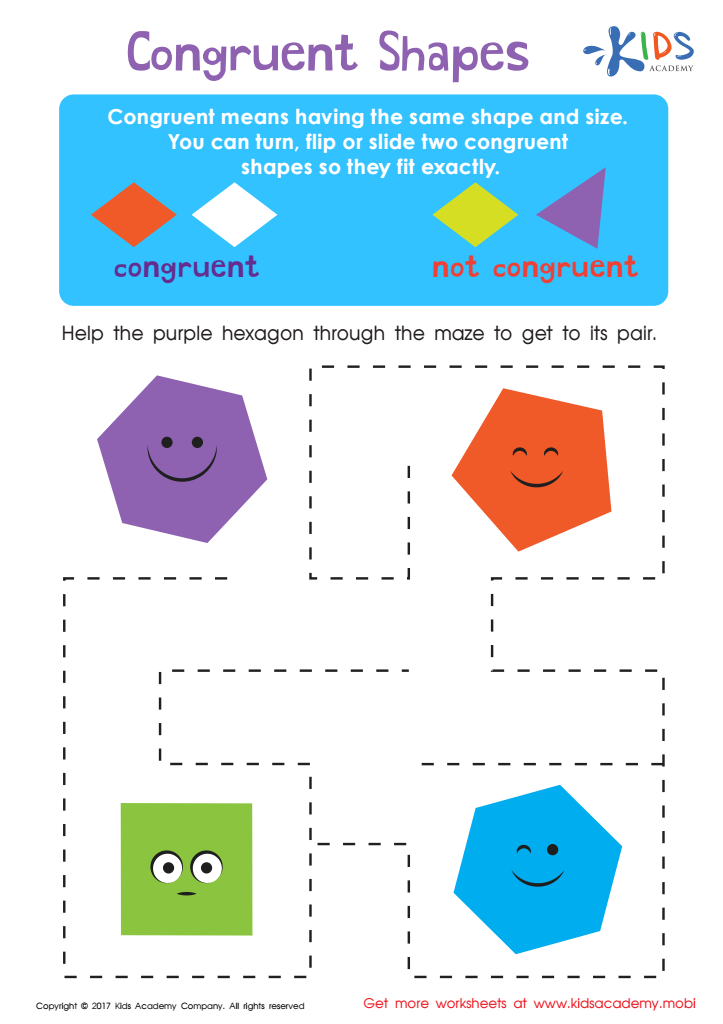
Congruent Shapes Worksheet
 Assign to My Students


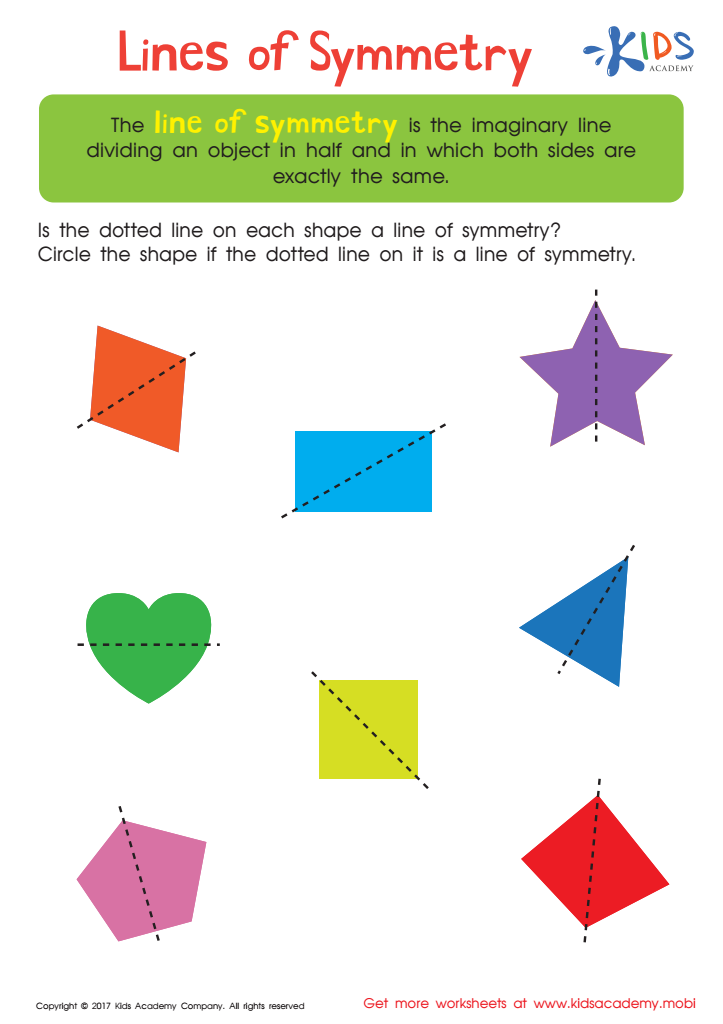
Lines of Symmetry Printable
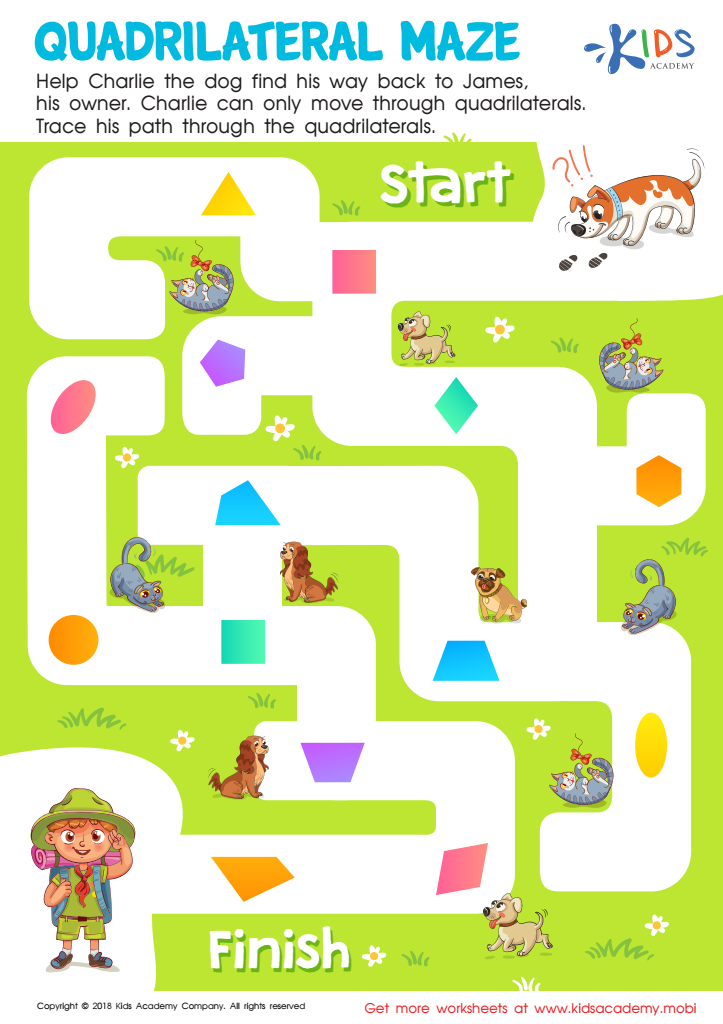
Quadrilateral Maze Worksheet
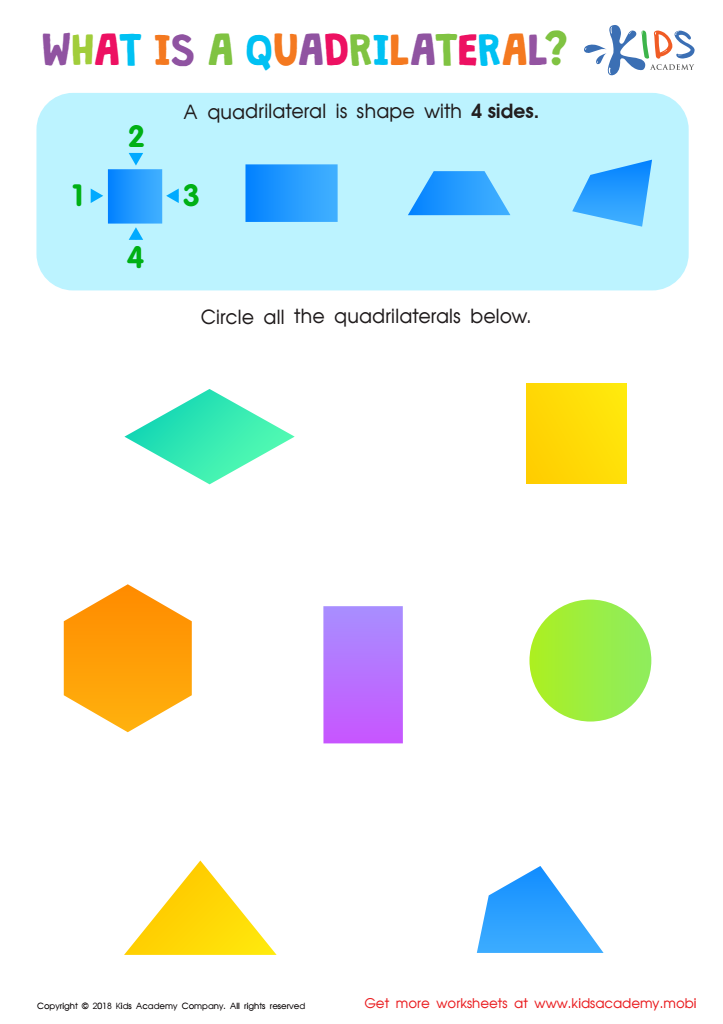
What Is a Quadrilateral? Worksheet








Recognizing 2D shapes is a fundamental skill for children ages 7-9, crucial for their cognitive development and understanding of the world around them. At this age, children are enhancing their spatial awareness, critical thinking, and problem-solving abilities, all of which are significantly enriched by shape recognition.
Firstly, familiarizing children with shapes lays the groundwork for advanced mathematical concepts, such as geometry, measurement, and even algebra in later years. Recognizing common 2D shapes—like circles, squares, triangles, and rectangles—helps children understand properties like symmetry, area, and perimeter, which are vital in mathematical literacy.
Additionally, beyond mathematics, shape recognition supports skills in art, design, and science. It enables children to interpret visual information, identify patterns, and think creatively. Consequently, this cognitive exercise can boost their self-esteem and confidence when facing complex tasks.
Moreover, 2D shapes are often present in everyday life, from architecture to nature. By helping children recognize and categorize shapes, parents and teachers can foster curiosity about their environment, engaging them in critical thinking and enhancing their observational skills. Overall, understanding 2D shapes not only equips children with essential skills for academic success but also nurtures lifelong learning and exploration.