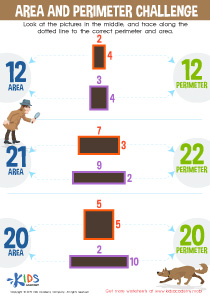
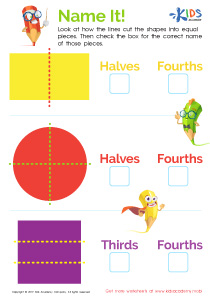
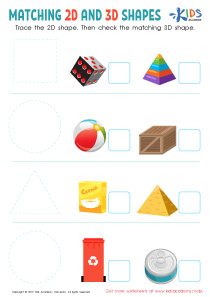
Vocabulary enhancement 2D Shapes Worksheets for Ages 7-9
4 filtered results
-
From - To
Welcome to our Vocabulary Enhancement 2D Shapes Worksheets designed specifically for children ages 7-9. These engaging, colorful worksheets will help young learners deepen their understanding of 2D shapes while expanding their vocabulary. Each activity focuses on essential shape terminology, encouraging students to explore terms like 'parallel,' 'symmetry,' and 'vertex' in context. Through fun exercises and challenges, kids will not only master 2D shapes but also develop critical thinking and language skills. Perfect for classroom or home learning, our worksheets make learning interactive and enjoyable. Download now to inspire your child’s mathematical language and conceptual understanding of shapes!
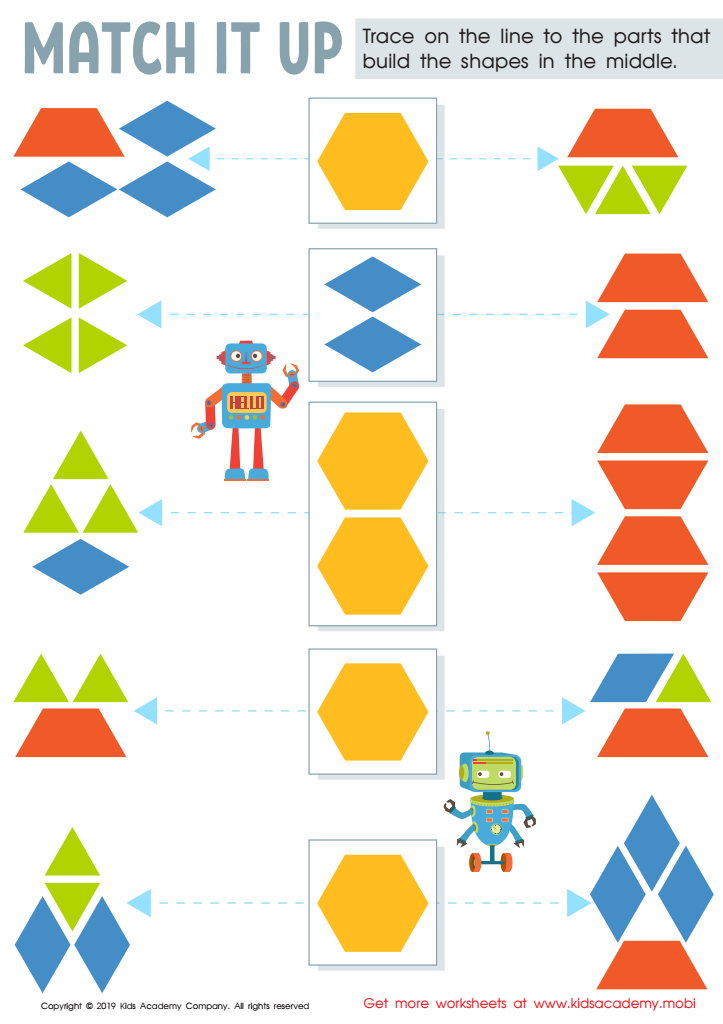
Match It up Worksheet
 Assign to My Students



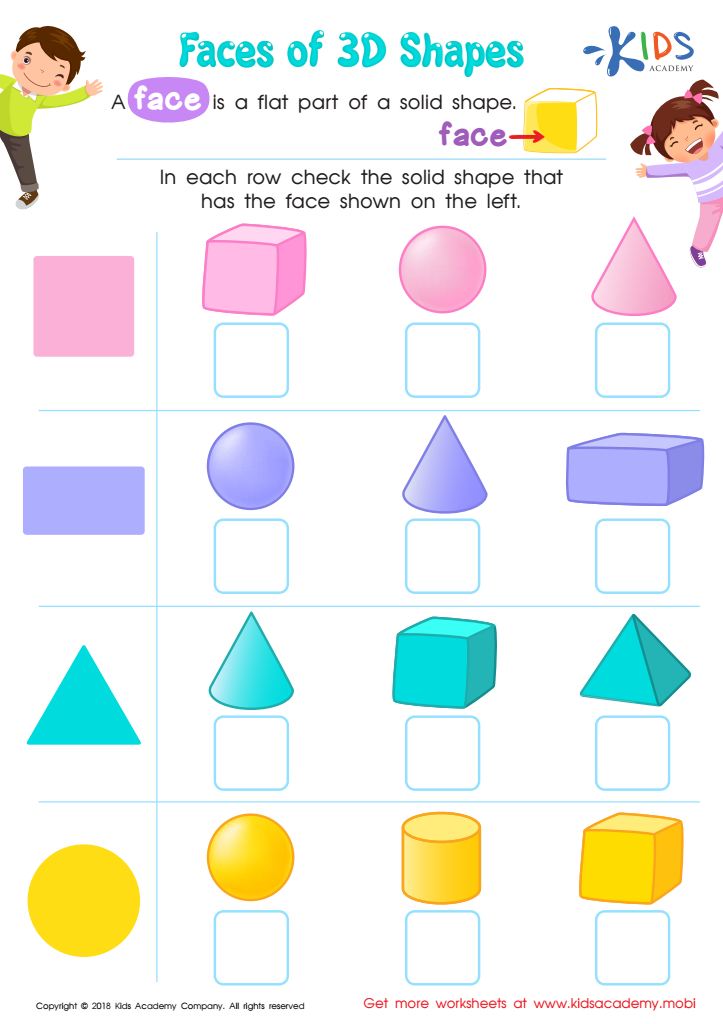
Faces of 3D Shapes Worksheet
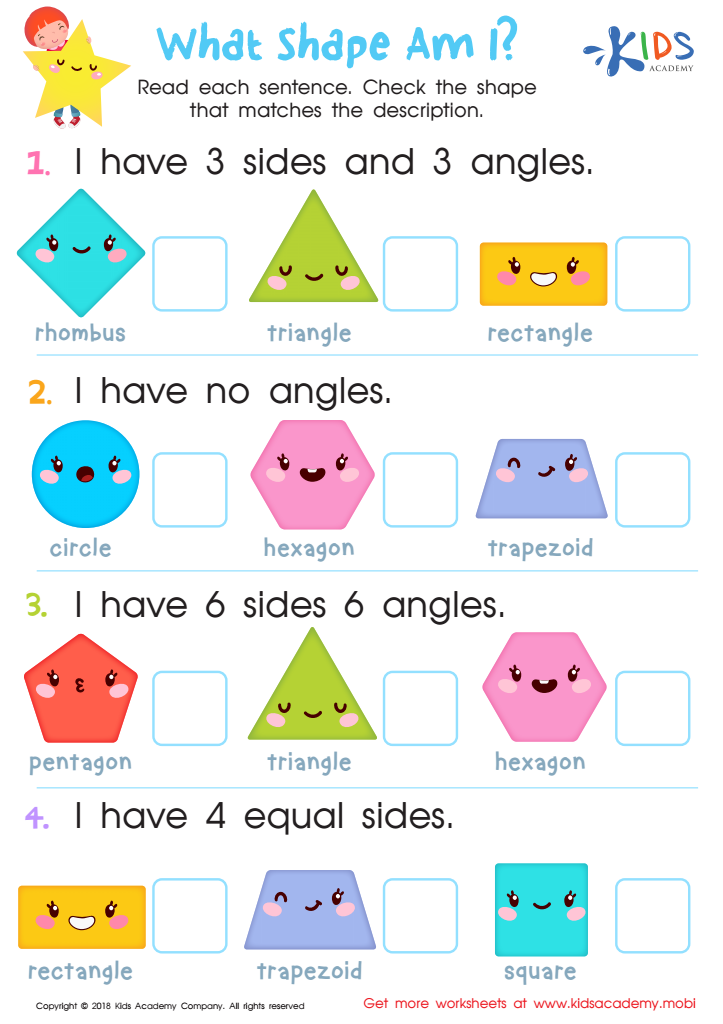
What Shape Am I? Worksheet
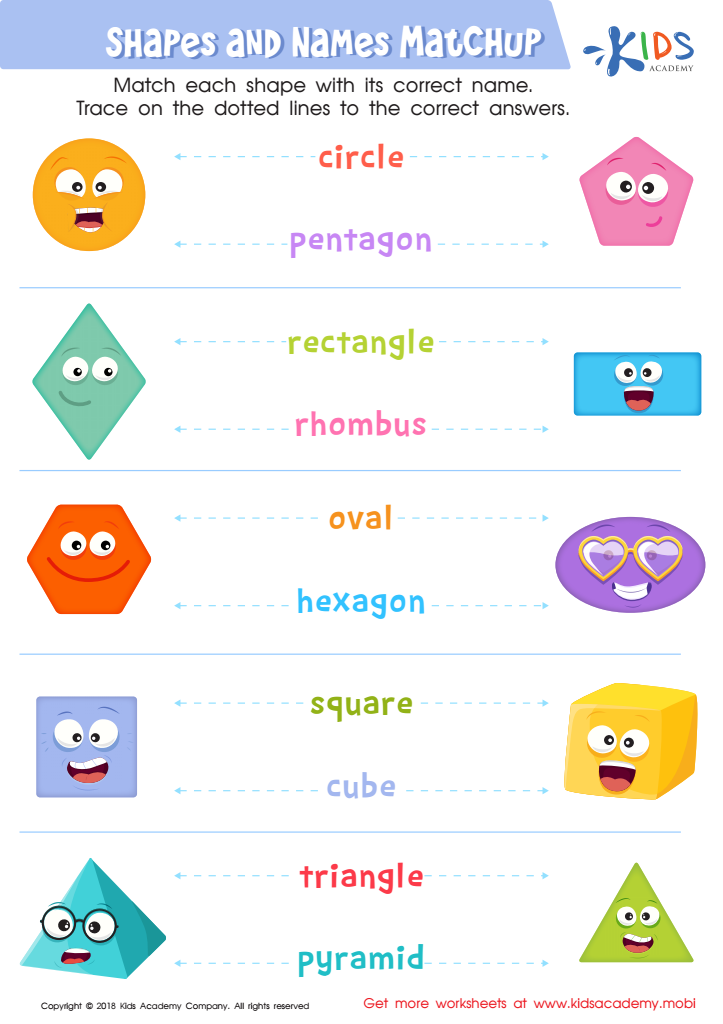
Shapes and Names Matchup Worksheet








Vocabulary enhancement, particularly in the context of 2D shapes for children aged 7-9, is crucial for several reasons. Firstly, a strong grasp of vocabulary related to shapes—such as "triangle," "rectangle," "congruent," and "symmetry"—supports students' mathematical understanding. As children learn to accurately describe and categorize shapes, they develop essential problem-solving skills and a solid foundation in geometry.
Secondly, enhancing vocabulary helps improve communication skills. When children can articulate their thoughts and analyses regarding shapes in discussions and group work, they cultivate confidence and clarity in expression. This not only aids in math but also fosters skills relevant across all subjects.
Furthermore, early mastery of shape vocabulary correlates with future academic success. Children who build a robust vocabulary in their early years often find it easier to tackle complex concepts later on, progressing seamlessly into higher dimensions and spatial reasoning.
Lastly, engaging with 2D shapes can spark interest and creativity in related areas, such as art, science, and technology, making learning more enjoyable. Thus, parents and educators should prioritize vocabulary enhancement in this domain, fostering an environment where children can thrive academically and personally.