Comparing Fractions Adding 2-digit Numbers Worksheets for Ages 7-9
6 filtered results
-
From - To
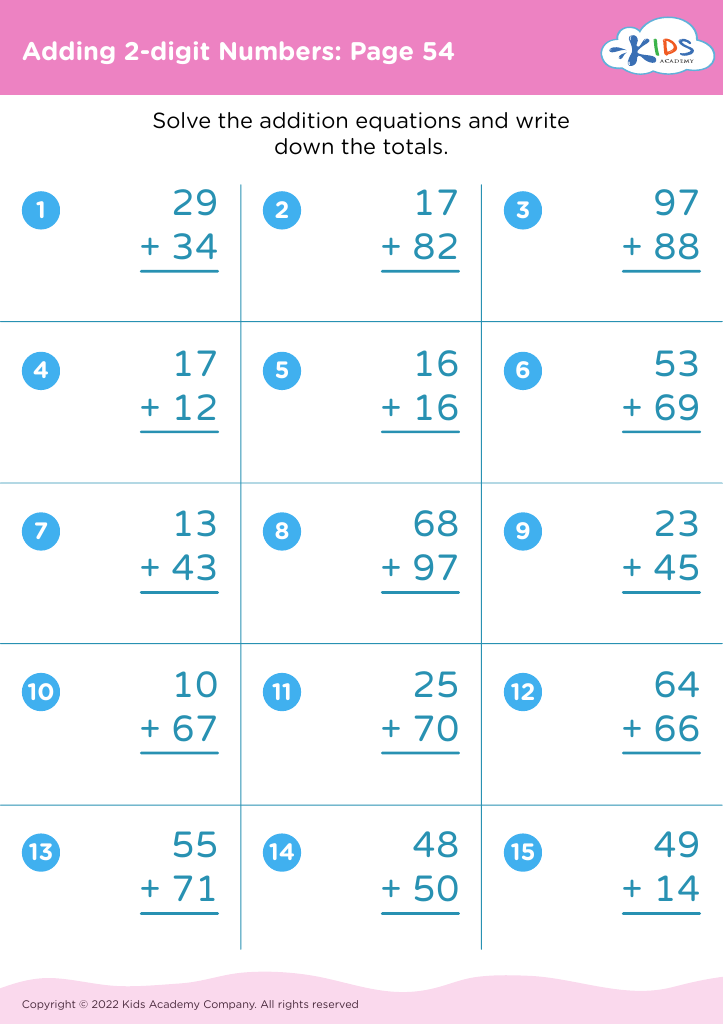
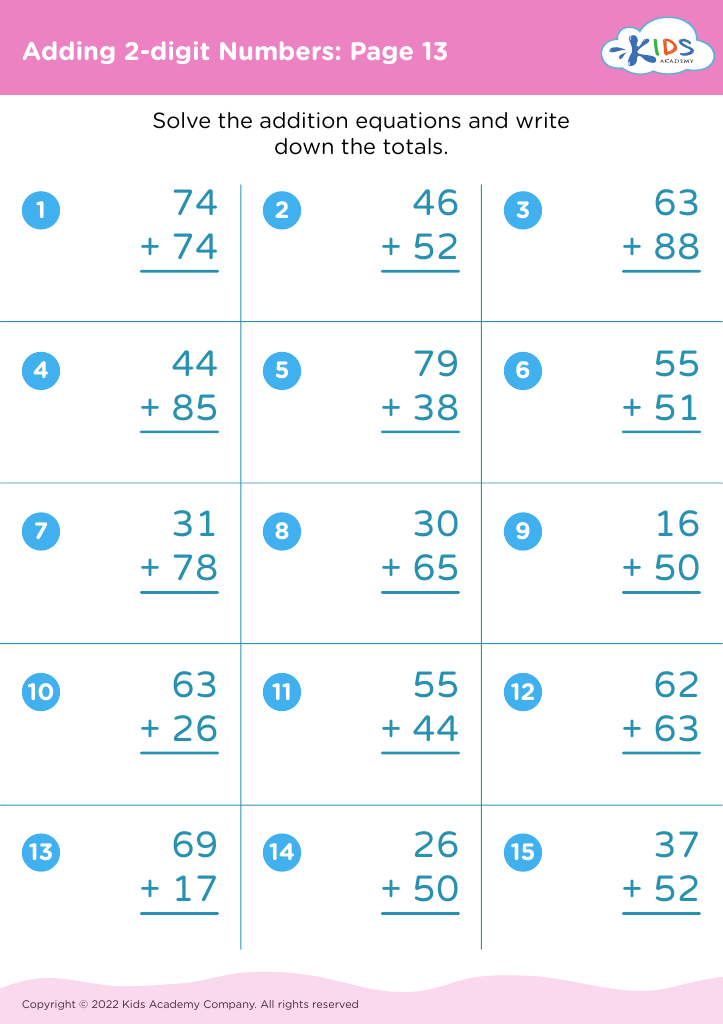
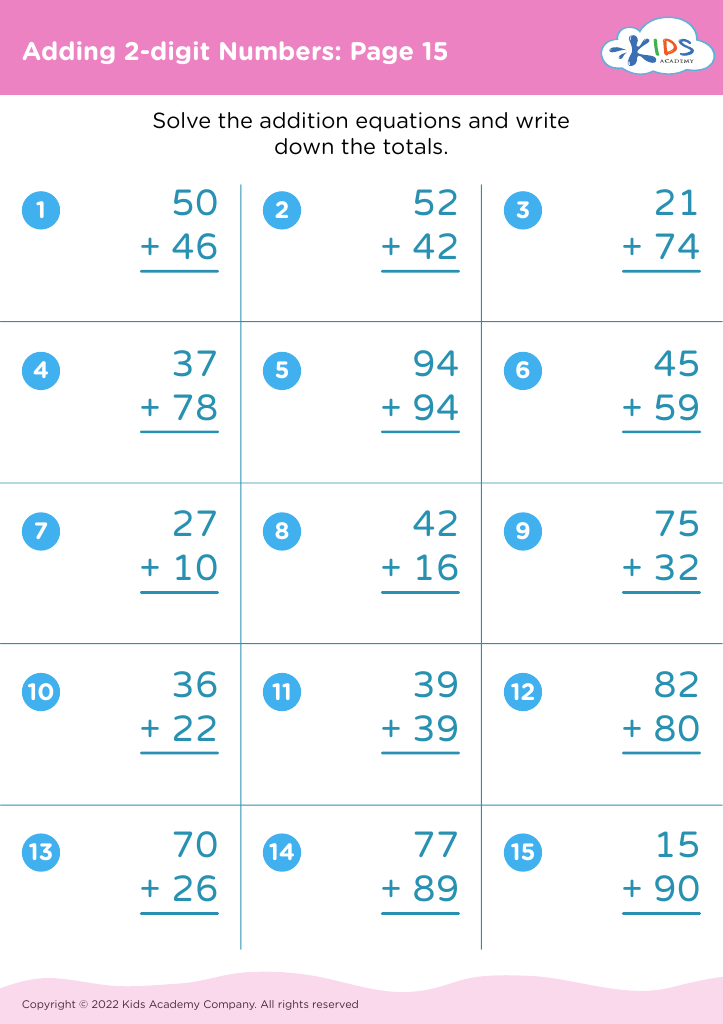
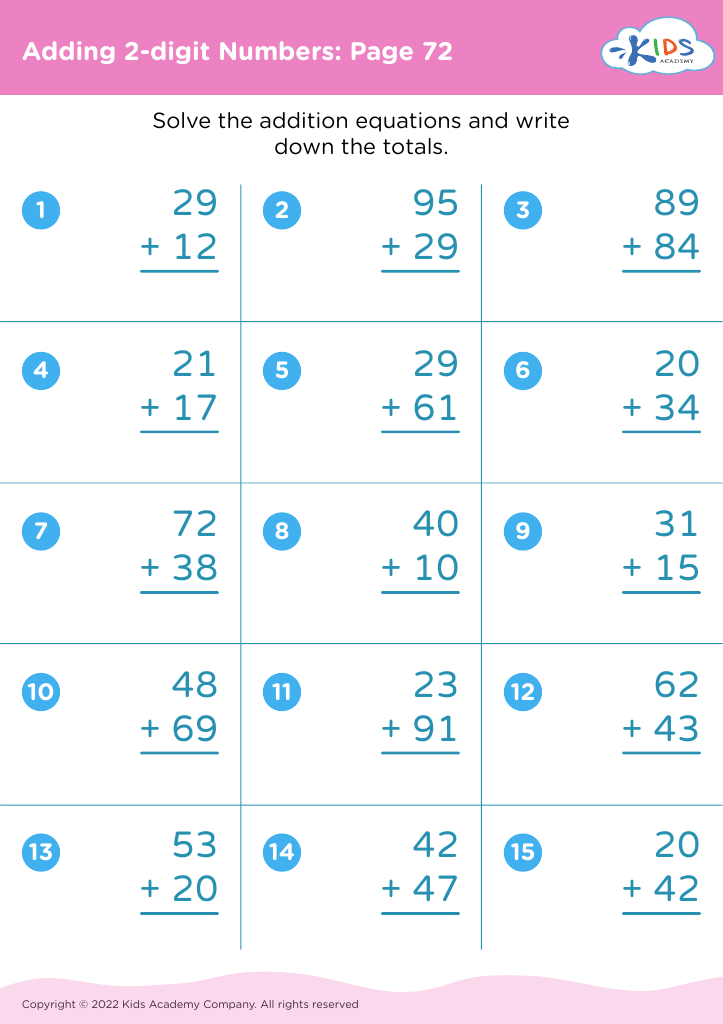
Explore our engaging worksheets designed for children aged 7-9, focusing on comparing fractions and adding 2-digit numbers! These resources foster essential math skills through fun and interactive activities. Students will learn to identify and compare different fractions, while also practicing the addition of 2-digit numbers, enhancing their problem-solving abilities. Each worksheet is crafted to suit varying levels of comprehension, ensuring every child can participate and thrive. Encourage your young learners to build confidence in their math abilities with exercises that promote critical thinking and teamwork. Download our printable worksheets today for a rewarding learning experience!
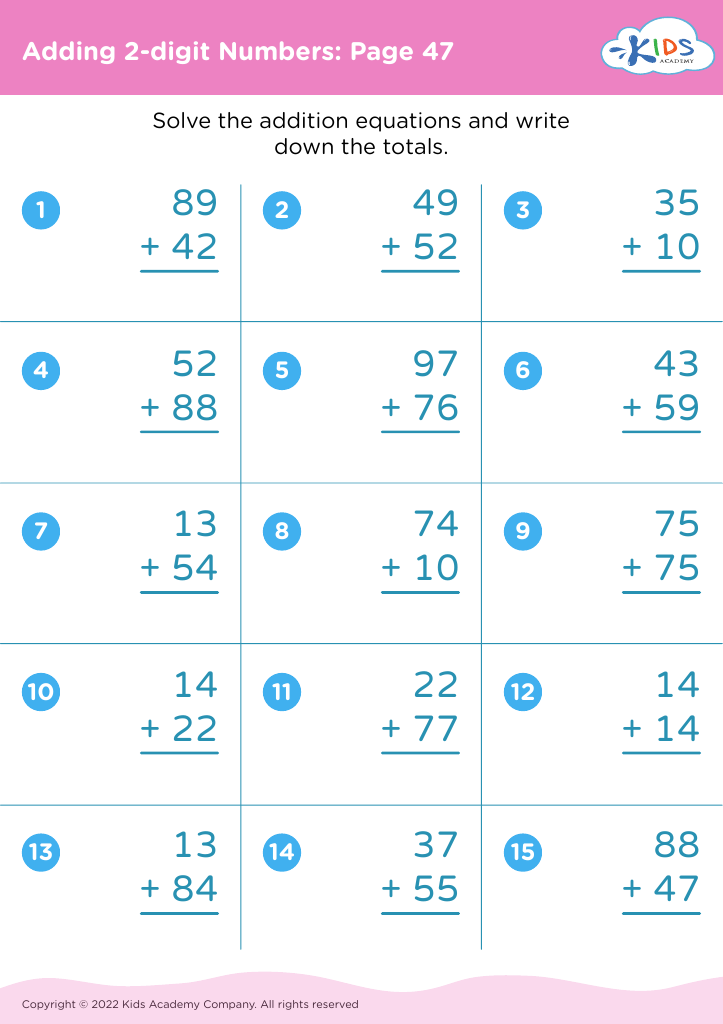
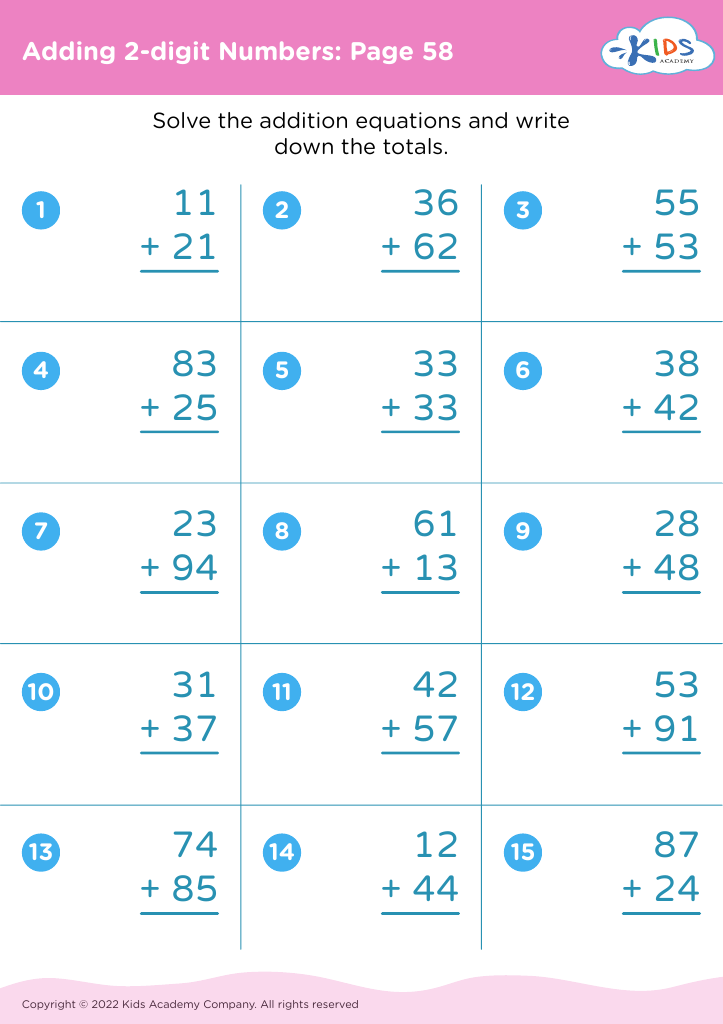








Understanding comparing fractions and adding two-digit numbers is crucial for children aged 7-9 as it lays the foundation for essential mathematical skills they will use throughout their education and everyday life. Comparing fractions teaches children about relationships and the concept of equivalence, fostering critical thinking skills. This skill helps them understand sizes, proportions, and various contexts in which these concepts apply, such as cooking or dividing items equally among friends.
Similarly, learning to add two-digit numbers not only develops their computational skills but also enhances their understanding of place value and number sense. This foundational knowledge plays a significant role in developing more advanced math skills, such as addition and subtraction of larger numbers, and algebra later on.
Moreover, mastering these skills boosts a child's confidence in math, which is directly linked to their overall academic performance. It enables them to approach math problems with a positive mindset, reducing math anxiety. Parents and teachers play a vital role in providing support, encouragement, and resources to help children grasp these concepts fully, ultimately preparing them for more complex mathematical ideas and instilling a lifelong appreciation for learning. By prioritizing these skills, parents and teachers can nurture well-rounded, mathematically proficient individuals.








