Identify shapes Adding up to 100 with Regrouping Worksheets for Ages 7-9
3 filtered results
-
From - To
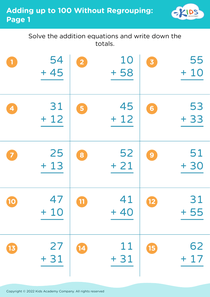
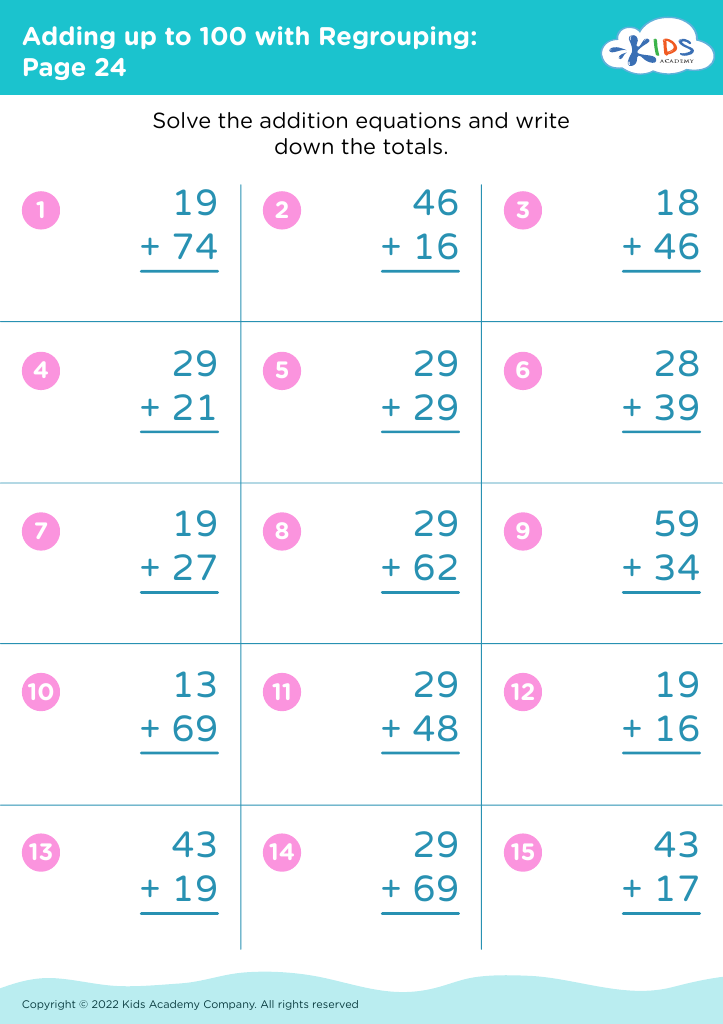
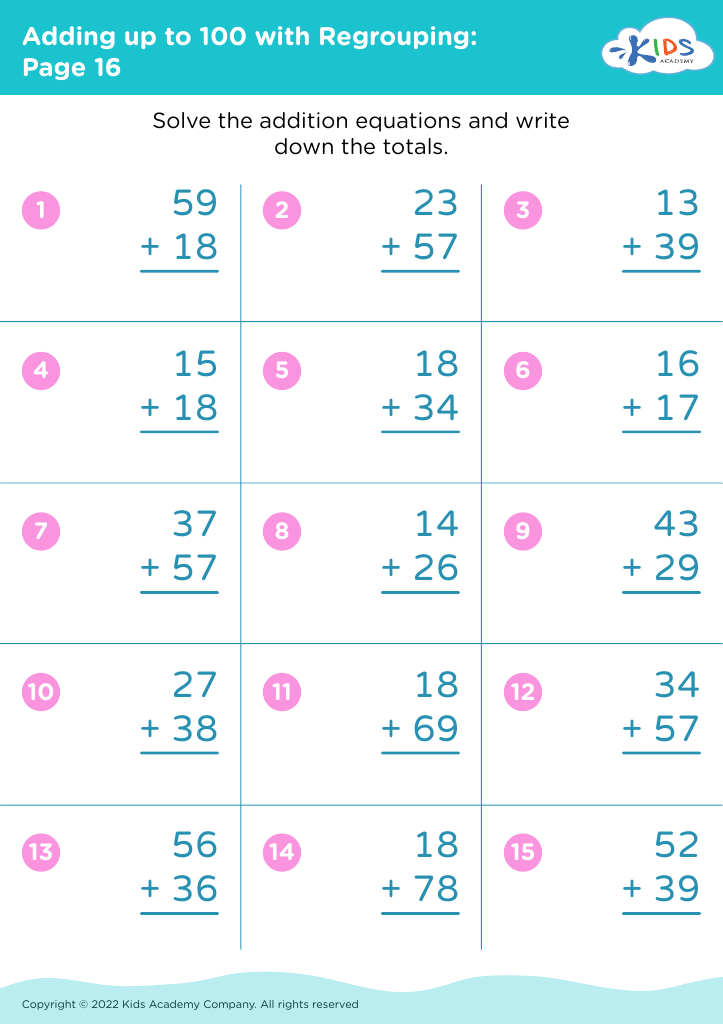
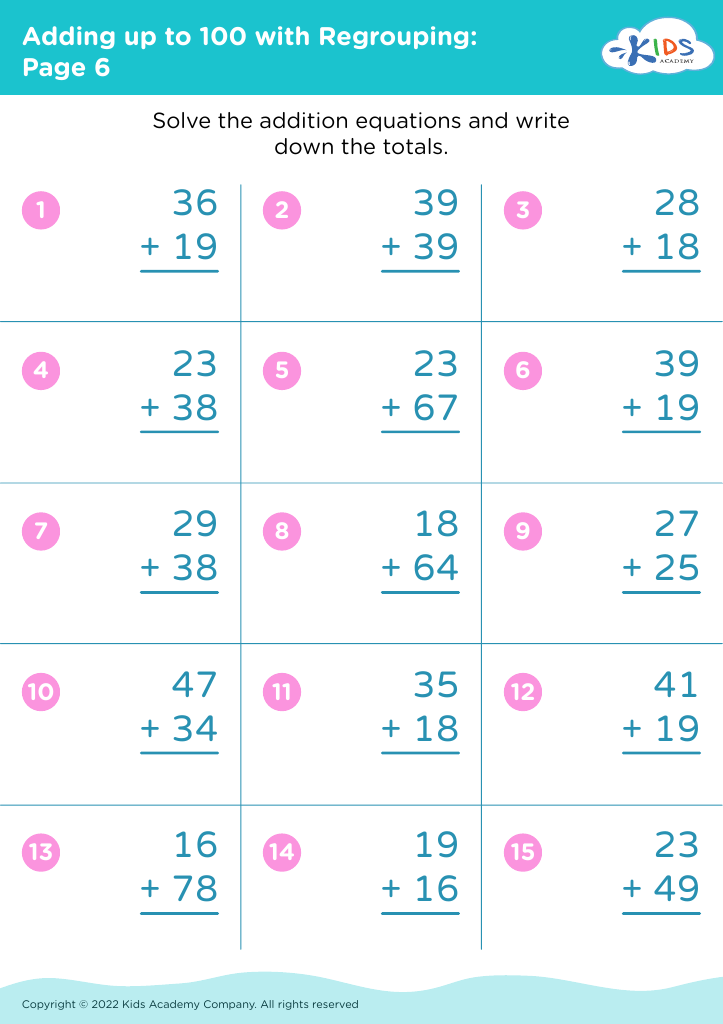
Our "Identify Shapes Adding up to 100 with Regrouping Worksheets" are designed for children ages 7-9, offering an engaging way to master math and geometry skills. These interactive worksheets help young learners recognize different shapes and practice adding numbers up to 100 with regrouping. Each activity combines visual shape identification with math exercises, nurturing problem-solving abilities and critical thinking. Perfect for both classroom and home learning, our worksheets encourage competence and confidence in mathematics, making learning enjoyable and effective. Download now to help your child excel in matching shapes and adding with regrouping!




Identify Shapes:
Understanding shapes lays the foundation for more advanced math and geometry skills. At ages 7-9, children begin to move beyond recognizing basic shapes and start to understand properties, such as the number of sides and angles. This knowledge enhances their spatial awareness and problem-solving skills, which are critical in everyday tasks and future academic success.
Adding Up to 100 with Regrouping: Mastering addition with regrouping is essential for numeracy development. When children learn to add numbers up to 100, they start to grasp the concept of place value, an important building block for more complex mathematical operations. Regrouping, or "carrying," involves moving values from one place column to the next (for example, units to tens), helping students understand how numbers interact. This concept is crucial for performing higher-level arithmetic, such as subtraction, multiplication, and division.
The integration of these concepts at an early age sets a foundation for critical thinking and analytical skills. Parents and teachers should prioritize these skills to ensure children are well-equipped to handle more advanced mathematics. Active engagement in these areas also boosts confidence, making math a more approachable and enjoyable subject for young learners.