Counting skills Adding up to 100 Without Regrouping Worksheets for Ages 7-9
6 filtered results
-
From - To
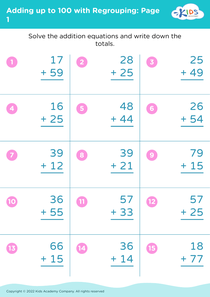
Enhance your child's counting abilities with our “Counting Skills: Adding Up to 100 Without Regrouping” worksheets, designed specifically for children aged 7-9. These engaging printables help young learners practice addition by working with numbers up to 100, building a solid foundation in basic math concepts. Without the complexity of regrouping, kids can focus on honing their skills, boosting confidence, and developing a love for math. Each worksheet features colorful illustrations and varied exercises tailored to maintain interest and encourage learning. Perfect for classroom use or at-home practice, our worksheets make mastering addition an enjoyable experience!
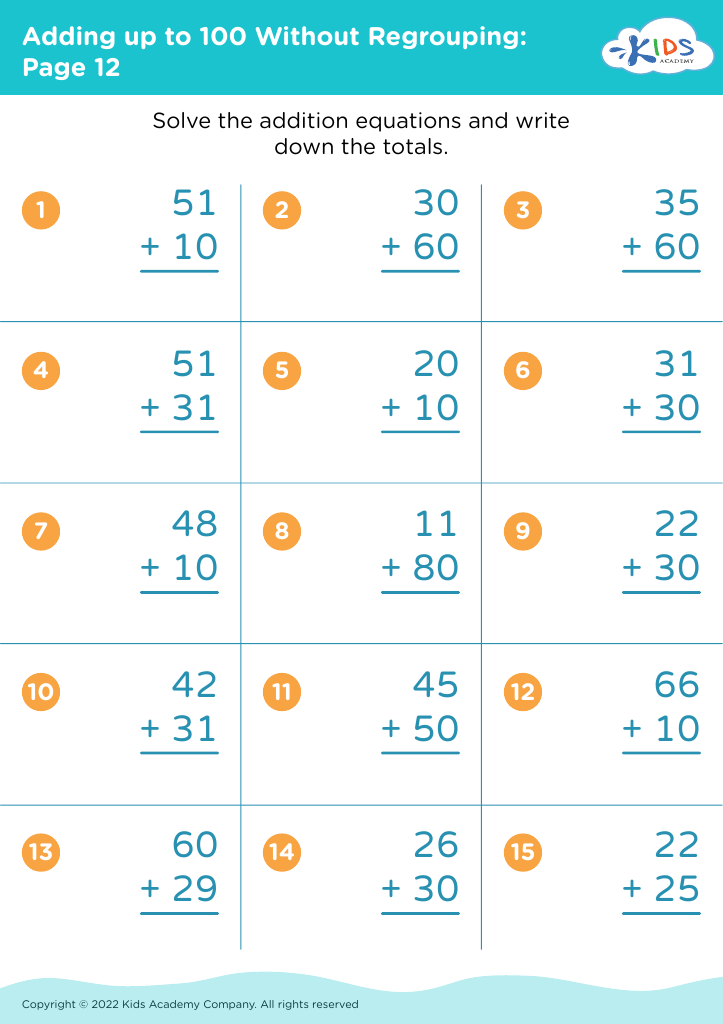
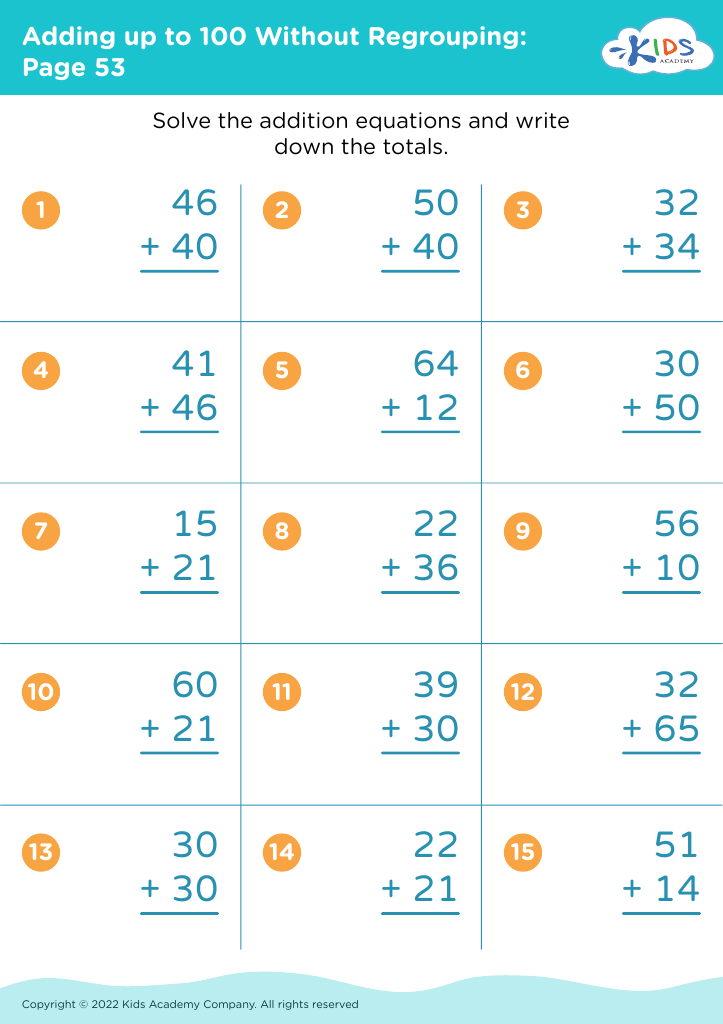
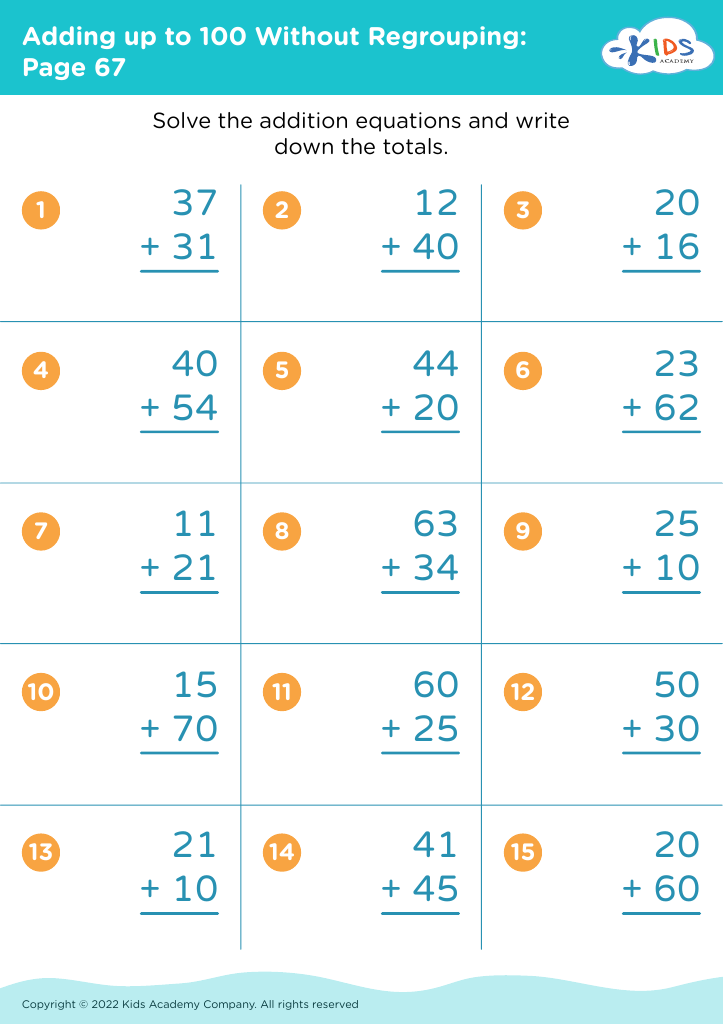
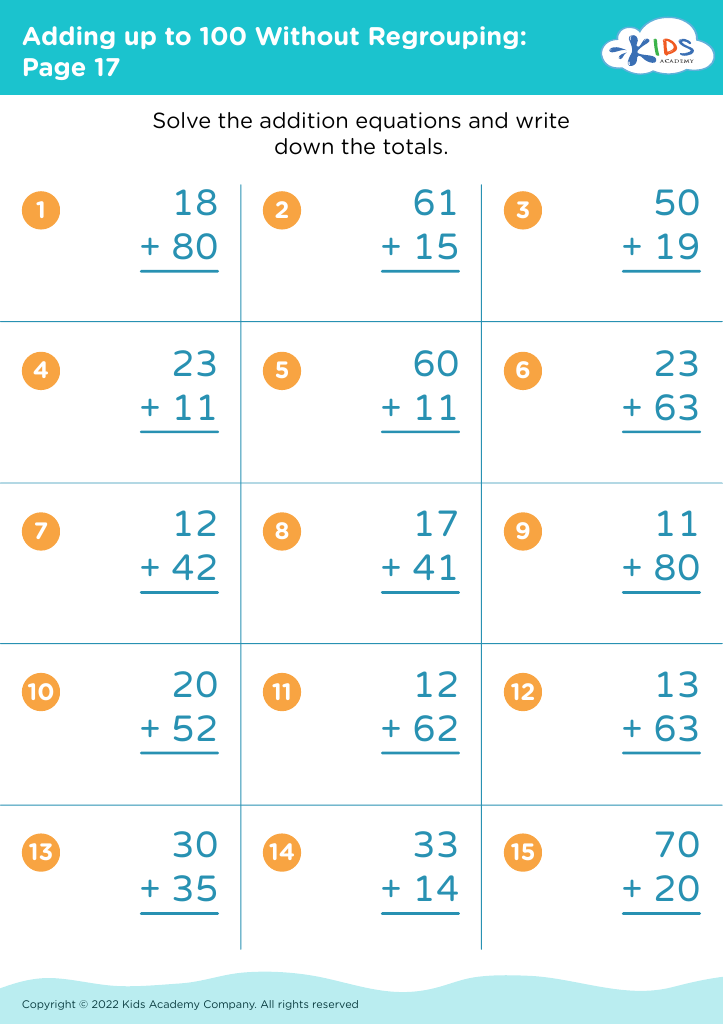
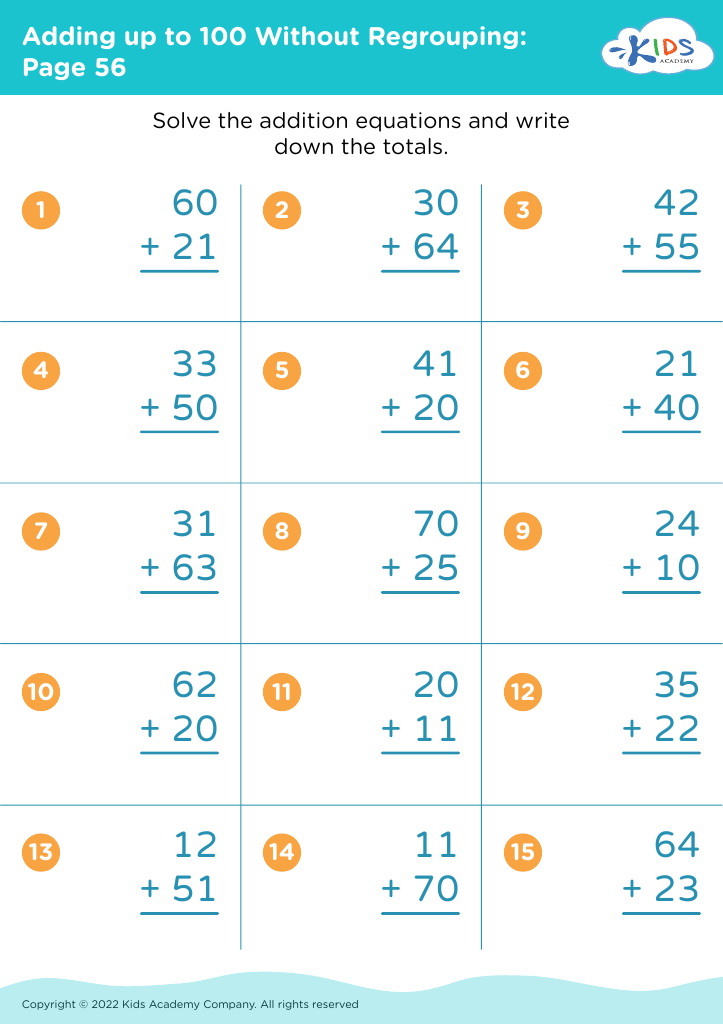
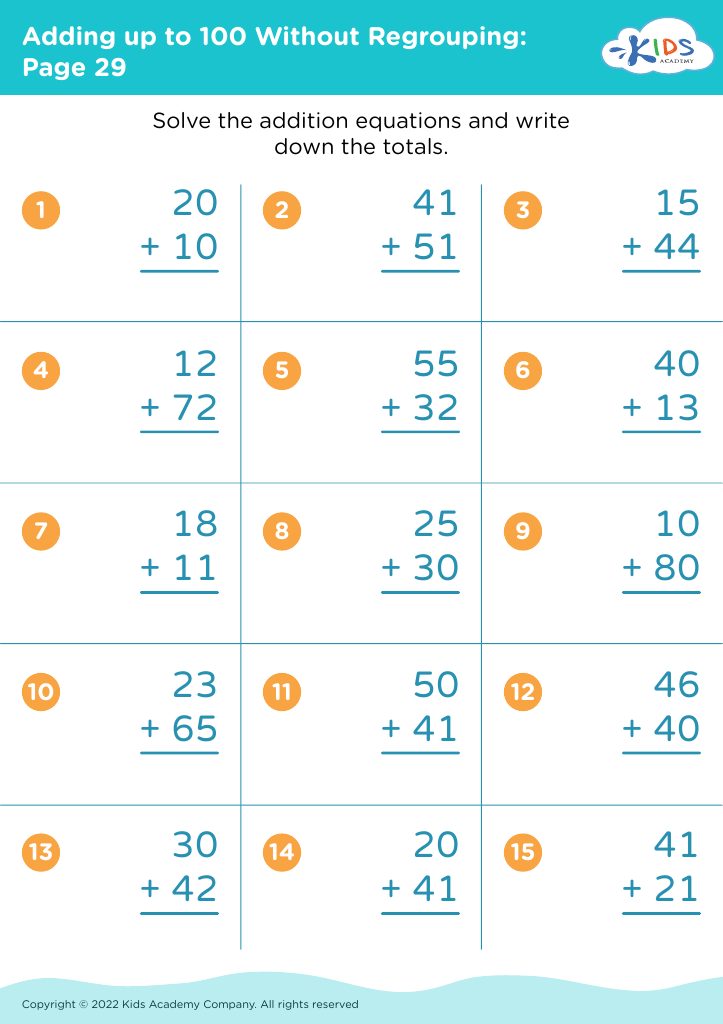




Developing counting skills and the ability to add up to 100 without regrouping is crucial for children aged 7-9 because it lays the foundation for their mathematical understanding. At this stage, children are transitioning from basic arithmetic to more complex problem-solving skills. Counting and adding without regrouping promotes number sense, helping students to visualize the relationships between numbers, enhancing their ability to perform operations mentally.
These skills also boost confidence in math, reducing anxiety around the subject. When students can confidently perform addition within this range, they are better equipped to tackle more complex concepts in higher grades, such as multi-digit addition, subtraction, and foundational skills for multiplication and division. Furthermore, the ability to manage smaller numerical tasks aids in developing useful life skills, from budgeting to time management.
Encouraging counting and addition without regrouping also enhances cognitive skills, such as memory and concentration, which are vital for academic success across all subjects. Parents and teachers who prioritize these skills contribute to building a resilient, mathematically literate child, fostering a positive attitude towards learning and the confidence to explore deeper mathematical concepts. This attention to foundational skills ultimately supports holistic development and lifelong learning.