Basic arithmetic skills Adding up to 100 Worksheets for Ages 7-9
3 filtered results
-
From - To
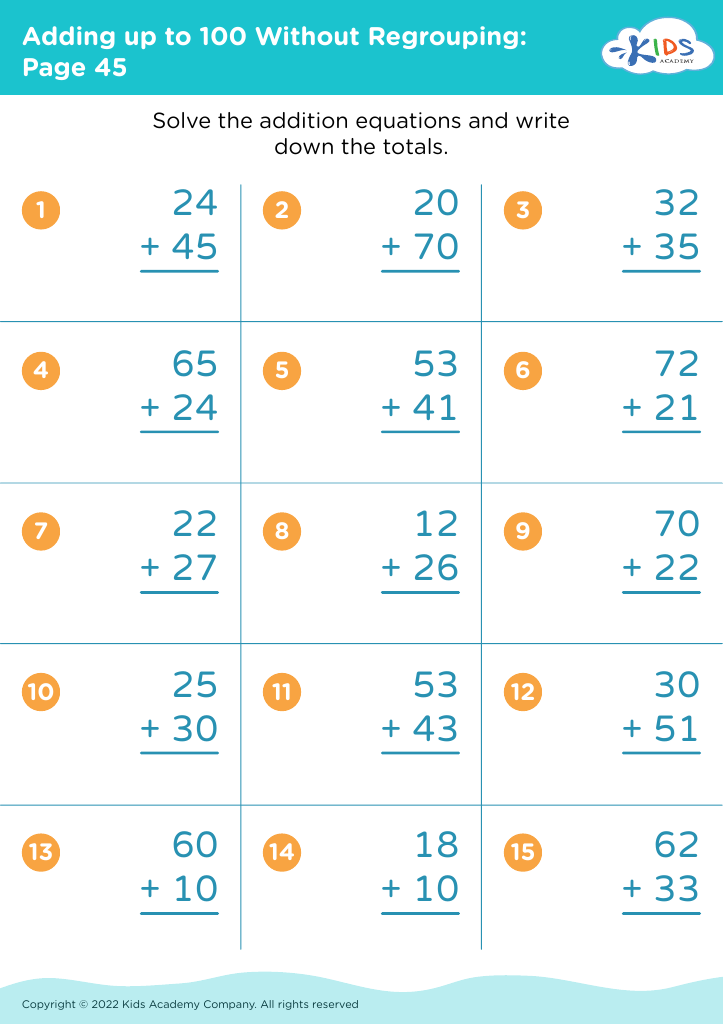
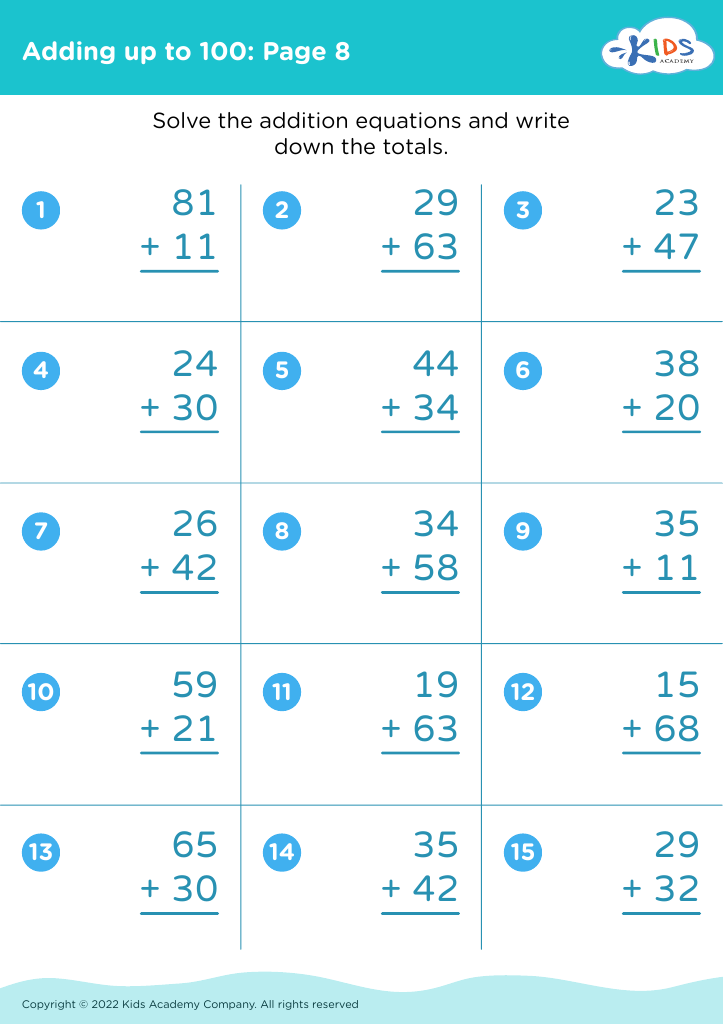
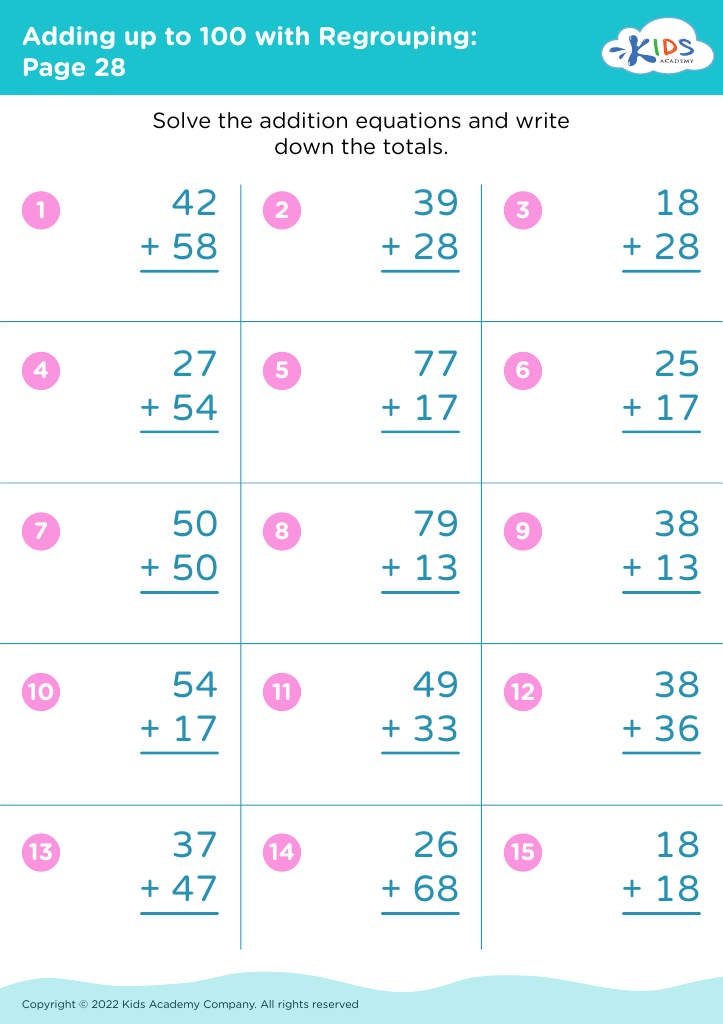
Unlock your child's potential in math with our "Basic Arithmetic Skills: Adding up to 100" worksheets, designed specifically for ages 7-9. These engaging tools are perfect for mastering key addition concepts, ensuring that young learners build a strong foundation in arithmetic. Through a variety of fun exercises, each worksheet enhances calculation skills, boosts confidence, and promotes a love for math. With activities tailored to this age group, children will effortlessly progress from simpler sums to more complex addition problems. Give your child the advantage they deserve with our expertly crafted resources. Dive in today and transform learning into an exciting adventure!






%20(1).jpg)
Mastering basic arithmetic skills, especially adding up to 100, is crucial for children aged 7-9 because it forms the bedrock of their future math learning and everyday problem-solving abilities. At this critical developmental stage, children are expanding their understanding of numbers and how they interact.
First, strong addition skills ensure that children can progress confidently to more advanced math topics, such as subtraction, multiplication, and division. These foundational skills also pave the way for understanding more complex mathematical concepts like fractions, algebra, and geometry. By solidifying their arithmetic abilities early on, children build the confidence to tackle higher-level mathematics without intimidation or struggle.
Second, arithmetic competency is intrinsically tied to real-life skills. Simple tasks like making change, measuring ingredients for a recipe, or even scoring in games require basic addition. When children grasp these skills early, they are better equipped to handle daily life tasks independently and competently.
Moreover, early success in mathematics often correlates with a positive attitude toward the subject in later years. Confidence in math can spur an interest in STEM fields, fostering a lifelong appreciation for the sciences.
In essence, by valuing and nurturing arithmetic skills in young children, parents and teachers set the stage not only for academic success but also for competent, confident problem-solvers in everyday life.








