Color recognition Adding up to 100 Worksheets for Ages 7-9
4 filtered results
-
From - To
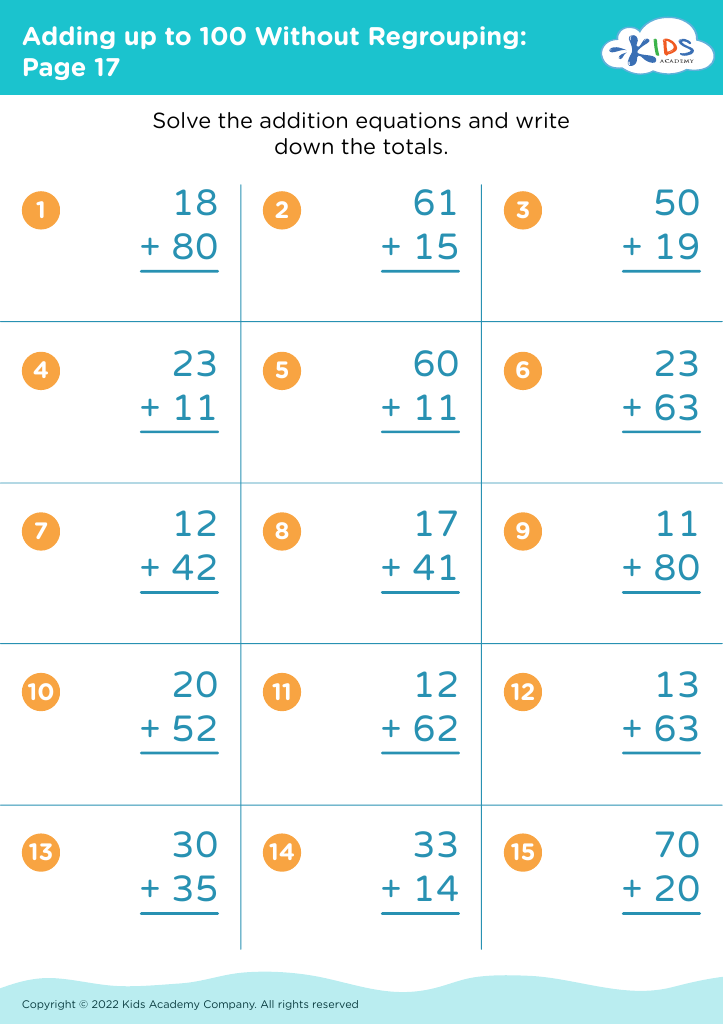
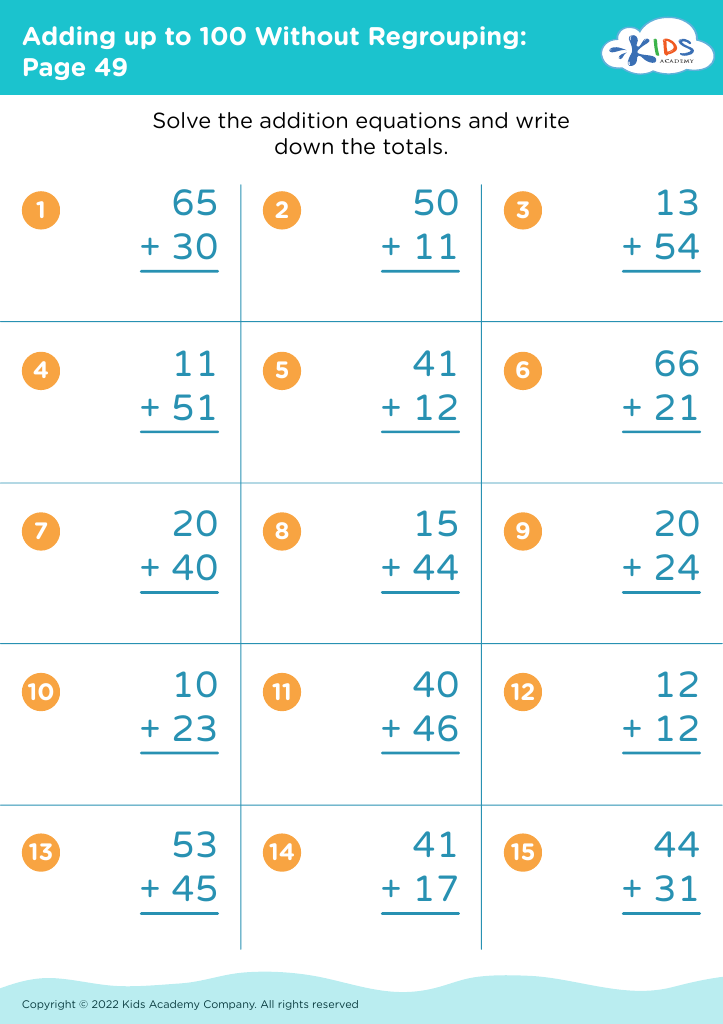
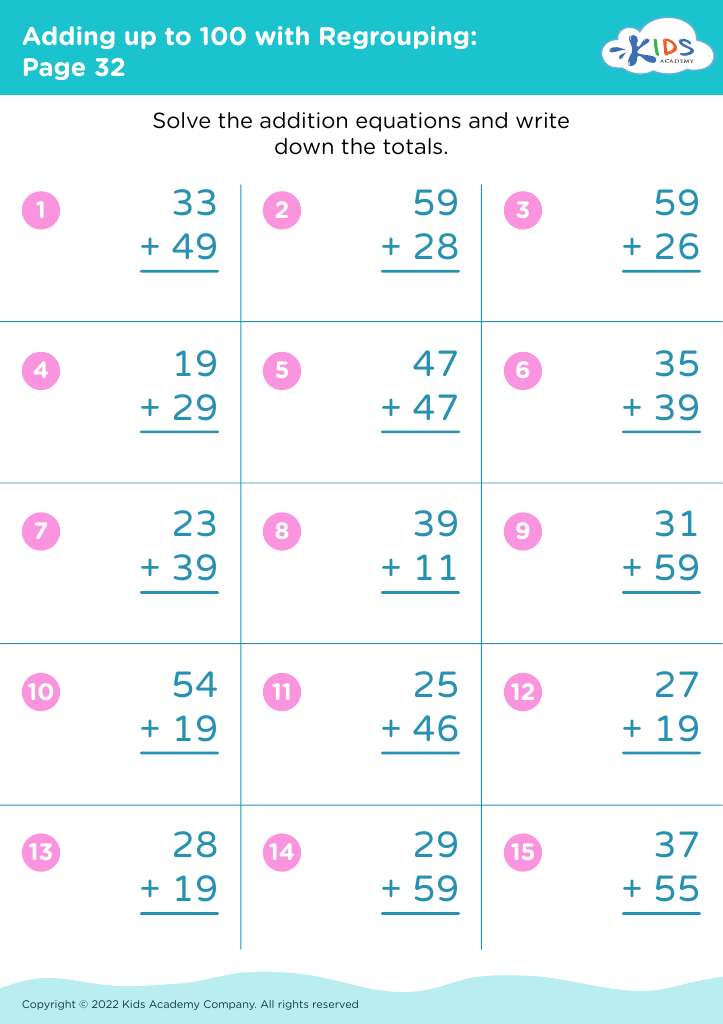
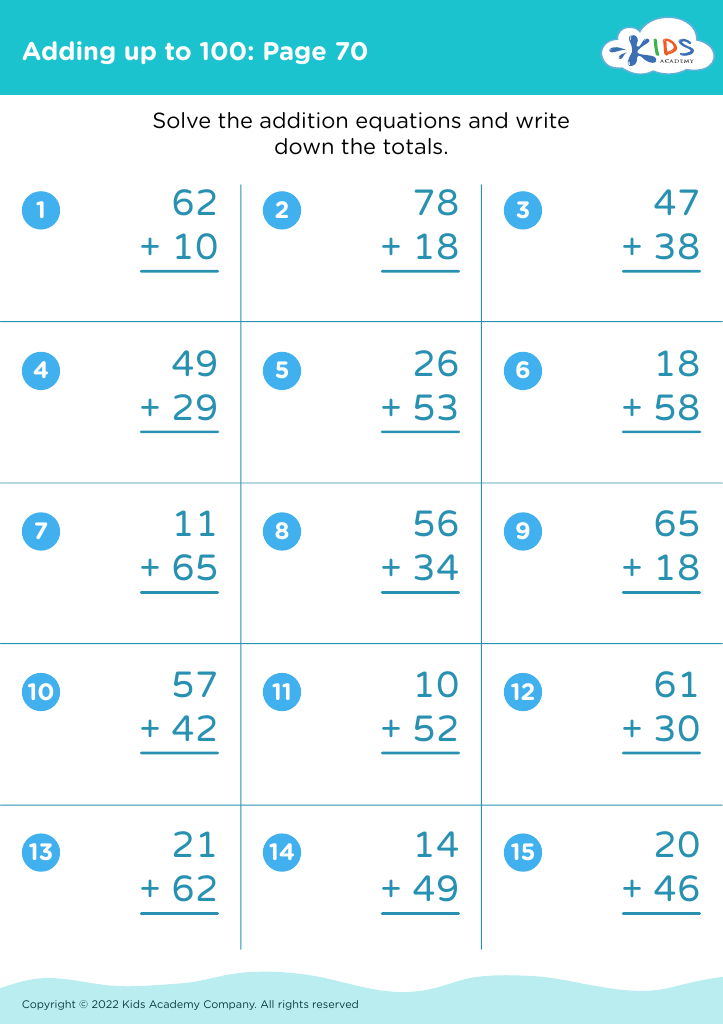
Enhance your child's learning experience with our "Color Recognition: Adding Up to 100 Worksheets for Ages 7-9." These engaging worksheets not only reinforce essential math skills by helping kids practice addition, but also incorporate color recognition, making learning fun and interactive. Each activity is designed to stimulate young minds, improve concentration, and strengthen mathematical understanding. With vibrant colors and captivating illustrations, these worksheets motivate students while fostering essential cognitive skills. Perfect for home or classroom use, these resources ensure your child builds a strong foundation in mathematics while honing their ability to recognize and differentiate colors. Download now for an enriching educational journey!






%20(1).jpg)
Color recognition and the ability to add up to 100 are foundational skills that support academic development in children aged 7 to 9. Parents and teachers should prioritize these skills for several reasons.
Firstly, color recognition is crucial for visual learning, which plays a significant role in early education. Understanding colors helps children enhance their observation skills and express creativity, paving the way for subjects like art and science. It also aids in classroom activities, where colors are often used to categorize objects, follow instructions, and foster engagement in learning through visuals.
Similarly, the ability to add up to 100 is vital for developing mathematical skills. It lays the groundwork for more complex arithmetic and problem-solving abilities. Mastery of this skill helps children gain confidence in their math capabilities, promotes critical thinking, and prepares them for future mathematics challenges.
Together, these skills are not just about individual subjects but also about building a well-rounded educational foundation. When parents and teachers actively support color recognition and addition skills, they contribute to children's cognitive development, academic performance, and overall confidence, fostering a love for learning that can last a lifetime.








