Comparing Fractions Adding up to 100 Worksheets for Ages 7-9 - Page 2
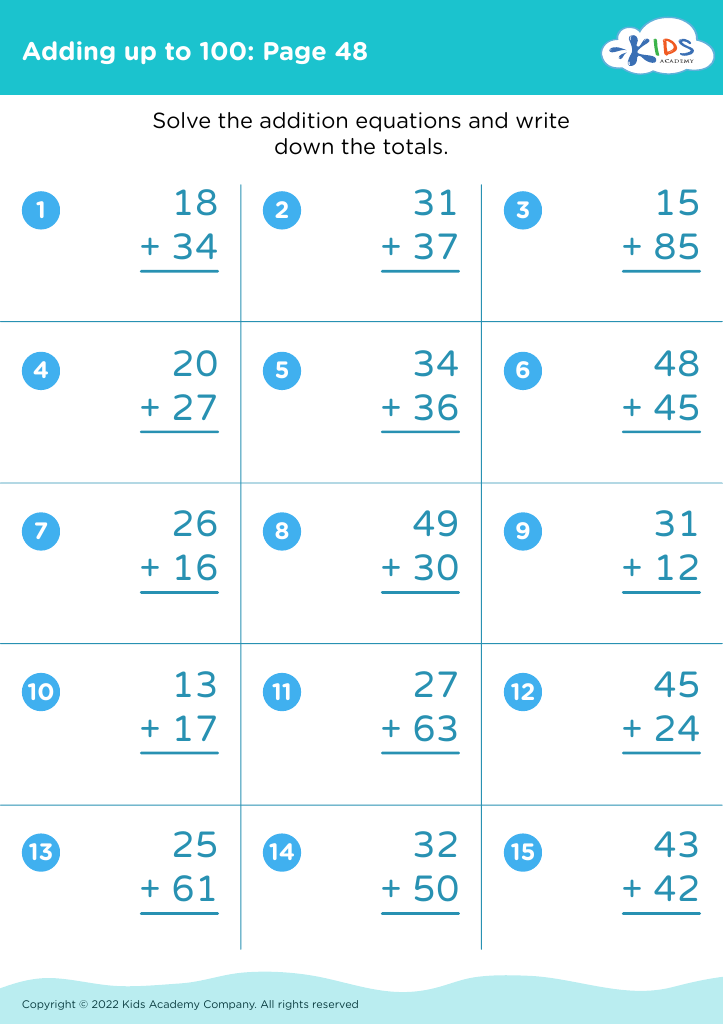
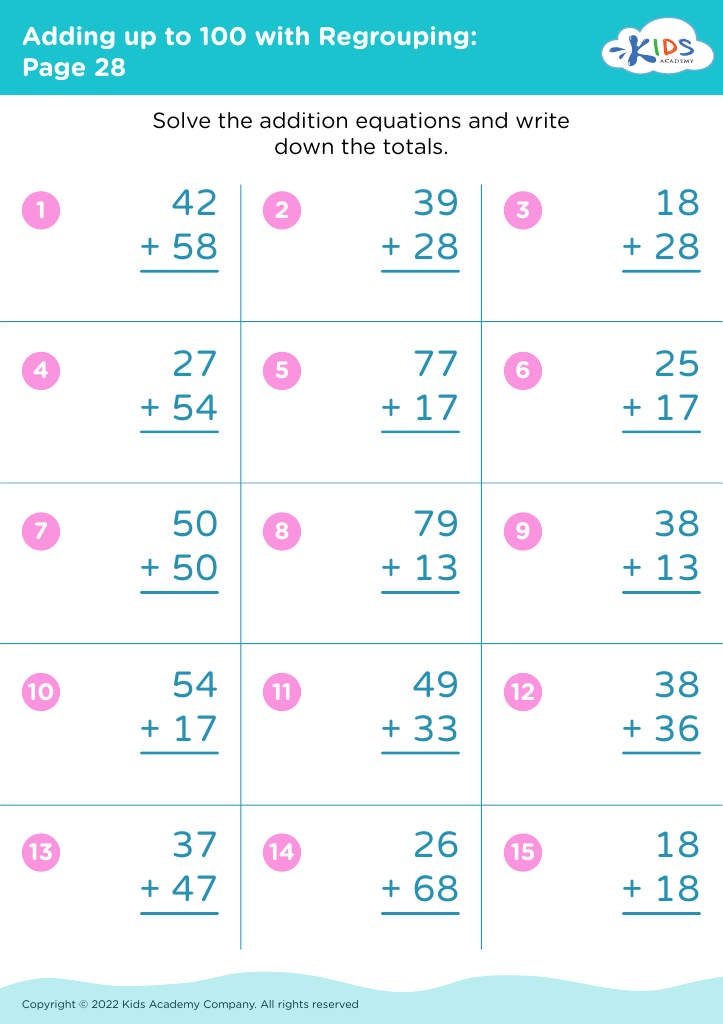
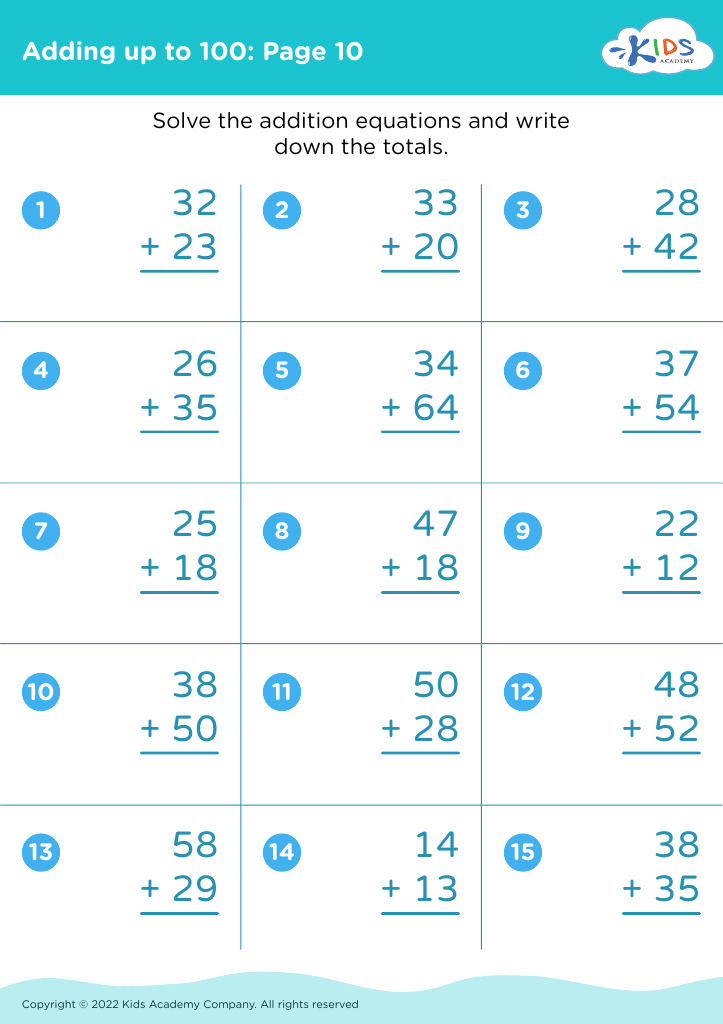
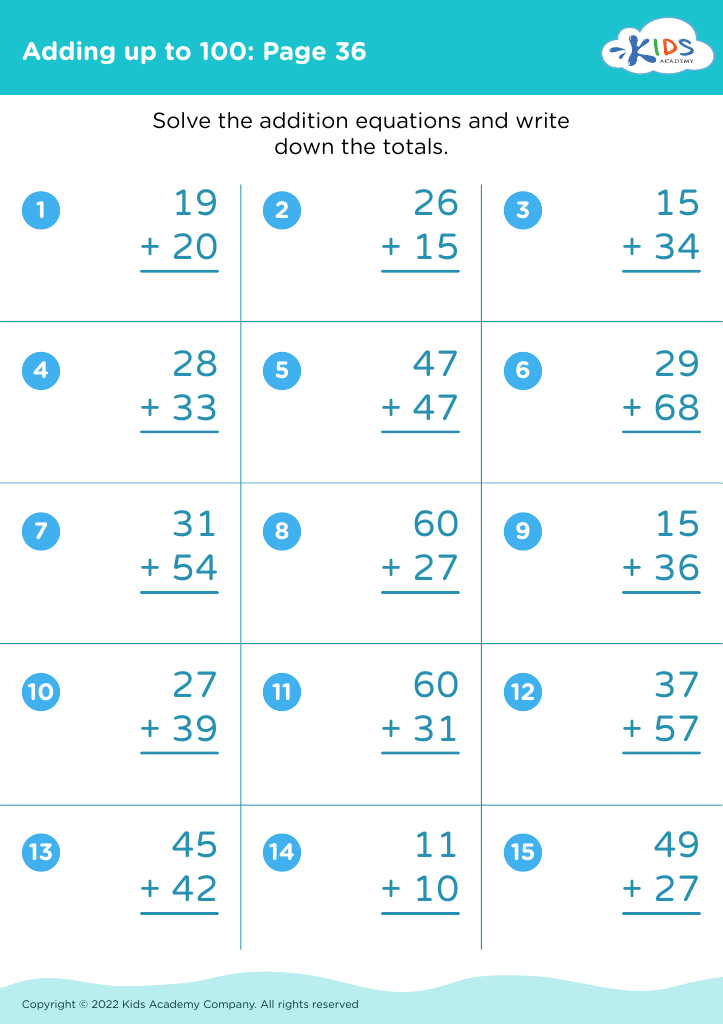




%20(1).jpg)


Teaching 7-9-year-olds how to compare fractions that add up to 100 is crucial for building a solid foundation in mathematics. At this age, children are developing the ability to understand more abstract concepts; therefore, mastering fractions is essential for their future math success. By comparing fractions, students enhance their numeracy skills, which are tools for problem-solving and logical thinking. These skills translate across various subjects and everyday situations, such as measuring ingredients for a recipe or understanding portions, fostering practical life skills.
Moreover, comparing fractions that sum to 100 introduces children to proportionate thinking, which is vital in understanding percentages, ratios, and eventually, more complex operations encountered in higher grades. This practice also strengthens their mental math capabilities, aiding in quicker and more efficient calculations.
Additionally, this topic helps cultivate critical thinking as students learn to question and articulate their reasoning for why one fraction is larger or smaller than another. This interaction enriches their vocabulary and communication skills in a mathematical context. Lastly, such exercises align with curriculum standards, thus ensuring the children meet academic expectations for their age group, making them well-prepared for advanced studies. Overall, adults nurturing these skills equip children with essential tools that extend well beyond the classroom.








