Critical Thinking Adding up to 100 Worksheets for Ages 7-9
5 filtered results
-
From - To
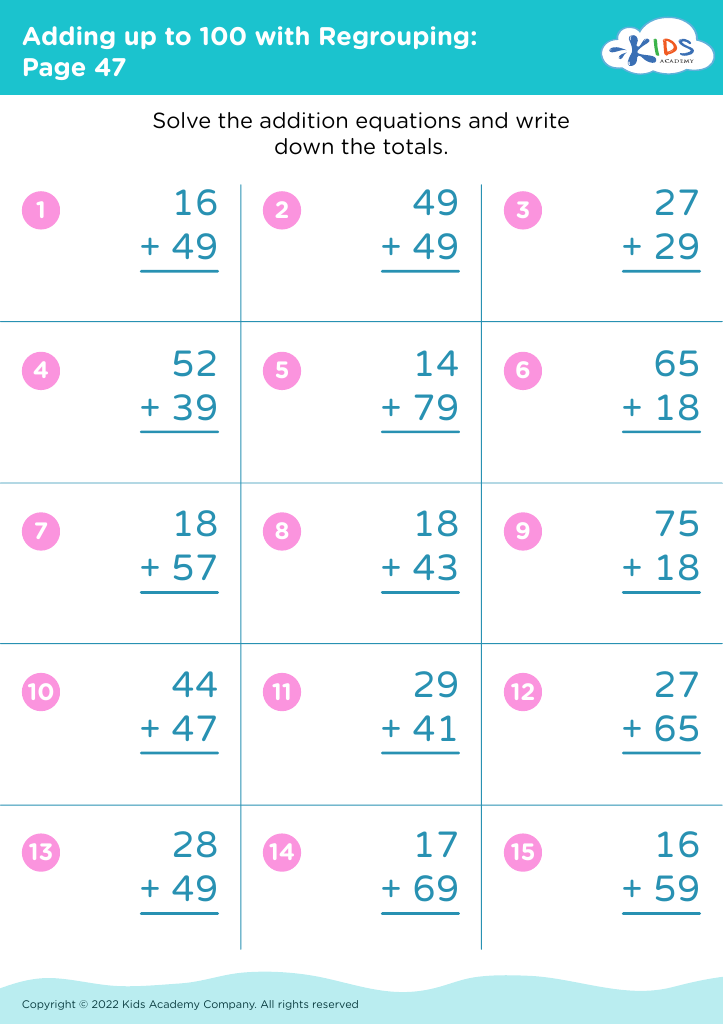
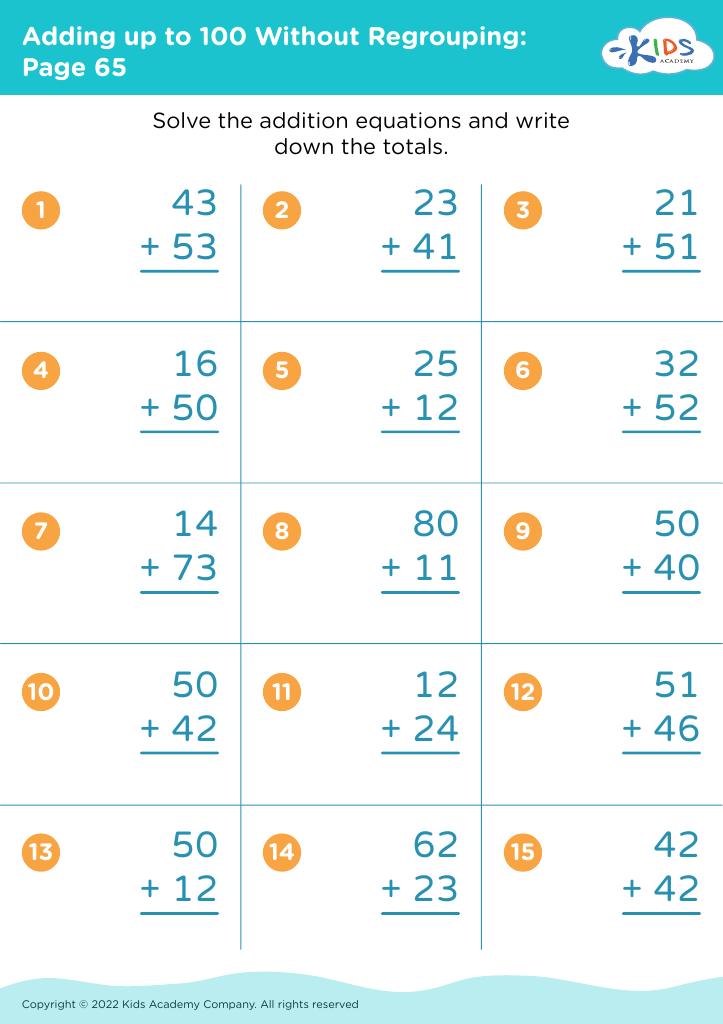
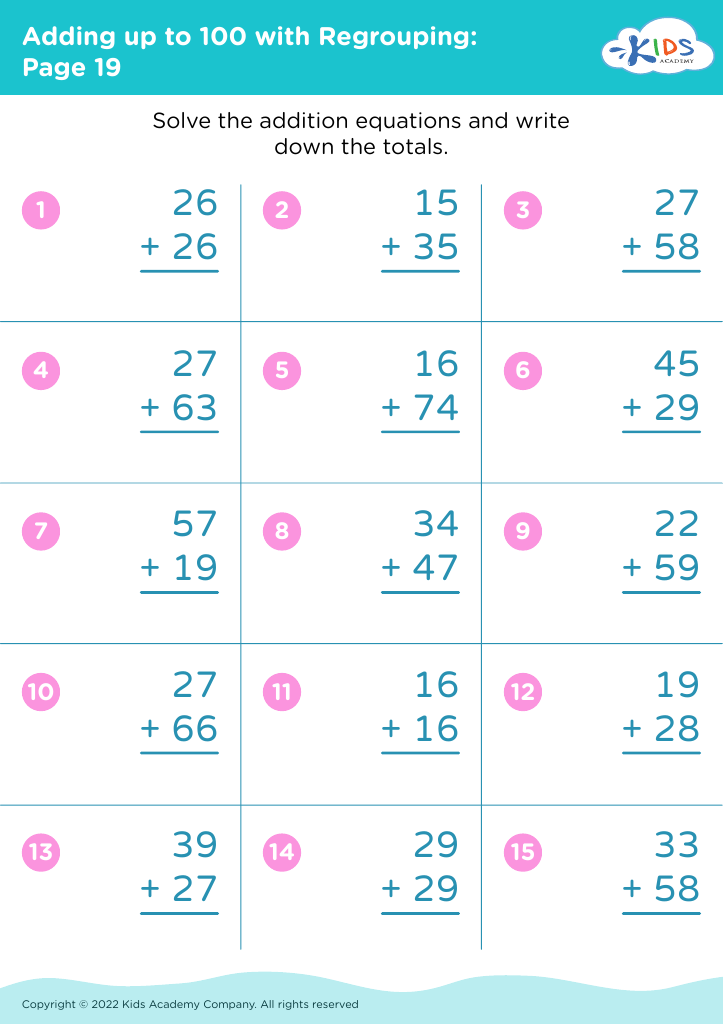
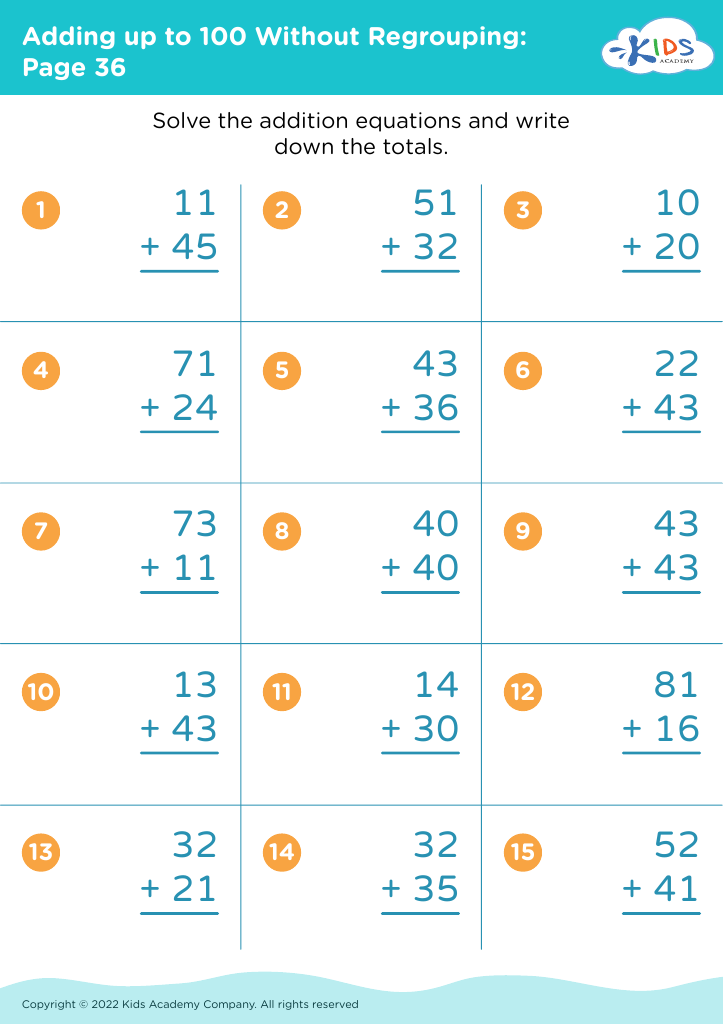
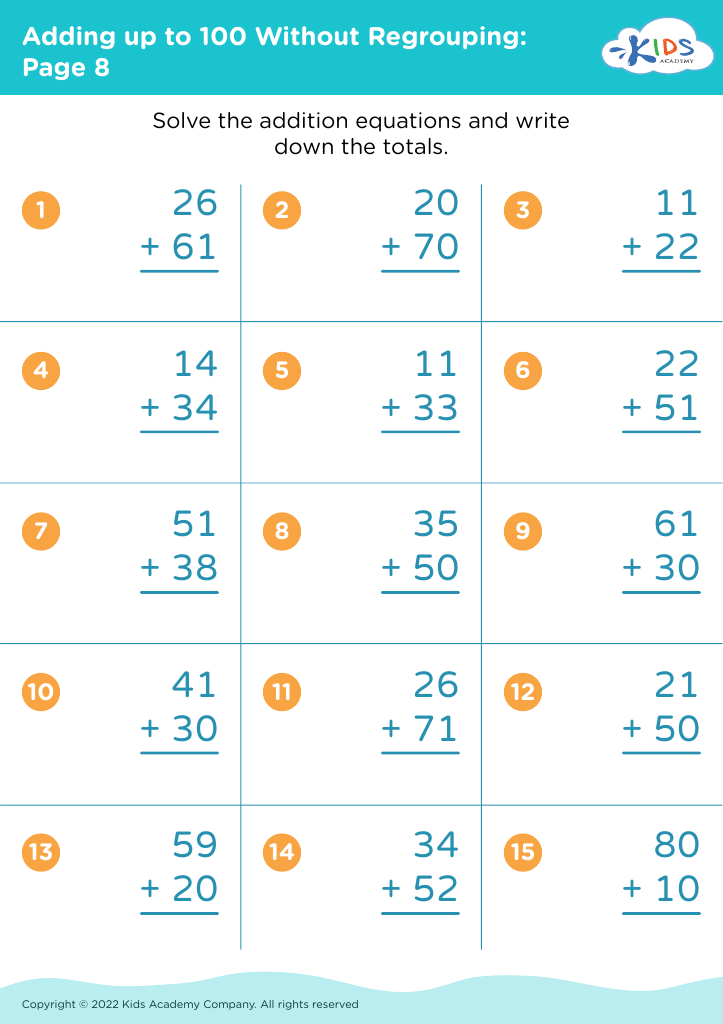
Welcome to our "Critical Thinking Adding up to 100 Worksheets" specially designed for ages 7-9! These engaging worksheets promote critical thinking skills through fun math challenges focusing on addition. Children will enhance their ability to solve problems, recognize patterns, and develop logical reasoning abilities. With a variety of exercises that encourage creativity and deduction, students will gain confidence in their math skills while exploring the concept of reaching 100. Our easy-to-use format allows parents, teachers, and caregivers to guide young learners on their educational journey. Dive into these interactive worksheets and watch your child's critical thinking soar!






%20(1).jpg)
Critical thinking is an essential skill for children aged 7 to 9, and both parents and teachers should prioritize its development. As children navigate their academic journey, critical thinking helps them analyze information, solve problems, and make informed decisions. At this age, kids are naturally curious, and fostering critical thinking encourages them to ask questions, seek explanations, and explore concepts deeply.
Engaging in exercises that promote critical thinking, such as math problems like “Critical Thinking Adding up to 100," enables children to practice logical reasoning and creativity. This exercise goes beyond mere calculations; it encourages kids to think about different ways to approach a problem, consider multiple solutions, and develop persistence when faced with challenges.
Moreover, critical thinking fosters independence and confidence, as children learn to trust their judgment and articulate their thoughts clearly. These skills lay the foundation for future learning and help children navigate the complexities of life outside the classroom. By supporting critical thinking, parents and teachers equip children with the tools they need for personal and academic success, ensuring they become effective problem solvers and engaged learners in an increasingly complex world.








