Develop critical thinking Adding up to 100 Worksheets for Ages 7-9
5 filtered results
-
From - To
Unlock your child's potential with our "Develop Critical Thinking: Adding Up to 100 Worksheets" designed specifically for ages 7-9. These engaging worksheets inspire young learners to explore math concepts through critical thinking and problem-solving skills. By analyzing various addition problems, children enhance their cognitive abilities while building a strong foundation in arithmetic. Fun scenarios and challenges keep students motivated, making learning enjoyable and impactful. Perfect for home or classroom use, this resource supports educators and parents in nurturing analytical thinkers ready to tackle more complex math topics. Discover how our worksheets can transform your child’s approach to mathematics today!
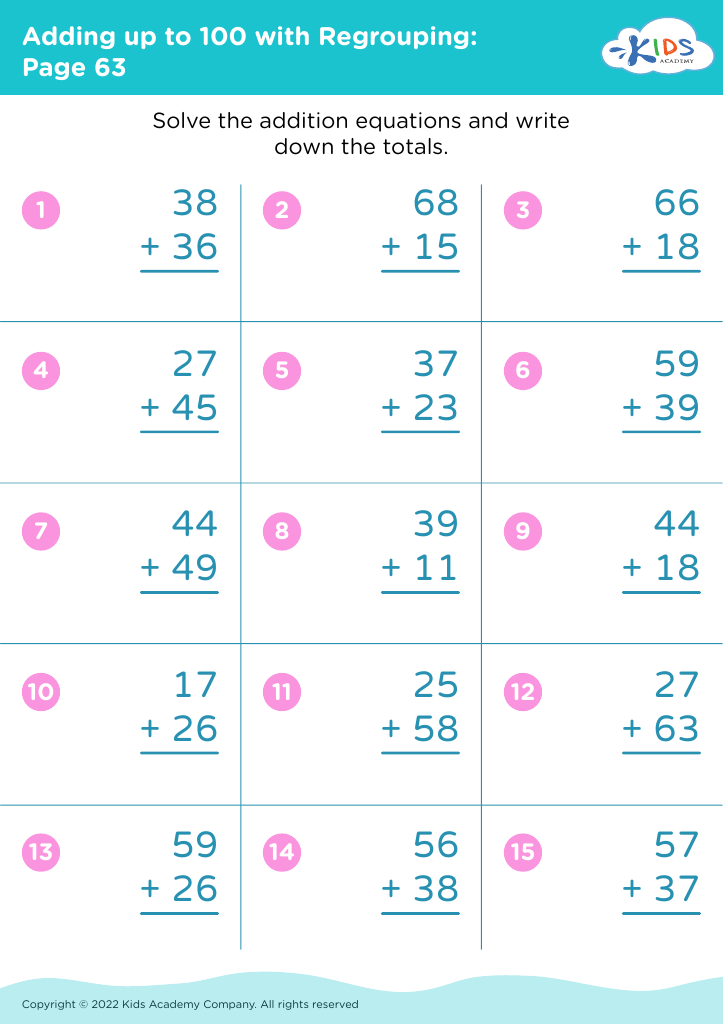
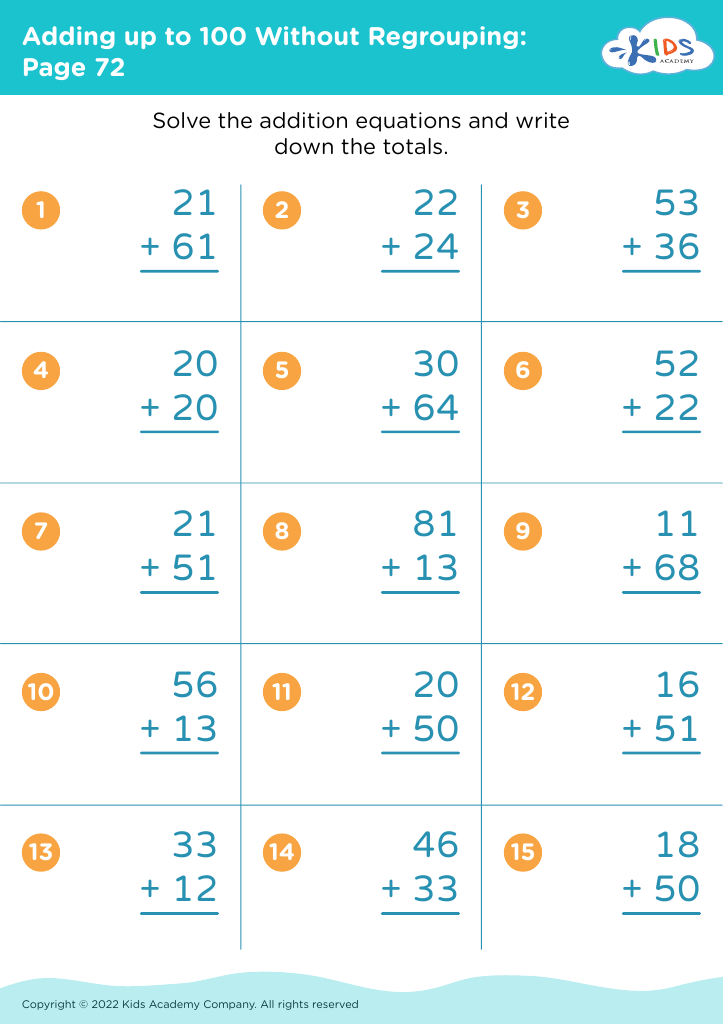
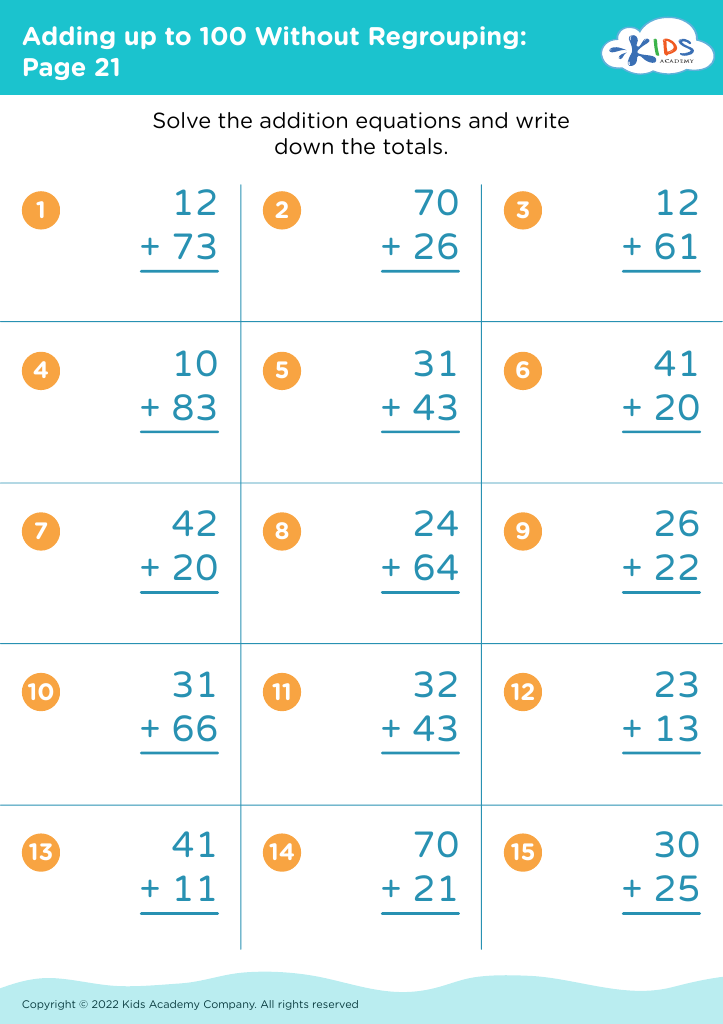

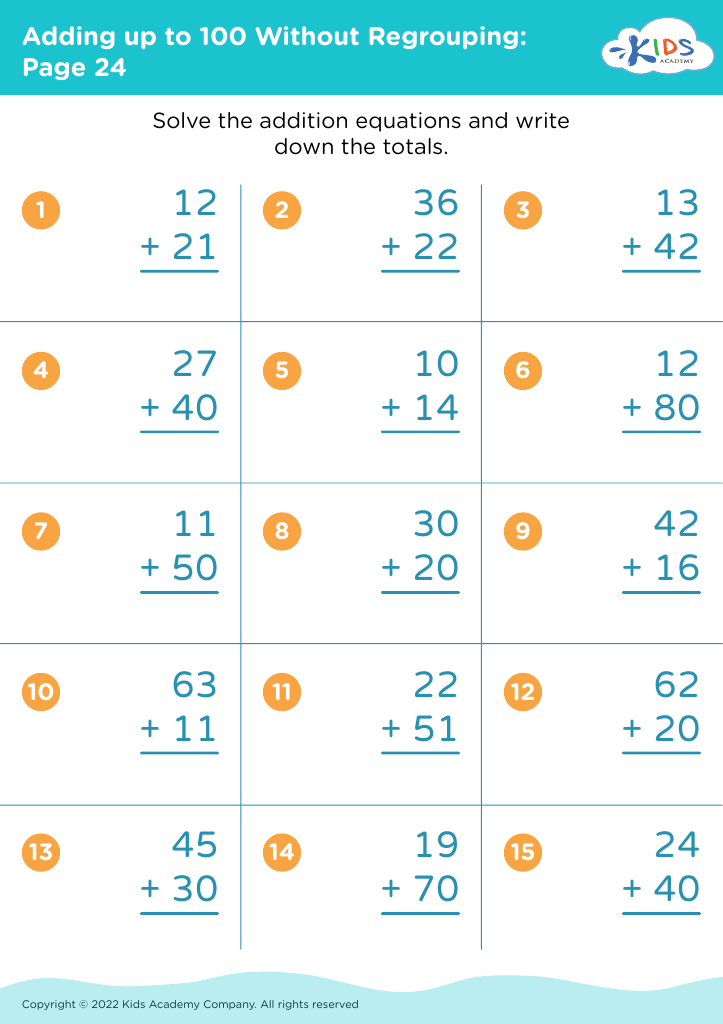






%20(1).jpg)
Developing critical thinking skills in children ages 7-9 is vital for their academic and personal success. At this age, children are beginning to refine their reasoning abilities, making it an ideal time to nurture these skills. Critical thinking helps children analyze information, evaluate different perspectives, and make informed decisions. When teachers and parents focus on critical thinking, they equip children with the tools to tackle complex problems and challenges they may face in school and everyday life.
Moreover, fostering critical thinking promotes curiosity and a love for learning. Children learn to ask questions, seek evidence, and engage in discussions, encouraging active participation in their education. This skill set not only boosts their academic performance in subjects like math and science, where problem-solving is crucial, but also enhances their ability to think creatively across all subjects.
Additionally, critical thinking fosters independence and confidence. As children learn to trust their analytical skills, they become more confident decision-makers. Supporting the development of these skills helps prepare children for future challenges, enhancing their abilities to navigate an increasingly complex world. Therefore, prioritizing critical thinking is essential for parents and teachers striving to promote well-rounded, capable individuals in a rapidly changing society.








