Develop number recognition Adding up to 100 Worksheets for Ages 7-9
4 filtered results
-
From - To
Enhance your child's math skills with our "Develop Number Recognition Adding up to 100 Worksheets for Ages 7-9." Designed for young learners, these engaging worksheets help children master number recognition and addition skills, making math both fun and educational. Each activity is geared towards boosting confidence in handling numbers up to 100, ensuring a solid foundation for future mathematical concepts. Colorful and intuitive, these printables encourage independent learning while providing a supportive structure for effective practice. Perfect for classroom use or at-home learning, these worksheets are your child's key to unlocking the joys of math. Download now from Kids Academy!
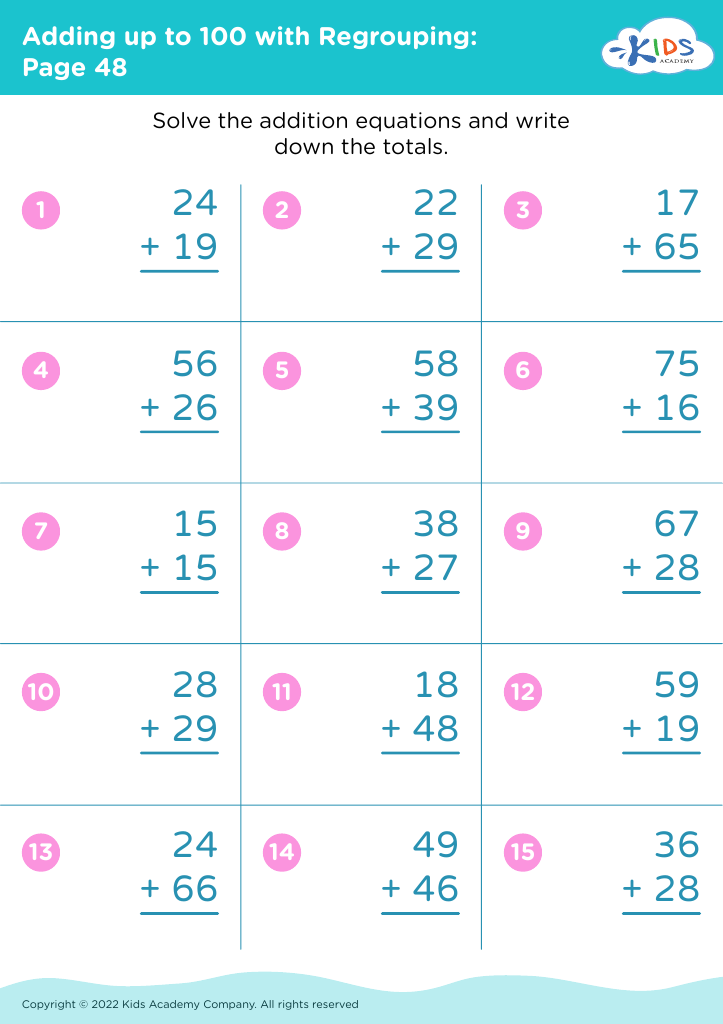
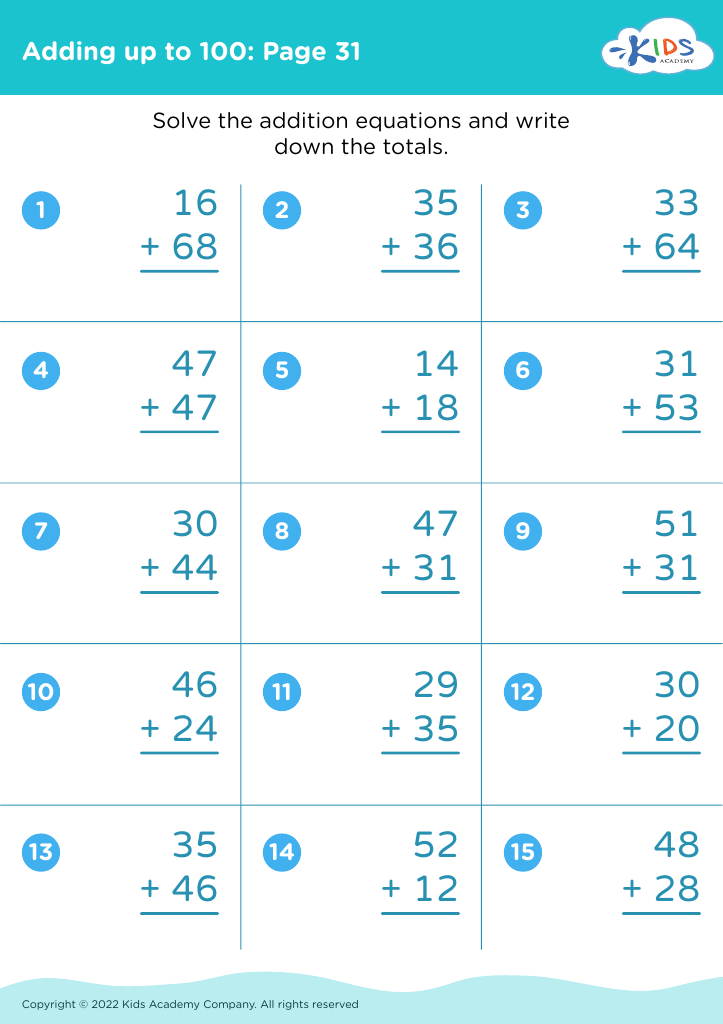
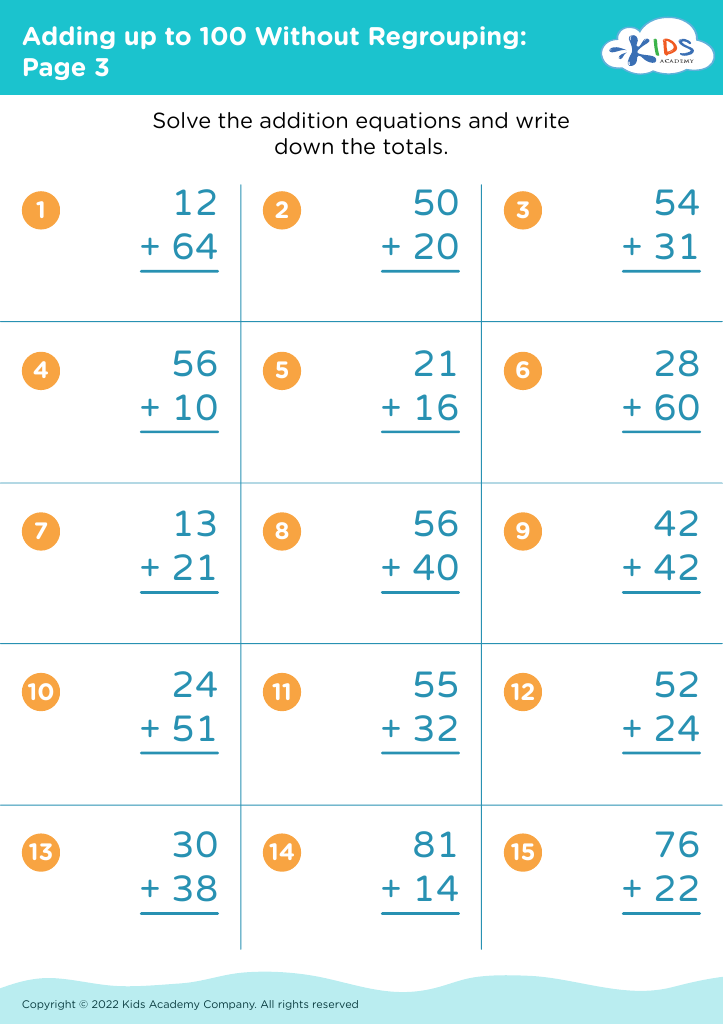
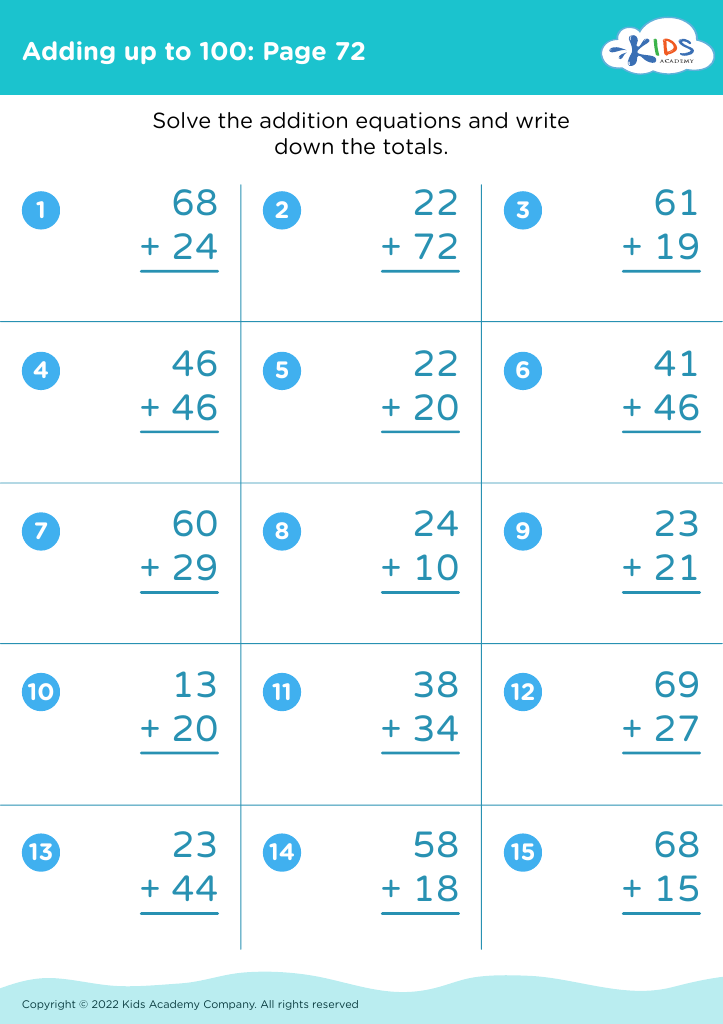






%20(1).jpg)
Developing number recognition and the ability to add up to 100 in children ages 7-9 is critical for several reasons. First, these skills form the foundation for more advanced mathematical concepts. Recognizing numbers and being able to manipulate them mentally or on paper is essential for understanding basic arithmetic operations, such as addition, subtraction, multiplication, and division. Early mastery of these skills can lead to greater confidence and enthusiasm for mathematics, setting the stage for future success in higher-level math courses.
Second, mathematical proficiency is also closely linked to everyday life skills. From telling time and handling money to understanding measurements in cooking or construction, the applications of math are vast and practical. Children who develop strong number sense and arithmetic skills early on are better equipped to navigate these everyday challenges.
Additionally, math skills support cognitive development by enhancing logical thinking, problem-solving abilities, and memory. Engaging in math exercises strengthens neural pathways, fostering overall intellectual growth. For parents and teachers, fostering a love and comprehension of mathematics in young students is a critical investment in their future academic and personal life. Early intervention and continuous support in number recognition and arithmetic can create a positive, lasting impact on a child’s developmental trajectory.








