Developing math skills Adding up to 100 Worksheets for Ages 7-9
3 filtered results
-
From - To
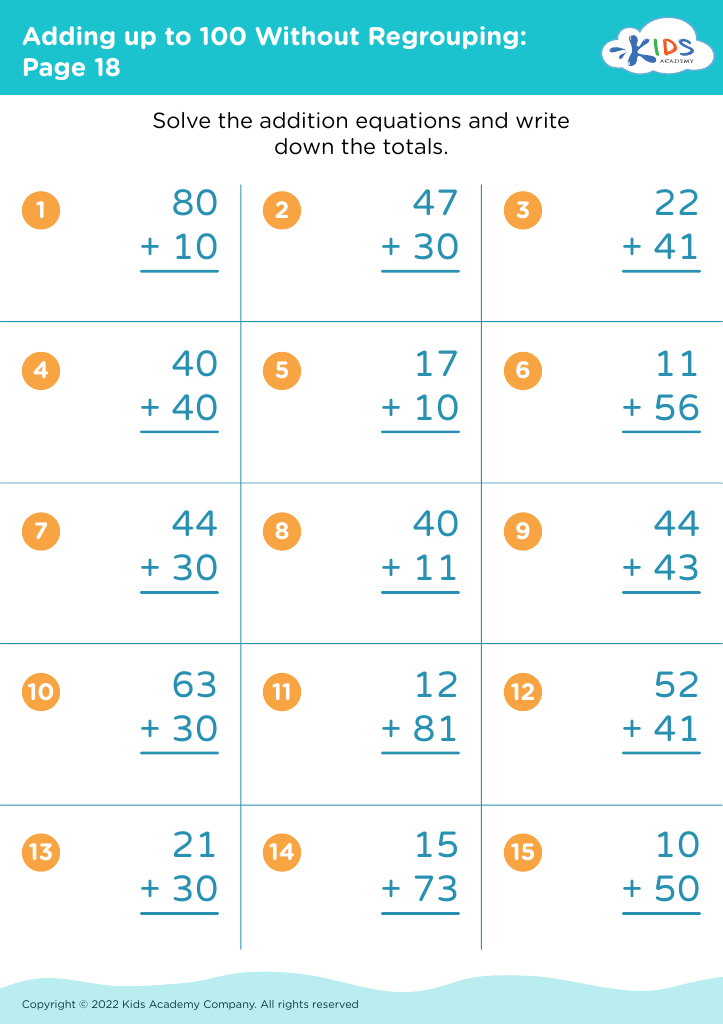
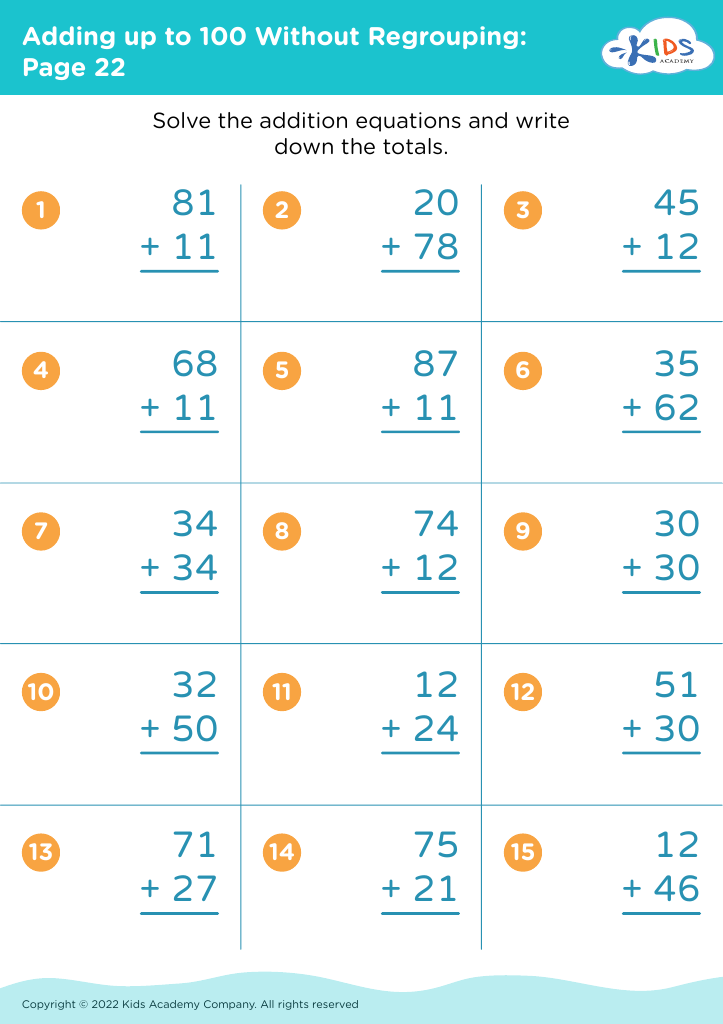
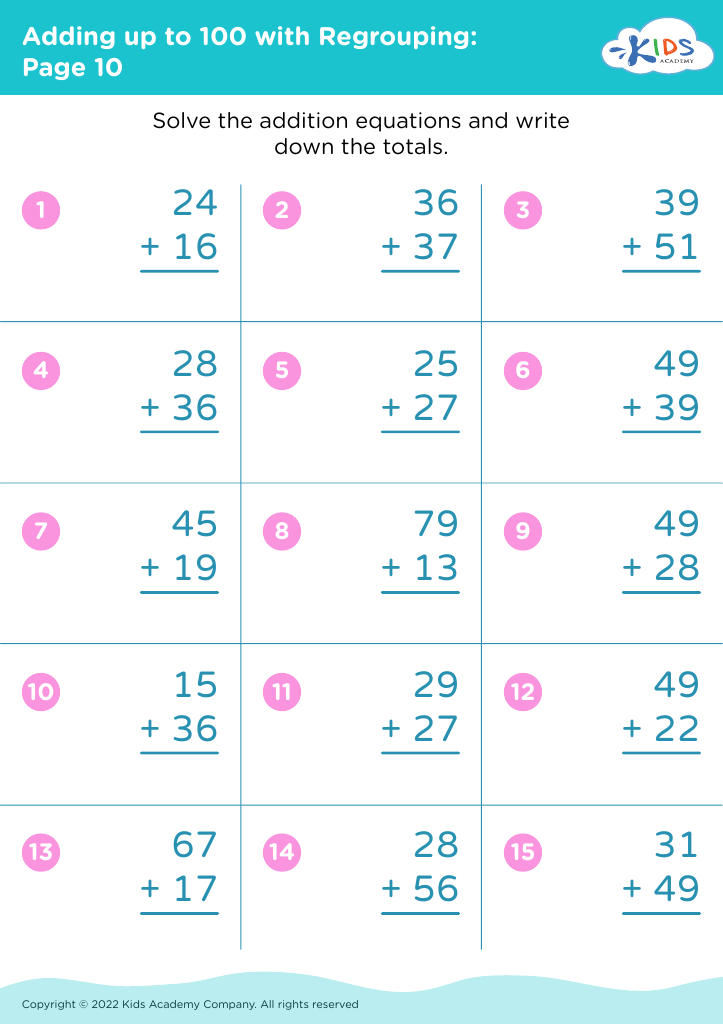
Unlock your child’s full numerical potential with our "Developing Math Skills: Adding up to 100 Worksheets" designed for ages 7-9. Our expertly crafted worksheets transform learning into an engaging adventure, helping young minds master essential addition skills through fun and interactive exercises. With a focus on adding numbers up to 100, these resources ensure kids build solid foundational math skills crucial for future academic success. Enhance your child's confidence and proficiency in math with Kids Academy’s state-of-the-art worksheets, and watch them thrive as they solve each problem with ease and enthusiasm. Start exploring today and make math exciting!






%20(1).jpg)
Developing math skills in children aged 7-9, especially the ability to add up to 100, is crucial for several reasons. First and foremost, these foundational skills act as building blocks for more advanced mathematical concepts. Mastery of basic addition ensures that children can tackle increasingly complex problems with confidence and accuracy. For parents and teachers, focusing on this education cultivates logical thinking and problem-solving abilities in young minds.
Equipping children with the competency to add numbers up to 100 provides practical benefits as well. Whether they are estimating the cost of items at a store or managing time for daily activities, these skills offer real-world applications that enhance their independence and decision-making abilities. Also, success in early math correlates with academic achievement across other subjects, including science and technology, thereby fostering a well-rounded education.
Additionally, developing math skills can significantly boost a child's confidence and enthusiasm for learning. Struggling with basic arithmetic might cause frustration and a negative attitude toward schoolwork, while overcoming such challenges can build resilience and a love for math. Given these benefits, investing time and effort into nurturing strong mathematical abilities in young learners offers invaluable returns both in their academic journey and daily lives.








