Drawing skills Adding up to 100 Worksheets for Ages 7-9
3 filtered results
-
From - To
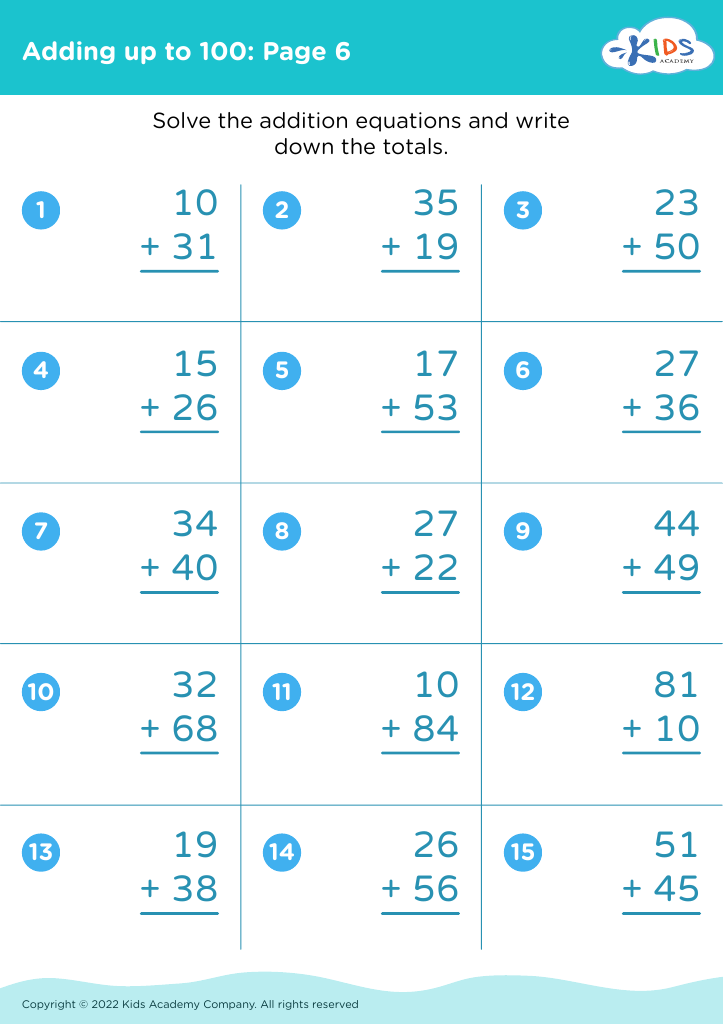
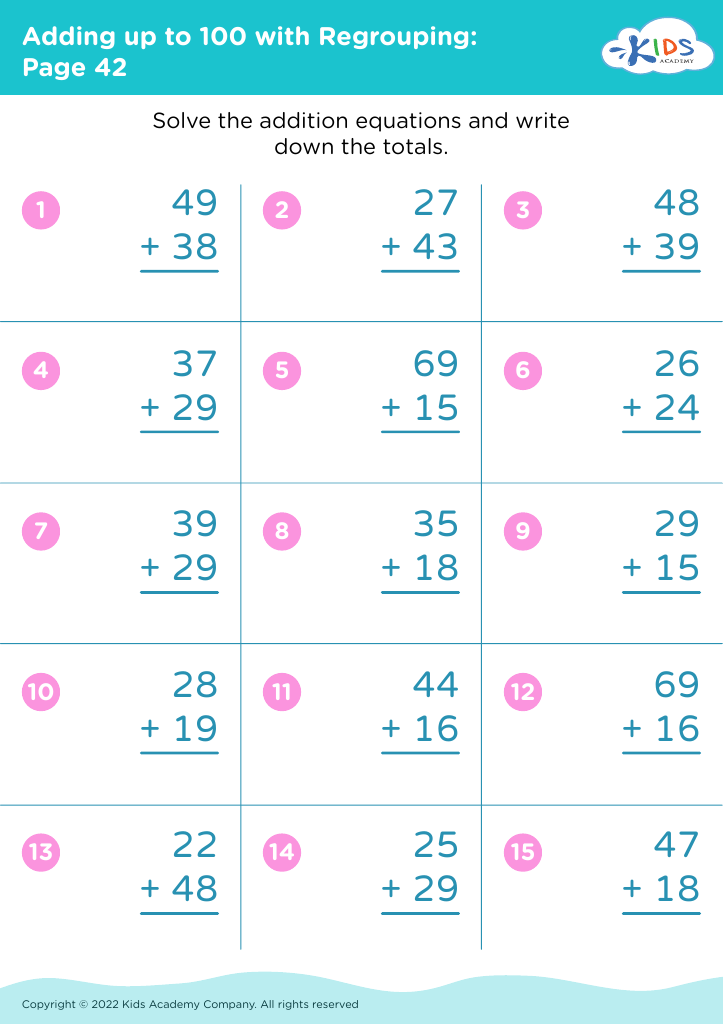
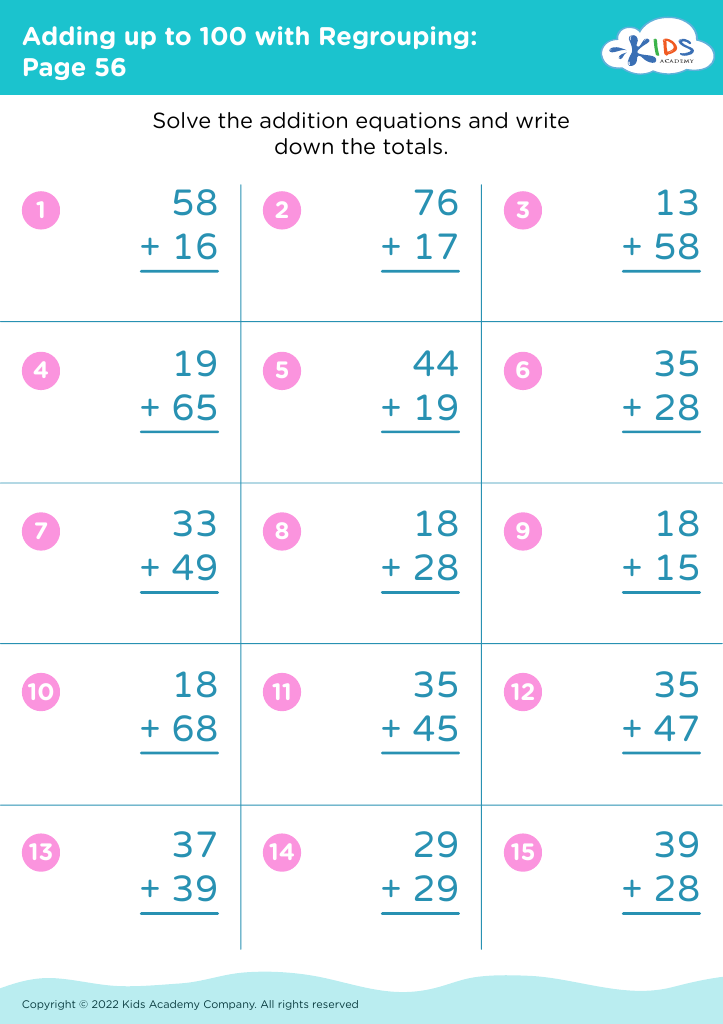
Enhance your child's drawing skills while boosting their math abilities with our "Drawing Skills Adding up to 100 Worksheets" designed specifically for ages 7-9. These engaging worksheets incorporate creative art activities that make learning addition enjoyable and interactive. Children will practice adding numbers up to 100 as they illustrate fun scenes and solve math problems through drawings. This unique approach not only reinforces arithmetic skills but also encourages creativity and critical thinking. Perfect for home or classroom use, our worksheets provide a comprehensive resource for young learners to develop both their mathematical understanding and artistic expression. Start drawing and adding today!





%20(1).jpg)

Drawing skills are essential for children aged 7-9, as they play a crucial role in both artistic development and cognitive growth. At this age, children's fine motor skills are maturing, and drawing helps refine these abilities, leading to improved hand-eye coordination and dexterity. When parents or teachers emphasize drawing skills, they foster creativity and self-expression, allowing children to communicate their thoughts and emotions visually.
Additionally, drawing can enhance counting and number recognition through activities like drawing to represent quantities and adding elements to create scenes. Integrating mathematical concepts like adding up to 100 during drawing tasks can make learning fun and engaging, transforming abstract ideas into tangible ones, Subsequently, this playful approach nurtures a positive attitude towards math and learning overall.
Moreover, drawing fosters critical thinking by encouraging children to plan their work, understand proportions, and visualize outcomes. It boosts confidence, as children take pride in their creations, reinforcing a sense of accomplishment. In summary, supporting drawing skills in aged 7-9 not only contributes to artistic and cognitive development but also builds a solid foundation for future learning, social interactions, and overall emotional well-being. Parents and teachers should hence actively promote drawing as an integral part of child development.








