Enhance critical thinking Adding up to 100 Worksheets for Ages 7-9
3 filtered results
-
From - To
Enhance your child's critical thinking skills with our Adding up to 100 Worksheets for Ages 7-9. These engaging and interactive exercises are designed to help young learners master addition while sparking their problem-solving abilities. Each worksheet combines fun math challenges with colorful visuals, encouraging kids to apply logical reasoning and think critically. Ideal for classroom use or at-home practice, this collection offers varied activities that align with common core standards, providing a solid foundation in math. Empower your child to boost their math confidence and enhance critical thinking with our expertly crafted worksheets. Visit us to get started today!
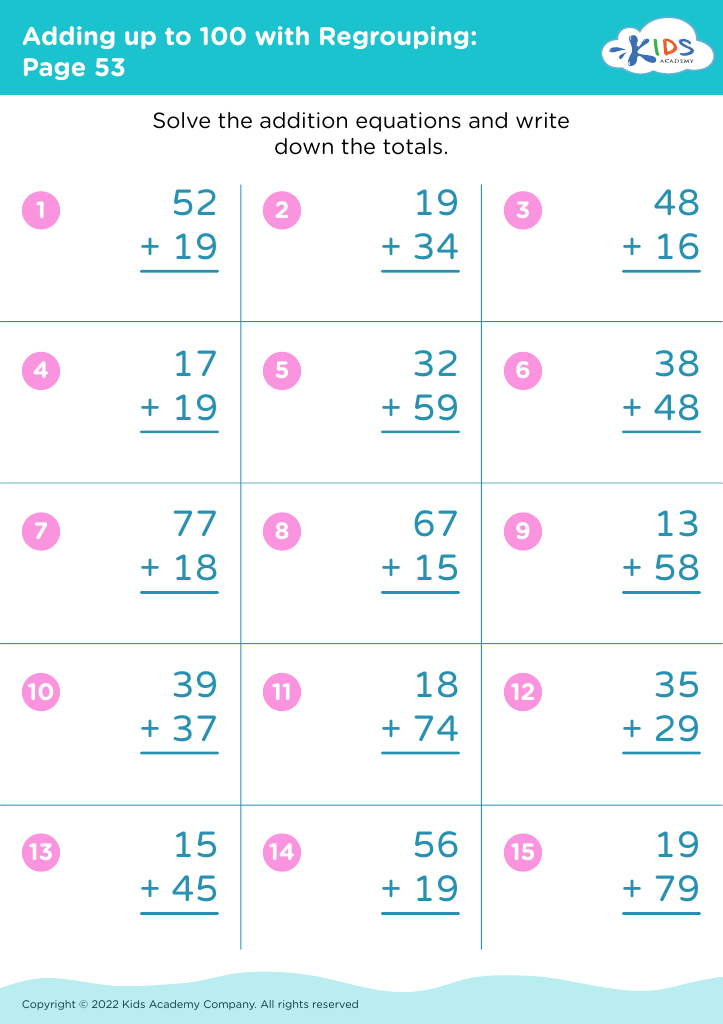
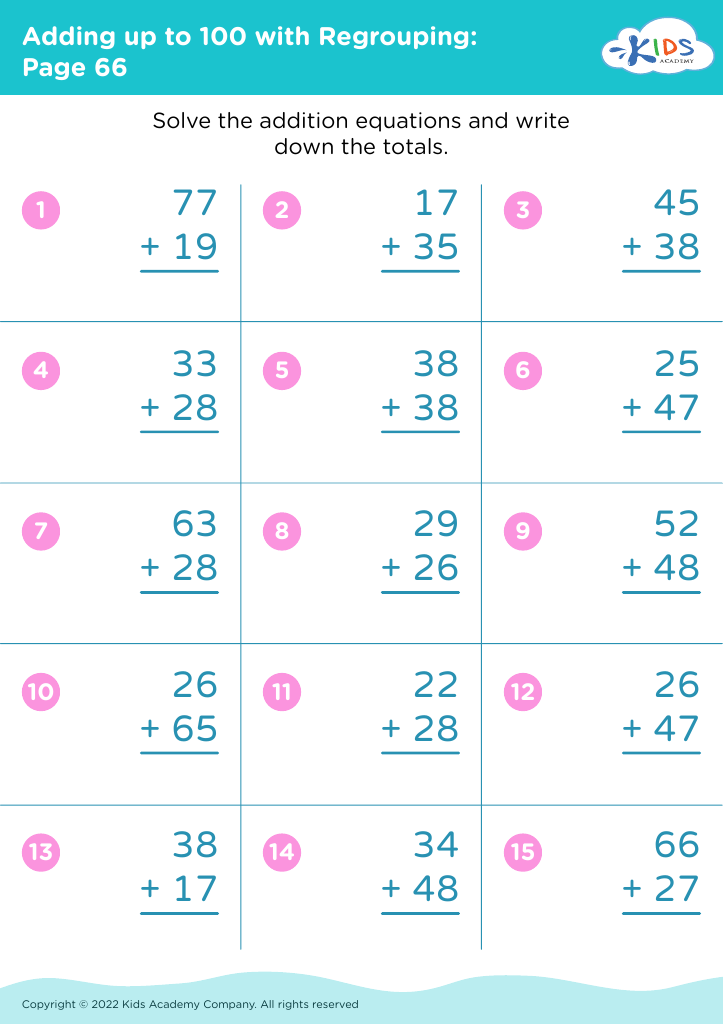
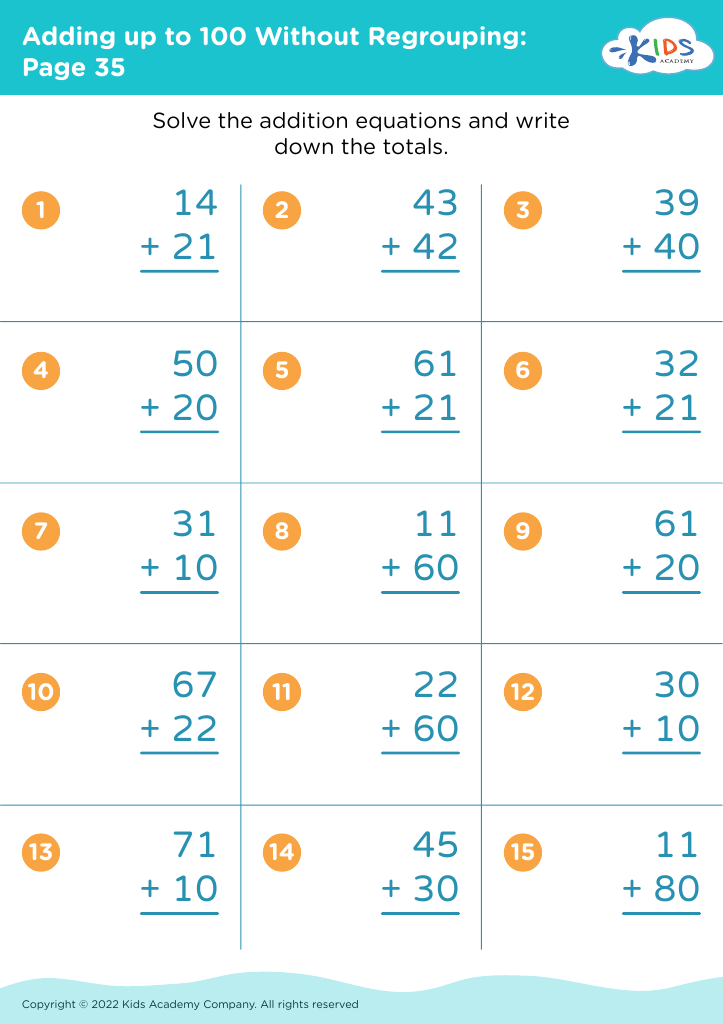





%20(1).jpg)

Enhancing critical thinking through math, such as learning to add up to 100, is vital for children aged 7-9 because it forms the foundation for their cognitive development and academic success. At this stage, kids transition from concrete to more abstract thinking. Critical thinking skills enable them to analyze, evaluate, and synthesize information — crucial steps in problem-solving. Math activities, like adding up to 100, require students to recognize patterns, use logical reasoning, and develop strategies, thereby boosting these skills naturally.
Moreover, arithmetic involving sums up to 100 promotes numerical fluency, which is foundational for more complex mathematical concepts they'll encounter later on. Proficiency in these basics can boost confidence and allow children to tackle advanced topics without fear, building a positive relationship with learning.
These skills aren't limited to math class; they transcend subject matter, enriching overall intellectual capabilities. Children learn to approach challenges methodically, ask pertinent questions, and think independently. Both parents and teachers play a crucial role in fostering these skills either through engaging activities at home or well-structured lessons at school. Encouraging critical thinking in early years cultivates lifelong learners equipped for the demands of the future.
In essence, developing critical thinking and basic math skills at a young age lays the groundwork for future educational and life success.








