Enhance problem-solving skills Adding up to 100 Worksheets for Ages 7-9
3 filtered results
-
From - To
Develop your child's problem-solving abilities with our Adding Up to 100 Worksheets, expertly crafted for ages 7-9. These worksheets facilitate the enhancement of critical thinking by challenging young learners while keeping them engaged. Each worksheet offers various interactive and fun exercises, promoting strategic thinking and helping kids master addition up to 100. Not only do these activities strengthen math skills, but they also build confidence in solving complex problems. Ideal for both classroom and at-home learning, our worksheets transform math practice into an enjoyable experience. Start your child's journey to becoming a math whiz today with our comprehensive resources!
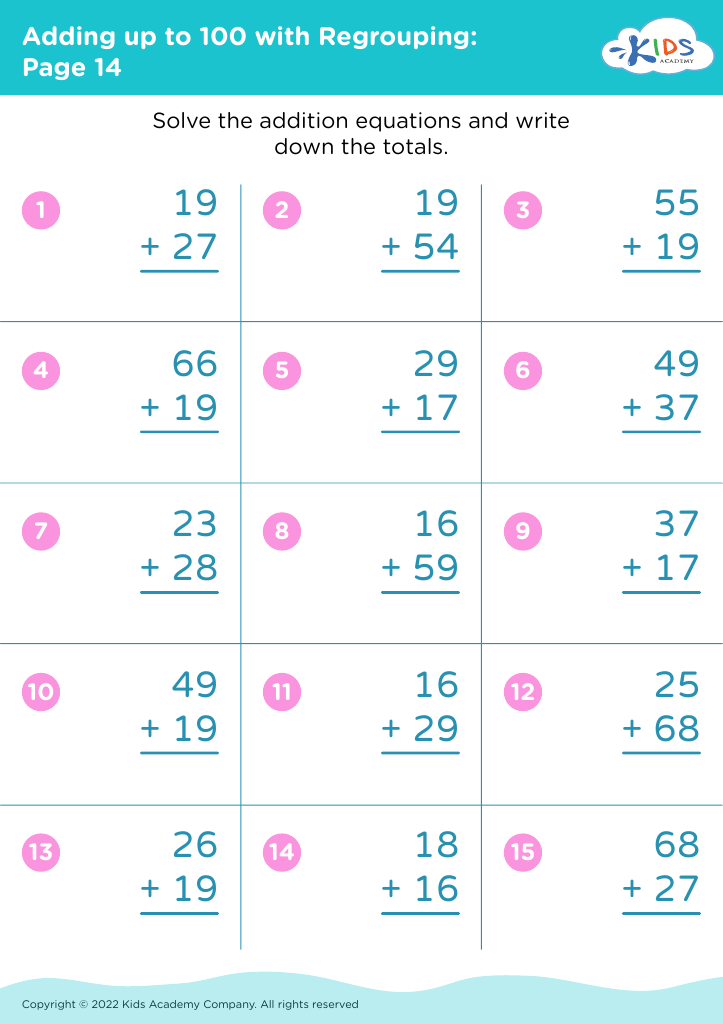
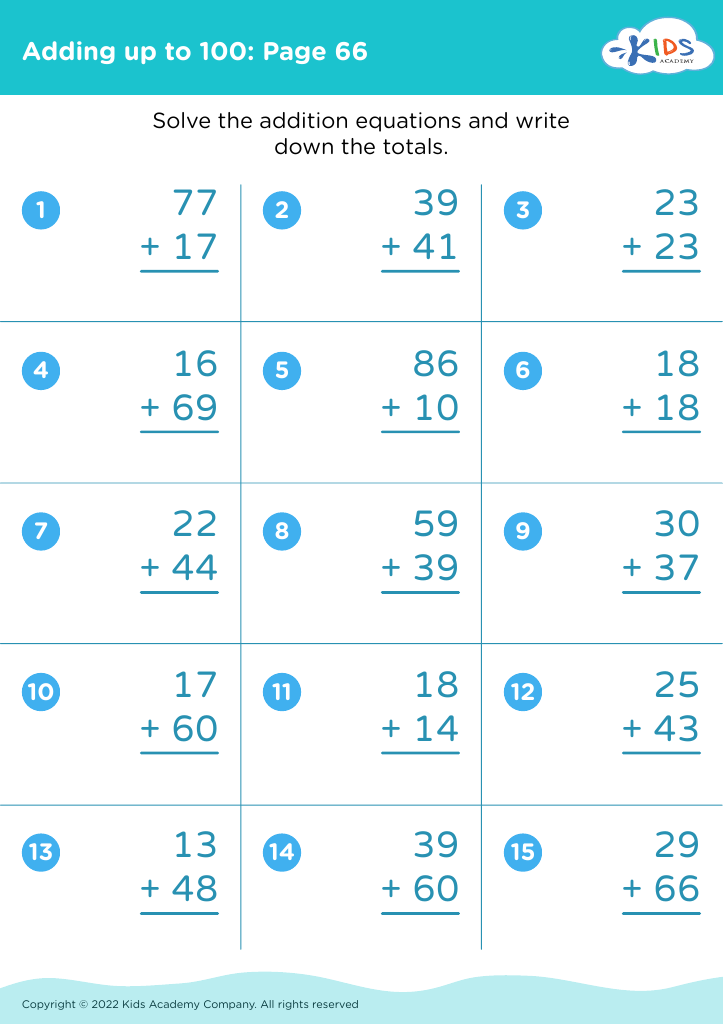
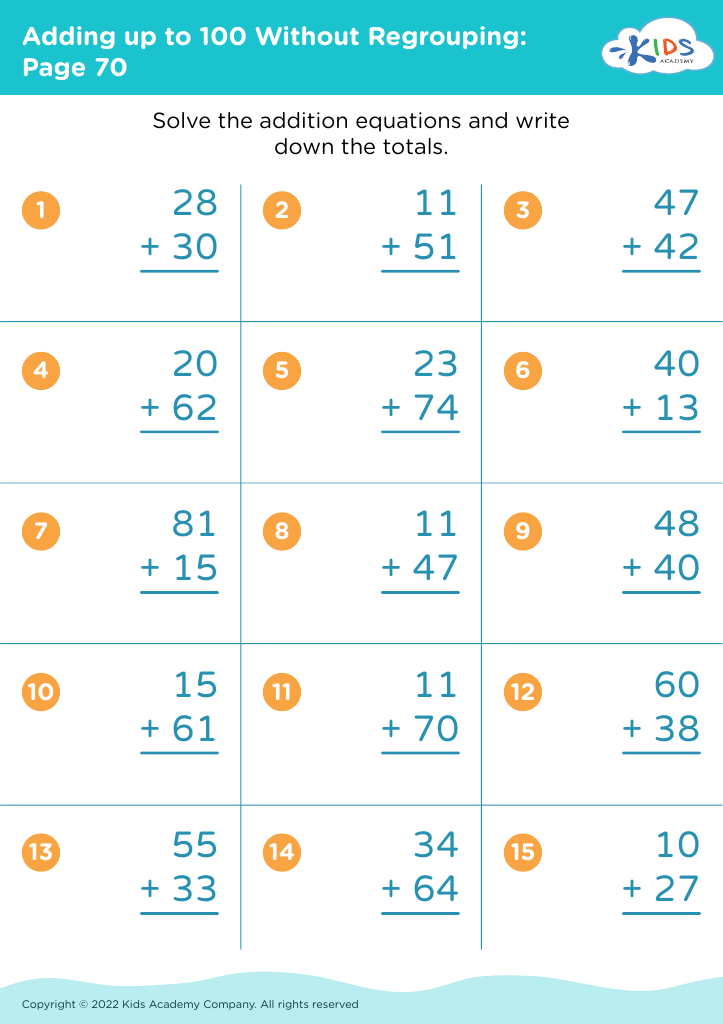





%20(1).jpg)

Enhancing problem-solving skills by teaching children to add up to 100 is crucial for their cognitive development and future academic success. Parents and teachers should deeply care about this skill for several compelling reasons.
Firstly, proficiency in addition forms the foundation of more complex math concepts. By mastering basic addition, children gain the confidence and competence needed to tackle multiplication, division, fractions, and eventually, higher-level math. It creates a solid mathematical base essential for future learning.
Secondly, developing these skills during the prime cognitive growth period, ages 7-9, harnesses their natural curiosity and eagerness to learn. Problem-solving activities stimulate critical thinking and improve brain function by forming stronger neural connections.
Moreover, enhanced problem-solving skills foster independence and resilience. When children learn to navigate numerical challenges, they also develop the ability to approach non-mathematical problems with calm and logic. This, in turn, increases their overall adaptability and perseverance.
Lastly, early proficiency in math and problem-solving often correlates with higher academic achievement and better educational outcomes. By focusing on these skills early on, parents and teachers set children on a path of continuous learning and success, building a strong foundation for their academic journey and beyond.








