Enhancing calculation skills Adding up to 100 Worksheets for Ages 7-9
4 filtered results
-
From - To
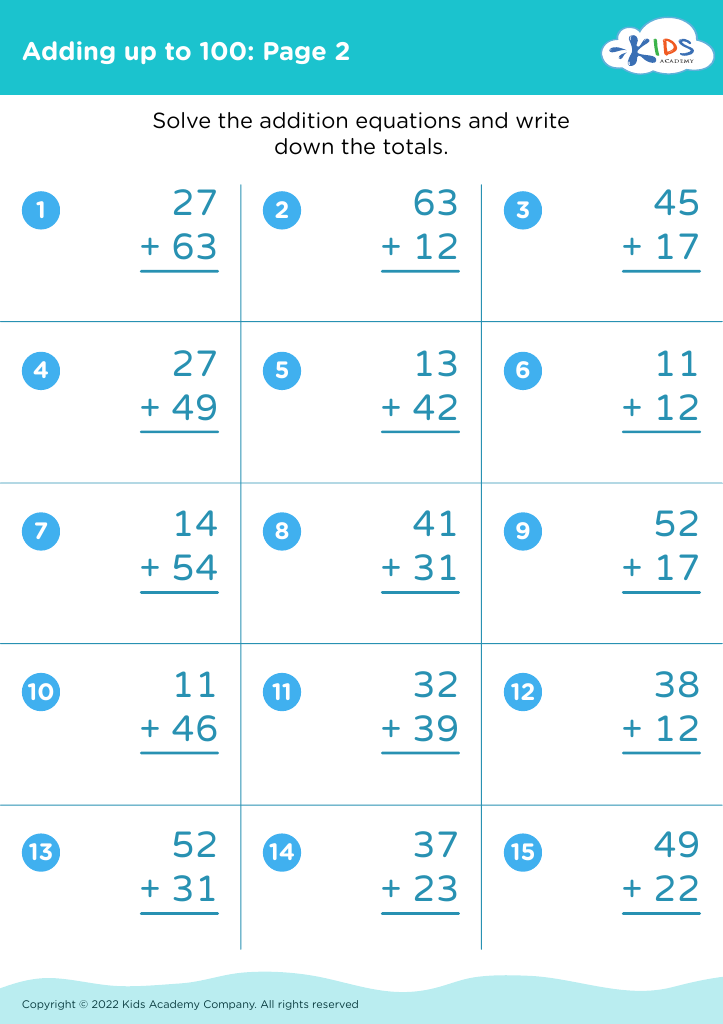
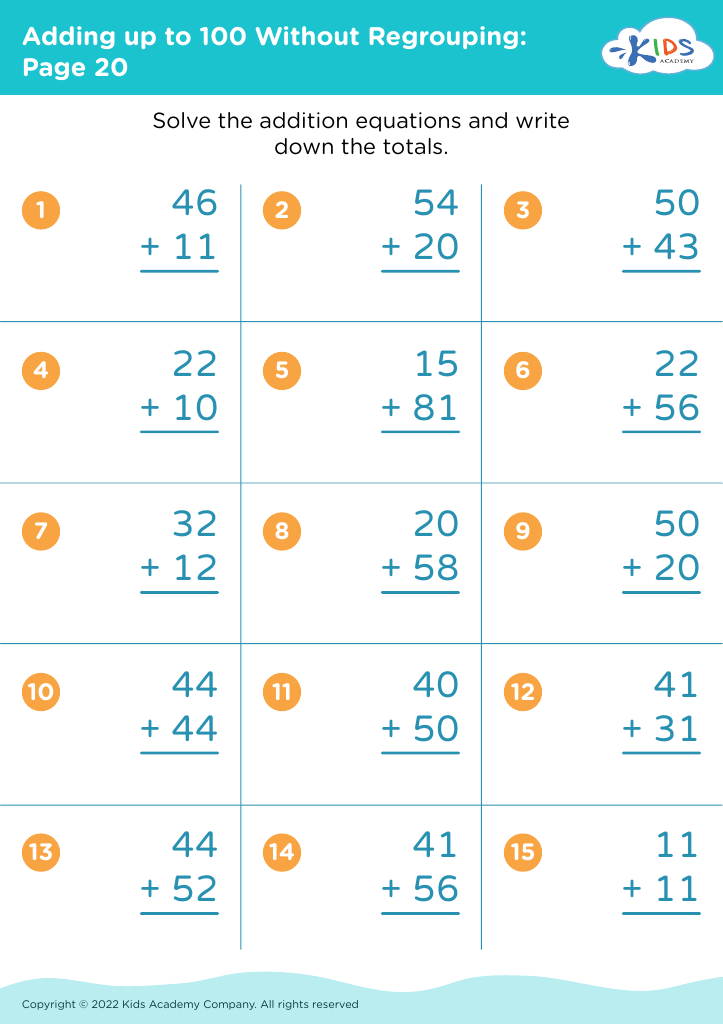
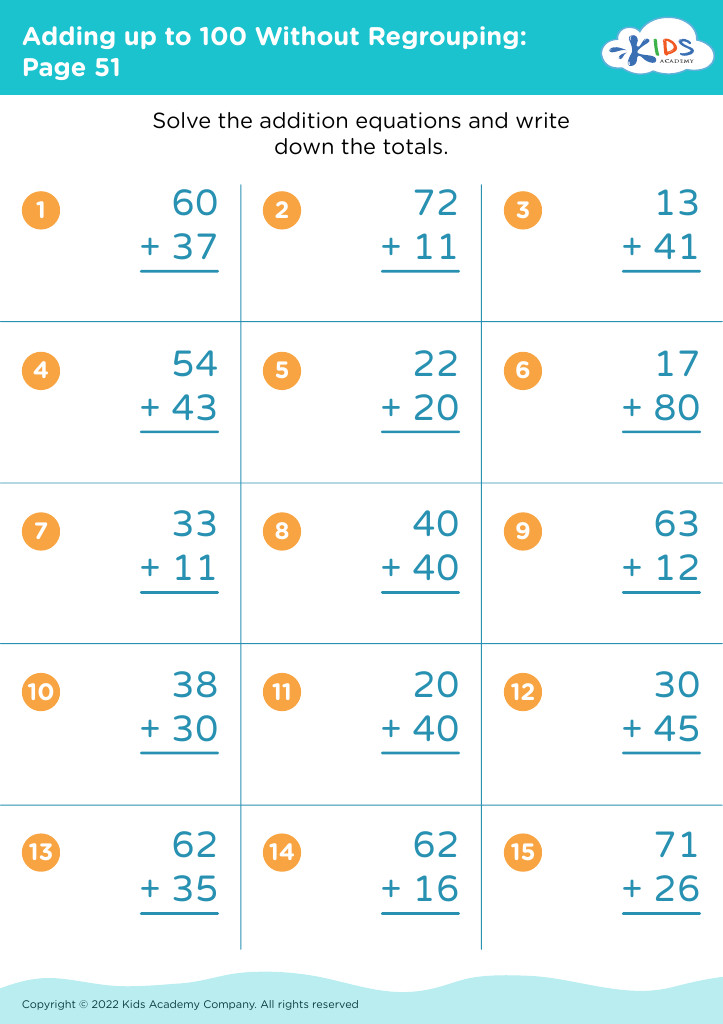
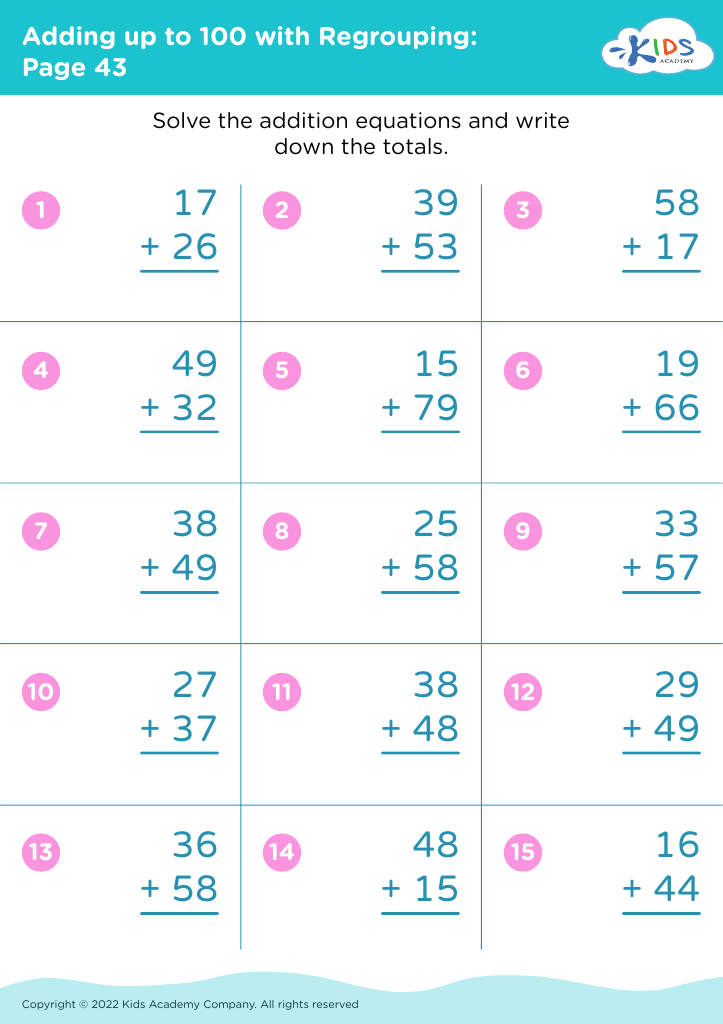
Boost your child's math confidence with our "Enhancing Calculation Skills: Adding up to 100 Worksheets for Ages 7-9". Carefully crafted for young learners, these engaging worksheets help children master addition within 100, building a strong numerical foundation. Each worksheet combines fun exercises with challenging problems, designed to enhance mental math abilities, improve accuracy, and encourage logical thinking. Perfect for classroom use or extra practice at home, our colorful printable activities ensure learning remains enjoyable. Empower your child to excel in math with this essential addition resource, fostering both educational growth and an enduring love for numbers.




%20(1).jpg)


Parents and teachers should pay particular attention to fostering robust calculation skills in children aged 7-9, particularly in adding up to 100, as this foundation is crucial for future mathematical success. At this age, students are in a critical developmental stage where they transition from basic arithmetic to more complex math concepts. Enhanced calculation skills help in several key areas:
-
Cognitive Development: Mastering addition up to 100 helps children develop logical thinking and problem-solving abilities. These skills are transferrable across various disciplines and everyday scenarios, fostering a well-rounded intellectual growth.
-
Confidence Building: Proficiency in basic math boosts children's confidence in their academic capabilities, encouraging a positive attitude towards learning. Confidence gained from math achievement often spills over into other subject areas, promoting overall academic success.
-
Readiness for Advanced Concepts: A solid understanding of addition provides a necessary foundation for more complex mathematical operations such as subtraction, multiplication, and division. It ensures children are adequately prepared for the upper grades, reducing the likelihood of future academic struggles.
-
Practical Life Skills: Arithmetic is essential in everyday life. Proficiency in basic addition is used in budgeting, cooking, shopping, and planning. Early mastery of these skills can lead to more independent and capable adults.
By focusing on enhancing these fundamental skills, parents and teachers can set the stage for a lifetime of mathematical competence and confidence in their students.








