Enhancing problem-solving skills Adding up to 100 Worksheets for Ages 7-9
3 filtered results
-
From - To
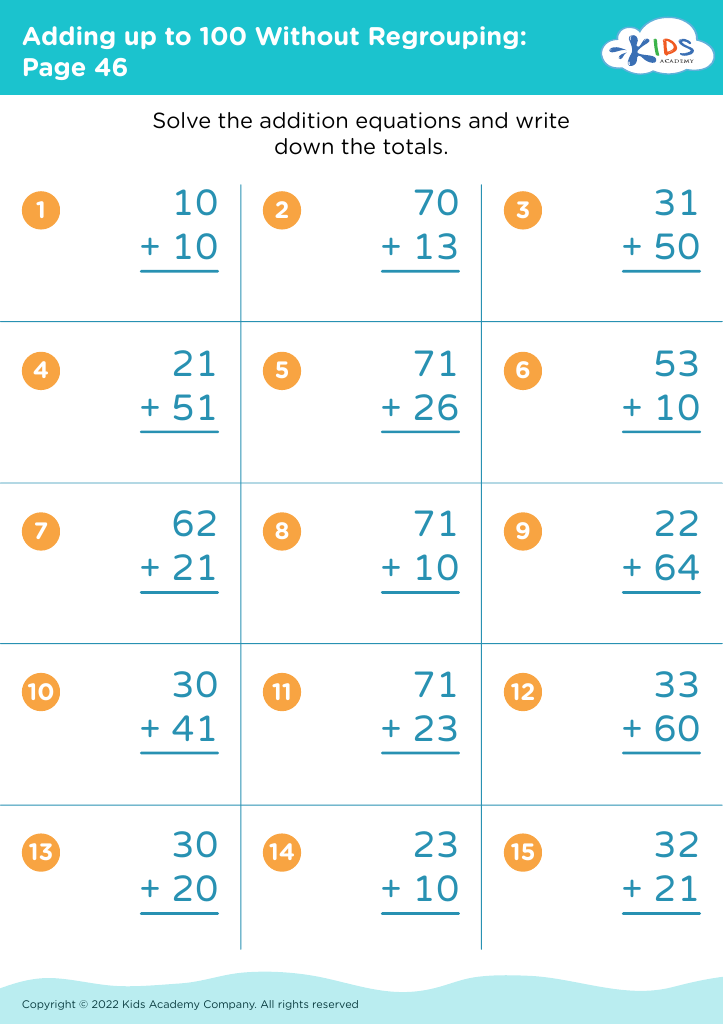
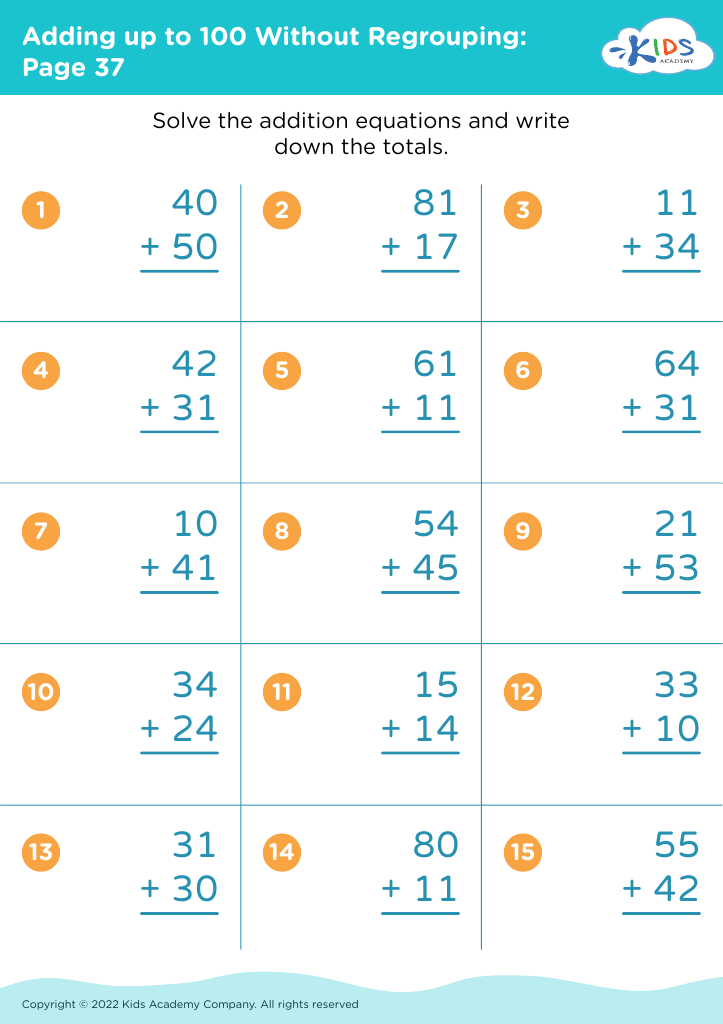
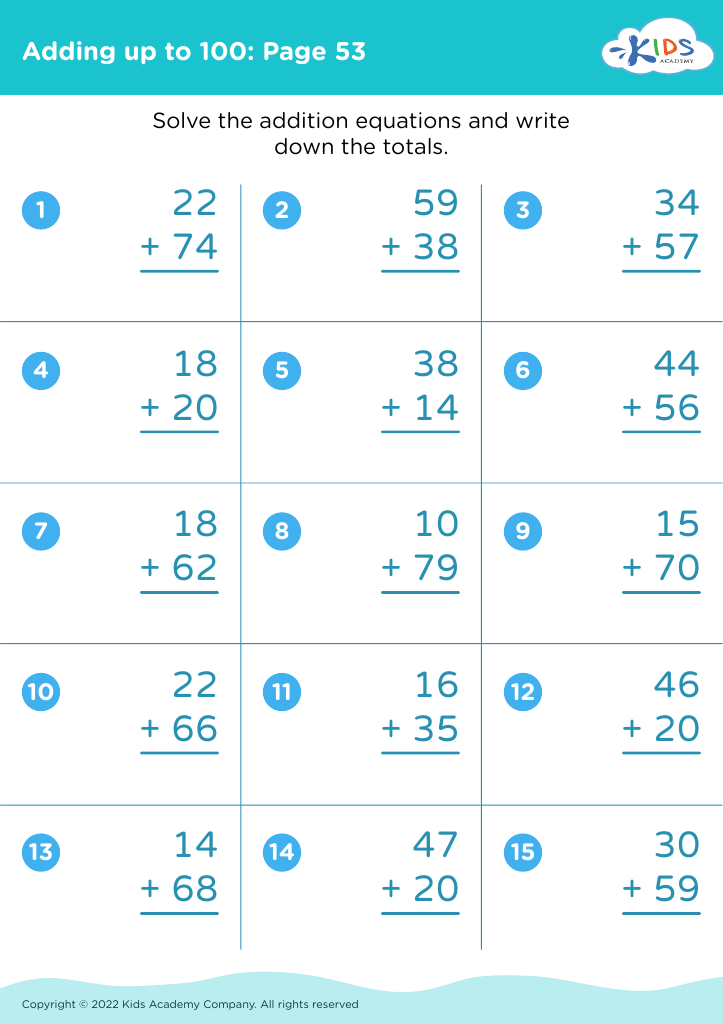
Boost your child's problem-solving skills with our "Adding Up to 100 Worksheets" designed specifically for ages 7-9! These engaging and interactive worksheets provide a fun and effective way for young learners to practice addition. As kids tackle various math challenges, they will build confidence and improve their critical thinking abilities. Each worksheet is crafted to encourage creative approaches while mastering addition strategies. Watch your child thrive as they enjoy the process of learning and developing essential math skills that will serve them well in the future. Start enhancing their problem-solving skills today and make learning math an exciting adventure!



%20(1).jpg)



Enhancing problem-solving skills in children ages 7-9, particularly with tasks like adding up to 100, is crucial for their cognitive development. At this age, children are at a pivotal stage where they begin to think abstractly and connect concepts. Developing problem-solving abilities fosters critical thinking, enabling them to approach challenges with confidence and creativity.
When children practice addition and refine their ability to reach 100, they not only improve their mathematical skills, but also learn persistence and resilience in overcoming obstacles. Engaging them in activities that require strategy and reasoning nurtures their focus and enhances their ability to analyze situations logically.
Moreover, strong problem-solving skills extend beyond mathematics; they lay the groundwork for successfully navigating real-world challenges. Encouraging parents and teachers to incorporate fun, interactive activities that involve reaching 100 can create a positive and engaging learning environment. This helps children cultivate a love for learning, making them more inclined to embrace academic challenges in the future. Ultimately, prioritizing problem-solving development during these formative years sets the foundation for lifelong skills essential for personal, educational, and career success.








