Fine Motor Skills Adding up to 100 Worksheets for Ages 7-9
12 filtered results
-
From - To
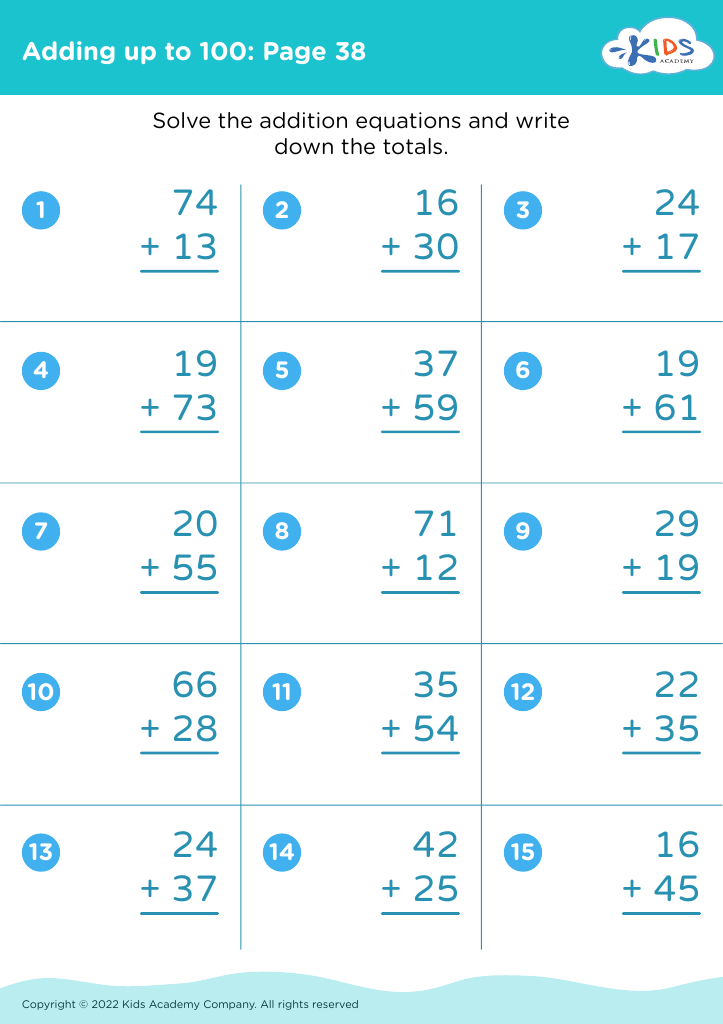
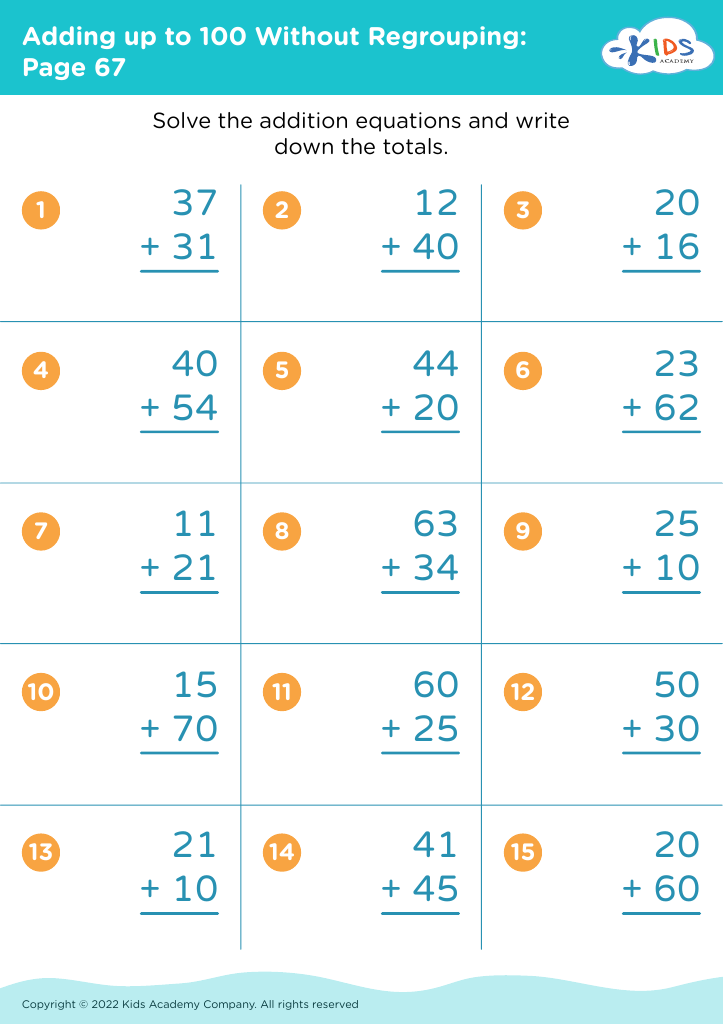
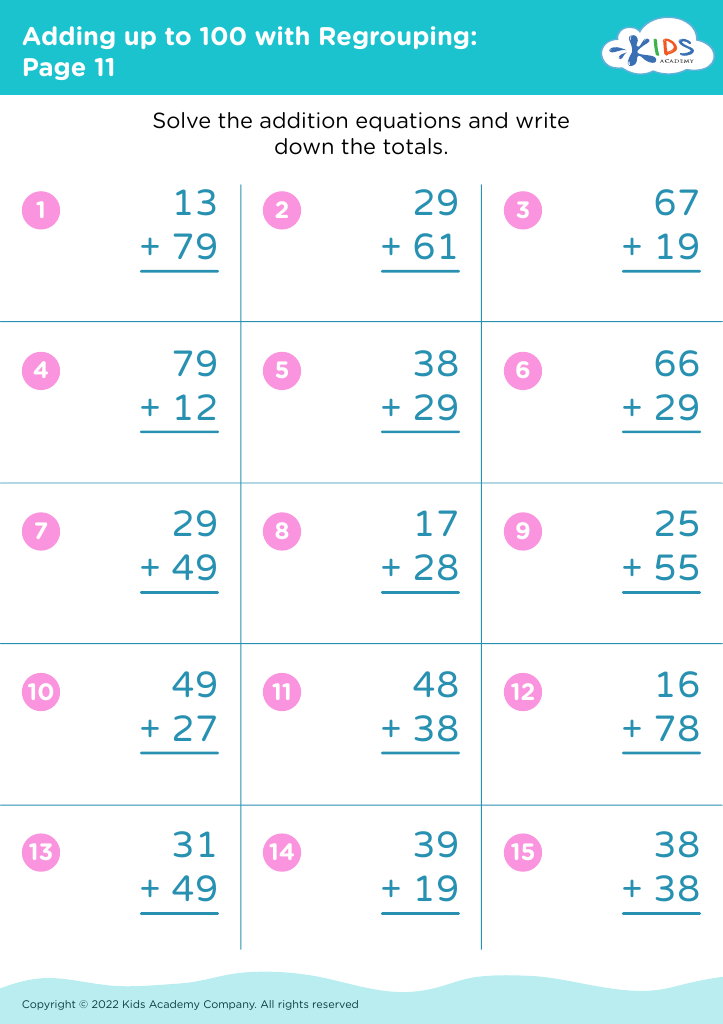
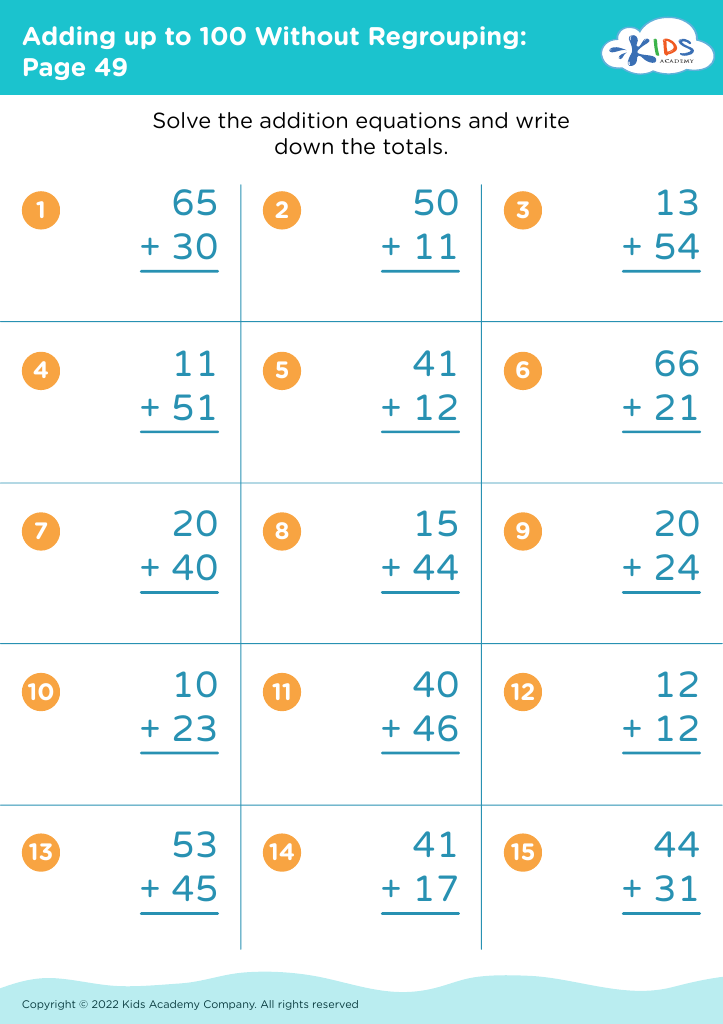
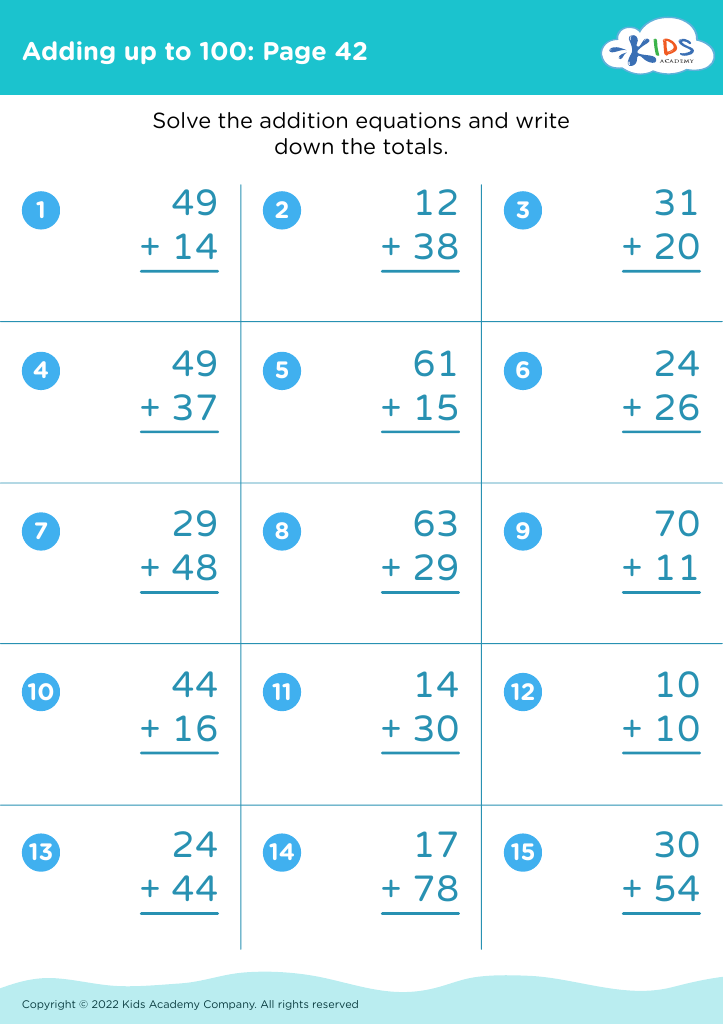
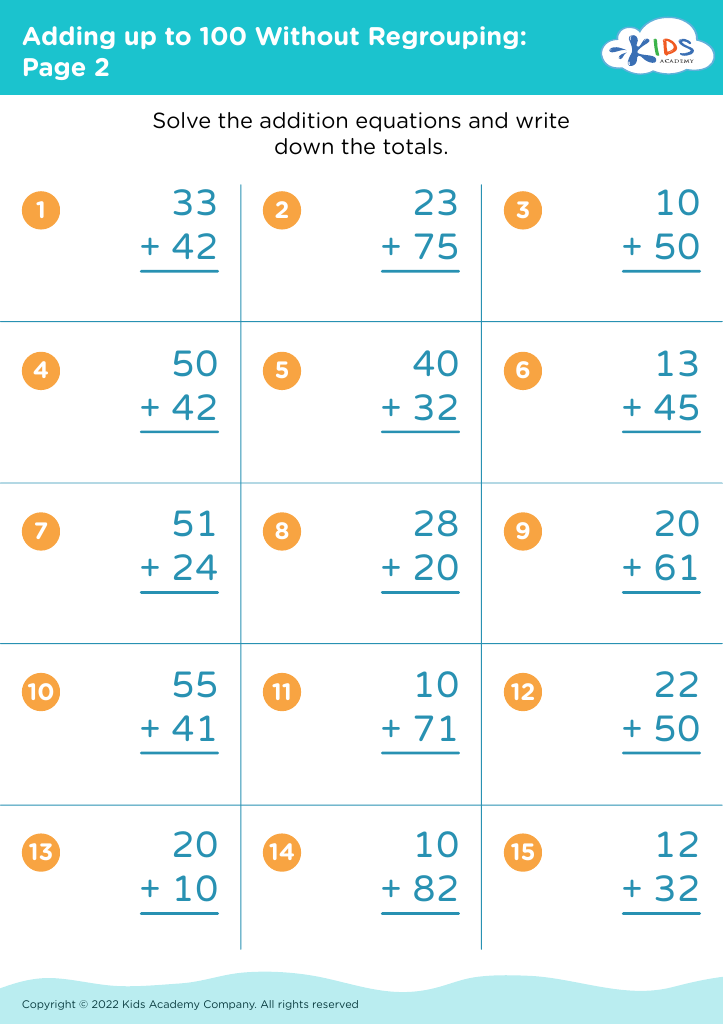
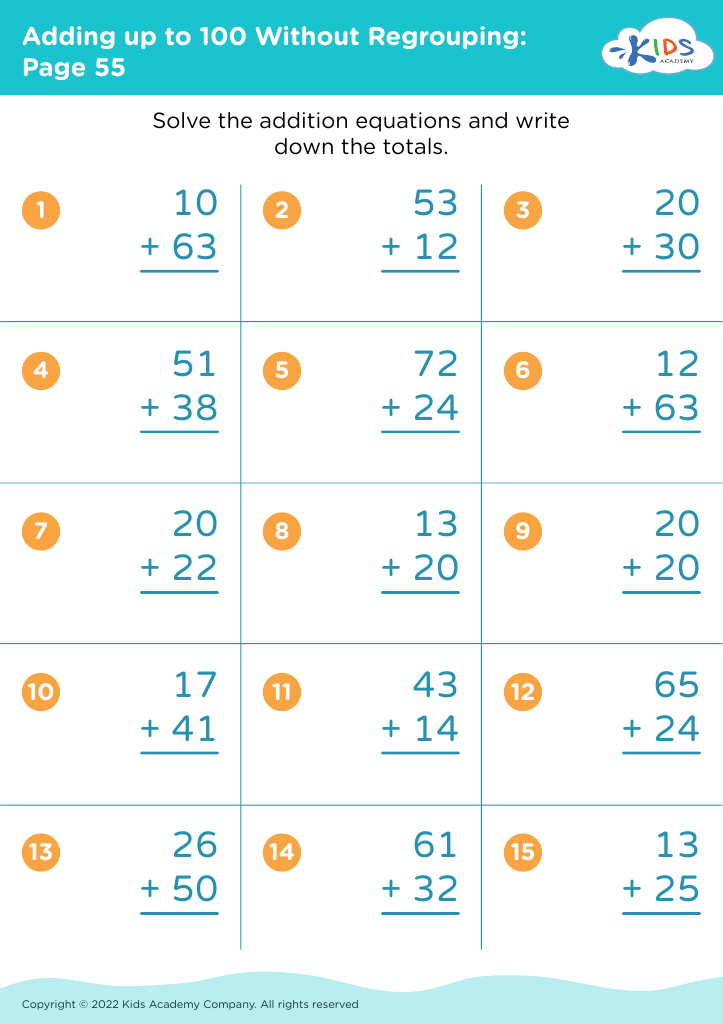
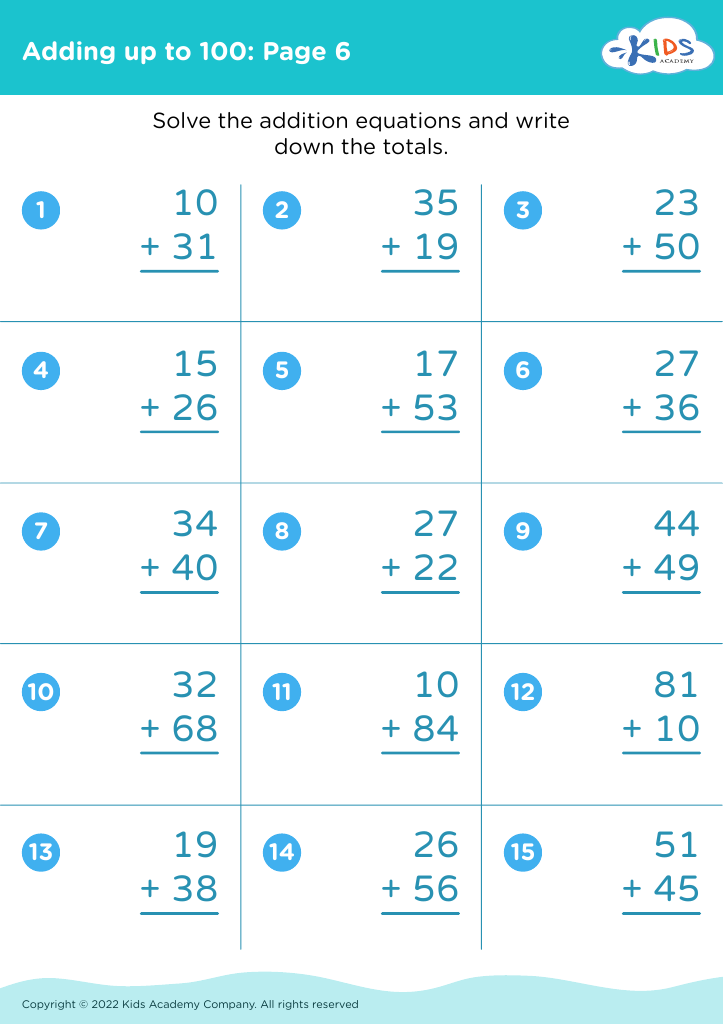
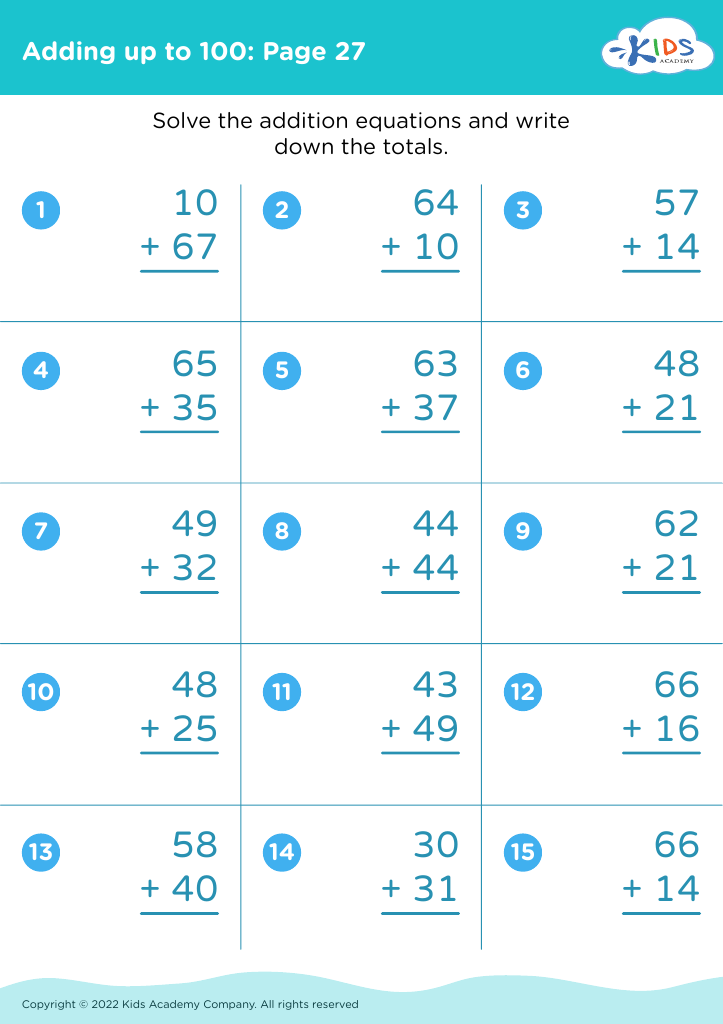
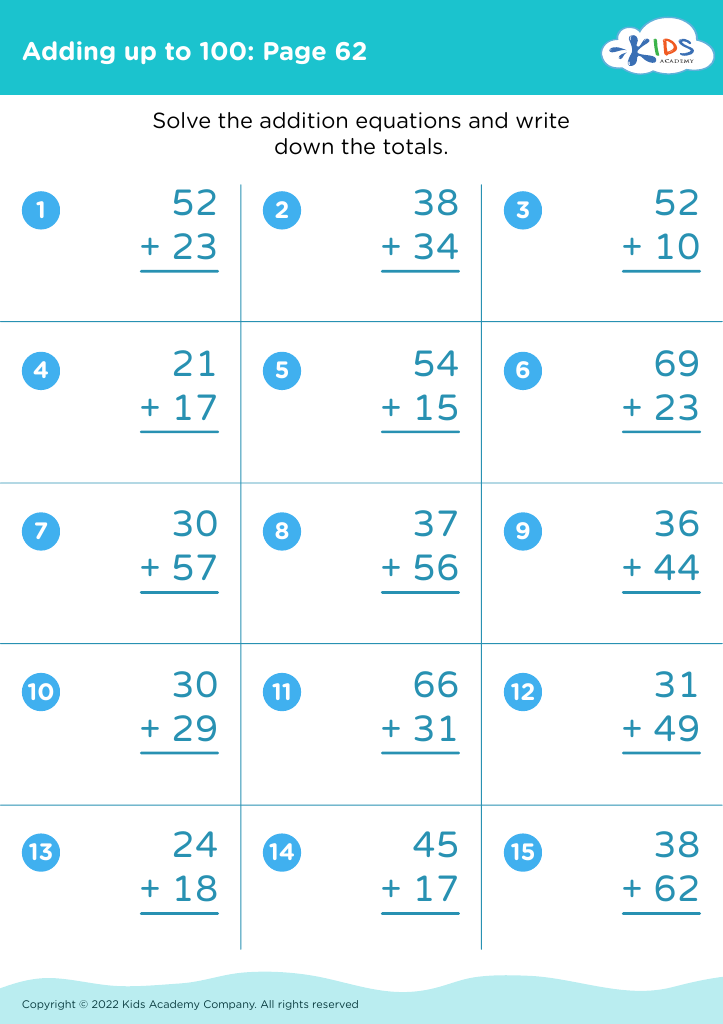
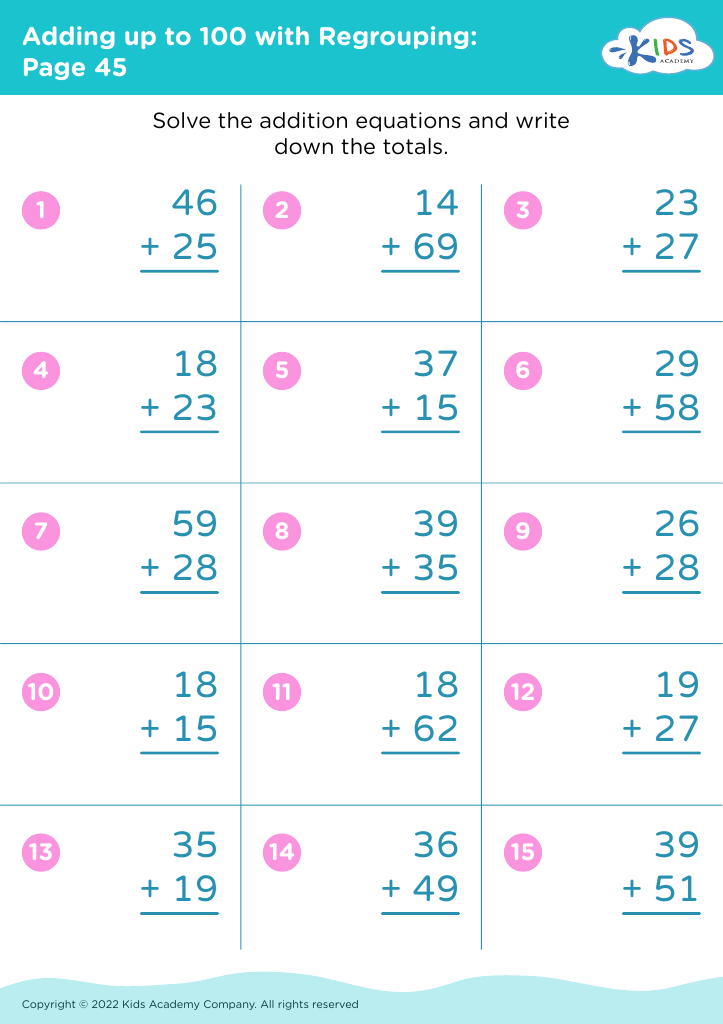
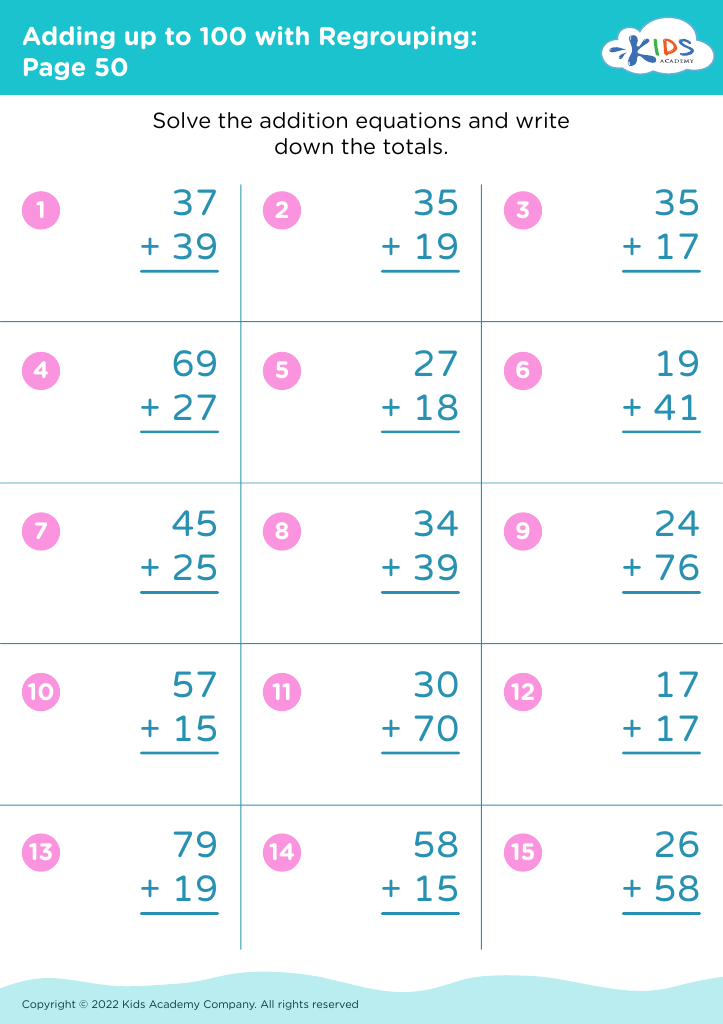
Boost your child's fine motor skills while mastering addition with our engaging worksheets designed for ages 7-9! Each worksheet offers fun, educational activities that encourage precise hand movements and improve manual dexterity. Through adding up to 100, children develop essential math skills in an enjoyable way, ensuring a solid mathematical foundation. These worksheets not only strengthen muscles in their hands and fingers but also promote better handwriting and hand-eye coordination. Perfect for home or classroom use, our worksheets turn learning into an adventure, making math practice both exciting and productive. Choose our fine motor skills worksheets to support your child’s journey to success!






%20(1).jpg)
Parents and teachers should prioritize the development of fine motor skills in children aged 7-9 because these abilities are fundamental to a child's overall growth and academic success. Fine motor skills involve the coordination of small muscle movements, especially in the hands and fingers, which are essential for tasks like writing, drawing, and manipulating small objects. When children develop these skills effectively, they improve their handwriting, which is vital for clear communication and efficient learning in later grades.
Moreover, activities that strengthen fine motor skills, simultaneously enhance cognitive development, including problem-solving and critical thinking abilities. For instance, adding numbers and reaching sums up to 100 requires a level of precision and understanding. Engaging in tasks requiring fine motor control, such as using manipulatives for counting or balancing objects, strengthens mathematical understanding and improves dexterity.
Cultivating fine motor skills also impacts children's independence and confidence in daily activities, such as dressing, tying shoelaces, and packing lunch. This degree of self-reliance supports positive self-perception and fosters readiness to tackle more complex challenges both inside and outside the classroom. As a result, focusing on fine motor skill development lays a comprehensive foundation for academic achievement and life skills, promoting well-rounded growth during these formative years.








