Fraction simplification Adding up to 100 Worksheets for Ages 7-9
22 filtered results
-
From - To
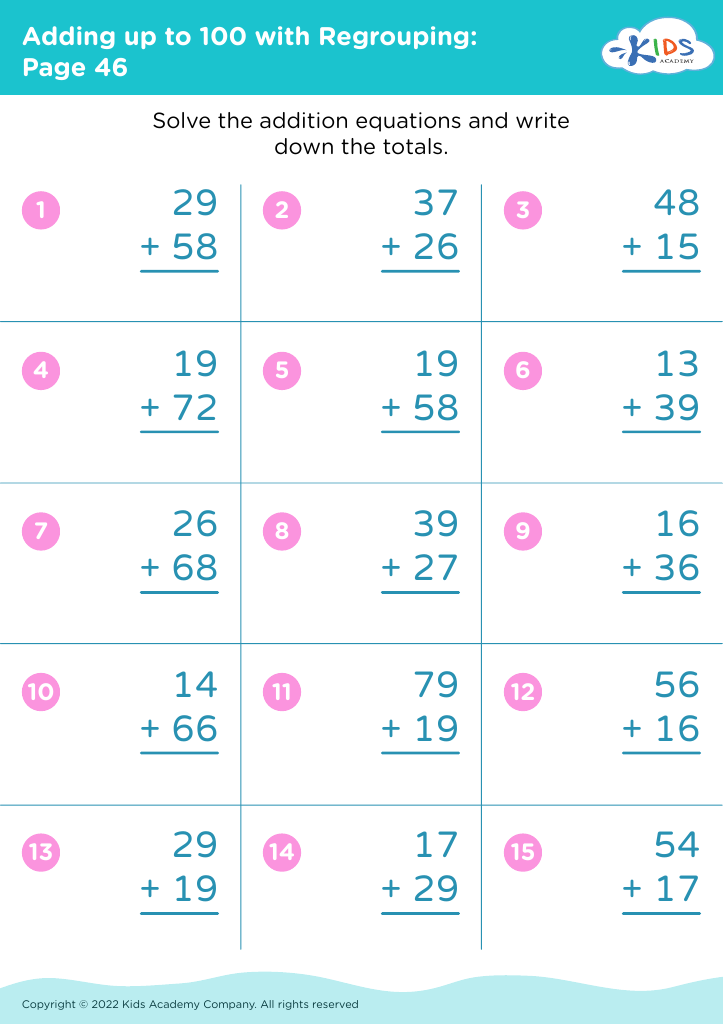
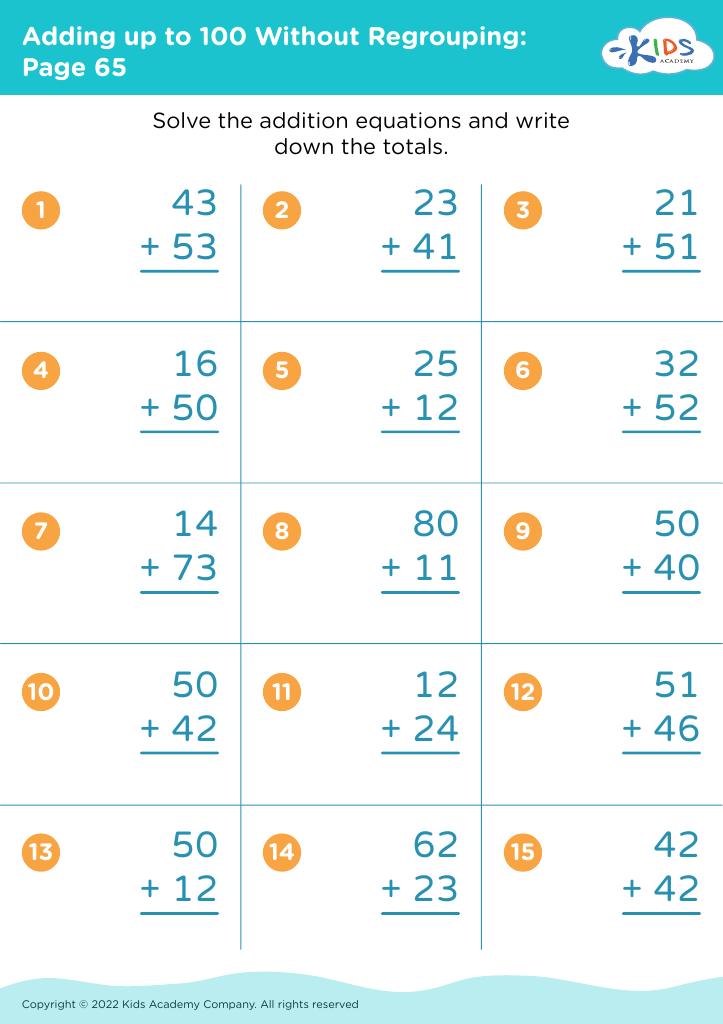
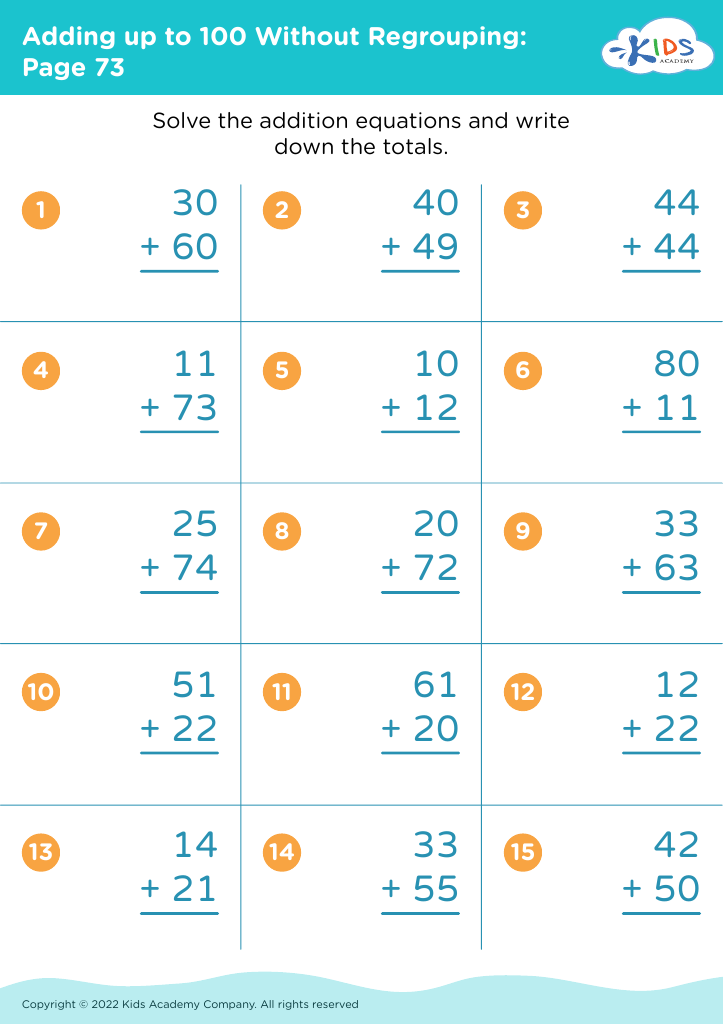
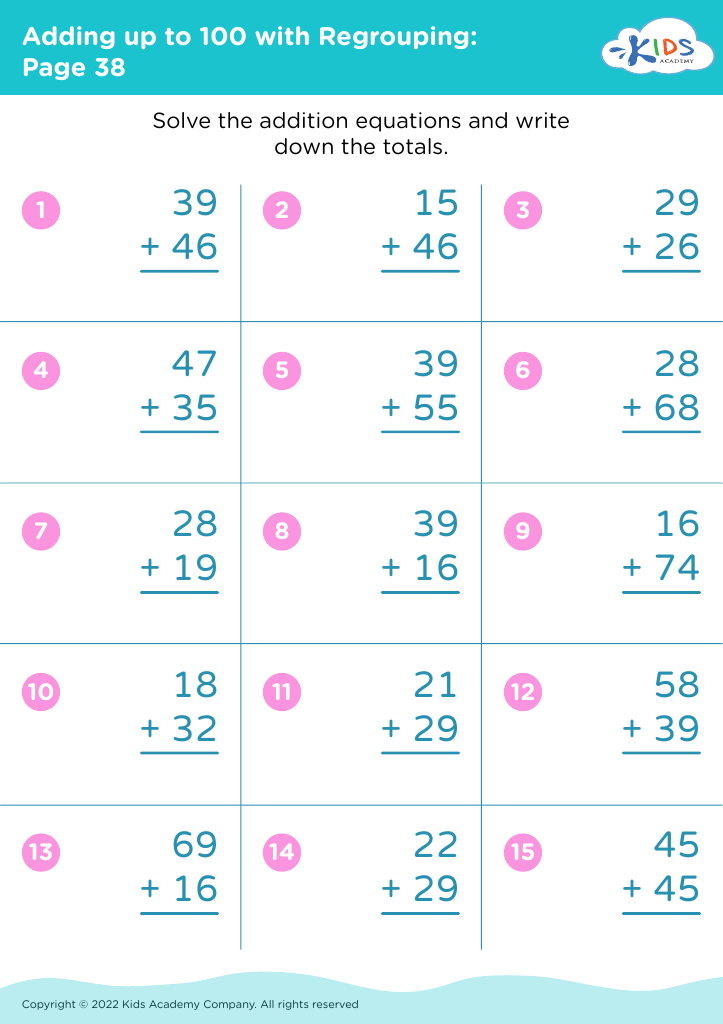
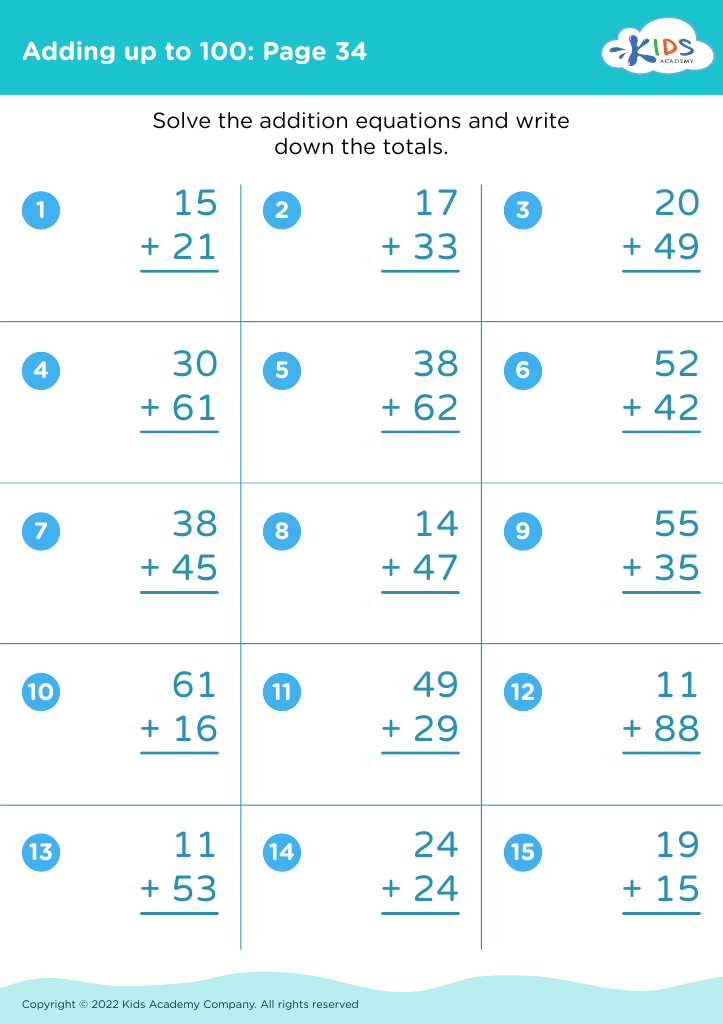
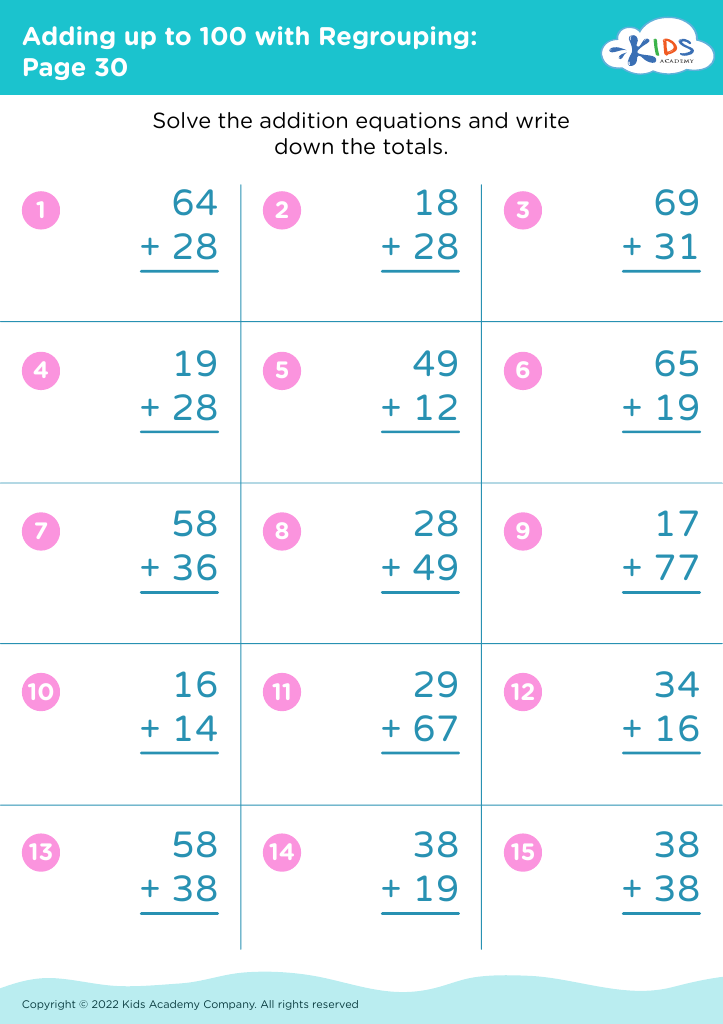
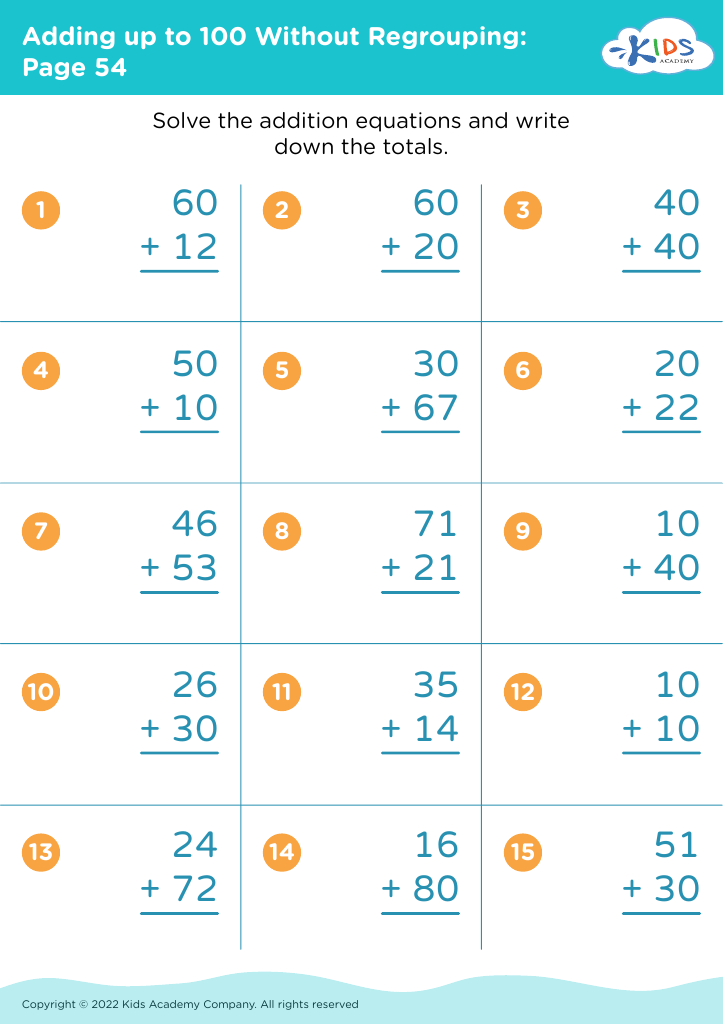
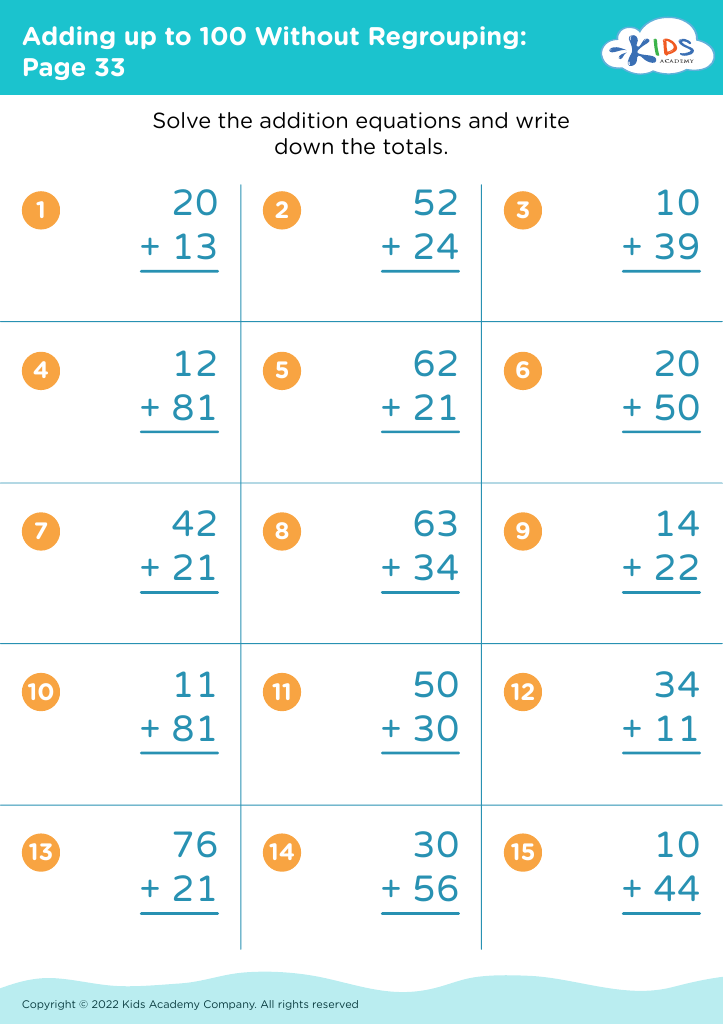
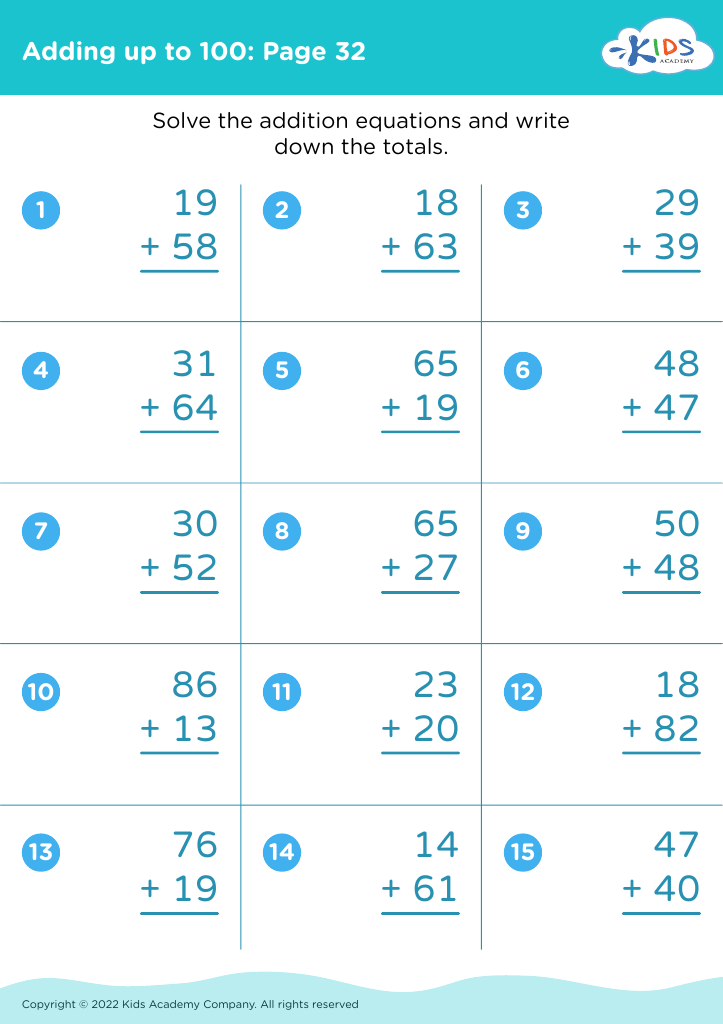
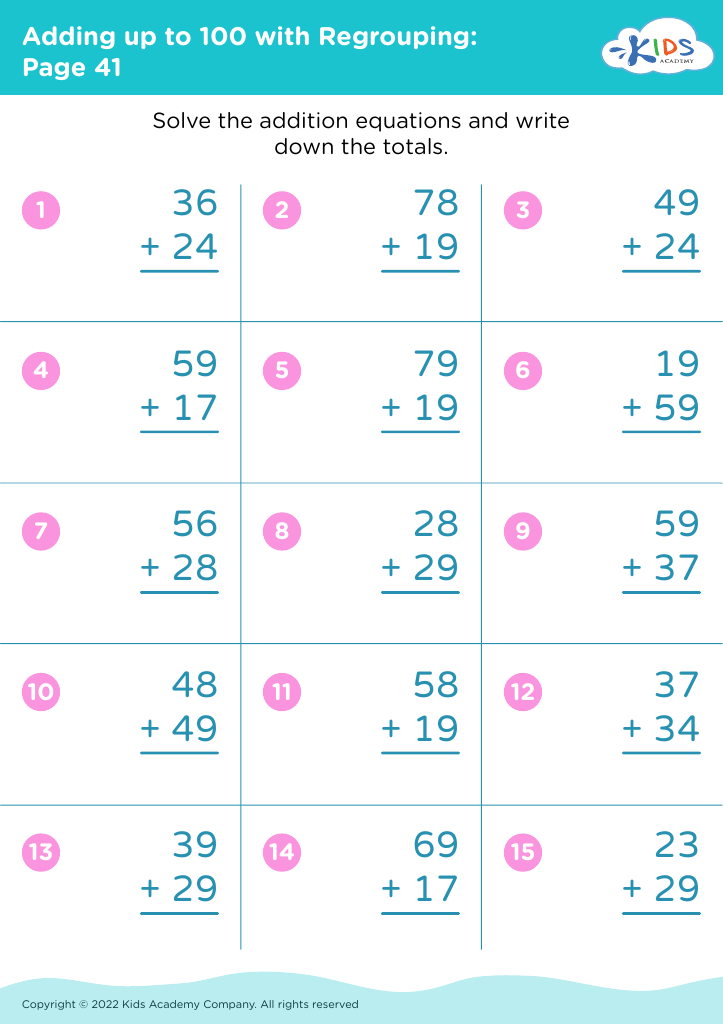
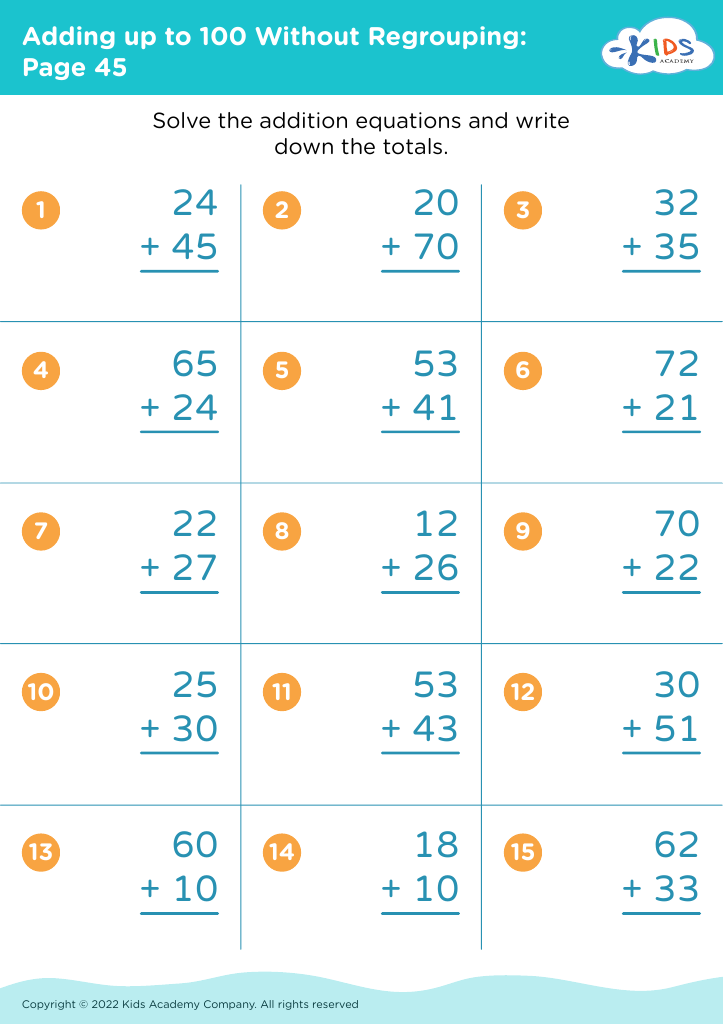
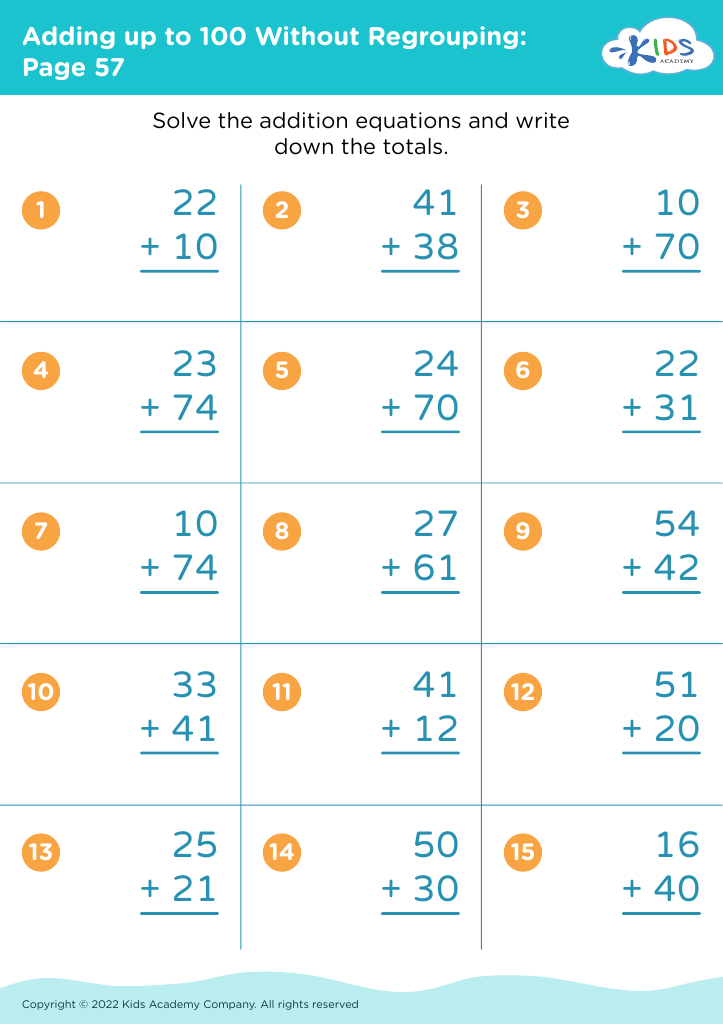
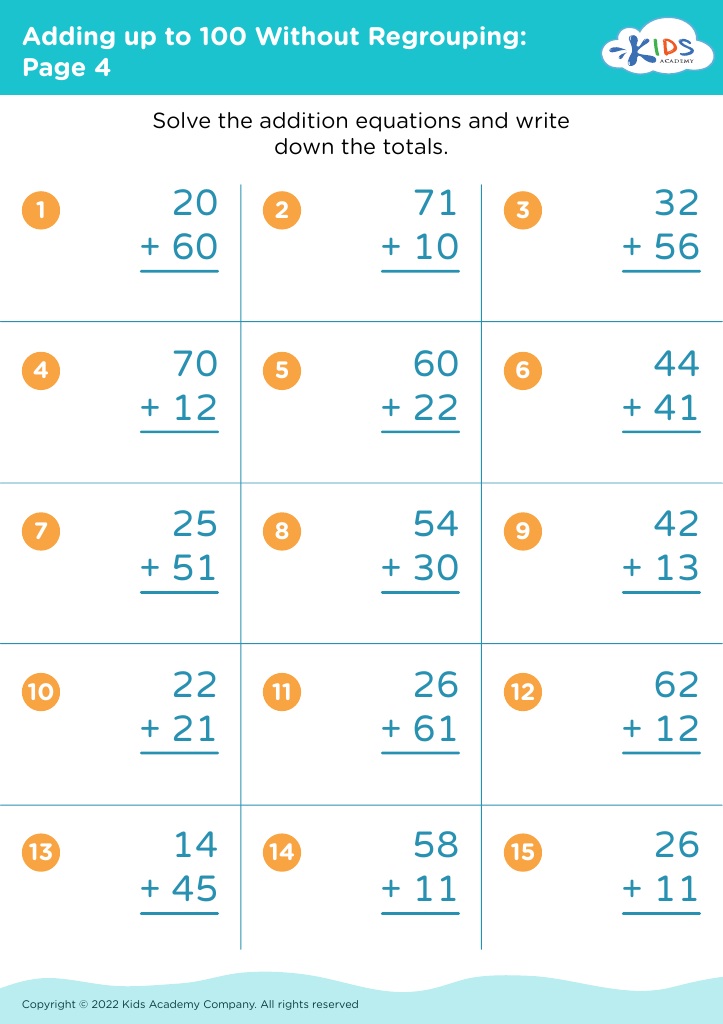
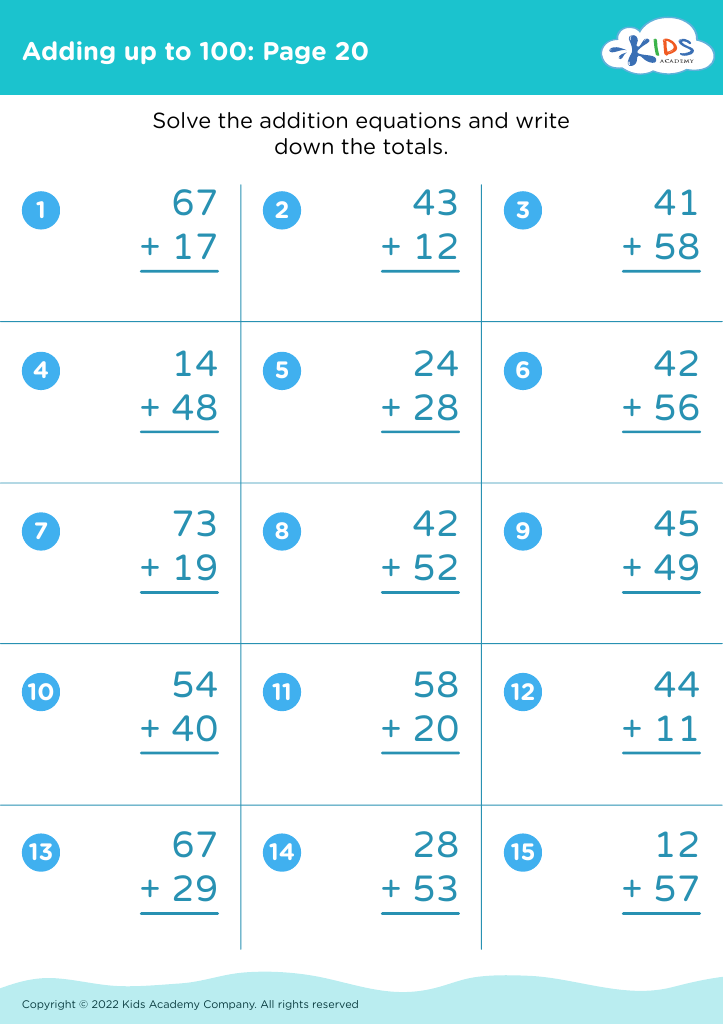
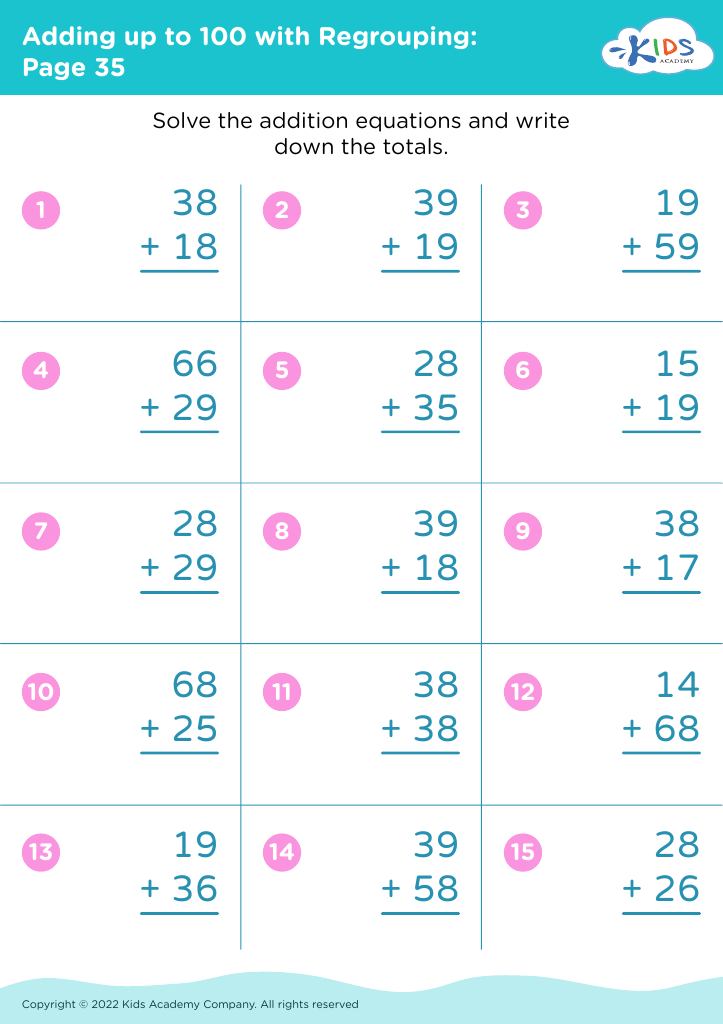
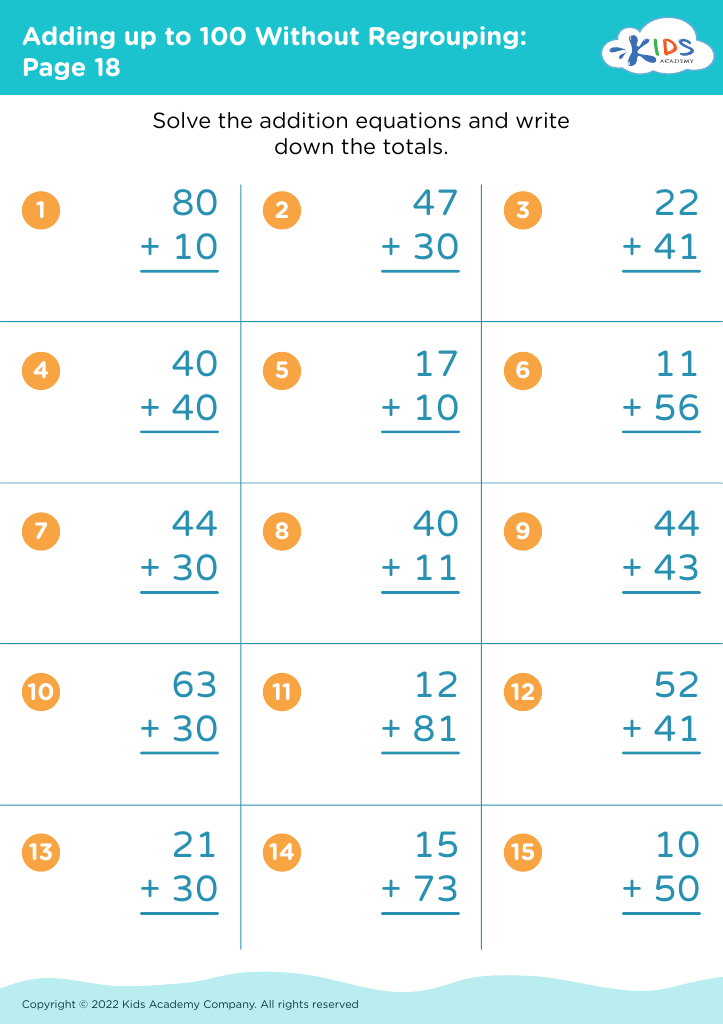
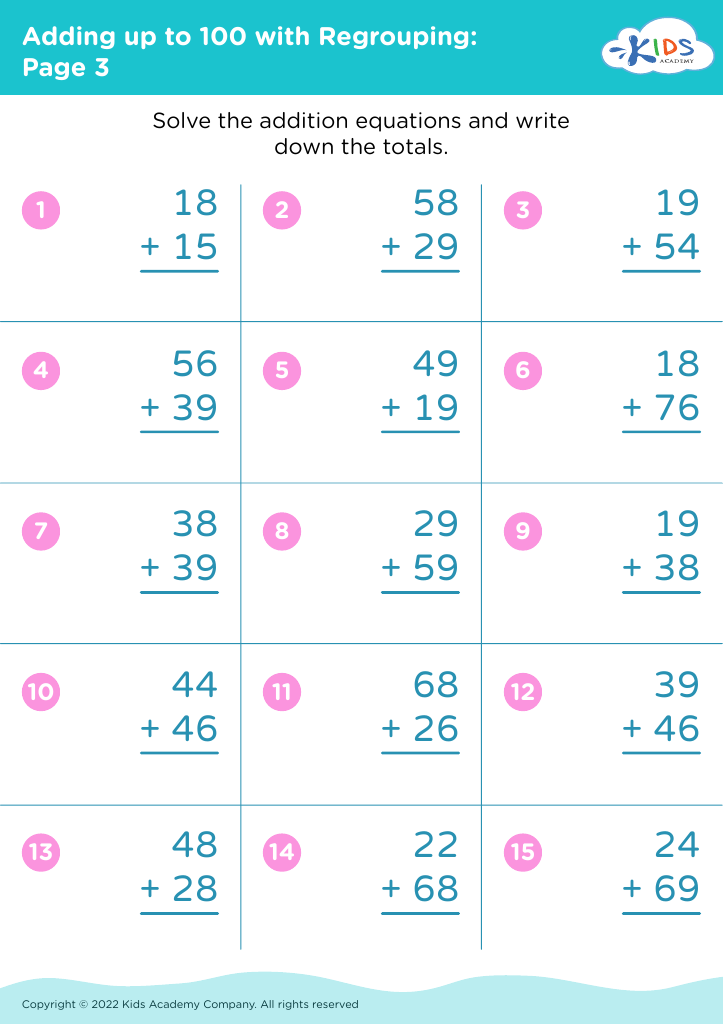
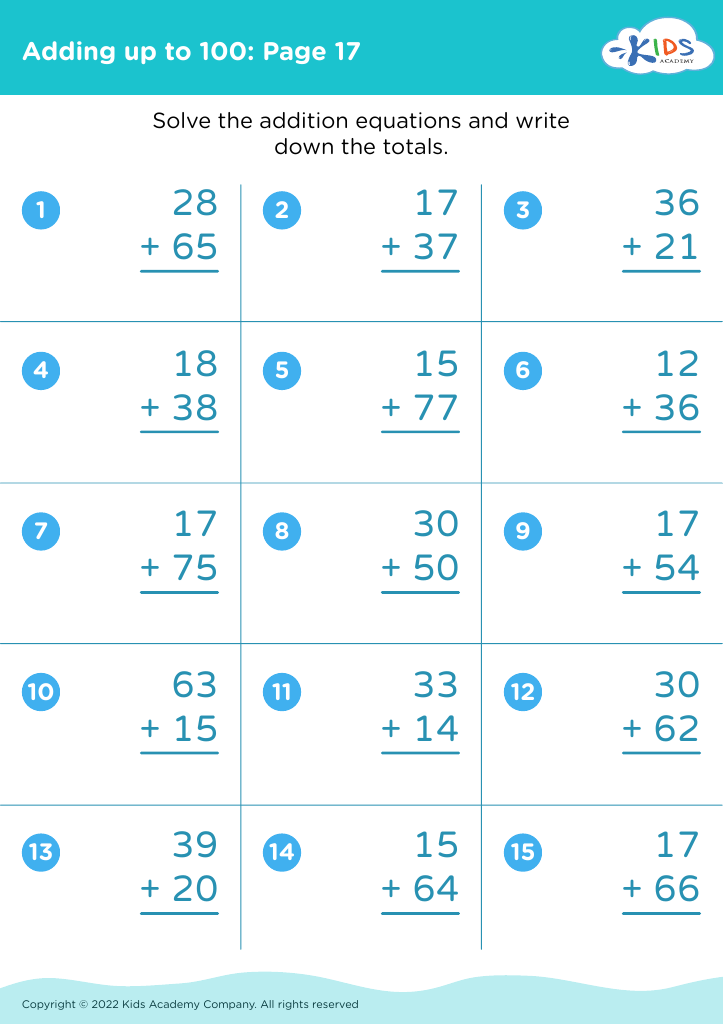
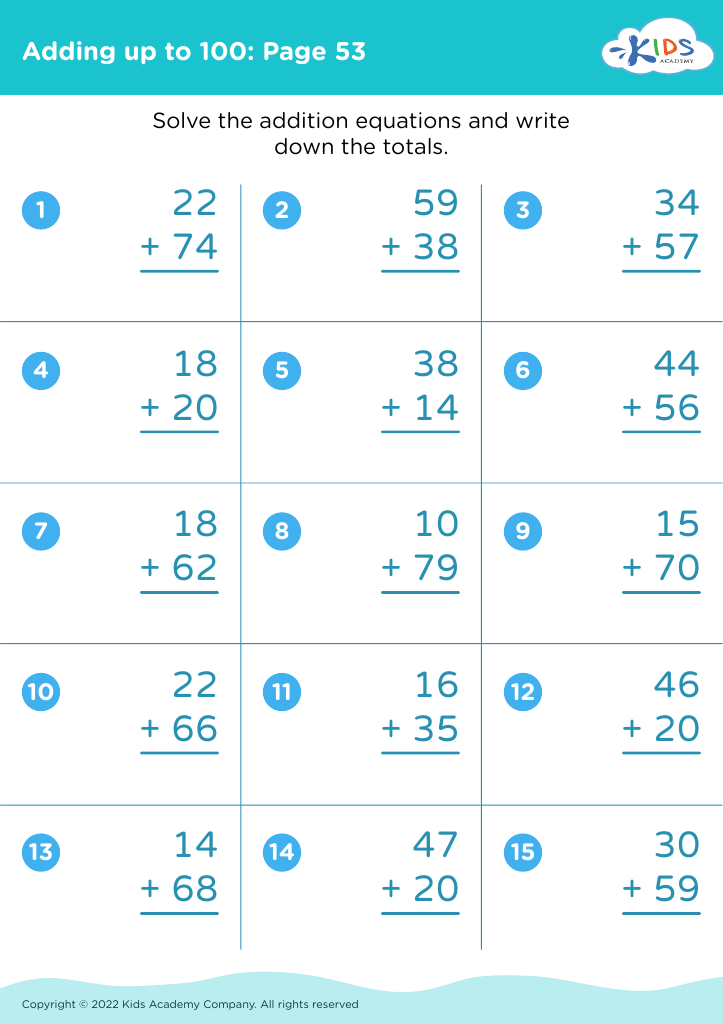
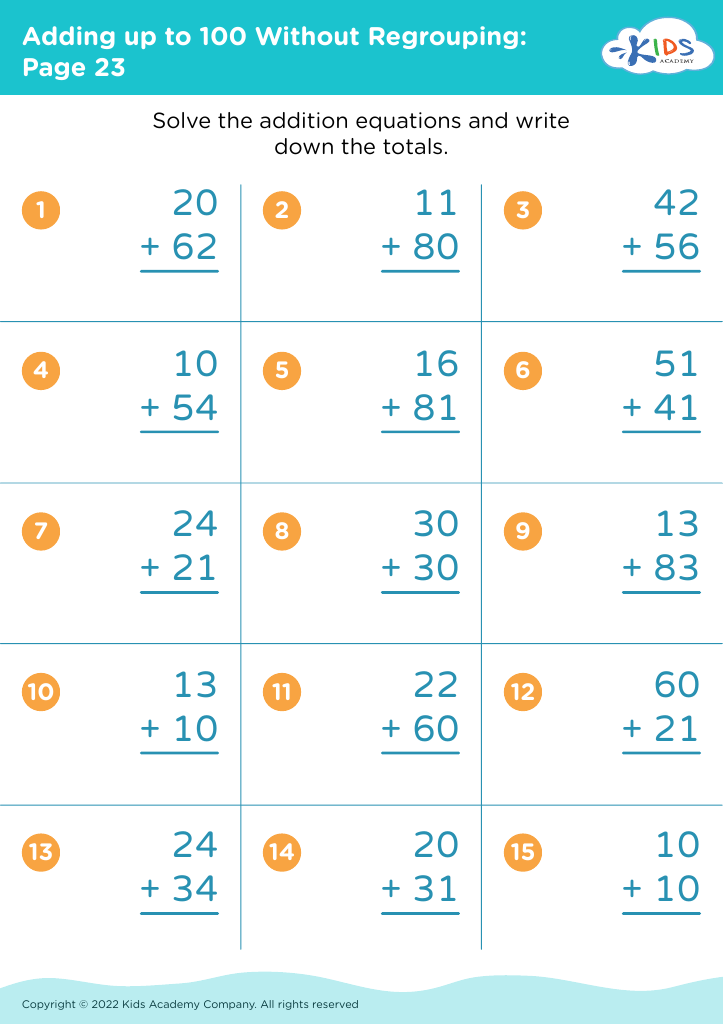
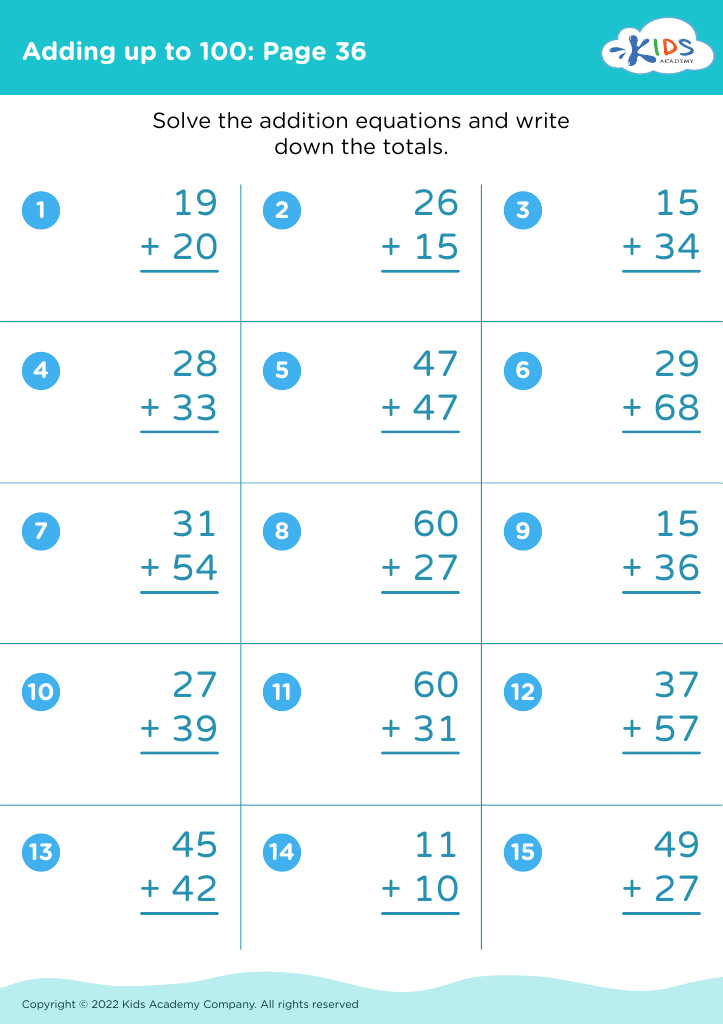
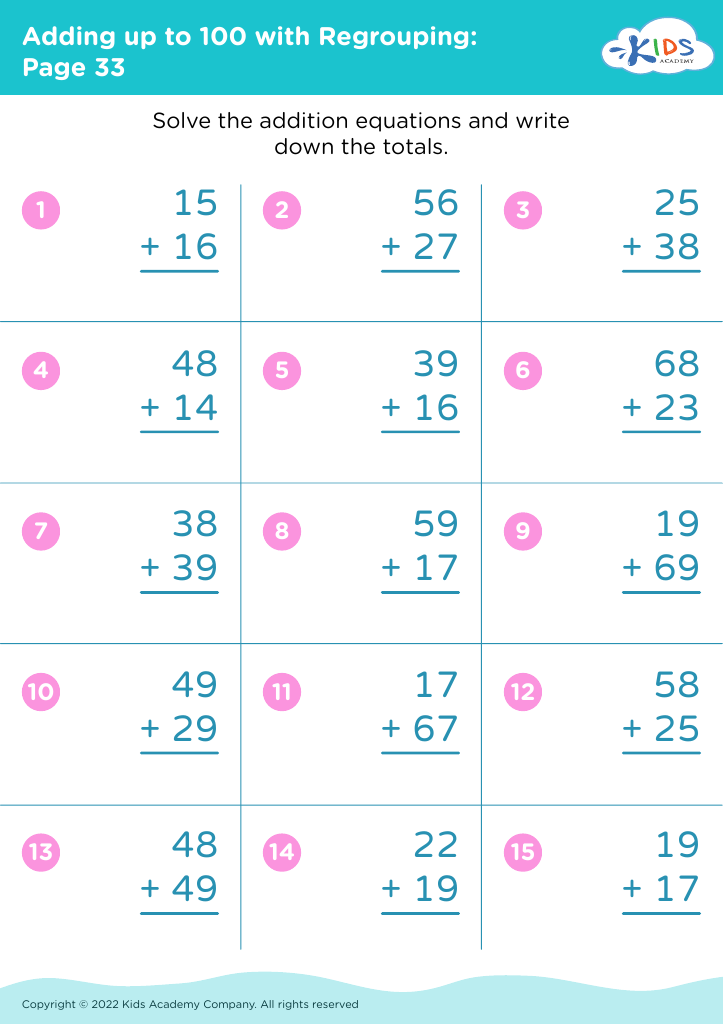
Discover our engaging "Fraction Simplification Adding Up to 100 Worksheets" designed for children ages 7-9. These worksheets help young learners master the concept of fraction simplification while reinforcing their addition skills within 100. Our carefully crafted activities make learning fractions fun and interactive, supporting your child's mathematical development. Each worksheet features colorful visuals and varying difficulty levels to cater to all learners, ensuring they build confidence and competence in math. Perfect for classroom use or at-home practice, these resources encourage critical thinking and problem-solving. Empower your child to tackle fractions with ease and make math an enjoyable experience!






%20(1).jpg)
Parents and teachers should prioritize fraction simplification and the concept of adding up to 100 for children ages 7-9 because these foundational skills directly support their mathematical development. At this age, children are beginning to grasp basic fractions, which serve as a stepping stone to more complex mathematical concepts in later grades.
Understanding fractions helps children recognize parts of a whole, aiding in their comprehension of division and proportional reasoning. By simplifying fractions, children learn to identify equivalent values, promoting critical thinking skills. This understanding encourages confidence in math and fosters a positive attitude toward the subject.
Moreover, the concept of adding to 100 is essential for developing number sense. It assists children in mastering addition and subtraction strategies and lays the groundwork for understanding percentages and basic financial concepts in life. Encouraging practices that involve fractions and adding up to 100 at home or in the classroom makes mathematics relatable and fun. Engaging parents in these concepts reinforces learning, ensuring that children can apply these skills in real-life situations, such as sharing snacks or understanding sports statistics. Ultimately, nurturing these skills contributes to the child’s overall academic success and self-efficacy in mathematics.








