Improve reading skills Adding up to 100 Worksheets for Ages 7-9
5 filtered results
-
From - To
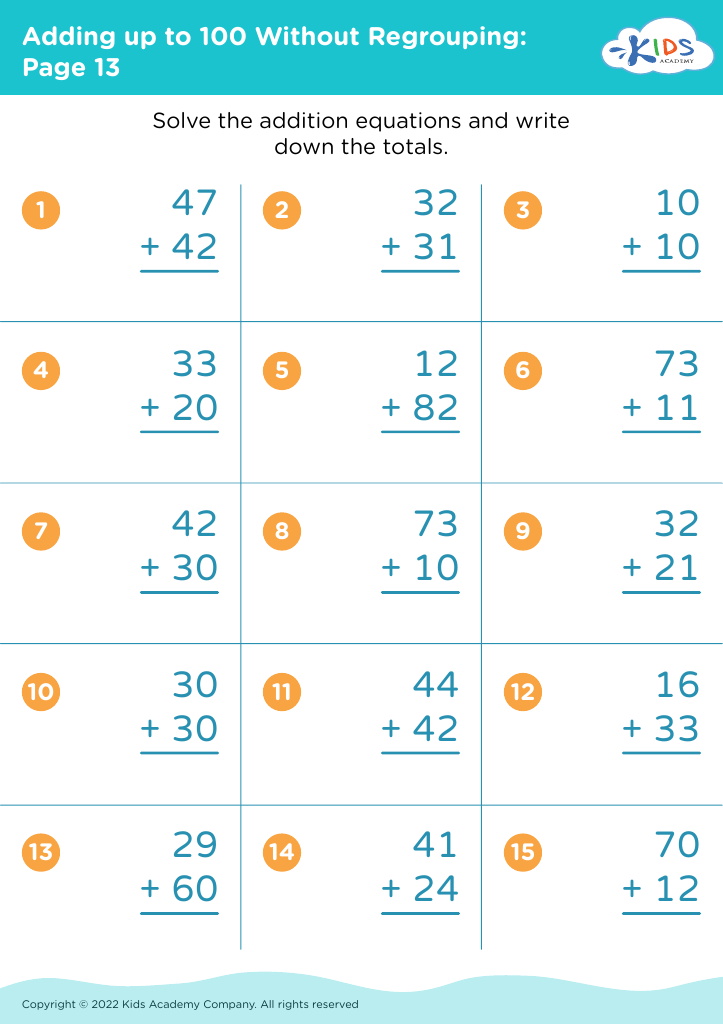
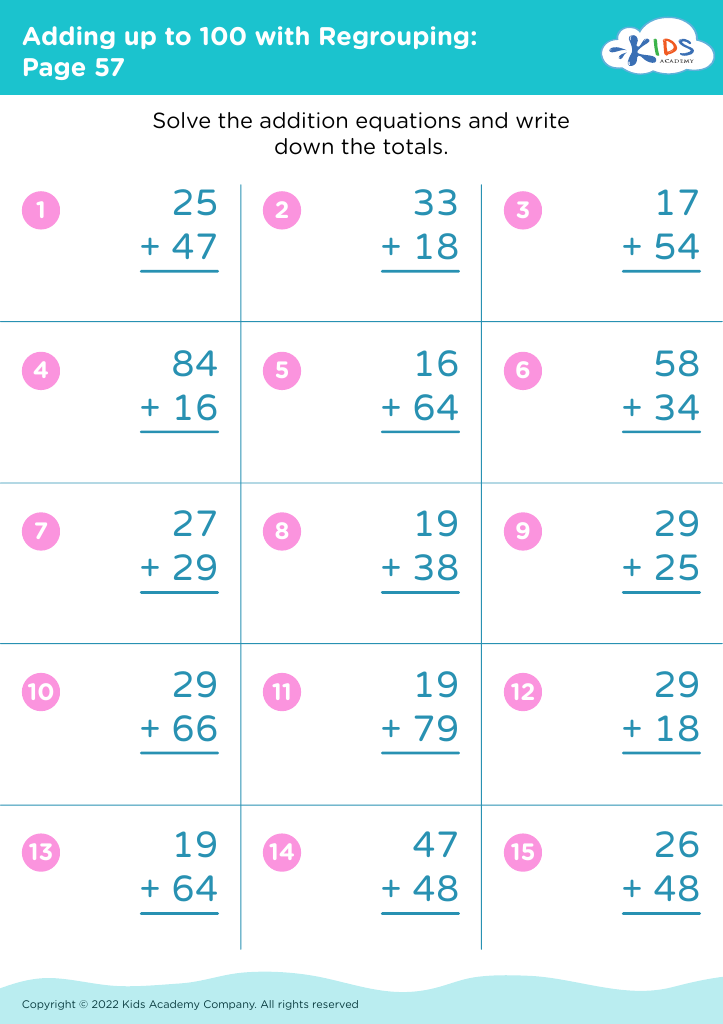
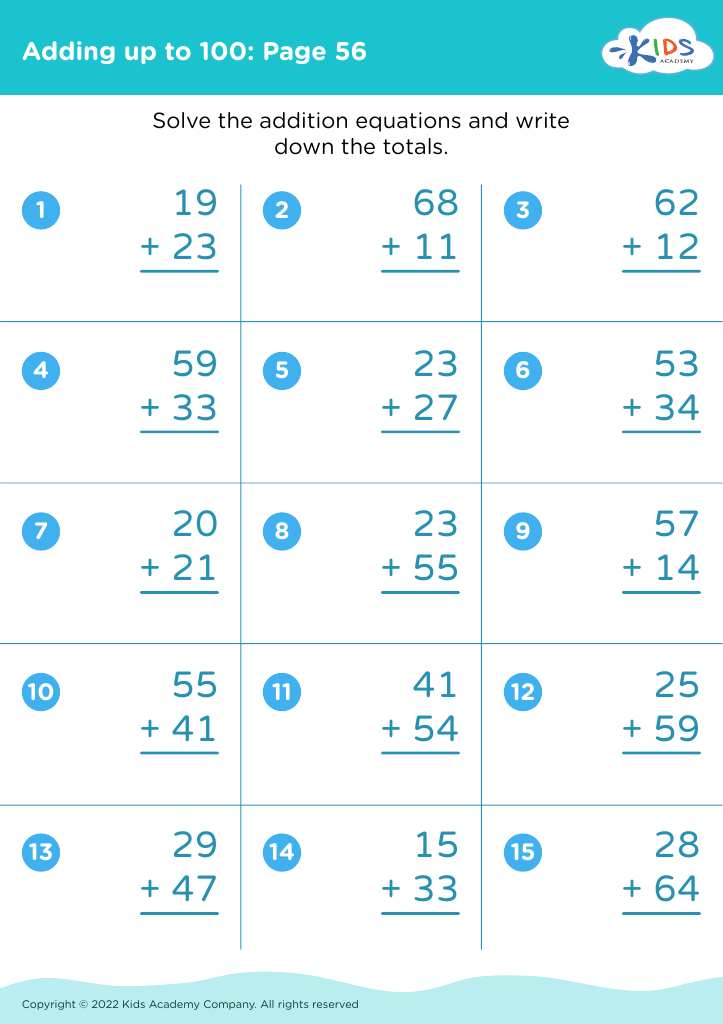
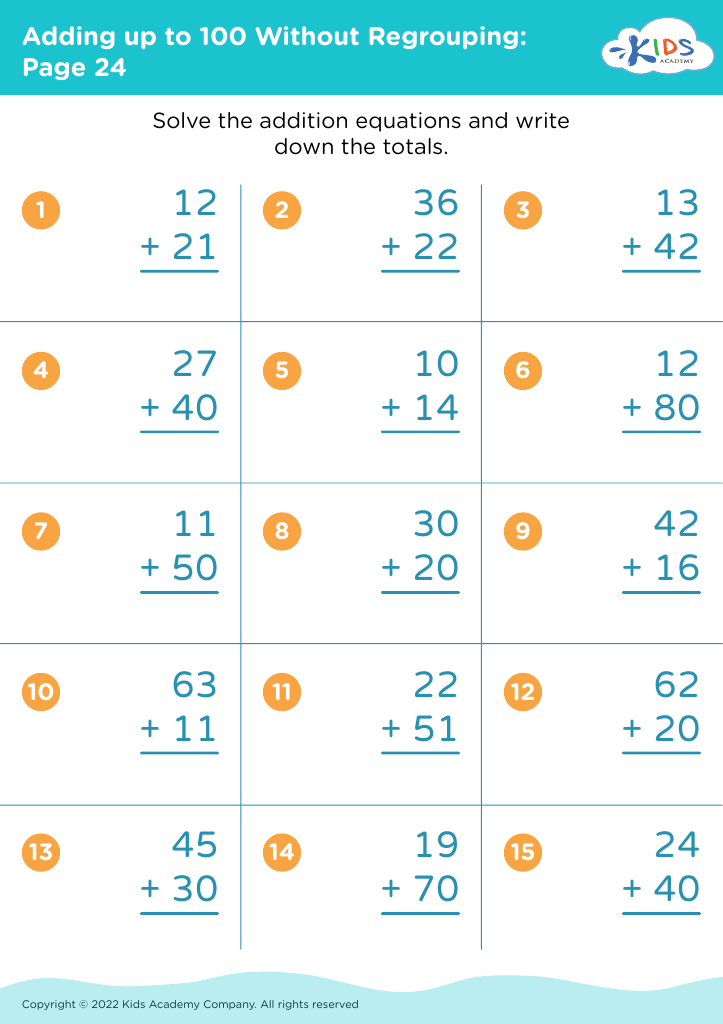
Enhance your child's reading and math skills with our specialized "Improve Reading Skills Adding up to 100 Worksheets" designed for ages 7-9. These engaging worksheets combine essential reading comprehension exercises with practical addition problems, fostering a dual development approach. Each worksheet invites young learners to solve math problems while reading instructions and story problems, enhancing both their numeracy and literacy. Perfectly crafted for children in this age group, our worksheets make learning fun and effective, providing a valuable resource to supplement your child's education at home or in the classroom. Empower your kid's academic journey today!





%20(1).jpg)

Parents and teachers should care about improving reading skills and basic arithmetic, like adding up to 100, for children ages 7-9 because these foundational skills are crucial for academic success and cognitive development. At this crucial stage, children's brains are particularly receptive to learning, making it an ideal time to instill strong reading and math abilities.
Reading proficiency allows children to access and understand a wide range of subject materials, fostering a love for learning and enhancing their critical thinking and comprehension skills. Good reading skills are not only essential for academic subjects but also for everyday life, impacting future educational and career opportunities.
Similarly, developing arithmetic skills, such as adding up to 100, builds a solid foundation for more complex mathematical concepts. This establishes confidence in problem-solving and logical thinking, which are critical skills inside and outside the classroom. Mastering these basics paves the way for advancing into higher-level math, ensuring they stay academically competitive.
Furthermore, reading and math skills are interrelated; strong literacy skills aid in understanding math problems, which often involve word problems and instructions. By concentrating on these critical areas, parents and teachers help nurture well-rounded, capable, and confident learners, setting them up for a lifetime of success and development.








