Improving math skills Adding up to 100 Worksheets for Ages 7-9
5 filtered results
-
From - To
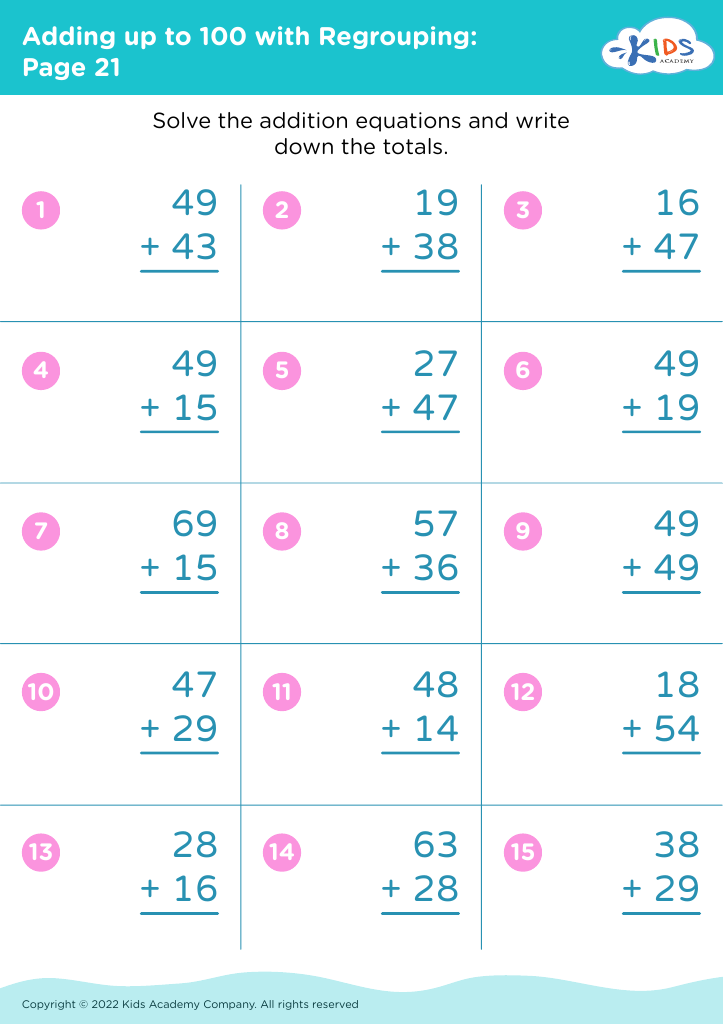
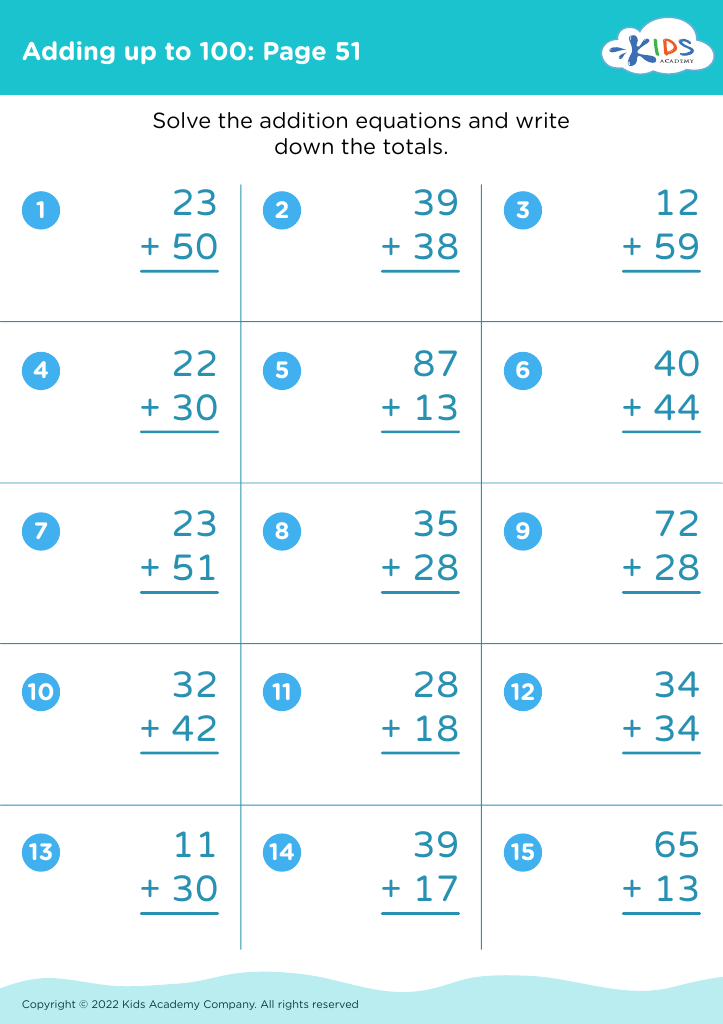
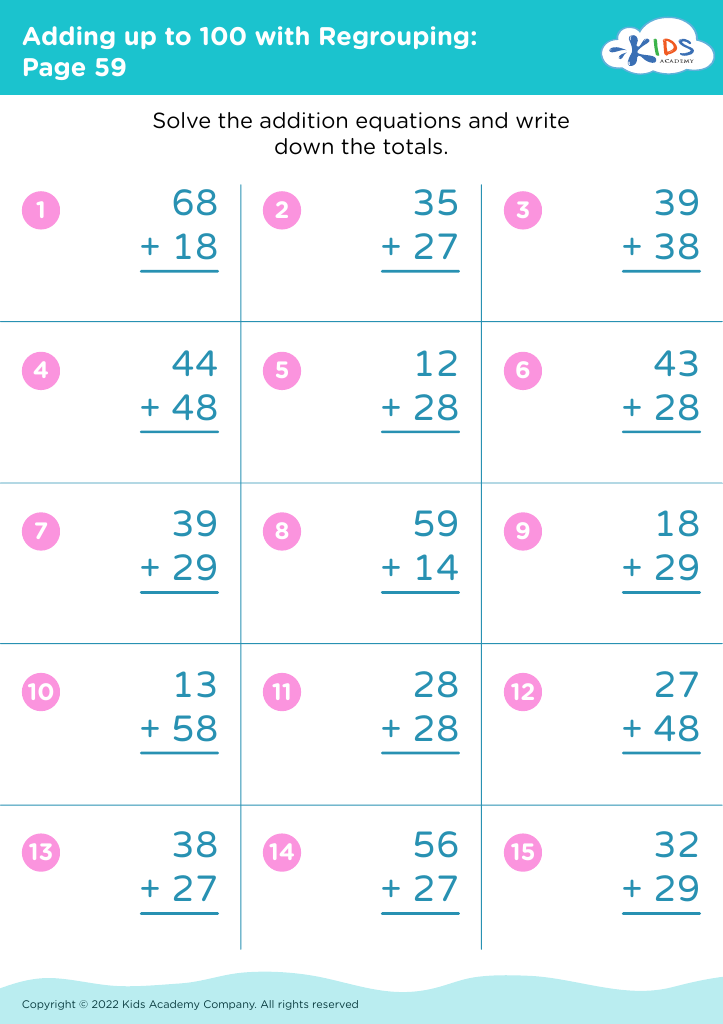
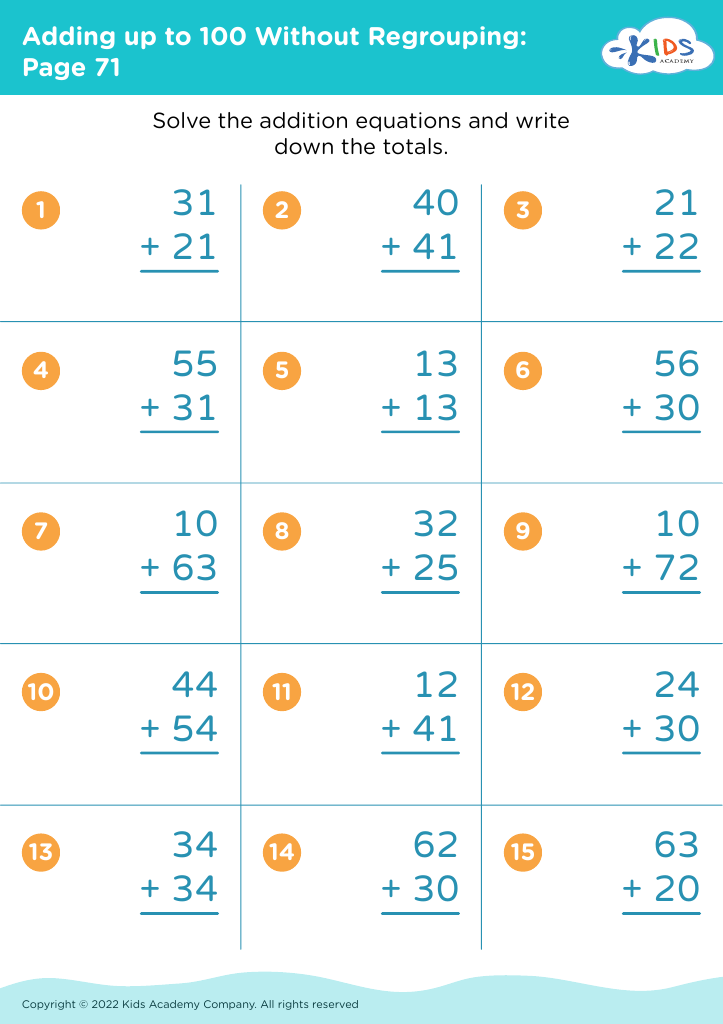
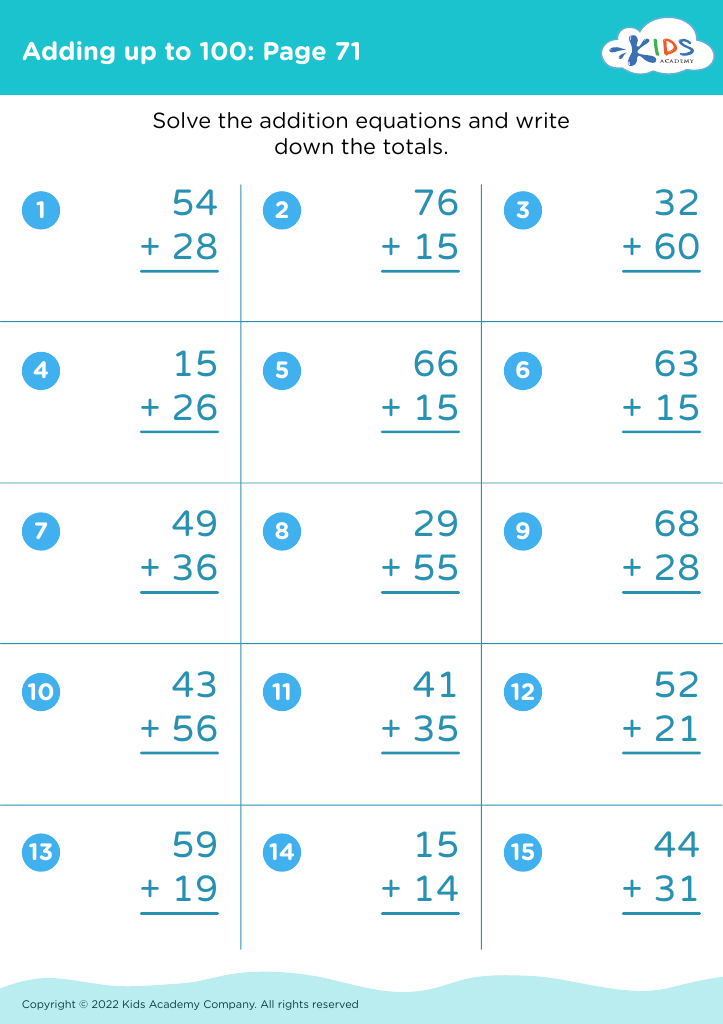
Enhance your child’s math abilities with our “Improving Math Skills: Adding Up to 100” worksheets designed specifically for ages 7-9. These printable resources offer engaging exercises that make learning fun while reinforcing addition skills. Each worksheet provides a variety of problems, from basic sums to more challenging equations that encourage critical thinking and problem-solving. As your child practices adding numbers up to 100, they will build confidence and proficiency in their math skills. Featuring colorful designs and progressive difficulty levels, these worksheets are perfect for at-home practice or classroom use. Start nurturing a love for math today!




%20(1).jpg)


Improving math skills, particularly the ability to add up to 100, is crucial for children ages 7-9 for several reasons. Firstly, mastering addition lays the foundational groundwork for more complex mathematical concepts, including subtraction, multiplication, and division. As children progress in their education, a strong grasp of basic arithmetic becomes essential for tackling word problems and real-world math applications.
Moreover, enhancing these skills boosts children's confidence and promotes a positive attitude towards learning. When children are proficient in fundamental math operations, they are better equipped to participate in classroom activities, engage in group projects, and handle homework with ease. This sense of accomplishment can foster a lifelong appreciation for math.
Additionally, developing strong addition skills contributes to improved cognitive abilities, encouraging problem-solving and critical thinking. In a world increasingly reliant on technology, these skills are valuable not just in academic settings but also in everyday life—shopping, budgeting, and cooking, for example.
Finally, parental and teacher involvement in improving math skills is vital. It creates a supportive learning environment that encourages exploration and persistence, helping children become confident learners prepared for future challenges. Overall, enhancing the ability to add up to 100 is essential in establishing a strong mathematical foundation for young learners.








